
The History of the Polish art market and investments in contemporary art
Julia Niżnik
As Stanisław Lec once mentioned in his collection of aphorisms, "the discipline of art requires freedom." It is not surprising, then, that the art market in Poland began to flourish only after 1990. Despite its relatively young age, the Polish art market, especially in the segment of contemporary art, has been developing with extraordinary dynamism, achieving high positions in global rankings in terms of generated auction revenues.
Furthermore, Poland, as the only country in Central-Eastern Europe, boasts a representation of contemporary artists, ranking 12th in the world with respect to the number of creators representing a particular nationality in the global contemporary art ranking provided by one of the largest global art portals – artprice.com.
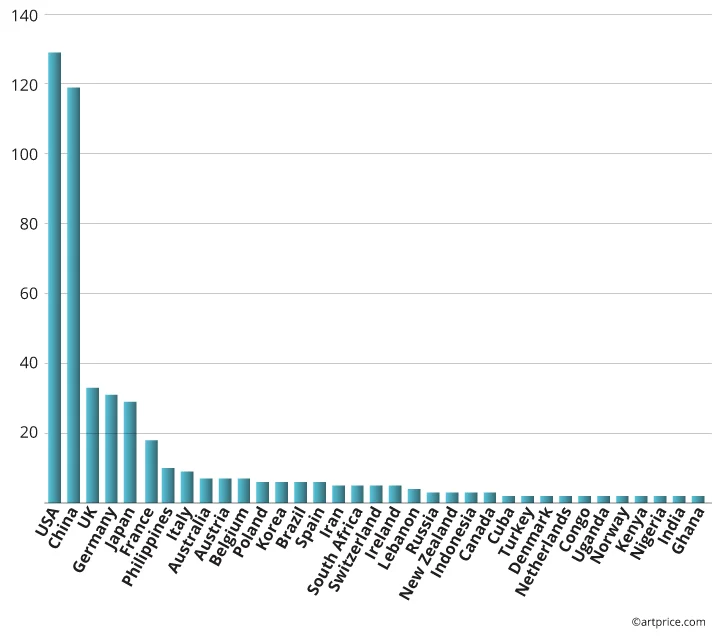
Poland has a rich history marked by continuous wars, invasions, and uprisings. Many works of art and precious items were plundered during numerous armed conflicts over the years, significantly impacting the supply of artworks. Additionally, a significant barrier to the development of the market was the period of communism. Only in 1989 did Poland experience a turning point for the development of a free art market, also laying the foundation for perceiving art as an investment.
Global Perspective
The first auction house was established in 1647 in Stockholm, a century before the founding of Sotheby's and Christie's auction houses. Initially, only the wealthiest individuals could invest in art, often acting as patrons for the greatest artists to obtain exclusive rights to their works. However, this changed in 1904 with the first investment fund by André Level and his twelve friends, who invested in works of contemporary avant-garde. Selling them in 1914, the group achieved a fourfold return on investment. Subsequent actions that strengthened the motivation to invest in art included changes in Sotheby's sales policy in the early 1980s. To attract potential investors, the institution provided loans to buyers and guaranteed prices to sellers. Currently, the investment perspective in the art market has advanced further, with companies offering opportunities such as purchasing fractional ownership of real artworks . The company sells the artwork to make a profit after a certain period, and the return is proportional to the percentage of the artwork owned. For example, the painting "Doppelbild" by Albert Oehlen yielded investors a net annual return of 36.2%. Moreover, new collector categories such as cars, handbags, comic boards, and video art have emerged in major auction houses, indicating the continuous development and growth of this market segment.
The Western art market is certainly more mature than our domestic market, but over the years, Poland has gradually converged with international standards. Not only has the number of auctions increased, but so has their turnover. In 2000, there were 55 auctions, while 2022 resulted in 636 (an increase of 58 compared to 2021). Additionally, from July 2021 to June 2022, Poland ranked 8th in terms of generated auction revenue, exceeding $22.5 million in the contemporary art segment, recording 63% growth. In 2022, the total turnover in the art market in Poland reached PLN 600 million, marking three record-breaking transactions in the field of contemporary art in auction history.
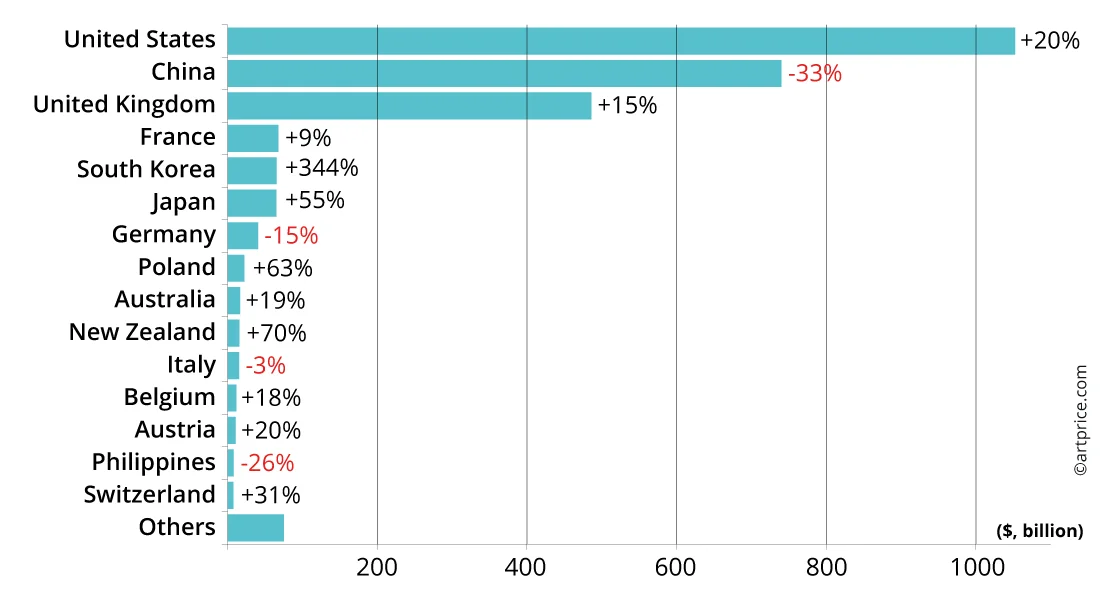
Poland has emerged from behind the Iron Curtain, and an increasing number of contemporary artists are gaining places in international exhibitions, contributing to the continuous growth of the Polish art market, especially in the contemporary art sector.
References:
Artprice.com (2022), The contemporary art market report 2022
Bołdok, S. (1992), Rynek sztuki w Polsce, Art.&Business. Gazeta Aukcyjna, 4-5.
Borowski, K. (2012). Inwestycje alternatywne w Polsce i na świecie na przykładzie rynku dzieł sztuki. Warszawa Oficyna Wydawnicza SGH.
Najwyższa Izba Kontroli (2017), https://www.nik.gov.pl/aktualnosci/nik-o-odzyskiwaniu-utraconych-dziel-sztuki.html
The content of this publication is for informational and educational purposes only. Before each investment, one should individually assess the benefits and risks associated with the planned transaction. Before making any decisions, consider (for example, with the assistance of a financial advisor) whether the transactions are suitable in light of the interested party's specific needs and financial situation, the adequacy of investing in any assets, or the application of any investment strategies.
The information presented is based on the authors' current knowledge at the time of publication and may become outdated. It also does not constitute a guarantee that the art market will maintain its previous trends in the future. Trading in works of art is always associated with a series of risks that should be individually considered before making a transaction. No information contained in the publication constitutes investment advice or any opinion regarding the suitability of any securities, and the opinions expressed on this page should not be treated as advice regarding the purchase, sale, or possession of any securities. DESA Unicum and the author of the publication are not responsible for the decisions made by recipients of the published content, which always remain the individual choice of the parties involved in potential transactions.
Investing always carries the risk of loss, and those interested in art market transactions should seek professional financial or legal advice.