
Appetite comes with eating – That is, demand and supply in the art market
Julia Niżnik
Demand
In the classical economic perspective, demand in the art market is described as the number of artworks that individuals can buy at different price levels, taking into account their financial resources. The law of demand assumes that in the market for typical goods, an increase in the price results in a decrease in demand, and conversely, a decrease in the price increases demand. However, the art market is not a market for typical goods, so different market mechanisms come into play
Analyzing the demand for artists' works, it is important to mention that demand and supply shape themselves according to the Veblen paradox, as works of art are considered luxury and rare goods. According to this theory, there is an escalation in demand despite the increase in prices of artists' works. Higher prices for paintings encourage the purchase of artworks because they signify prestige as well as material and social status of their owner. The demand in the art market is also influenced by many other non-price factors, whose impact is greater than in the case of price determinants. These include: social income, information technologies, cultural capital, and the existing supply in the art market.
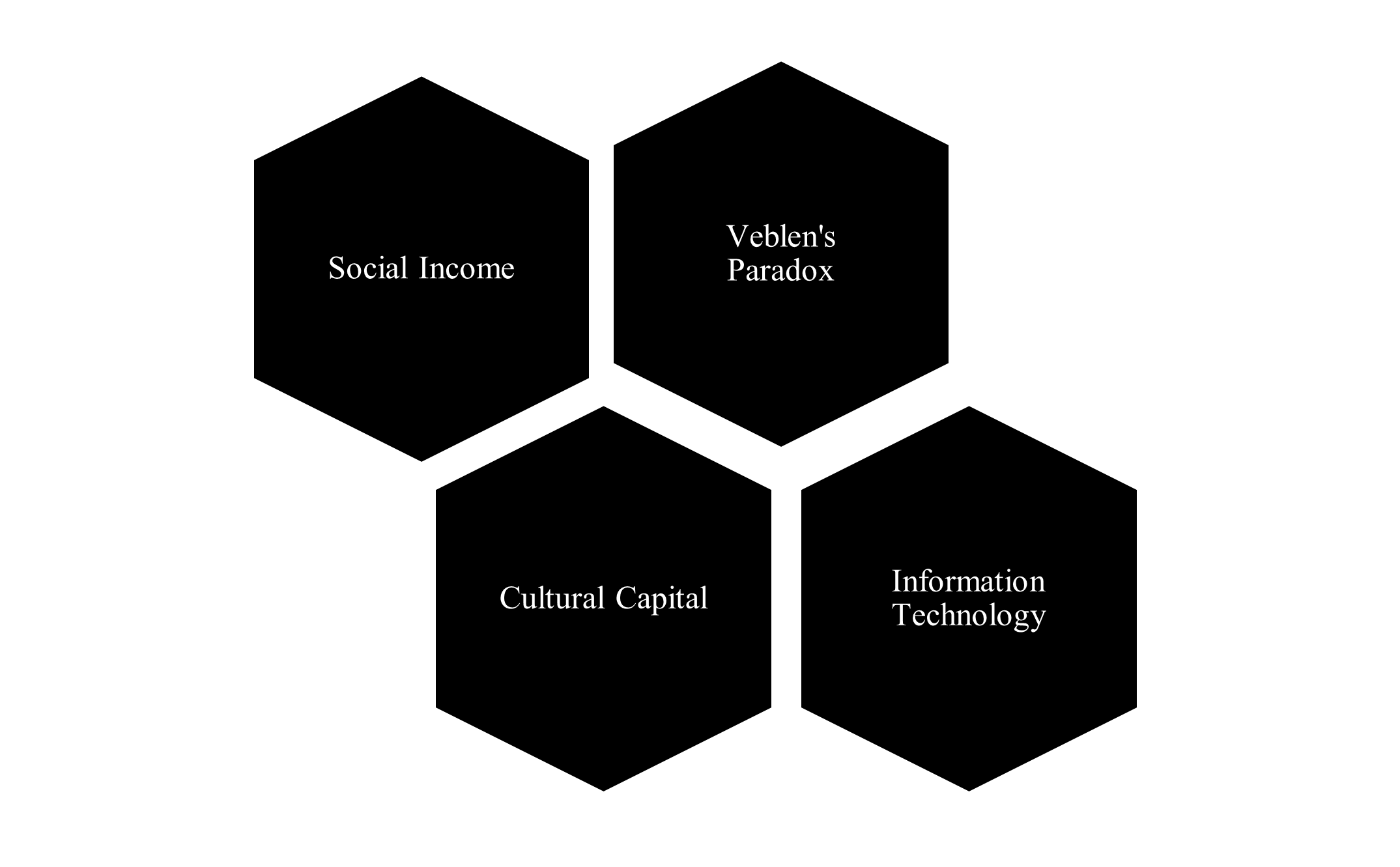
A fascinating factor appears to be the level of cultural capital in society, understood as a body of individual preferences based on the accumulation of experiences with similar goods. These experiences shape the cultural taste of the individual and their preferences for selected products. In other words, more frequent contact with art influences a greater demand for it in the future, and this concept can be concluded with the proverb: "appetite comes with eating." This theory stands in contrast to the law of marginalism, which assumes that satisfaction from consuming each additional unit of a good decreases.
Do Contemporary Artists Differ So Much from Old Masters?
Supply in the Art Market
Entities on the supply side of the art market are predominantly auction houses. Galleries and artists selling paintings also operate in this market, but this sector is immeasurable due to a lack of knowledge about the scale and characteristics of concluded transactions. The law of supply present in the market for traditional goods also applies to the art market, where an increase in the price of a good results in greater profitability and influences an increase in the number of offered services or products. However, it should be remembered that in the secondary art market, the number of works for deceased artists is limited, affecting a low or zero level of price elasticity of supply. In addition, the supply of artists' works is shaped by other non-price factors, such as the development of art market institutions, random (historical) factors, and the influence of the state. Considering the supply in the art market, it is worth mentioning the Baumol effect, also known as Baumol's cost disease. In the classical economic approach, technological progress lowers the production costs of a good, thereby increasing the efficiency of the enterprise. This leads to not only increased profits for entrepreneurs but also higher wages that the company can afford to pay its workers. Unfortunately, as Baumol observed, productivity in the art sector has remained unchanged for centuries because artistic and scientific creativity does not undergo technological progress to the extent seen in "classic" sectors of the economy.
A contemporary artist, like 200 years ago and in the case of traditional forms of art, creates a sculpture using the same tools as their predecessors. In the long-term perspective, as long as humans are not replaced by robotic professors or artists, it can be predicted that prices in these sectors will continue to rise, and contemporary artists, like their predecessors, will remain surrounded by brushes, canvases, chisels, and long hours spent in their studios.
References:
Lucińska, A. (2021). Obrazy na rynku finansowym. Analiza efektywności inwestowania. Difin.
Nierenberg, B. (2015). O chorobie Baumola i jej następstwach dla sztuki i nauki. Przegląd Kulturoznawczy, 26(4), 378-384.
Towse, R. (2019). A textbook of cultural economics. Cambridge University Press.
The content of this publication is for informational and educational purposes only. Before each investment, one should individually assess the benefits and risks associated with the planned transaction. Before making any decisions, consider (for example, with the assistance of a financial advisor) whether the transactions are suitable in light of the interested party's specific needs and financial situation, the adequacy of investing in any assets, or the application of any investment strategies.
The information presented is based on the authors' current knowledge at the time of publication and may become outdated. It also does not constitute a guarantee that the art market will maintain its previous trends in the future. Trading in works of art is always associated with a series of risks that should be individually considered before making a transaction. No information contained in the publication constitutes investment advice or any opinion regarding the suitability of any securities, and the opinions expressed on this page should not be treated as advice regarding the purchase, sale, or possession of any securities. DESA Unicum and the author of the publication are not responsible for the decisions made by recipients of the published content, which always remain the individual choice of the parties involved in potential transactions.
Investing always carries the risk of loss, and those interested in art market transactions should seek professional financial or legal advice.