
Investing in art - profit and loss account
Julia Niżnik
If we were to draft up the proverbial profit and loss account including the incurred costs and estimated revenues, we would like to obtain one answer. How to invest in works of art to maximize profits?
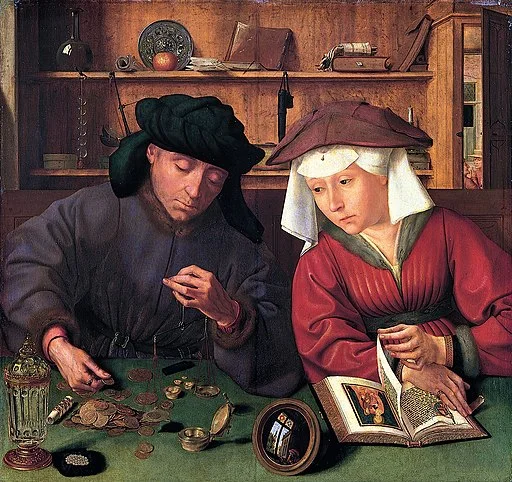
Similar to the stock and bond market, the art market does not have one correct answer to this question. The main strategies most commonly applied in art investment include geographical arbitrage strategies or regional art strategies, which focus on investing in art from a specific geographical region (e.g., Chinese art). There are also periodical strategies that focus on investing in a specific period or trend in art history (modern, contemporary, impressionist, old masters, etc.), or medium strategies that focus on investments in one artistic medium (such as photography or video). For example, Grażyna Kulczyk's collection focuses on works by post-war and contemporary art classics, both Polish and foreign artists, and is one of the top art collections recognized worldwide. Assembling a universally respected collection does not necessarily require large income, as exemplified by the art collection of Herbert and Dorothy Vogel. The couple, both civil servants since 1962, dedicated one salary to living expenses and the other to collecting art. Despite budgetary and spatial constraints (they lived in a one-bedroom apartment in Manhattan), they amassed over 5,000 works of art by esteemed artists. Their collection, now housed in numerous museums, mainly consists of minimalist and conceptual art.
The strategy of investing in new artists, focusing on creators who are not yet recognized and therefore have the potential for rapid price growth, is also gaining popularity. Many investors start their journey from this point, gradually moving on to mid-priced artists, and then to so-called blue-chip artists with established reputation on the market, such as Andy Warhol or Pablo Picasso. Works or artists from the contemporary art segment, whose pieces were known only in the domestic market, may achieve international fame in the coming years, which was the case with the Polish Munich School. As the famous neon sign by Italian artist Maurizio Nannucci says: "All art has been contemporary." However, with time, it moves away from contemporaneity, being replaced by younger art, experiencing an increase in value over time. Therefore, when investing in works of art today, it is best to maintain a long-term time horizon, as confirmed by reports published by artprice.com. From 2012 to 2016, the only Polish artist appearing in the rankings was Tamara Łempicka. In 2017, Wojciech Fangor joined her, and since 2018, the list has been expanding annually with additional avant-garde contemporary artists, such as Mojżesz Kisling, Magdalena Abakanowicz, Roman Opałka, Zdzisław Beksiński, Leon Tarasiewicz, Andrzej Wróblewski, or Piotr Uklański.

The 3D art market, where the sale of masterpieces from private collections occurs in 3 cases: debt, divorce, death, gave rise to the crisis art strategies, focusing on acquiring artworks at deep price reductions from collectors facing bankruptcy or insolvency. To increase the value of an art portfolio, investors also place works in important museum exhibitions. Additionally, there are mass purchase strategies that involve buying large quantities of artworks to obtain better prices and lower transaction costs.
When investing in works of art, one should remember about time, patience, and risk. The spirit of allocating funds to works is reflected in the proverb "Rome wasn't built in a day," just as one's collection won't be built instantly. Adopting a coherent strategy seems to be the best investment path. You don't have to be an art enthusiast to invest in it. However, undoubtedly, getting to know art and delving into the acquired works makes the process more enjoyable, and the transactions become more personal, thereby reducing the investor's imperfect knowledge. Additionally, they receive a tangible bonus in the form of the possibility of consuming their investment until its sale. However, there is risk with every investment, including transactions in the art market. Therefore, to risk wisely, one should consider individual risk tolerance, capital, and time horizon, which will help in choosing the appropriate investment strategy.
References:
https://www.artprice.com
Zorloni, A. (2013). The economics of contemporary art (Vol. 60). Heidelberg: Springer.
The content of this publication is for informational and educational purposes only. Before each investment, one should individually assess the benefits and risks associated with the planned transaction. Before making any decisions, consider (for example, with the assistance of a financial advisor) whether the transactions are suitable in light of the interested party's specific needs and financial situation, the adequacy of investing in any assets, or the application of any investment strategies.
The information presented is based on the authors' current knowledge at the time of publication and may become outdated. It also does not constitute a guarantee that the art market will maintain its previous trends in the future. Trading in works of art is always associated with a series of risks that should be individually considered before making a transaction. No information contained in the publication constitutes investment advice or any opinion regarding the suitability of any securities, and the opinions expressed on this page should not be treated as advice regarding the purchase, sale, or possession of any securities. DESA Unicum and the author of the publication are not responsible for the decisions made by recipients of the published content, which always remain the individual choice of the parties involved in potential transactions.
Investing always carries the risk of loss, and those interested in art market transactions should seek professional financial or legal advice.