
Wyspiański, Gottlieb, Lipiński - meeting of masters
It is sometimes said that artists have intense but short lives. These claims seem more appropriate for the controversial and frequently scandalous figures of the second half of the 20th century as well as for celebrities of our era. However, history tends to demonstrate something completely different and, as it often does, surprise us. Although our times are much different from past centuries, certain mechanisms influencing society still remain uninterrupted. Session I of "Old Masters, 19th Century & Modern Art" auction presents you with a selection of works by roughly 60 artists. The fates of the three of them brought the artists together in a remarkably intriguing and, in a sense, tragic way.
So, what did Stanisław Wyspiański, Maurycy Gottlieb, and Hipolit Lipiński have in common, beyond the fact that all three were exceptional painters and masters in their craft, despite the contrasts in the formal and stylistic aspects of their art? It seems that there are a few aspects they had in common; the most distinguishable is the fact that all three died considerably young or in the prime of their creative capacities. It should be the starting point for examining the connections and relationships between them, as well as how their fates intertwined. Three phenomenal painters: Wyspiański, Gottlieb, Lipiński. What did they have in common, and what definitely separated them? What happened to them, and at what stage could their paths cross? Eventually, could even they meet back in the day? Let us retrace the biographies of the painters as well as the fascinating dialogue between the three masters.
Is it Possible that the Masters Met?
It is key to finding the answer to this engaging question – Had the artists ever met? We don't even consider a meeting between all three of them, as it would be challenging or even impossible, but at least a confrontation between two of the artists. All three artists came from the same milieu. Although only Wyspiański was born in Krakow (Lipiński in Nowy Targ and Gottlieb in Drohobycz), each of them spent some time in the Krakow School of Fine Arts. Wyspiański even became its lecturer when the facility was elevated to the rank of Academy. Let us point to the creators' earlier lives when all three artists had contact with the powerful and strongly resonating figure of Jan Matejko. At the end of the 19th century, the Krakow School of Fine Arts was undoubtedly the most important establishment on Polish soil. Matejko himself influenced generations of young artists. Obviously, he developed bold assumptions of pompous and monumental historicism. Lipiński and Gottlieb followed this path to a certain degree; however, they also developed their own style and modified the principles postulated by their master. Wyspiański took a completely different artistic direction. He distanced himself from historicism and traditional painting in favor of modernism, which is not surprising as he was the youngest and the keenest on modernity out of the three creators.
Hipolit Lipiński (1846) was the oldest. Exactly ten years later, Maurice Gottlieb (1856) came into the world. Stanisław Wyspiański was born in the next decade, in 1869. Lipiński initially studied at the Academy of Fine Arts in Munich. When the artist returned to Krakow, he found himself in Matejko's zone of influence. Gottlieb began his studies at the Vienna Academy. Matejko's fame brought the artist to the legendary Krak's town. In the biography of Wyspiański, who had been associated with Krakow since childhood, educational trips, for instance, to Paris, were just episodes. So, let us try to put some facts together. In the year of Lipiński's death, that is in 1874, Maurycy Gottlieb came to Krakow from Vienna. Wyspiański was only five years old at that time! The theory of their great encounter is shattered in the light of these facts, even though a "clash" between Lipiński and Gottlieb seems likely and historically possible. As a result, the meeting of masters is purely a metaphor in the context of our reflections and only "takes place" on the pages of our catalog. Finally, it is important to draw attention to another factor that links these painters – they all passed away in Krakow: Lipiński and Wyspiański at the age of 38 and Gottlieb, who was in his prime but had not yet achieved fame, at the age of 23.
Different Styles – One idea
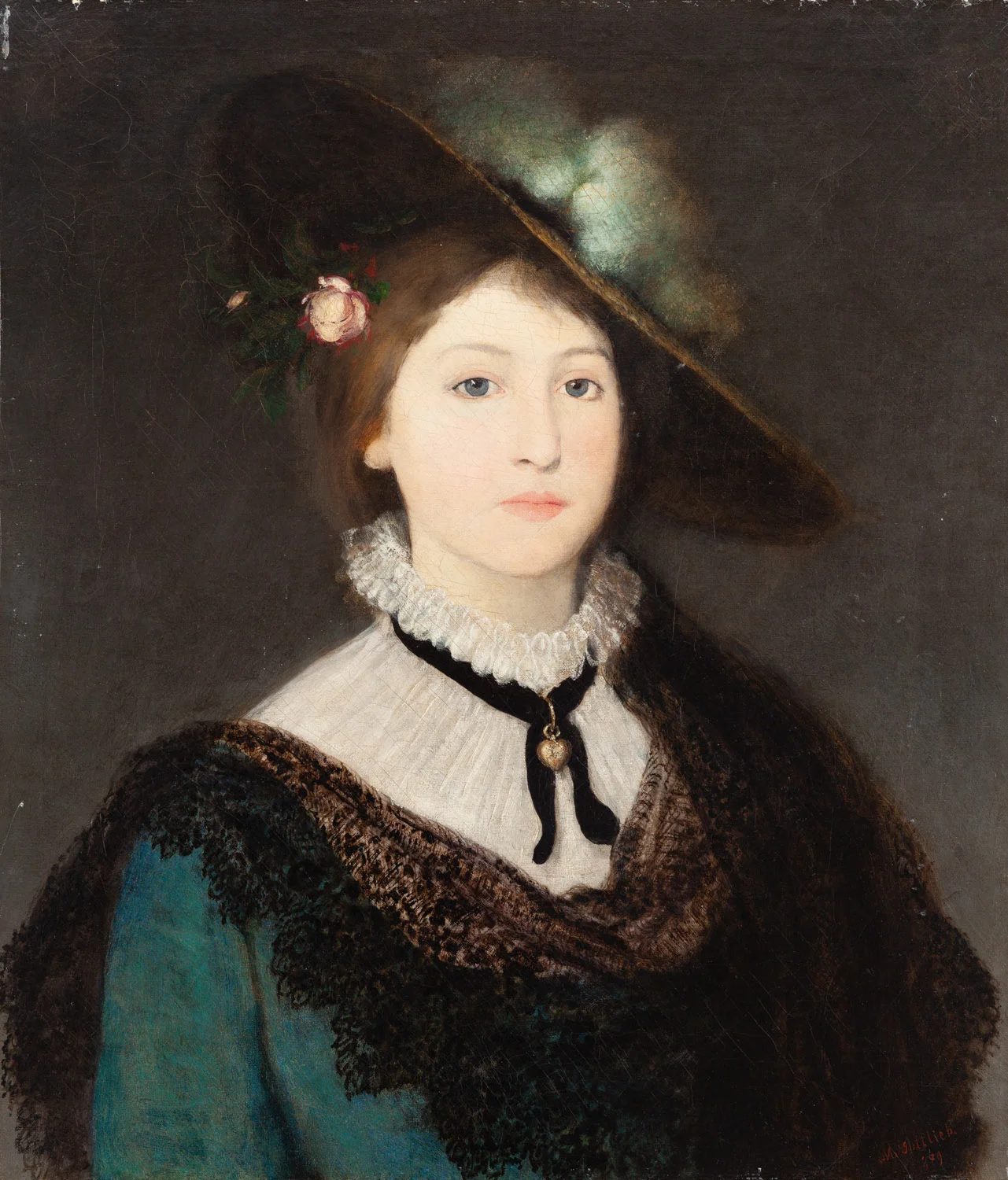
Matejko is now, and rightly so, linked to the concept of pompous historicism. His large-format, meticulously rendered paintings are today the greatest national treasures of Polish culture. Monumental canvases glorify the nation and show its greatness. Not all of the disciples continued their master's assumptions, but even if we are not dealing with continuity in a formal sense, their works fully imply the same national and patriotic spirit. Maurice Gottlieb used to say, "I am a Pole and a Jew, and I want to work for both of them, God willing." His words perfectly reflect not only the creator's approach to art but also the character of his works. Actions are also significant here. Despite persecutions the creator suffered in Krakow, he eventually returned to this city and bound his short career with this place. Gottlieb's creative idea is, therefore, highly related to Polish culture because the style of his works already seems to express the spirit of international painting. His "Portrait of a Young Woman in a Hat" from 1879 is brilliant in its form, boldly corresponding with the oeuvre of Rembrandt van Rijn himself.
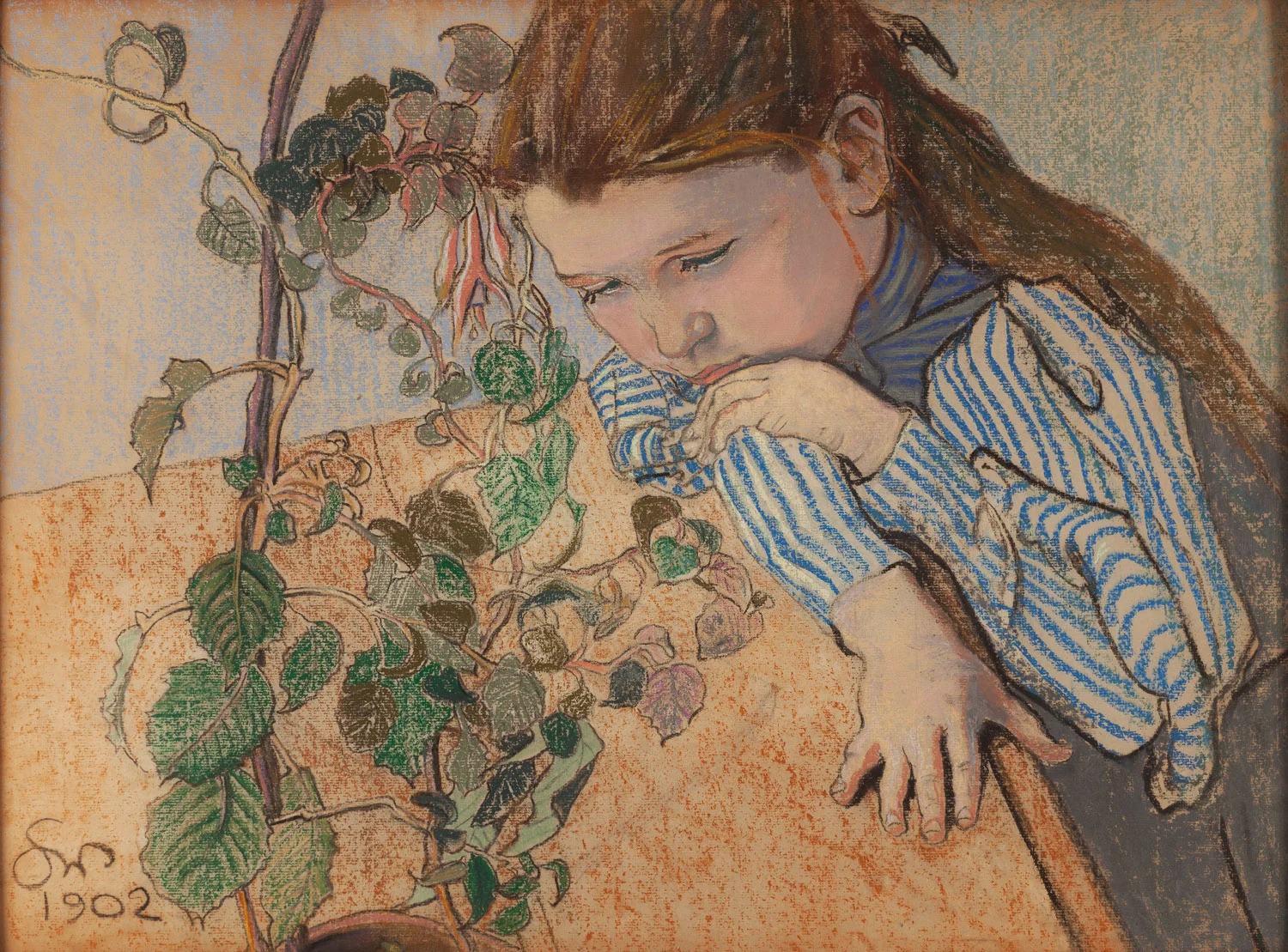
The works by native Poles Wyspiański and Lipiński present a completely different character. Wyspiański is, after all, the coryphaeus of Polish art, a painterly and literary national prophet, and an apostle of the strength and power of Poland's national spirit. His meaningful dramas such as "Acropolis" or the iconic "Wedding" are impressive observations and diagnoses of Polish reality, valid to this day. Wyspiański appears to be the mighty Cossack bard, Wernyhora, from Matejko's painting, a reproduction of which was placed in the Bronowice wedding house during the premiere of "Wedding." He stubbornly believed in the rebirth of a nation that continued to follow the macabre "dance of the Chochoł," symbolizing general national apathy. In this context, children's portraits stand in direct opposition to the patriotic movement, but, in a sense, they also allow to include the artist among the 19th-and 20th-century world creators due to their Art Nouveau soft lines and extraordinary decorative quality.
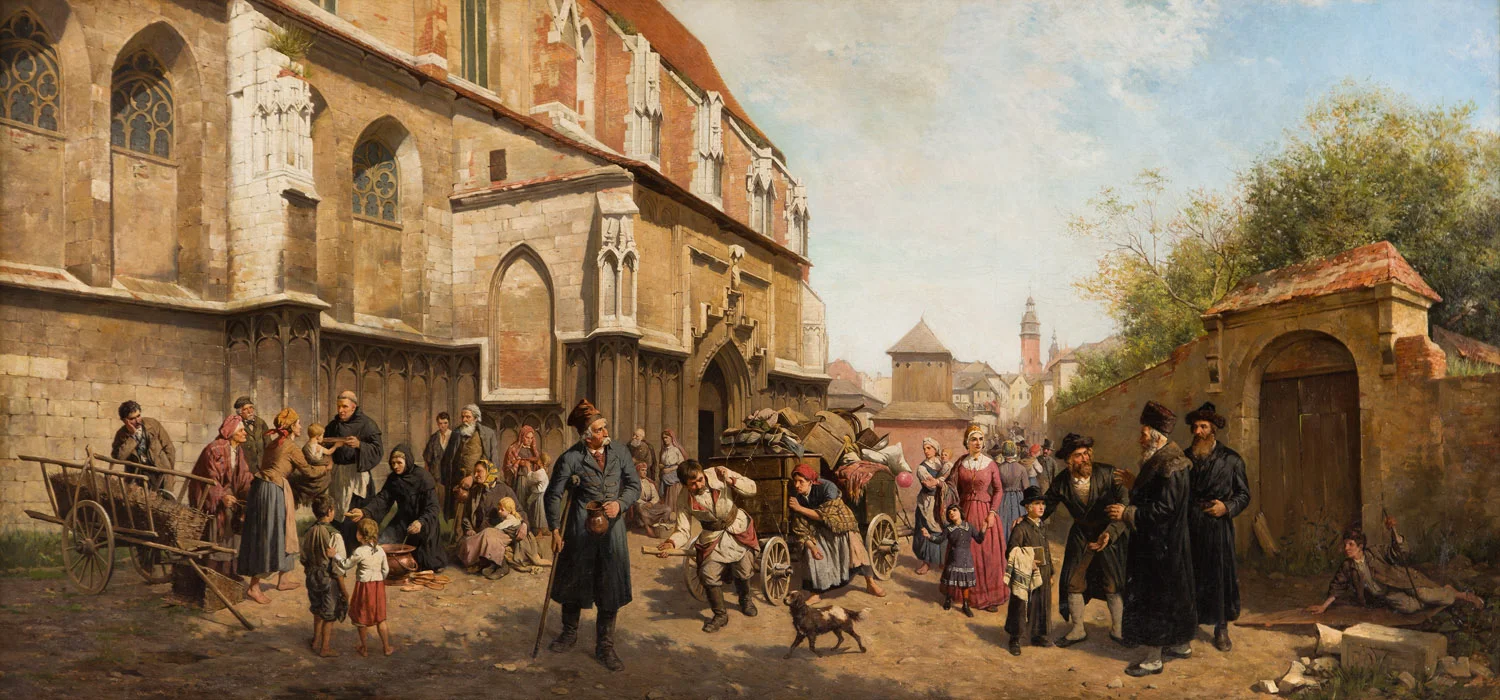
Finally, the figure of Hipolit Lipiński – an artist unjustly forgotten today. Following Matejko, he created extensive, multifaceted compositions, despite the not being so pompous. He recreated the details of historical events with the same precision, although his paintings depicted genre scenes from the lives of common people-the lowest social classes or bourgeoisie. Lipiński almost poetically rendered the topography and the depicted architecture, not only of Krakow. One of his last paintings – "Rumford's Soup in Front of the St. Catherine's Church in Cracow" is a fully didactic work that fits into the concept of improving the condition of society. The eponymous "soup" is a meal provided for the poor at the foot of one of the Krakow churches.
Art Humanistic to its Core
The essence of all three of these artists' works is based on the idea of humanism. Though it is depicted differently in each instance, the human figure is the main component of their art. In the case of Wyspiański, it is almost always an autonomous unit – an individual hero with original, characteristic features – a mother, a child, a saint... In Lipiński's case, a collective play the leading role. Surely, one can distinguish individual characters from the group, so often depicted by the artists, but only together do they form the entire painting. Gottlieb, on the other hand, seems to be a bit more complicated. He painted both collective scenes and individual portraits. In either case, these works are also simply psychological representations of human beings.