
Roman Opałka - Painter of irreversible time
"For God's sake, just don't stop", with these words French artist Jean Pierre Raynaud summed up Roman Opałka's decision to give up traditional painting in favor of a project, concocted in 1965, titled "OPALKA 1965/1-∞". It was not only one of the most outstanding works in the artist's creative activity but also one of the most significant manifestations of conceptual movement in the history of 20th-century painting.
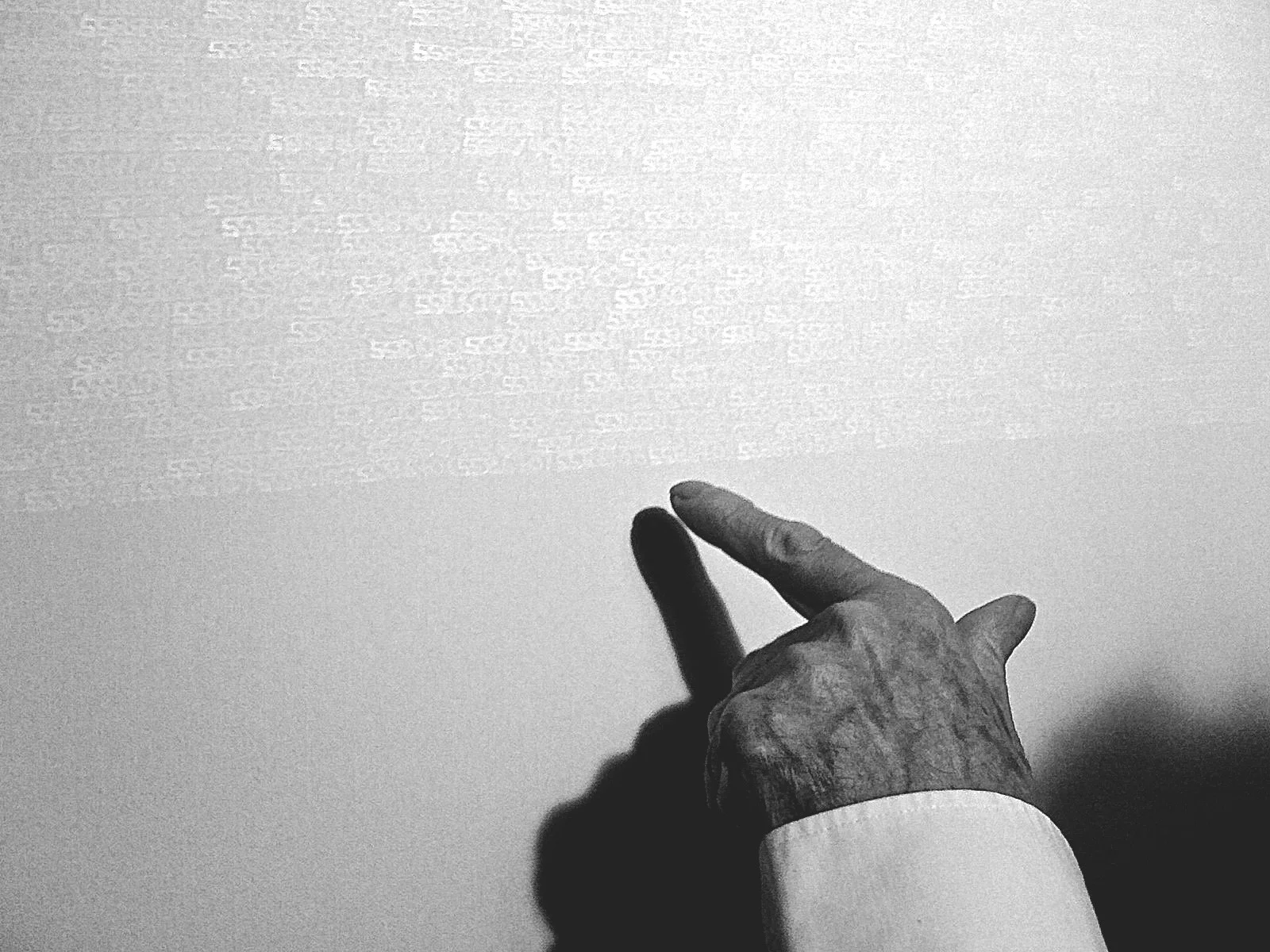
In 1965, frustrated by the incumbent paradigm of automatism of the 1960s and driven by unfettered expression, Roman Opałka redefined his painting. He broke with the dead weight of the past that could disrupt the homogeneity and purity of his ideas and devoted himself fully to his life's work - the "OPALKA 1965/1-∞" project. As he wrote, "I was thirty-three years old and had a mature attitude to my life. I figured it all didn't make sense. I was on the verge of killing myself. This project saved me." Opałka had been carrying out artistic research in many different fields before he reached his meta idea. He dealt with, among others, graphics, drawing, posters, also sculpture and medallic art. In each field he obtained original, often even revelatory, results. It is worth mentioning here what led to the creation of "Details", an example of which is presented in the offer presented at the November auction "Post-War and Contemporary Art". The very earliest works of this artist were characterized by a predilection for geometry, asceticism, and repetition. Constant striving to reach the total concept and, subsequently, the form that would be capable of conveying it is noticeable from the very early years of his work. As a result, it is quite simple to find in Opałka's œuvres the works which directly foreshadowed consecutive series of numbers, painted on the canvas surface with a thin brush. In 1961-63 the "Chronomes" series was created, which directly referred to variations on one module - point and line. Countless tiny formulas covered the entire composition, creating a repetitive and dense structure. The ascetic works had a hypnotic, meditative character. The indecipherable modules made sense only when put together. "None of the compositions' modular elements taken out of the whole meant anything on its own," wrote Bożena Kowalska,
"Just like a grain of sand is neither a desert nor a beach. Its place and role can be defined only after duplicating it in astronomical quantities. What is its essence in this case? The element itself or the whole of which it is a part of? Similarly, the passing fractions of seconds constitute the lapse of time. Apart from the physical convention of minutes, hours, or millennia, there are no units that could measure evanescence in the psychical sphere of human experience. There is also no concept of time as a whole. The points and lines in Opałka's Chronomes posed a question about the meaning and dimension of human time and contrasted with its unspecified segment - the infinity of duration"
(Bożena Kowalska, Roman Opałka, Krakow 1996, p. 18).
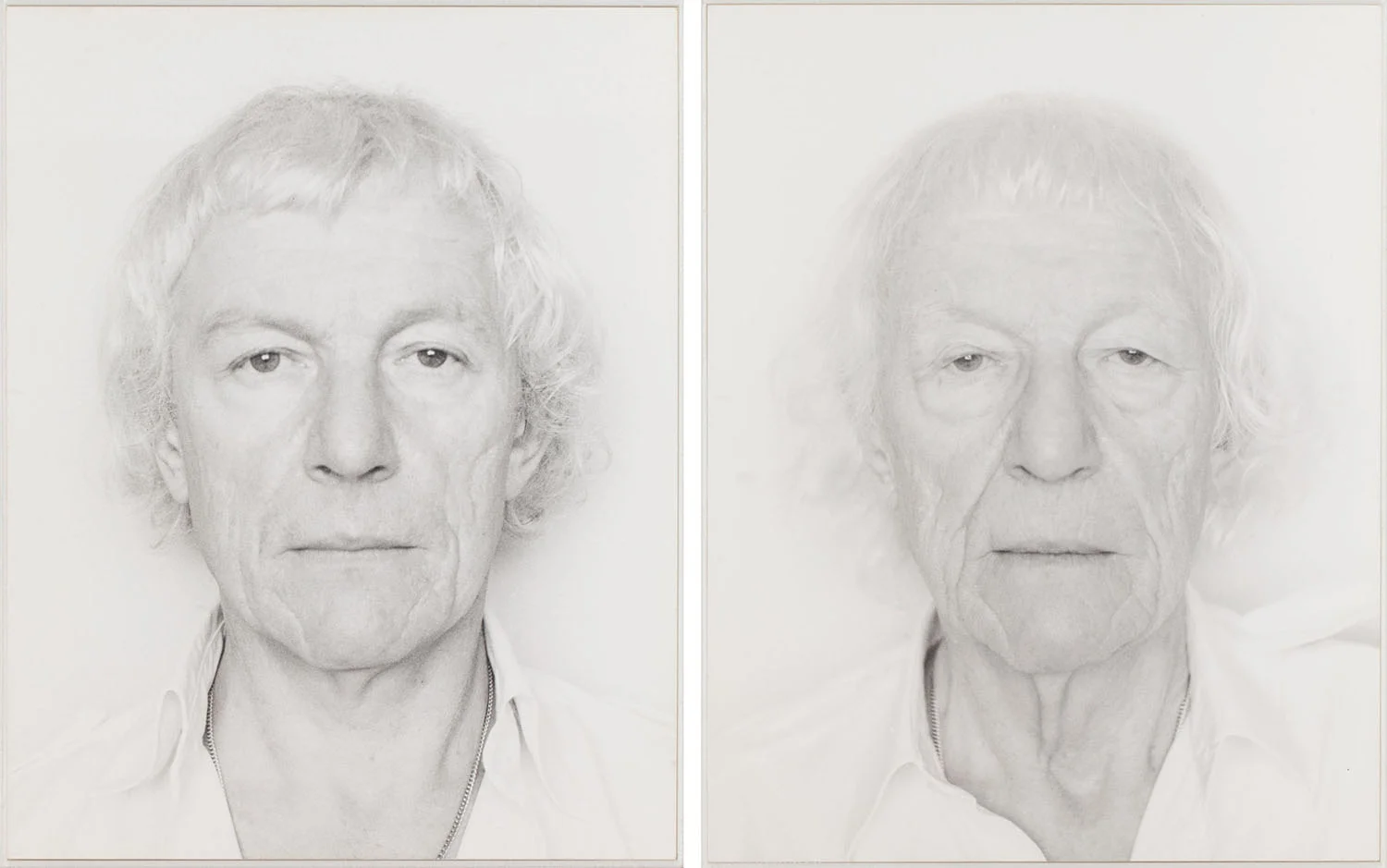
Initiated in 1965, the series of the so-called "Counted Pictures", or rather, as the artist preferred, "Details", undoubtedly belongs to the canon of contemporary world art, being one of the flagship examples of conceptualism derived from minimal art, as well as processual art based on the concept of time, next to the works of such artists as Bruce Nauman, Tehching Hsieh, or On Kawara. The series "1965/1 - ∞", decades-long and continued until the artist's death, constituted, in fact, Roman Opałka's "opus vitae". From a formal point of view, it consisted of three elements: large-format canvases with uniform dimensions of 196 × 135 cm, audio recordings, on which the artist recorded successive numbers recited out loud on a cassette tape, and photographic self-portraits taken each time after work, which, many years later, most vividly illustrated the lapse of time, documenting the artist's changing physiognomy. The idea of the project is best reflected in the artist's words,
"In my attitude, which is a project for life, progression records the workflow, documents it, and determines the time. There is only one date - the date when the first detail of the progressive counting idea was created. Each next detail is part of one whole. It is marked with the date when the first detail was made, that is 1965, the infinity sign at the beginning, and the first and last number of a given detail. I count progressively from one to infinity on the identical detail formats (except for 'travel postcards'), freehand, with a brush, using white paint on a gray background, assuming that the background of each next detail will be 1% paler than the previous one. Therefore, I predict a period in which the details will be calculated (painted) with white on white."
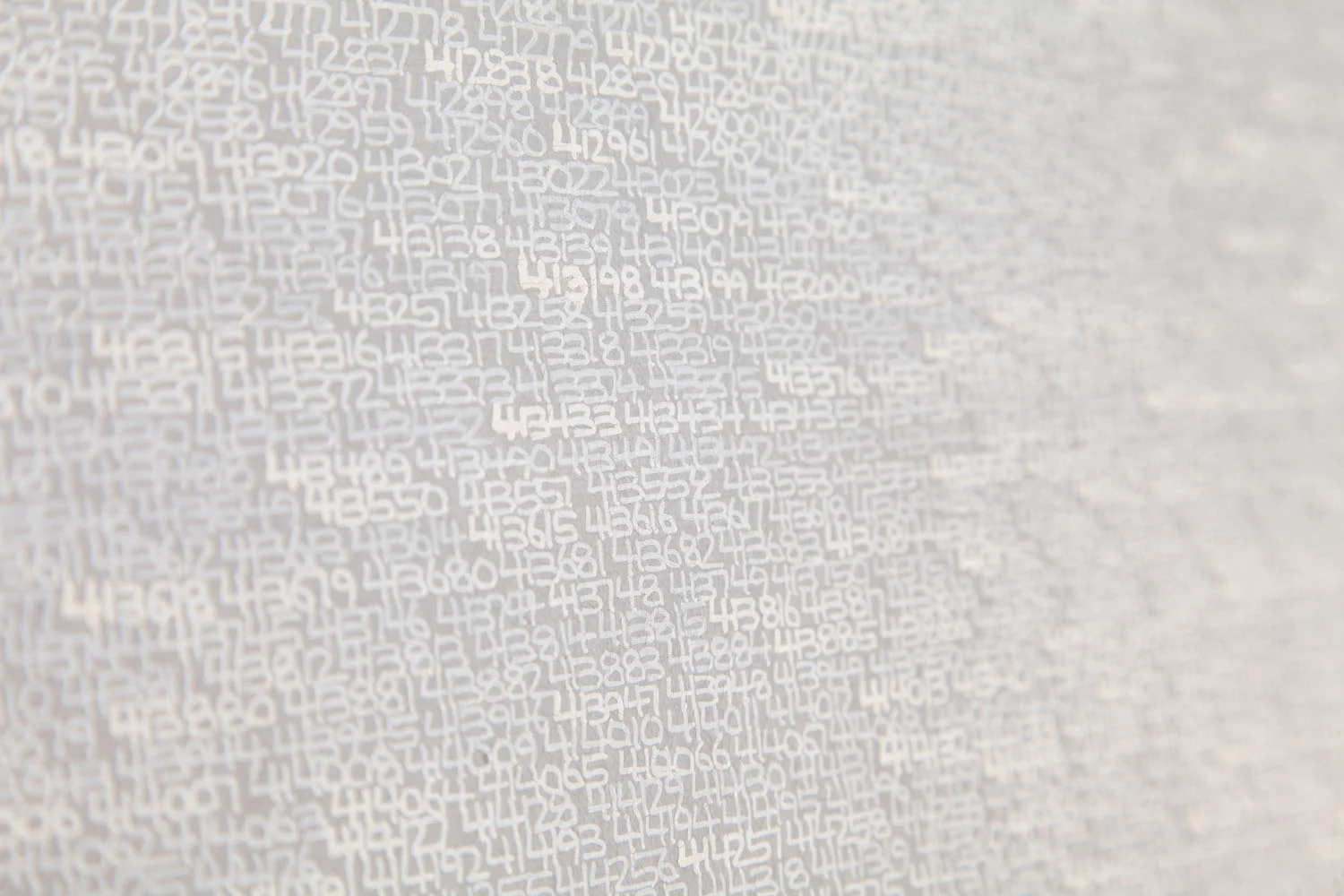
Opałka's determination to stick to his idea was met with both admiration and skepticism. Bożena Kowalska considers Opałka to be an extraordinary personality and is a devoted admirer of his art, while Andrzej Osęka wrote years ago that a phone book, also full of numbers, is more interesting than the artist's paintings. Undoubtedly, it was the very individual concept of this work, reinforced by the use of the artist's image and own voice changing over time, elevated to the rank of a universal message, that became one of the symbols of 20th-century art. According to Anne Rorimer, Opałka's works can be viewed in relation to many new forms of aesthetic expression which, in various ways, first occurred on the international scene in the mid-1960s. These movements include primarily conceptualism, but also minimalism and pop-art. Just before his death, at the end of April 2011, when Opałka's exhibition "Oktogon" was opened in Berlin, the artist reached the number 5,590,000 on his canvas. His dream was to achieve seven sevens. It was supposed to be the moment when, as he calculated, his image would turn completely white. According to the artist's words: "The goal of brightening each subsequent background, making it about 1% more white than the previous 'Detail'-painting, is the creation of mental, emotional, and ethical whiteness, until the end of my existence, until the further dynamization of the unity expansion, beyond the horizon 7777777".