WOMEN'S PAINTING. EXPRESSION AND SENSITIVITY
The art of the old masters has relatively few female representatives. It comes as no surprise, as their path to artistic careers was often difficult and full of disappointments. For a long time, great academies refused to accept women. They could only learn in private classes, which often did not provide the necessary education or teach the basics of artistic techniques.
"Looking back, all this learning was worthless," Olga Boznaska said after years of Adrian Baraniecki's Higher Courses for Women held at the Technical and Industrial Museum in Krakow. Nonetheless, more and more talented artists entered the artistic scene at the end of the nineteenth century. The world of art was gradually becoming more open to women, who, after 1900, and particularly during the interwar period, were able to spread their wings more boldly. However, it was accompanied by certain bizarre events. There is a well-known story about Zofia Stryjeska, who began her studies at the Munich Academy pretending to be her own brother, Tadeusz, wearing a taped mustache and disguised as a man. Our February auction of old masters presents you with the works by four wonderful female artists.
.
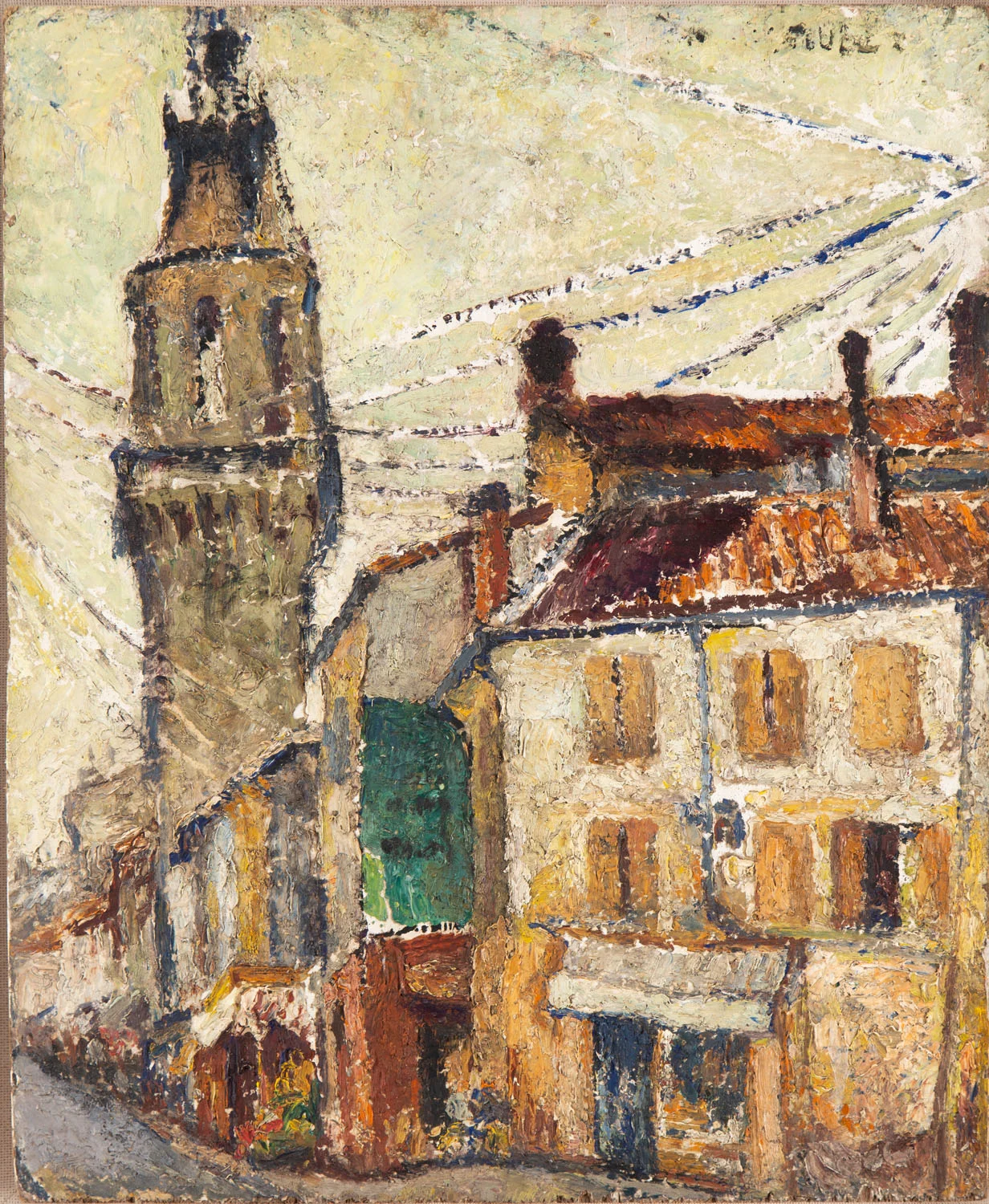
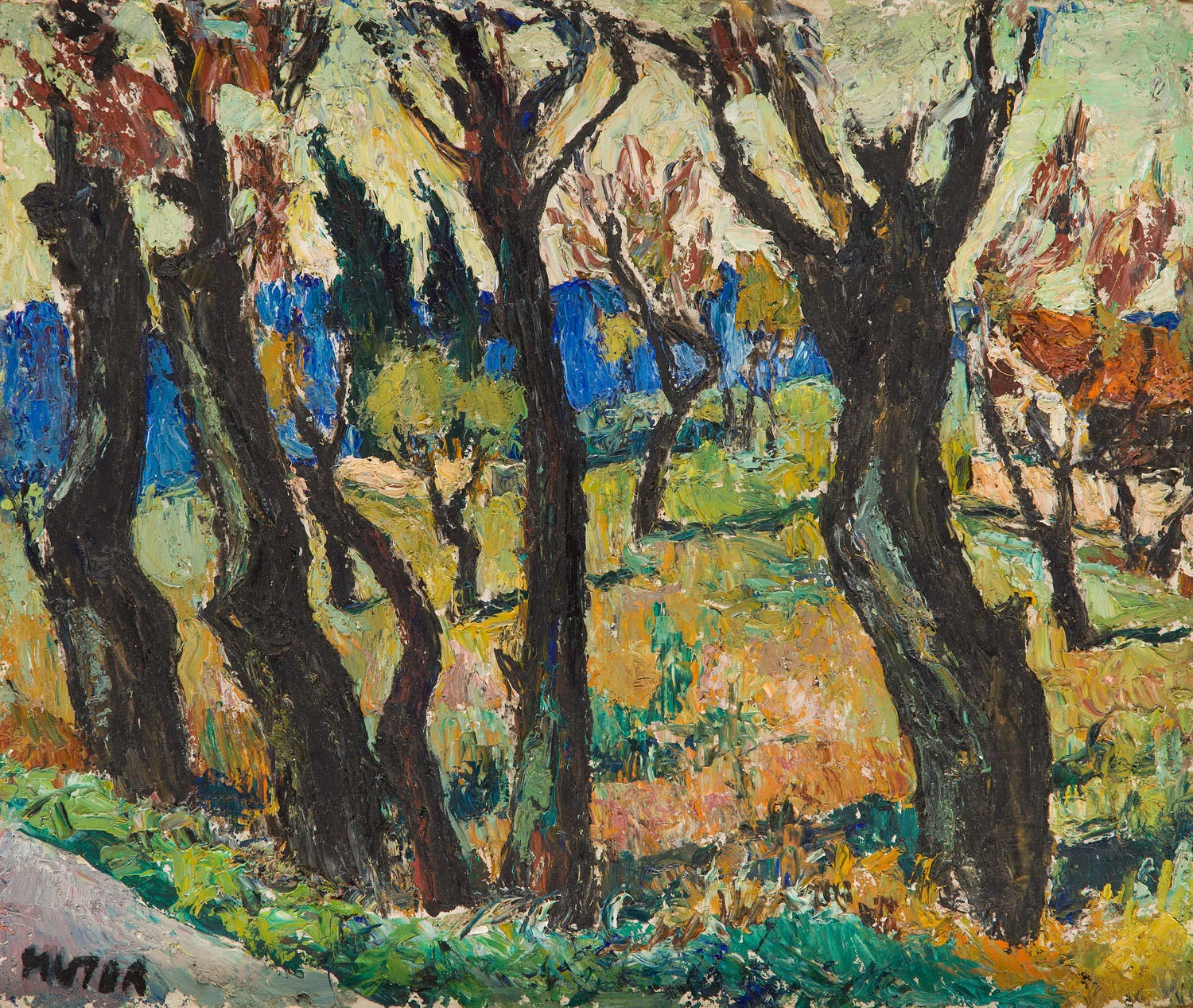
We'd like to introduce you to such great Polish artists as Olga Boznańska, Anna Bilińska, and Mela Muter. For a long time, the latter creator unfairly remained in the shadow of other artists. Muter was an exceptional painter, and her artistic achievements can be compared to those of other world-renowned artists. She painted portraits, still life, as well as landscapes, which in particular display her artistic sensitivity. Our auction "Art Outlet. 19th century and Modern Art" includes two diverse landscapes by the artist, dating from the late period of her career. In many respects, the 1940s and 1950s were very special for Melania Mutermilch. During World War II, she sought refuge in the south of France. Initially, she found it in Villeneuve-lès-Avignon. Later, the artist relocated to the city's heart, where she set up her studio near the famous Saint-Bénézet bridge. She made many paintings of the view from her windows. Surprisingly, this period of terror was also a period of intense artistic development for Muter. The artist continuously searched for new formal solutions, frequently depicting Avignon and its environs in her landscapes. Muter also painted incredible, even mystical, scenes on religious themes, set against the backdrop of the local landscape. Muter continued to paint the city and its environs long after the war, which she managed to survive; the compositions featured in our auction were created at that time. The first depicts Avignon's charming Old Town. It shows a view of Rue Carreterie with the slender tower of Saint-Augustin's church, with the boulevards running parallel to the Rhone's riverbed, as well as the monumental basilica of Saint-Pierre, one of the city's most important temples, which frequently recurs in Muter's art. The second painting is quite different. The landscape with trees is likely reminiscent of one of the trips to the south of France, most probably near Avignon.
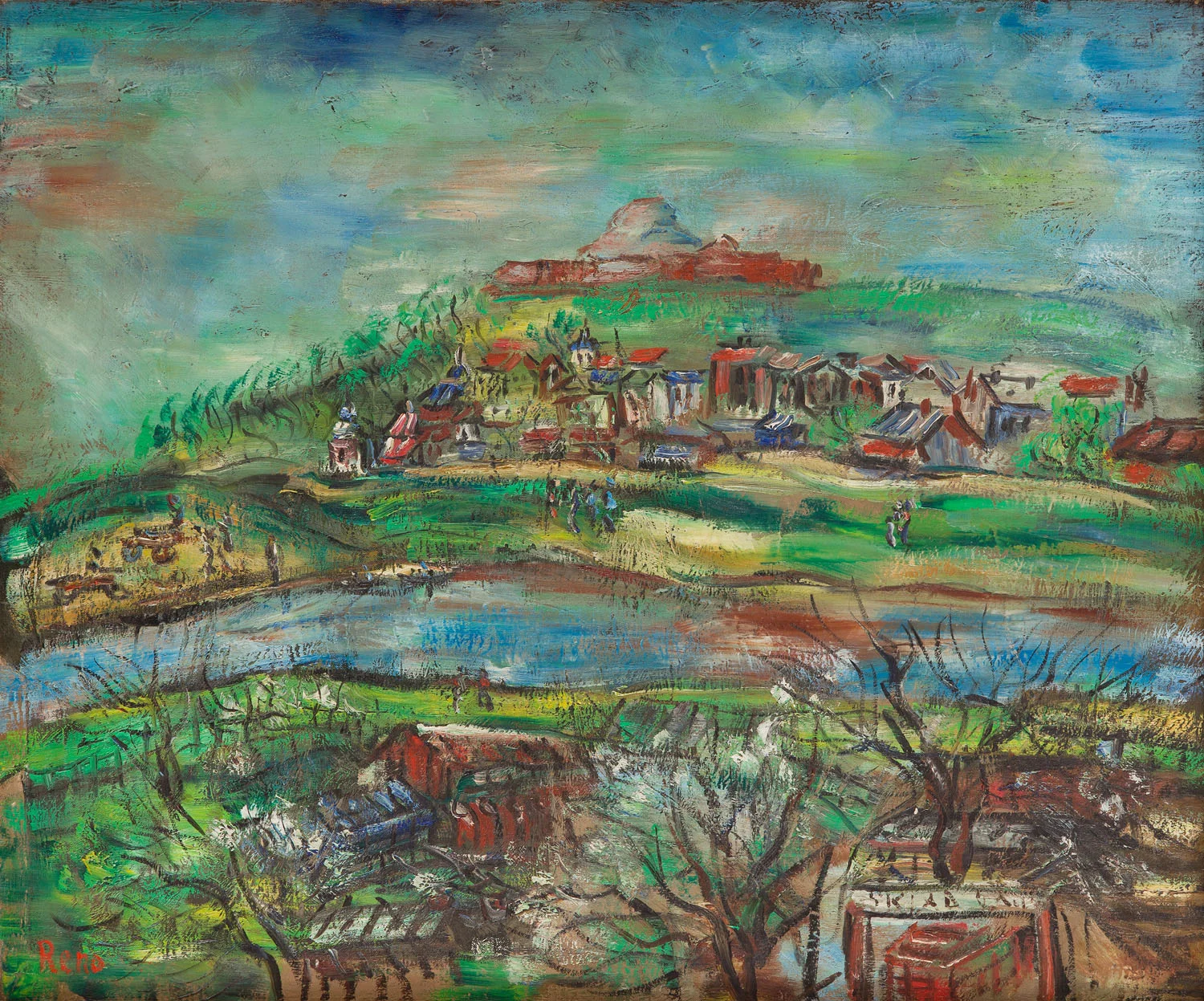
Irena Hassenberg is another painter who is closely associated with the École de Paris. Her attachment to Paris is so strong that it extends far beyond the realm of art. Hassenberg had lived in Paris since 1907, and in 1926 she obtained French citizenship. Her travels, however, were not limited to Europe. Although the artist is best known for her views of Paris, she also painted landscapes of other cities, including New York, which she visited in 1925. Nonetheless, Poland played a significant role in the artist's work, as exemplified by the unique Krakow landscape included in the auction offer. The canvas titled "Vistula River in Cracow" is an iconic depiction of the city of Krak, the legendary Polish ruler. In the background of the painting, we see an expressive image of the Kościuszko Mound, which is located in Zwierzyniec, a neighborhood in Krakow. In the foreground, there are small buildings, with the Vistula, the queen of Polish rivers, meandering between them. The work's history also contributes to its unique character. The canvas debuted at the Paris Autumn Salon in 1949. It later became part of Henri Adam Braun's collection, a well-known local art critic and collector.
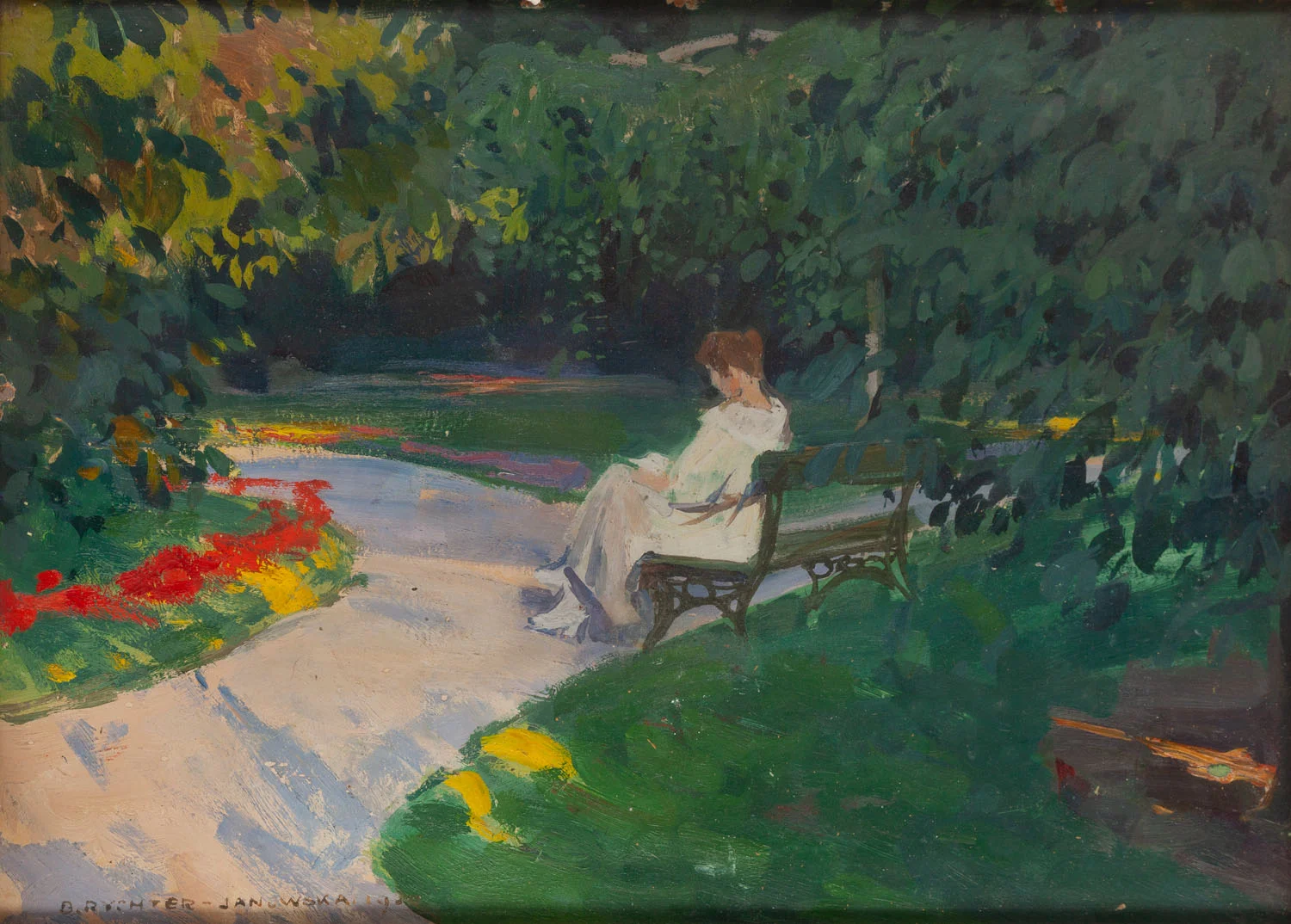
Another Polish painter, Bronisawa Rychter-Janowska, takes a completely different approach in her work. Apart from painting the reminiscences of her Mediterranean voyages, Rychter-Janowska's art focuses on Polish culture and tradition. The most common motifs in her paintings are charming manors and palaces of the Polish nobility; atmospheric salon interiors; and sensitive landscapes. Two of the artist's works will go up for auction on 10 February. One of them is a lyrical view of a park. In this work, Rychter-Janowska depicted an ephemeral figure of a woman in a white dress, engrossed in her book. She is completely immersed in the ubiquitous lush greenery, and the painting undoubtedly presents the hot summer season to the full. The painter, much like an experienced Impressionist, made use of color by introducing light reflections and "throwing" purple-blue shadows on the ground. The artist's second work is also very noteworthy. The small painting "Bureau," also known as the "White Living Room" for the contemporary, is unquestionably one of Rychter-Janowska's early works. On the back of the work, there are still all three exhibition labels, which provide a wealth of information about its history. "Bureau" is undoubtedly a significant work in Rychter-Janowska's oeuvre. It was presented to a wider audience at the Society for the Encouragement of Fine Arts in Polish Kingdom in Warsaw, as well as the Krakow and Lviv Societies of Friends of Fine Arts. The topic of the work is also unique. Placed in the room's corner, the eponymous furniture, along with the surrounding objects, is a memory of the past - indeed, the painting presents the historical interiors of the Mańkowski Palace in Krakow. Together with the painting, other views presenting the interiors of this monumental building were included in the exhibition that took place at the Society for the Encouragement of Fine Arts in the Polish Kingdom in Warsaw in 1907. We can thus assume that the artist created something like an illustrative series at the turn of the twentieth century.
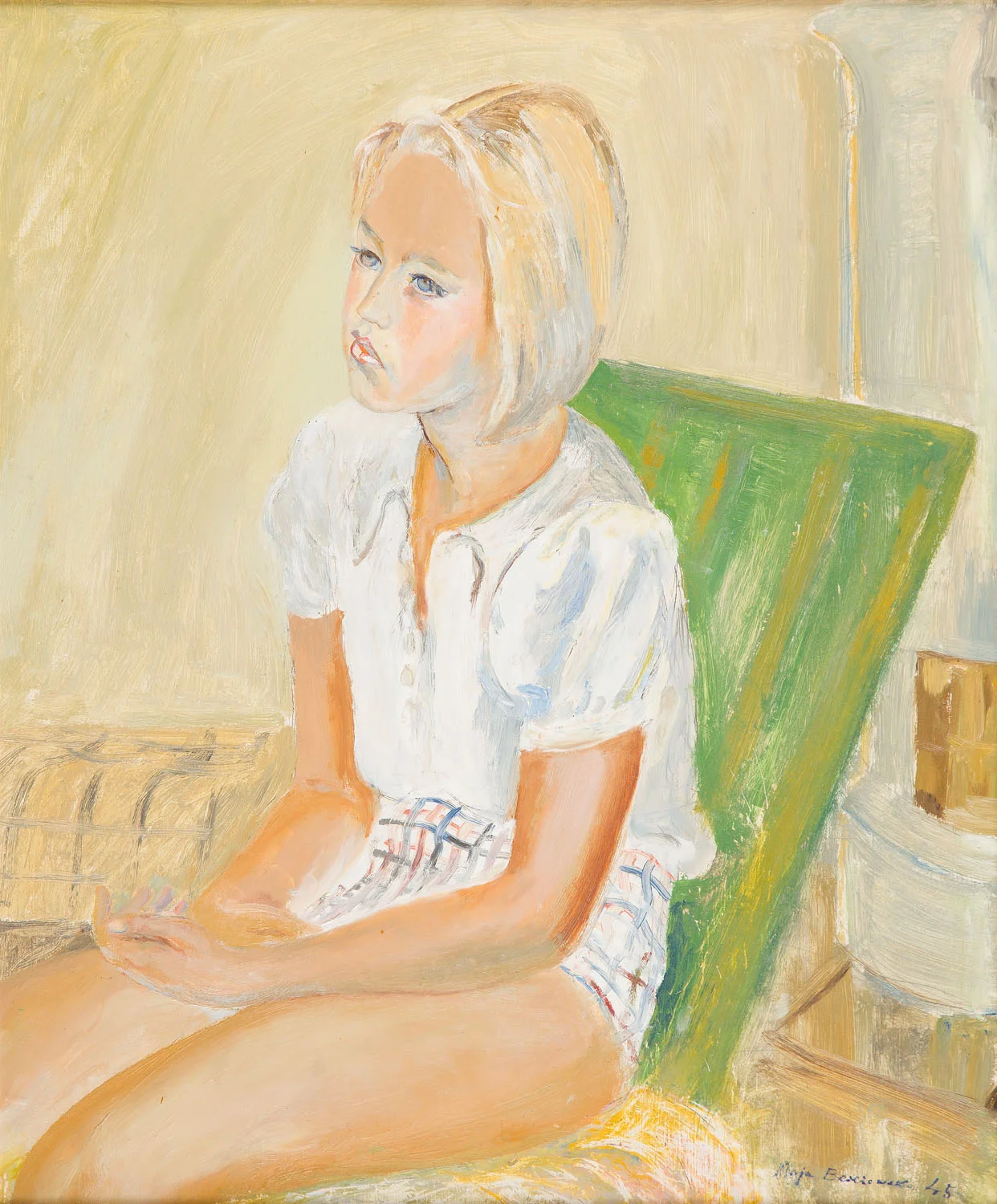
Our auction also includes a remarkable painting by Maja Berezowska. Works by this well-known, popular cartoonist and watercolorist appear fairly frequently on the auction market. Her works with erotic and satirical overtones are popular among collectors. This time, however, we present you with a one-of-a-kind work, as it was created in oil. Few such paintings by Berezowska have been auctioned so far, which is why this work is a major sensation. The atmospheric image of a fair-haired girl in a white blouse was created in 1945. The time and place of creating the painting are significant because, at that time, Berezowska was on convalescence in Sweden after her imprisonment in the Ravensbrück concentration camp. She was sentenced for, as they called it at the time, "disrespecting Hitler." In the 1930s, she made a series of his cartoons, which were published in the Parisian magazine "Le Figaro". She was a very active artist during her time in Sweden and painted a lot of portraits of the local people she met. The artist even presented her works at local exhibitions. An experienced eye will notice a slightly blurred inscription on the back of the painting. It tells us the name of the city, Huskvarna, as well as the street and the house number, which could be one of the artist's Swedish addresses.