
WITKACY AND BIRULA: THE ARTIST'S FRIENDSHIP WITH A DOCTOR
Weronika Daniluk
"Zakopane was once called" the spiritual capital of Poland ". We would call it differently, a general factory of a specific, in fact purely Polish drug, Zakopianina , the psycho-chemical composition of which we are trying to analyse, possibly for the first time ever. The man with the so-called "Zakopane problems" becomes incomprehensible to the mental "flail" from the valleys. He loses his old friends; he does not recognize women on the "other side of the rope" (...) the most beautiful woman becomes incomprehensible to him in her erotic manifestations when she has not undergone training in Zakopane. For what is even the wildest perversion without adding to it purely Zakopane eroticism, without a few strong doses of Zakopanina? "
S.I. Witkiewicz, Demonizm Zakopanego, "Echo Tatrzańskie", 1919, series 19-20; for: D. Folga- Januszewska, T. Jabłońska, Zakopane w czasach Rafała Malczewskiego, Olszanica 2006, s. 2, p. 34.
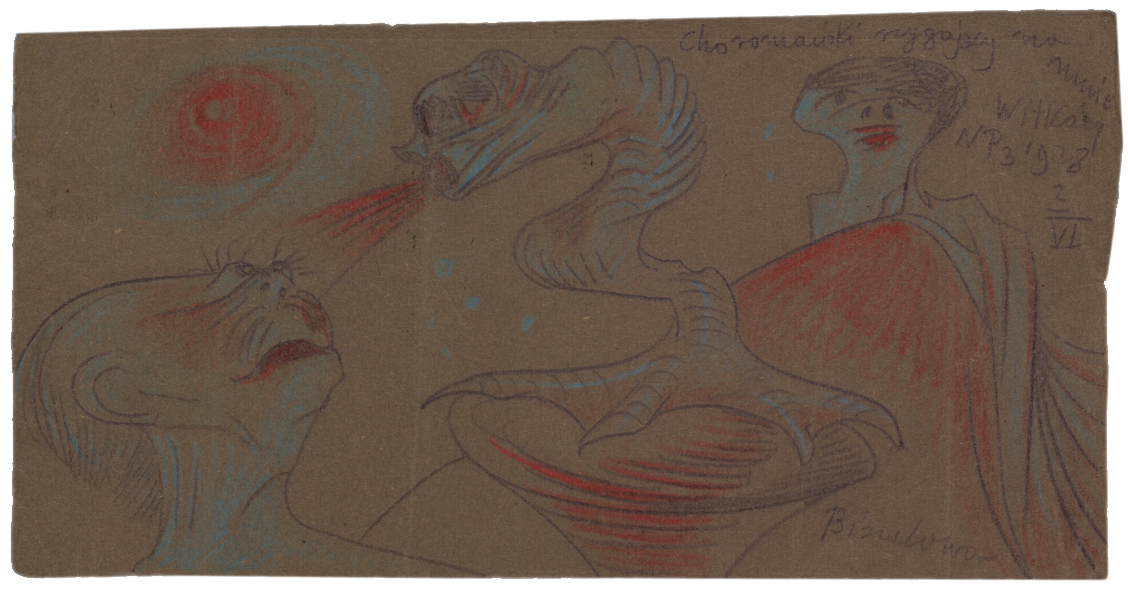
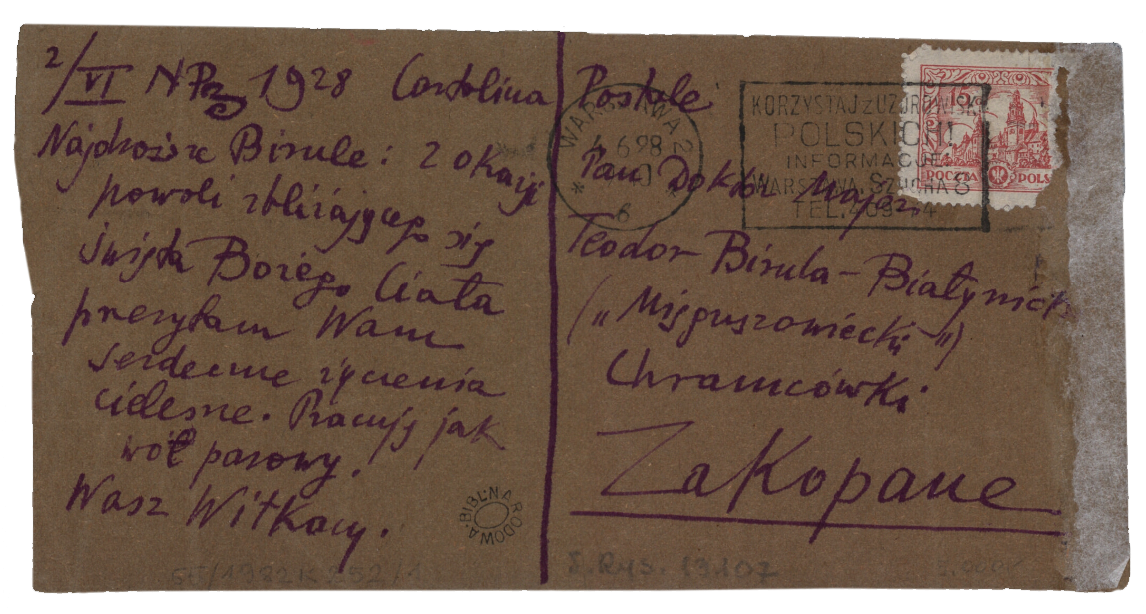
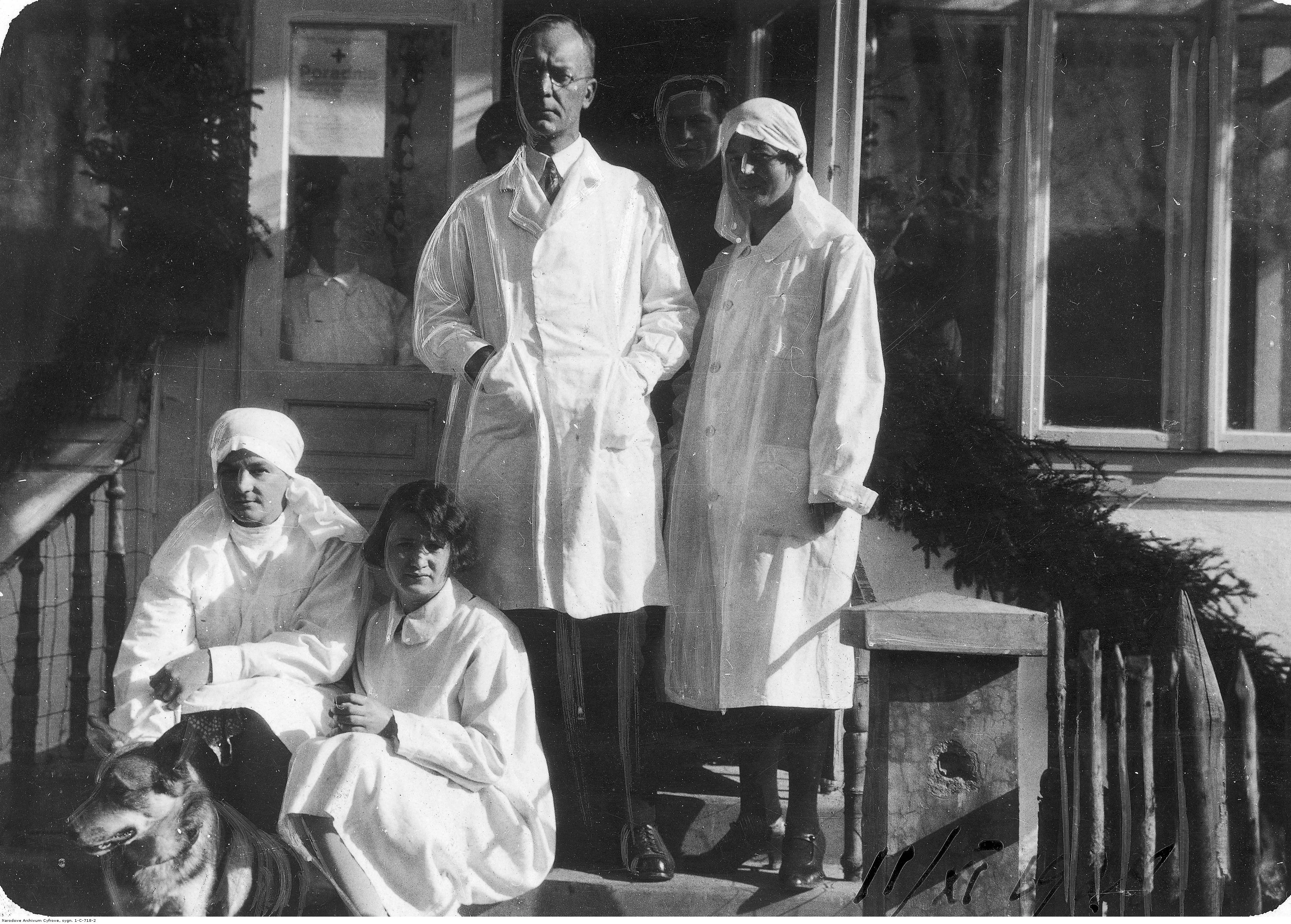
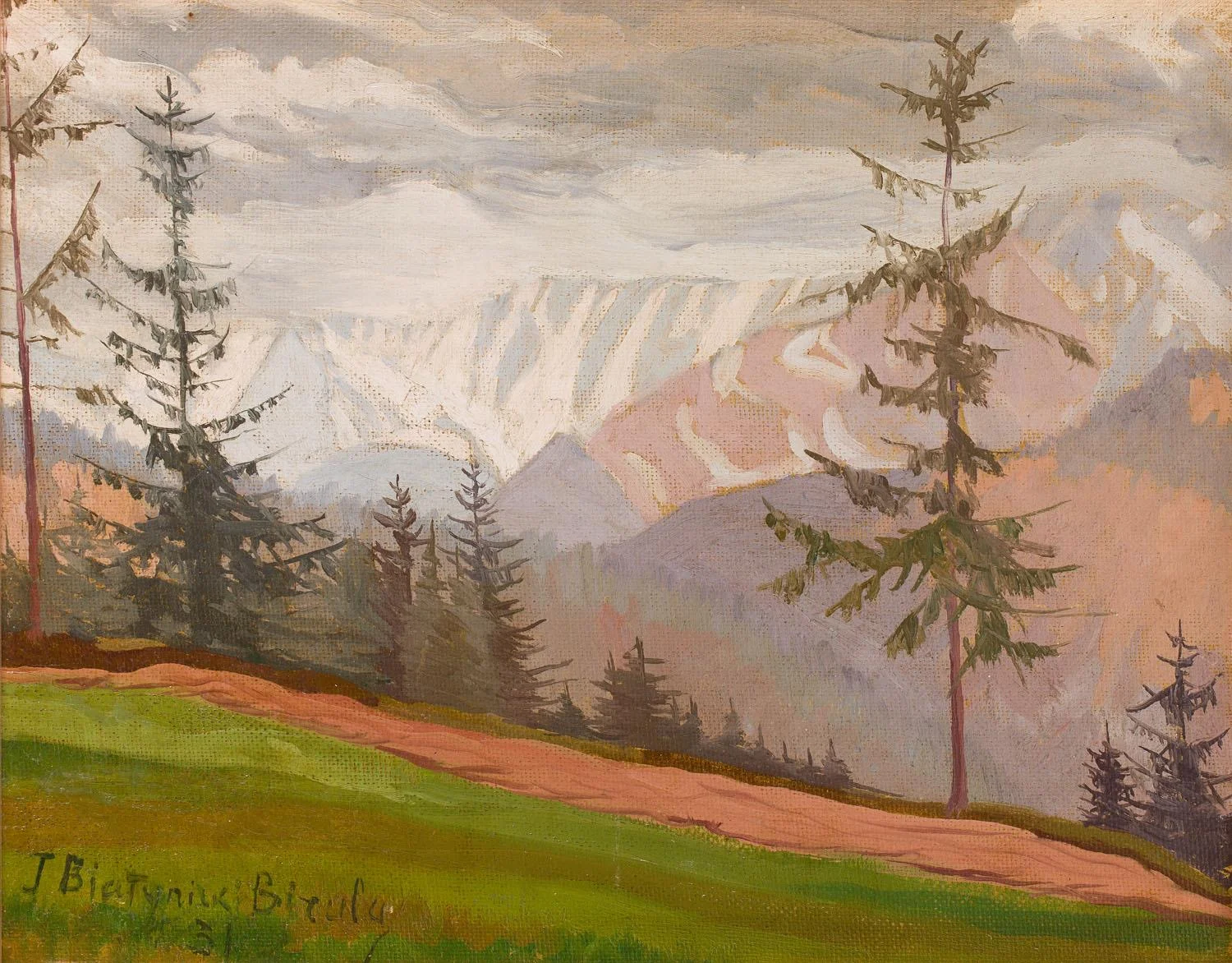
Witkacy is by far the greatest personality of the interwar Zakopane. An intellectual painter, writer and thinker had a scandalous personality. He loved to shock, which earned him the nickname "the madman from Krupówki" (D. Folga-Januszewska, T. Jabłońska, Zakopane in the times of Rafał Malczewski, Olszanica 2006, vol. 2, p. 41). According to an anecdote, he was able to receive guests while taking a bath (Ibid., P. 44). He was friends with the radiologist amatour painter ̶ Teodor Białynicki-Birula. During World War I, Teodor served as a military doctor, first in the Russian army and then in the Polish Army. After the war, he managed a sanatorium in Zakopane, and then in Chodzież. He was also involved in painting. He mainly painted landscapes. Under his supervision, Witkacy experimented with psychoactive substances (Ibid., P. 40). We present the works of both men at our auction.
The doctor invited friends to his Zakopane house for social meetings, known as orgies, during which alcohol and drugs were consumed. Birula obtained drugs and looked after participants under the influance, for which, as part of the fee, he received portraits painted by Witkacy. Thanks to this, he has accumulated a considerable collection of them.According to the handwritten catalog in the National Library, his collection consisted of over 300 works
However, the roles were sometimes reversed. According to the protocol of June 27/28, 1929, it was Witkacy who acted as the "master of ceremonies", and Birula and the painter Janusz Kotarbiński were the ones under the influance. On January 27, 1930 Witkacy organized a collective exhibition at the "Poraj" hotel, at which, according to the information on the invitation, "series of psychic works performed in a trance" were exhibited (Irena Jakimowicz, Witkacy. Painter, Warsaw 1985, p. 67).
On his portraits, Witkacy marked the substance under the influence of which he was being created. It could be drugs, cigarettes, but also beer, or ... tea, in which he believed the properties of brightening the work of the mind. Sometimes he even served a specific kind of tea. It was either a Chinese variety or a Darjeeling (I. Jakimowicz, Witkacy. Malarz, Warsaw 1985, p. 65). He also created under the influence of "higher order" drugs (including mescaline). These works were closest to the concept of Pure Form he developed.
We encourage you to try to decipher the markings on the Witkacy portraits presented at our auction. We refer at the same time to position 9 in the catalog - Julia Sokołowska's portrait, where in the description of the painting all the notes made by the artist were explained.