
THE DWARF REVOLUTION
The Orange Alternative posters (1987-1988)
Dorota Monkiewicz
Wrocław is one of the Polish cities where wall art developed incredibly well. This can be observed looking at the Outdoor Art festival - ‘Out of Something' - organised biennially at the BWA Awangarda city gallery since 2008.
The Wrocław murals tradition has a much longer history - it goes back to the 1980s and the martial law period. It was when Waldemar ‘The Major' Frydrych - a history and art history student at the University of Wrocław - got the idea of drawing dwarfs on the painted-over political slogans on the walls. That way, the slogans such as ‘Solidarność fights', ‘The winter is yours, but the spring is ours', or ‘TVP lies', which were covered up by building administrators, were replaced with the images of smiling dwarfs. Even though technically politically neutral, they brought attention to whatever they were covering up.
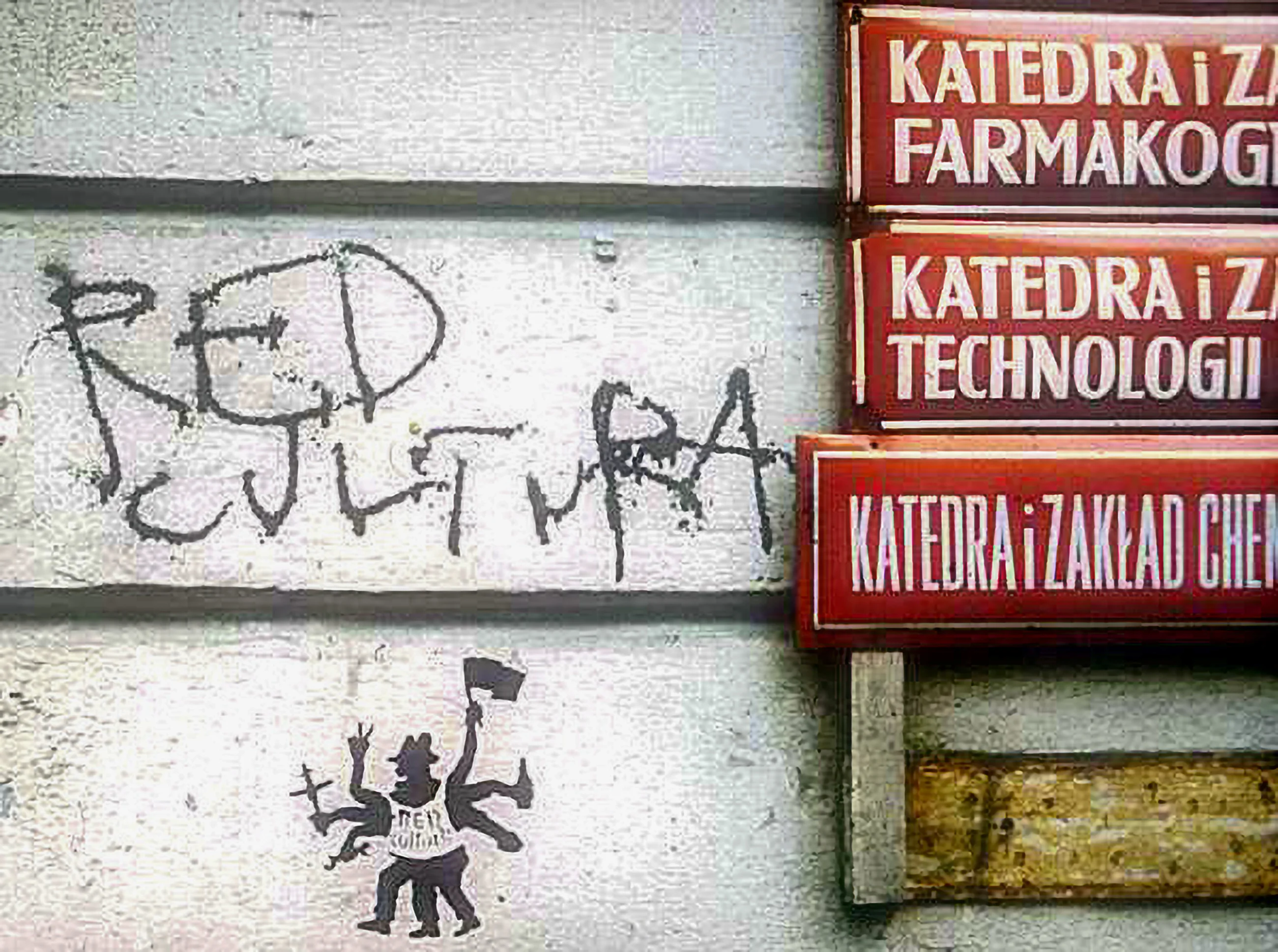
This kind of tactic also referred to as ‘surrealist socialism' by ‘The Major' Frydrych, became characteristic for the activities of the ‘Orange Alternative' inaugurated in 1987. It began with the ‘Dwarf Revolution' happening taking place on the 1st of June - on ‘Children's Day'. It was attended by groups of young people in red hats. In the autumn of 1987, other happenings took place, such as ‘Who's Afraid of the Toilet Paper', ‘Militiaman's Day' alongside the ‘flower for a militiaman' undertaking, ‘The October Revolution Holiday' (6/11/1987; on the eve of the holiday celebrated on November 7th in socialist countries). In December, another happening took place - ‘Santa on the Świdnicka Street'. Next year, in May, among the atmosphere of the declining People's Republic of Poland regime, a crowded Orange Alternative ‘carnival' was organised. Its participants carried banners with the following slogans: ‘There is no freedom without dwarfs', ‘Gargamel Out', or ‘Kingsize For All' (referencing the title of a Julisz Machulski film). Each time, the happening participants were caught by the militia and brought into commands. In the face of the powerlessness of the then serious political opposition, the Orange Alternative opted for a strategy of ridiculing the absurdity of the police state, i.e. Poland in the 1980s. It was most visible during the happening organised for the October Revolution anniversary. Some of the participants were carrying cardboard mockups of tankettes and were dressed as Red Army volunteers in characteristic pointed hats with red stars on their foreheads. The rest was asked by the organisers to come dressed in the revolution colours (in other words, in red) or, as a last resort, to bring grilled cheese sandwiches with red ketchup on top. For that reason, the militiamen would call through loudspeakers ‘catch the Reds' which was funny as that was the name used by the people to call the regime supporters.
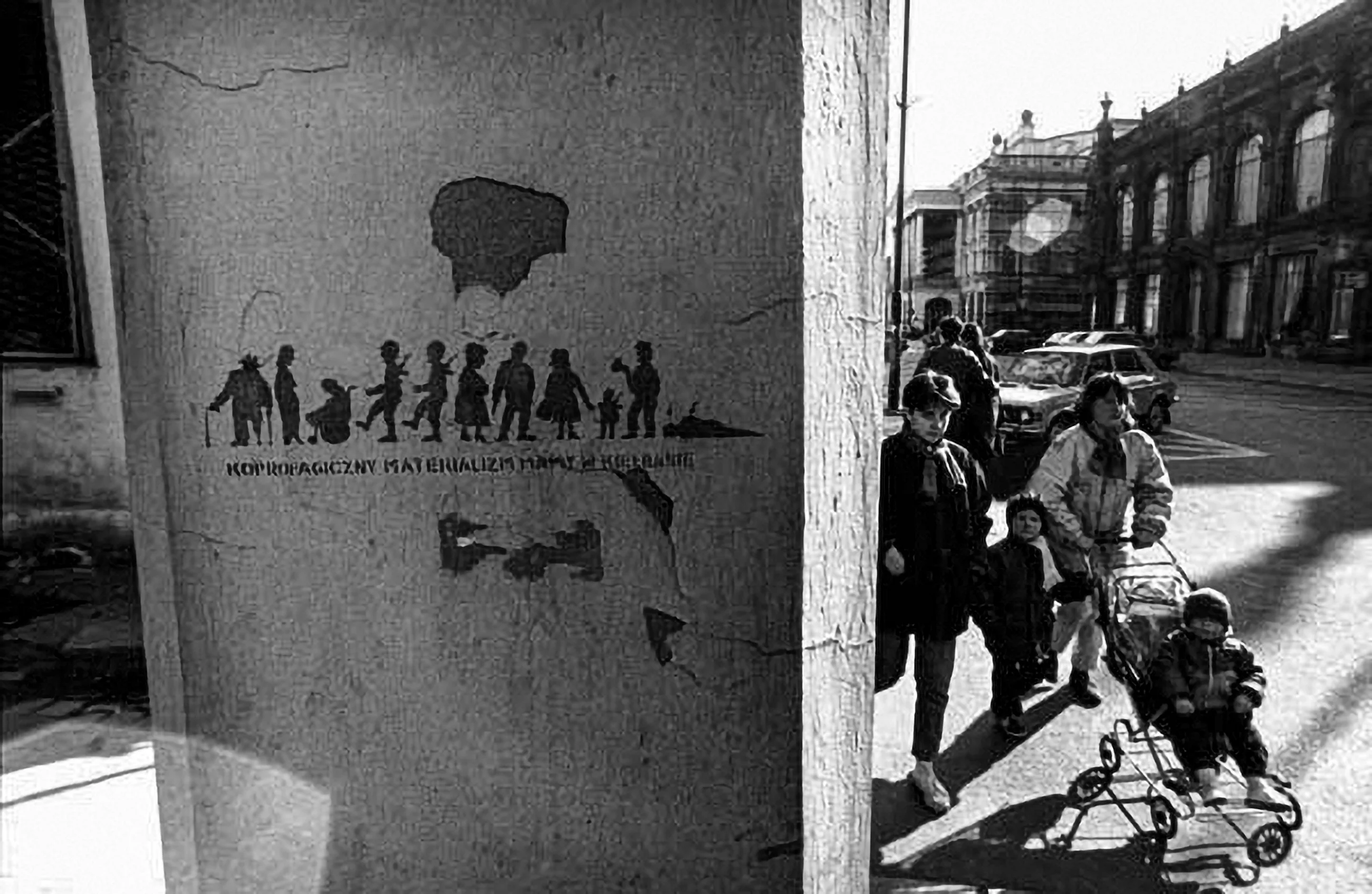
The liveliest anecdote concerned a grilled cheese sandwich stand on Świdnicka Street. The militiamen ordered a woman to close down the stand, so she hung up a notice that she had run out of buns. This event did not come as surprising at the times. ‘Just the ketchup then, please' - the next customer ordered. He was immediately escorted to a police car.
The Orange Alternative happenings took the form of contemporary flash mobs; the participants were called to meet ‘by the clock on Świdnicka Street' thanks to posters placed around the city. Jacek ‘Pontoon' Jankowski was the posters' author. Back then, he was a leader of a legendary ‘Kormorany' music band, and later in the 1990s, he was a ‘Grupa LUXUS' band member. The posters were not printed, instead, they were reproduced from templates by hand. Pontoon created the poster for the first Orange Alternative happening, ‘The Dwarf Revolution' (1st June 1987), as well as the ‘October Revolution' (Revolüce, 6th June 1987). His templates were also imprinted on the building walls. Today, they form part of the history of Polish art of the 1980s.