
NEO-EXPRESSIONISM AND MUSIC
Synesthesia and all other phenomena combining visual arts and music are nothing new nowadays. Tunes have always inspired visual artists, just as images have constituted a starting point for creating music. These two fields of art freely interpenetrate and complement each other.
The artists associated with neo-expressionism were particularly interesting. They very often experimented in the area of music, an interesting example of which is the art of AR Penck, a neo-expressionist of Swiss origin. He developed his own original technique of creating pictures using the so-called stick-figures, which resembled cave paintings. The artist failed to enroll in several art schools in the former German Democratic Republic and as a result decided to deal with art on his own. In 1957, he met the artist George Baselitz, who became a friend and significant source of inspiration for him.
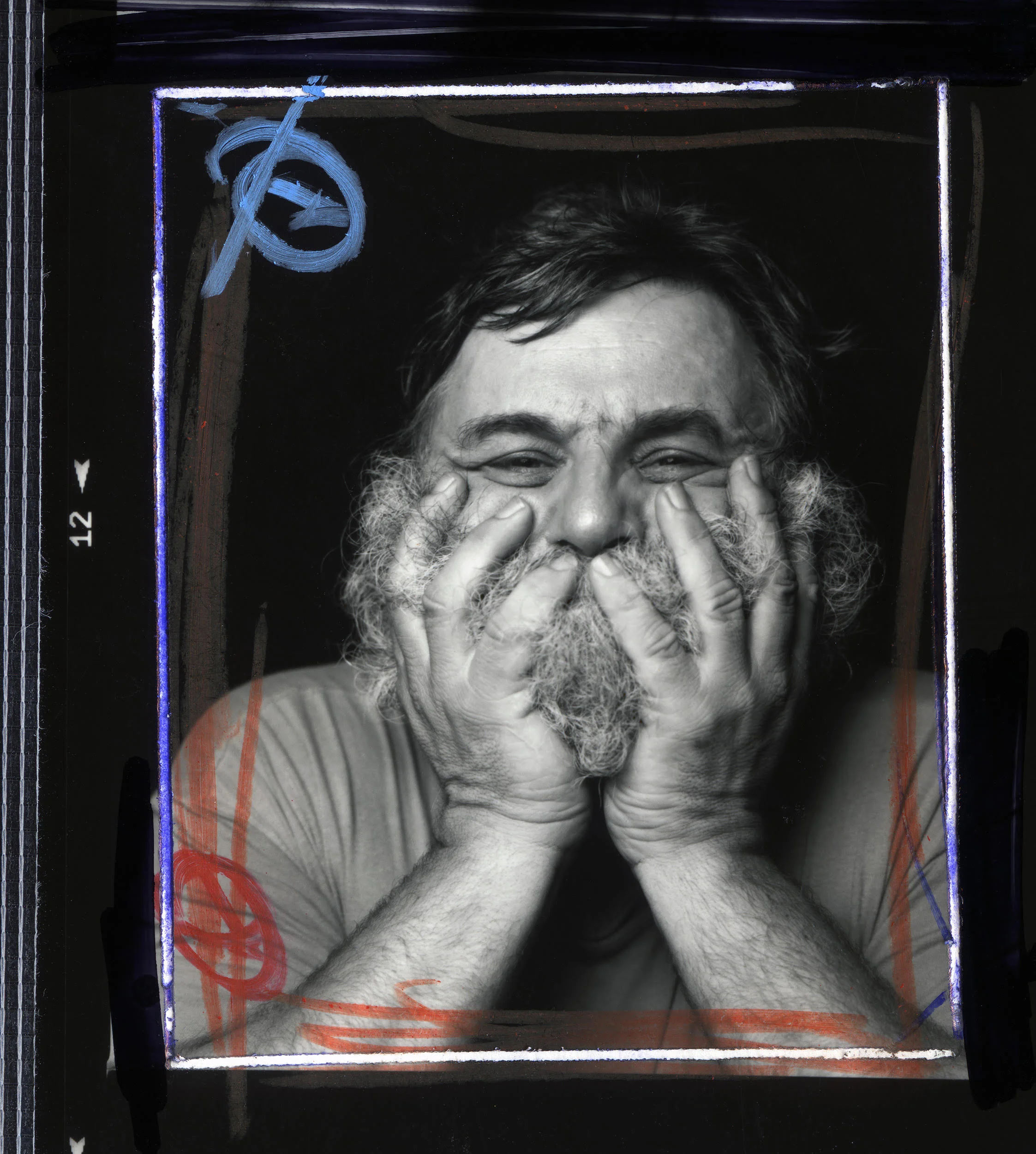
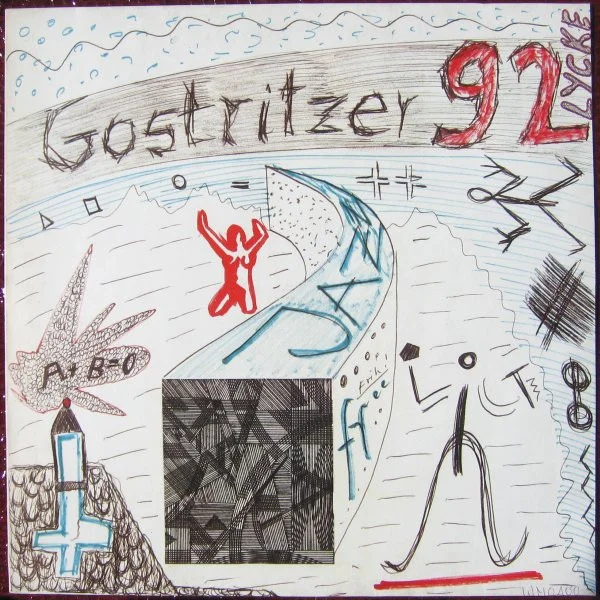
In the 1960s, AR Penck developed the characteristic stick figures and uniform signs and symbols that resembled prehistoric rock paintings. The artist experimented with unusual sculptural materials, e.g. cardboard boxes, empty plastic bottles, and other objects he found. In the 1970s, the artist lived in West Berlin. His art was under constant surveillance of the communist government, which is why he used several pseudonyms. Multiple identities facilitated exhibiting works outside the GDR. In 1969, Penck smuggled his works to Cologne for a solo exhibition in the gallery of Michael Werner, who became his main supporter. Although Penck lived in East Berlin, he regularly exhibited his works in West Germany, mainly owing to Werner's support. At the end of the seventies, the artist began to work with wood, creating sculptures inspired by totem and tribal art. A few years later, he began to make use of bronze and iron in his sculptures. In addition to visual art, he was absorbed in creating music and regularly made performances. In 1979, he released his first album titled Gostritzer 92. The concerts accompanied exhibition openings, and his music was, just like the wild art, unbridled and subject to constant transformation.
When it comes to the Polish art scene, Marek Kamieński is an artist whose art from the 1980s had strong affiliations with German and American neo-expressionism. He is said to be one of the most popular "Polish wild men", not only because of his style but also due to the rampage that accompanied his exhibitions. Kamieński was a producer and occasionally sang for the band Zilch, with which he performed at the legendary rock festival in Jarocin. The recordings of these performances have been remastered and can be now found in the "Best of Jarocin" compilation. Kamieński's exhibitions were turbulent. They provoked controversy due to their musical setting, the themes of the paintings, as well as videos, which featured, among others, live playboy girls. Kamieński said about his music, "We did crossovers, that is, we mixed conventions and musical styles, but at that time it did not have a name. It was hardcore punk, very noisy, played together with fragments of contemporary music, that is, most often vocalism, resembling Schönberg, or violin improvisations in Weber's style.". Kamieński's band was called Zilch, which is slang for "zero". It was a reference to the conversation held between Lennon and MacCartney, in which John said to Paul, "You travel around the world with your guitar, but it's not important – zilch. I bake bread and take care of my son, that's something".
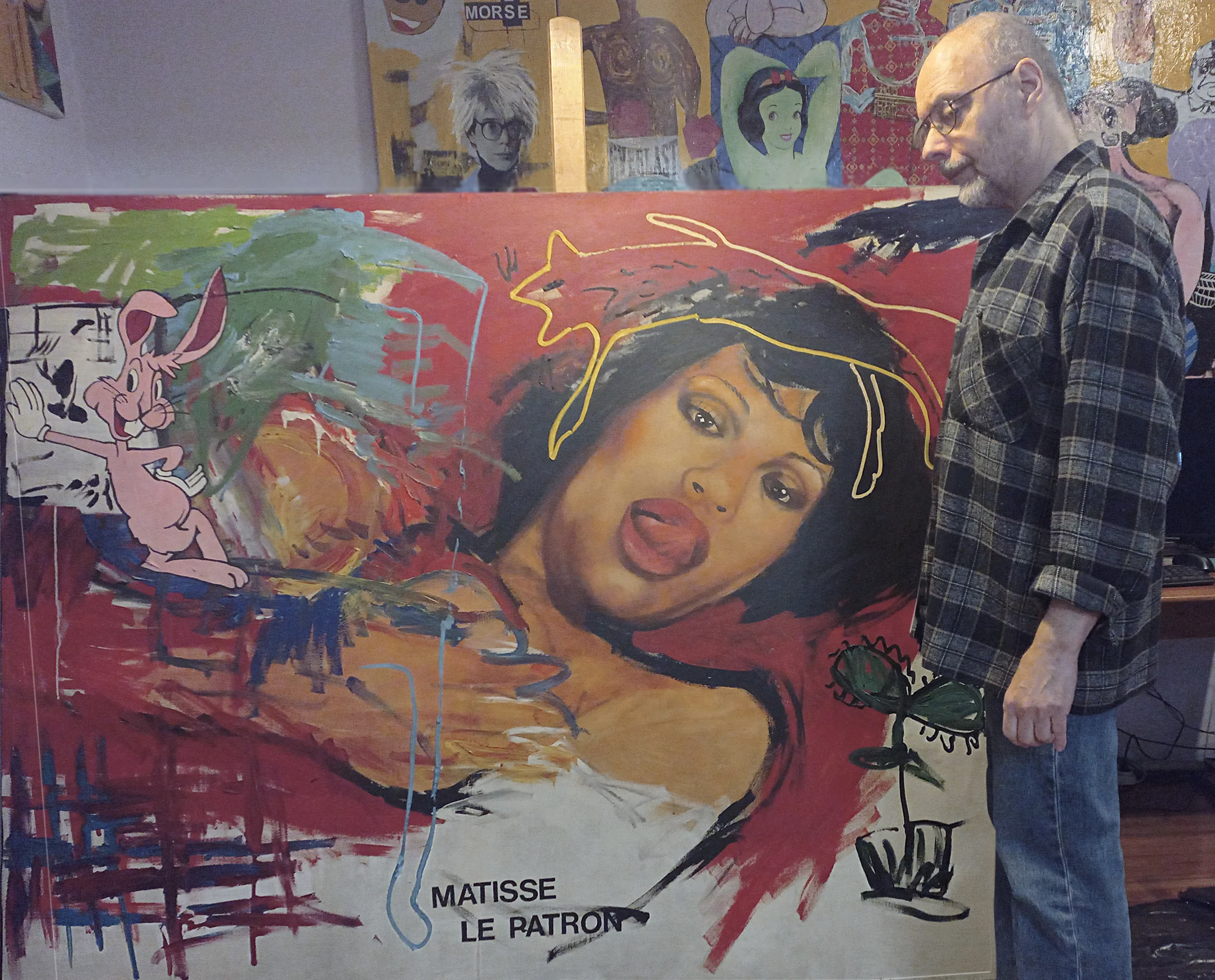
The band was active for 5 years, playing punk live with the accompaniment of tape recordings. Kamieński equated neo-expressionism in painting and punk rock music,
"I believe that neo-expressionism was like punk rock music, which was also an ideology. The music itself, limited its field of activity to proverbial "three chords" in order to attain such a hypostasis. However, if the music came into touch with an authentic talent, it was able to create works such as 'Der Übergang' by AR Penck, 'Grillo' by Basquiat, or Polish 'Czaszka Hitlera', and 'Spacer z psem' by Zdzisław Nitka, as well as "London Calling" by The Clash"
(Untitled. Interview with Marek Kamieński by Krzysztof Stanisławski, [in:] Nowa ekspresja. 20 lat. Vol 2. [exhibition catalog] The Contemporary Art Gallery, the Art Exhibition Office in Olsztyn, Olsztyn 2009, p. 96).
"'Trzy kaczorki z jedną nerką' (‘Three Little Drakes with One Kidney')
is the title of a song recorded on a tape and the name of a punk rock band. I played the song with the band Zilch at the Jarocin Music Festival almost exactly in the middle of the 1980s. It consisted of several parts – each maintained in a different aesthetics – starting with opera singing, through bruitism, elements of violin used by Krzysztof Penderecki in ‘Threnody for the Victims of Hiroshima', ending with fragments called "cold wave" at that time, and everything was intertwined with hardcore punk blasts. Apparently, in a foreign language, in cases when we do not have to comply with the conventions, it is easier for us to say what is difficult to express in our own language - the language of painting.
It is because we recall a decade, which in at least its first half, was dominated by various languages of expressionism. And I have never been a ‘full-time' expressionist, like for example Wiesław Obrzydowski, because in order to be one, you simply have to be born that way.
Because for me, expressionism is the ‘salt of painting' and also one of the forces of nature – like a flame that never goes out. The art of a natural-born expressionist requires pristine condition and tenacity of cartoon heroes, as well as perseverance on the battlefield – this, in turn, is an imperative experienced by both lyric subjects of the ‘Song of the Old Lovers' by Jacques Brel. I am different, that's why I perceive that decade, at least the second half of it, as the period (each period has its own duration) of my own private postmodernism. After all, de Kooning was not always an abstractionist in his paintings, and Rothko was rarely an expressionist.".
Marek Dariusz Kamieński