
Teresa Pągowska: A poet of color
In 1961, Teresa Pągowska was included in the informal canon of post-war Polish art by Peter Selz through her participation in the "Fifteen Polish Painters" exhibition at the Museum of Modern Art in New York. More than 60 years later, her work continues to captivate, with her world of sensitive gestures and personal stories in her paintings being rediscovered anew.
Teresa Pągowska's painting invites viewers into an intimate world of her own explorations, observations, and thoughts. As she noted: "Painting can be 'crazy,' it has the right to touch deeply hidden flashes of the subconscious, it can satisfy more intimate longings-if one can express it that way and if it is even possible to speak about painting in such terms" (Teresa Pągowska, undated manuscript from the artist's family archive). The culmination of the deeply personal dimension of her work was the creation of small-format "portraits of objects and animals" beginning in 1995.
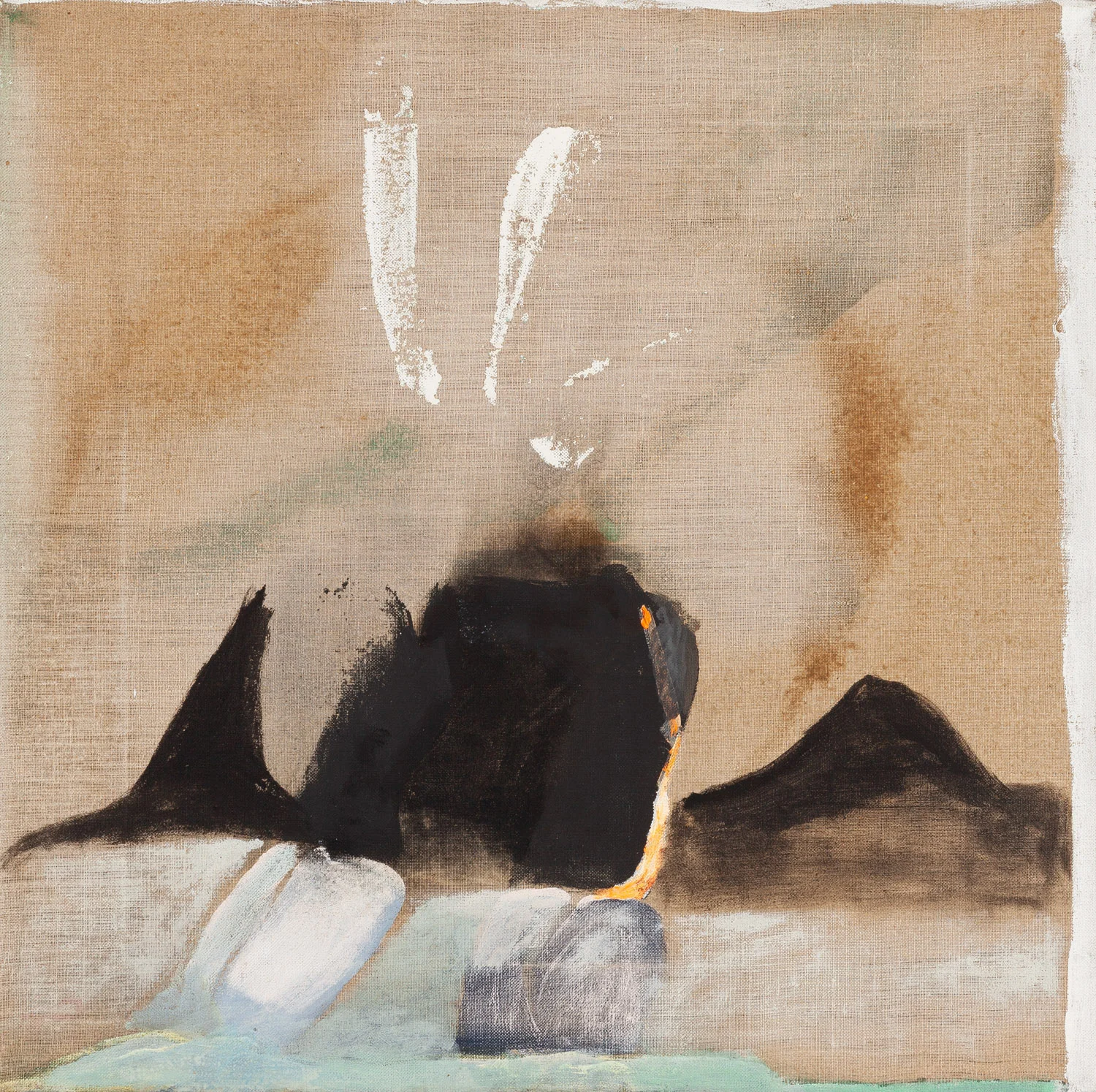
Pągowska's unique way of experiencing real phenomena was influenced by her work and friendship with Piotr Potworowski, with whom she rejected the realistic specifics of her surrealistic vision and introduced a painterly sign with purely artistic impact. Although she drew from the experiences of masters she encountered while developing her own artistic language-such as Wacław Taranczewski and Eustachy Wasilkowski-she ultimately found her own, highly individual creative stance and sensitivity to color. By using the natural texture and color of unprimed canvas, she created painterly signs within it, working with just a few brushstrokes.
She painted constantly, despite daily obligations, and each of her paintings became a self-portrait of the artist. Pągowska responded to reality with original intensity, feeling the world more deeply than we generally know it. In this way, she expressed a singular truth and defined art as a sensitive, independent personality. Her painting, comparable to an essay on experiencing the world, is ultimately received with lightness and pleasure, thanks to its refined color combinations. Tadeusz Konwicki already wrote about her distinctive artistic elements, which found their development throughout her entire career, in 1966:
entire career, in 1966: "Her abstracted world of plastic forms contains a sufficient sum of meaningful elements, which, like a drug, stimulate the viewer's imagination, engaging them in co-participation in the creative act. Thus, her painting not only 'soothes the eye,' not only entertains with its autonomous plastic play, but also draws us into the chalk circle of contemporary human dramas"
(Tadeusz Konwicki, introduction to the catalog [in:] Teresa Pągowska. Malarstwo, exhibition catalog, Association of Polish Artists and Designers. Central Bureau of Artistic Exhibitions, Warsaw, 1966, unnumbered).
The color in Pągowska's work remained equally consistent throughout her career, gradually gaining confidence, abandoning the play of aesthetics, seeking asceticism, and making mature choices with each stage of her creative process. In the midst of the anxieties of contemporary life, color served as a tool responding to the experience of reality.