
Monotypes of Jaremianka
"In the times of social realism, Maria Jarema worked as hard as before. In 1951, she changed her painting technique and chose monotyping, which she combined with tempera. This led to far-reaching consequences, because the "marriage" of printmaking and painting required constant improvisations, being a journey into the unknown that does not allow one to predict the presumed final effect."
- Mariusz Hermansdorfer
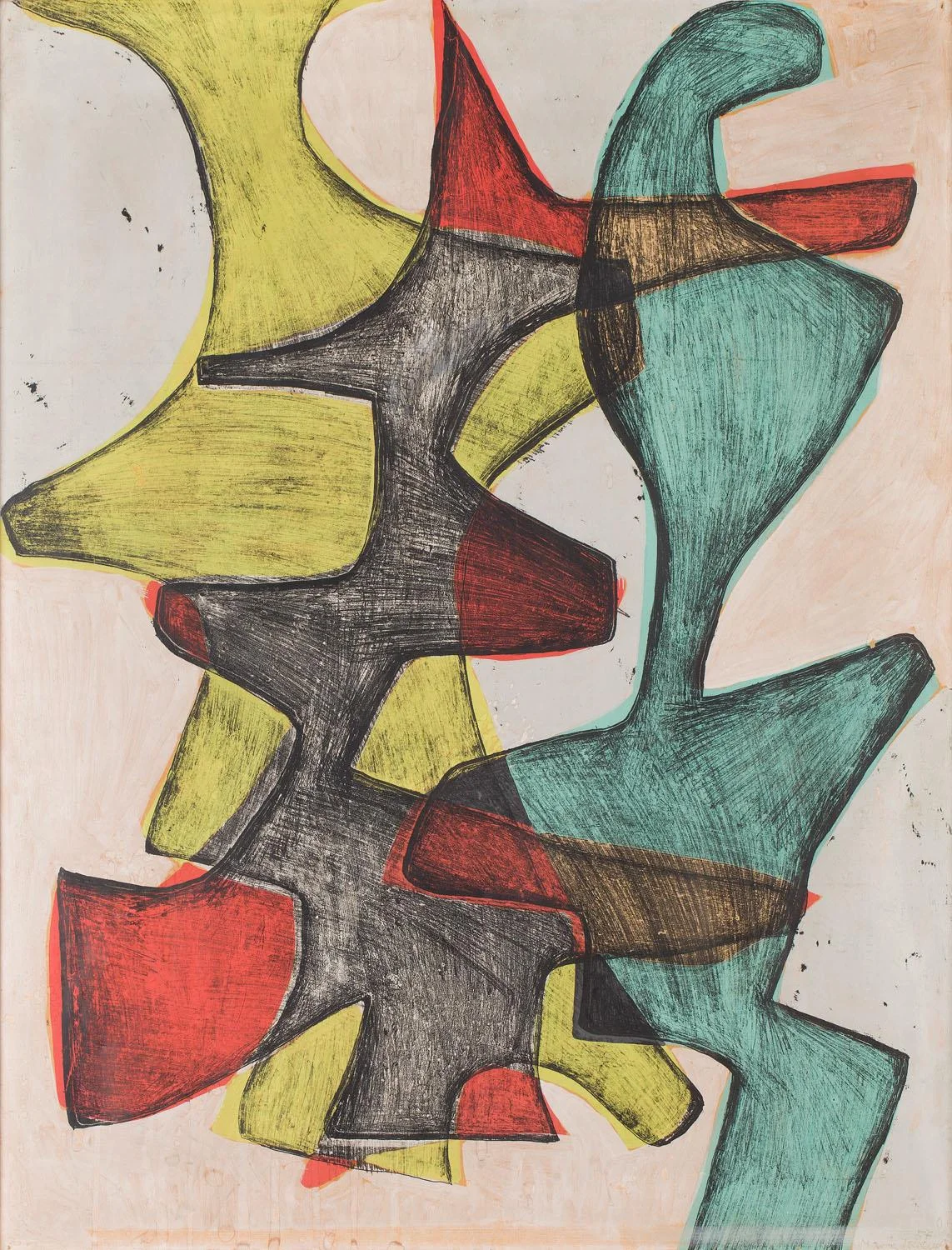
Maria Jarema's, alias Jaremianka, multicolored, rhythmic, and resonant monotypes from the second half of the 1950s are most probably her crowning achievement. The uniqueness of the works is highlighted by the fact that their creation was interrupted by the artist's premature death. Conscious of her incurable disease, Jarema worked even harder, as if afraid that she would not be able to fulfill all her concepts. At that time, she also returned to sculpture, creating, among others, the ascetic "Figure" in 1956. As regards painting, she concentrated on exploring movement and space. In her letter to Tadeusz Kantor, Jarema wrote:
"The basic discovery of contemporary painting is freedom. Not selflessness, not fantasy, nor originality, as they say, 'at all costs'-but the painter's right to reach his own boundaries without limitations. Your own self-this is the most questionable and the least accessible issue for everyone."
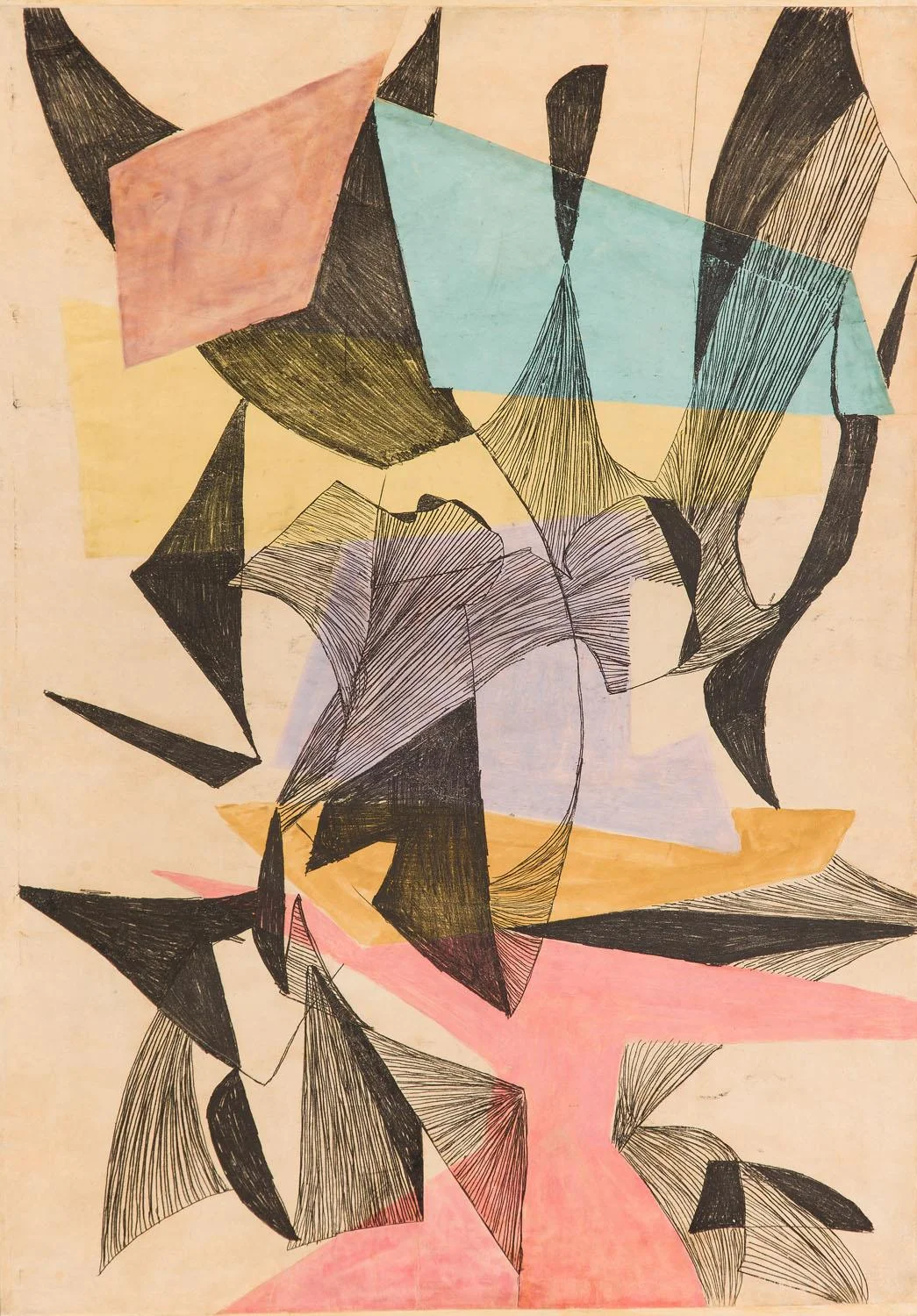
Monotyping held a special place in Maria Jarema's art. This technique, combined with tempera and stratification of grounds, allowed the artist to obtain the impression of depth and movement in her works. She made use of her theatrical and sculptural experience in her monotypes, referring to the poetics of surrealism, dreams, and imagination. In the words of Hermansdorfer:
"The metamorphosis of characters takes place in motion, in time, and in space. The forms converge, and penetrate, they are fluid, multiplied. It is difficult to say with certainty whether we are dealing with many characters or only one, which is additionally presented in different perspectives, changing its place on the paper plane as the actor changes his on the stage. Multiplied heads, lips, eyes, and body outlines are identical and distinct at the same time. They are both normal and submerged. The process of transformation has its rhythm, its strength, and dynamism."
- Mariusz Hermansdorfer, Między realnością i abstrakcją, [in:] Maria Jarema, [ed.] Barbara Ilkosz, Warszawa 1988, p. 8.
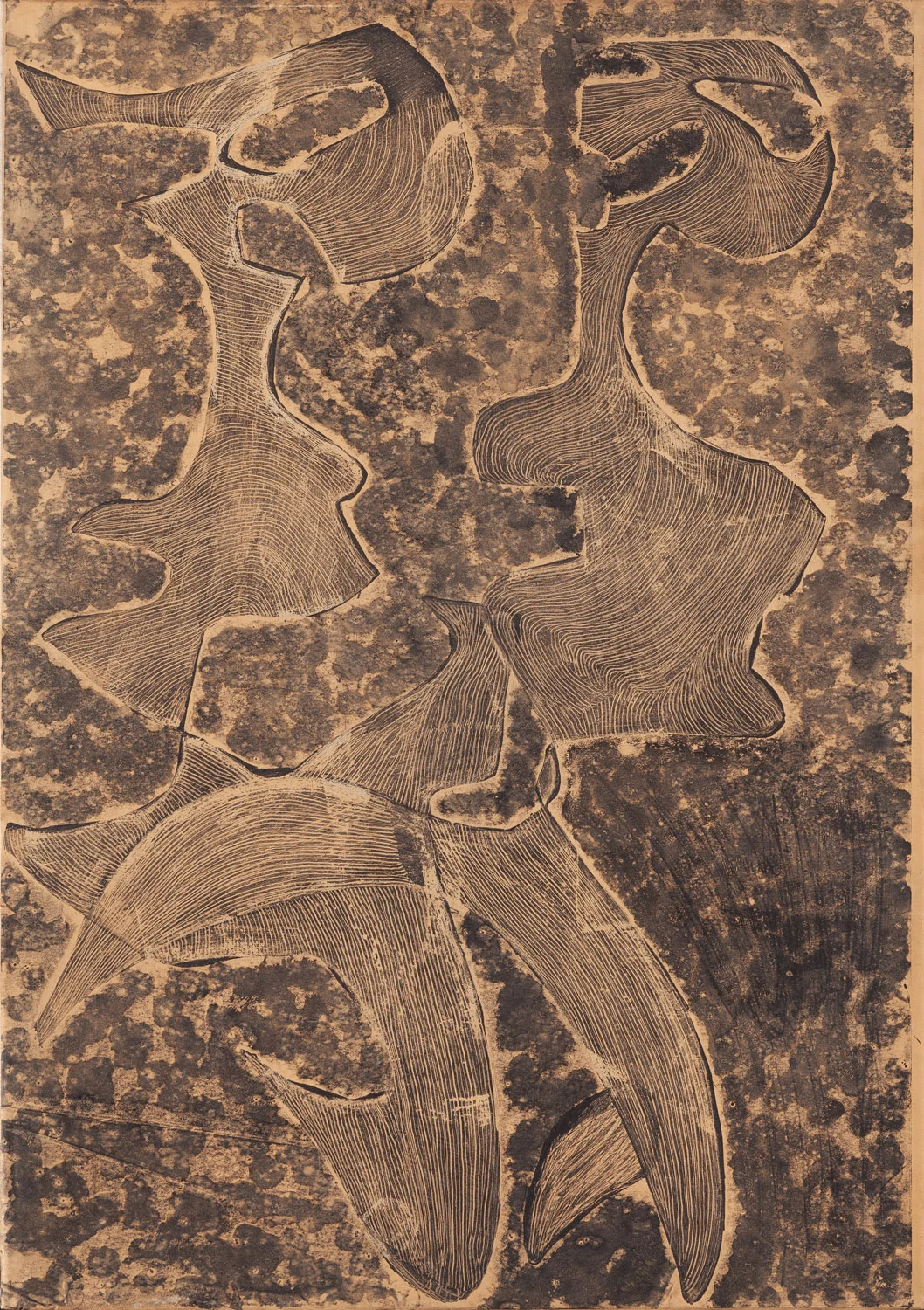
Although the monotypes appear to be manifestations of pure painterly form, the art of Jaremianka always had a tendency to refer to social reality and politics. Her political affiliations evolved - in the 1930s, the young artist studied art and engaged in the then illegal communist movement and twenty years later she dealt with art and politics during the so-called Khrushchev Thaw. At that time, cultural policy in communist Poland was becoming less repressive, which gave artists the opportunity to create more freely and, above all, take up themes that could not be featured in the works presented at official exhibitions in the first half of the 1950s. This applies, for example, to abstract art. As the artist had already noted earlier:
"Abstractionism, wrongly considered by some to be an artistic movement, was an act of self-defense for art. It rejected the subject matter, desiring clearly to present the issues of art. Abstractionism imposed it on the viewers, depriving them of the topic that so often absorbs their attention, and, at the same time, allows them to be closer to art, making it more human."
(quoted after Barbara Ilkosz, Maria Jarema 1908-1958, Wrocław 1998, p. 124).
The phrase "act of self-defense" stands out in the quoted passage. It may refer to the art of Maria Jarema, which was created in opposition to social realism imposed by the communist authorities. The artist did not participate in this current, which is why she did not exhibit her works at the time of its grip. These words remained somewhat valid at the time when Jarema made her monotypes, which, like all her abstract works created during the Thew, are perceived as "abreaction" after socialism-realism, being a symbol of artistic freedom after a period of cultural enslavement.