Crossroads of Epochs Painting of the 19th Century
The nineteenth century was undoubtedly one of the most interesting "moments" in the history of European culture. It seems that the word "moment" may not be appropriate in this case, as we take more than one hundred years of artistic struggles, scandals, and spiritual elations into account. However, one fact is certain. Never in history have there coexisted so many different and diverse movements and styles. Never before have two groups with diametrically opposed perspectives on art clashed so intensely; the conflict between traditionalists and modernists was not as intense.
DESA Unicum's auction of paintings and drawings from that era is going to take you on a fascinating journey, ending at the eponymous "crossroads of epochs". It includes more than thirty works by well- and less-known Polish and foreign painters, revealing the diversity of the century, as well as the tradition that was still long-lasting at the beginning of the next century.
In the 19th century, art flourished among official cultural institutions. All significant centers nurtured and developed the tradition that dates back to the establishment of the first academies. The artists were properly educated at universities, which taught them in line with the old, well-known patterns. Studies of ancient art and the focus on creators' mastery were dominant at such facilities. The most important were the academies in Munich and in St. Petersburg. In France, more specifically in Paris, salons had a monopoly over exhibitions, which was the only place where creators could display their art. Works that were rejected by the jury disappeared into the depths of history. The situation was similar in other metropolises, such as the Vienna Künstlerhaus. This state of affairs began to arouse more and more controversy over time. There were many divisions among the artists as their dissatisfaction grew.
The first rupture with official cultural institutions took place in Paris. It was there, in 1855, that Gustave Courbet single-handedly opened an exhibition in a makeshift building, which he simply titled "Realism". This event was to manifest his separateness from academic patterns and set a path for other painters. Modernism was gradually emerging. Realists looked at the world with extraordinary curiosity. Venus was replaced by ordinary models - women from the crowd, flesh-and-blood characters, struggling with everyday problems. Titian once painted the divine beauty from Urbino. Then, Édouard Manet presented naked Olympia – a well-known Parisian prostitute. One could come up with numerous similar examples. The artists ventured to paint outdoors as a result of the revolutions among the realists. They took notice of unusual light phenomena and the vibrancy of the surrounding colors outside the confines of their studios. A new stylistic concept was created during one of the morning walks around the port of Le Havre. In 1872, Claude Monet created his painting titled "Impression. Sunrise", which gave rise to a new movement – impressionism. Over the next decades, art enjoyed more and more autonomy. Academicism and modernism coexisted at the same time. Creators increasingly modified reality, and at the turn of the century, they were only a step away from avant-garde abstractionism.
Academicism and historism undoubtedly dominated in the first half of the 19th century. Academism was inextricably linked to the educational system and the dynamic artistic universities operating in Europe at that time. When asked what value was placed on a pedestal in that milieu, only one answer came to mind: ancient art. Ancient culture served as a model and a determinant. The subject matter had to be "worthy" of the painting and sculptural professions.
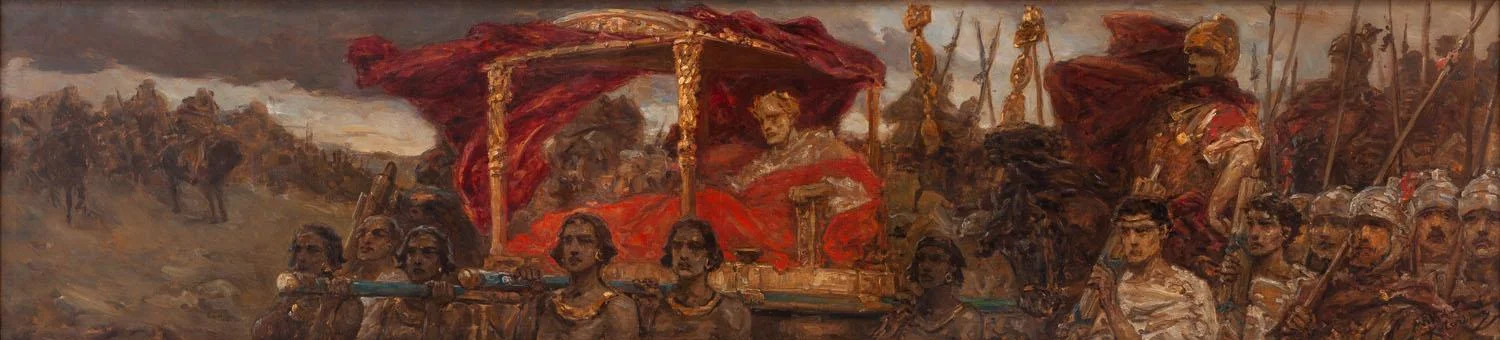
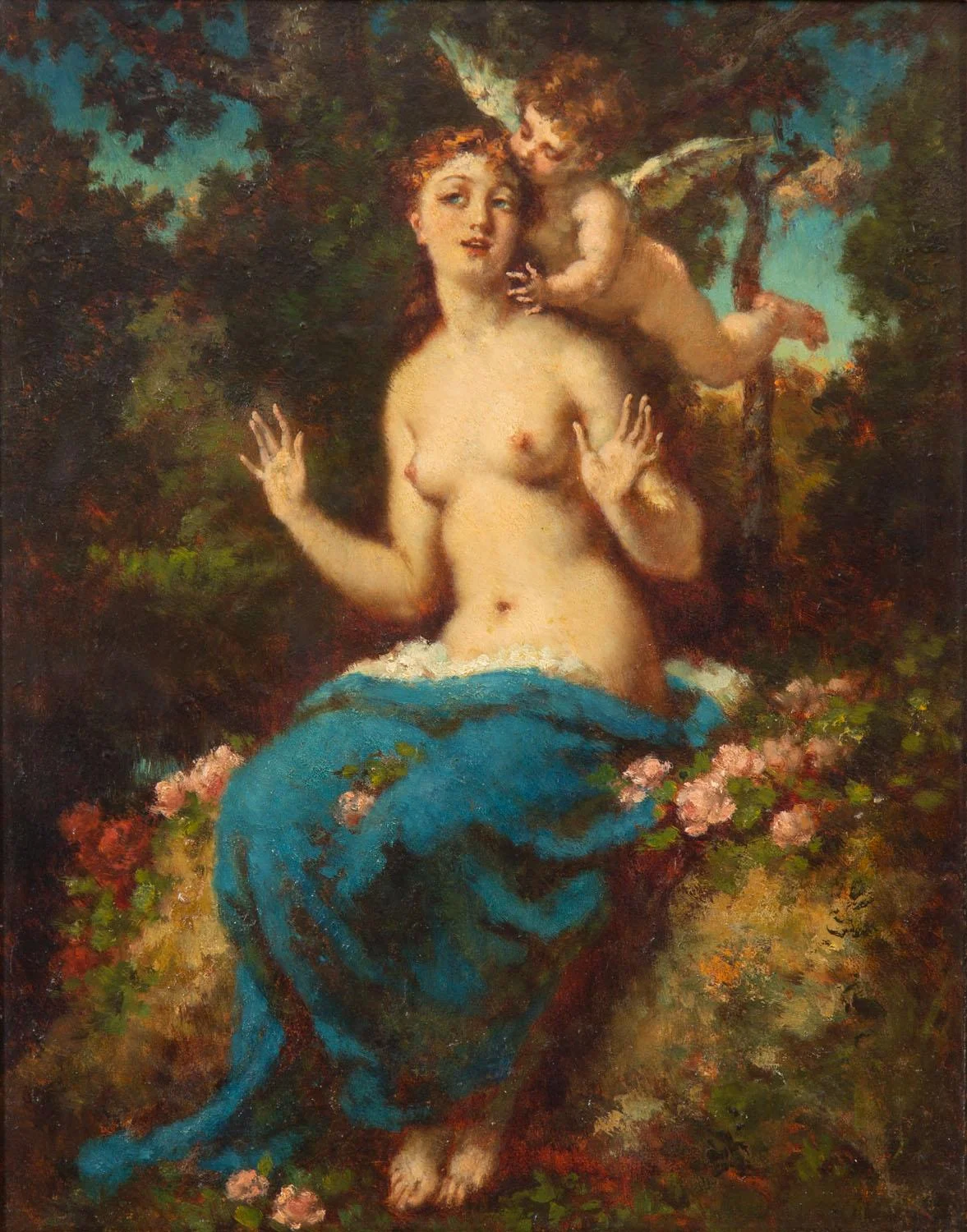
Therefore, it should preferably be drawn from history, mythology, or the distant past, which is best exemplified by the monumental canvas by Wilhelm Kotarbiński. Inspired by historical events, the artist painted a vision of the Roman emperor's triumphant march. This work, created after 1900, is far from the drawing virtuosity typical of academism but clearly draws from the atmosphere of the style. Similar depictions and allusions to the histories of Greece, Rome, and the East allowed Kotarbiński to rise to fame. He also curiously combined them with elements of Slavic culture. A corresponding composition to the painting offered at the auction can be found in the current collection of the Warsaw National Museum. This canvas is of similar size and serves as a great point of reference, additionally elevating the position of the expressive "Triumphator". Another noteworthy image includes a representation of a young woman with a Cupid by Virgilio Díaz de la Peña. In the painting, the author refers directly to mythology, more specifically to the history of Cupid-the Roman god of love. Set against the atmospheric forest landscape, the scene is an excellent example of the still popular romanticism in painting.
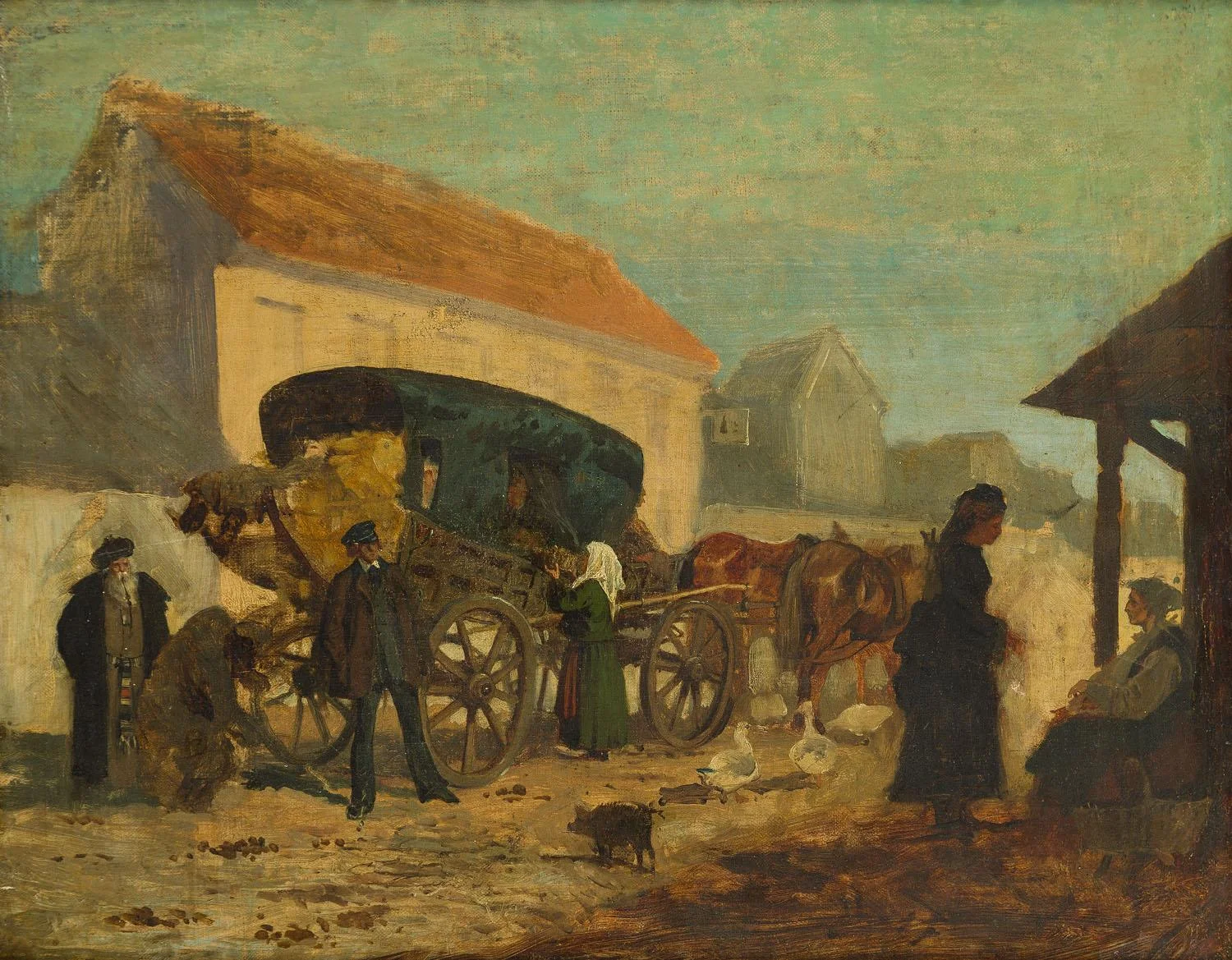
The works created by both of the Gierymski brothers and included in our auction offer are of high collector value. We present you with an oil composition by Maksymilian and a pencil sketch by Aleksander. They were both master artists, and their works are undoubtedly sensational as they appear relatively rarely on the market. The landscape with a stagecoach in a small town by the younger brother is almost a photographic record of countryside everyday life. Although the image is a bit sketchy, it strikes the viewer with the artist's focus on characters, elements of architecture, and even animals.
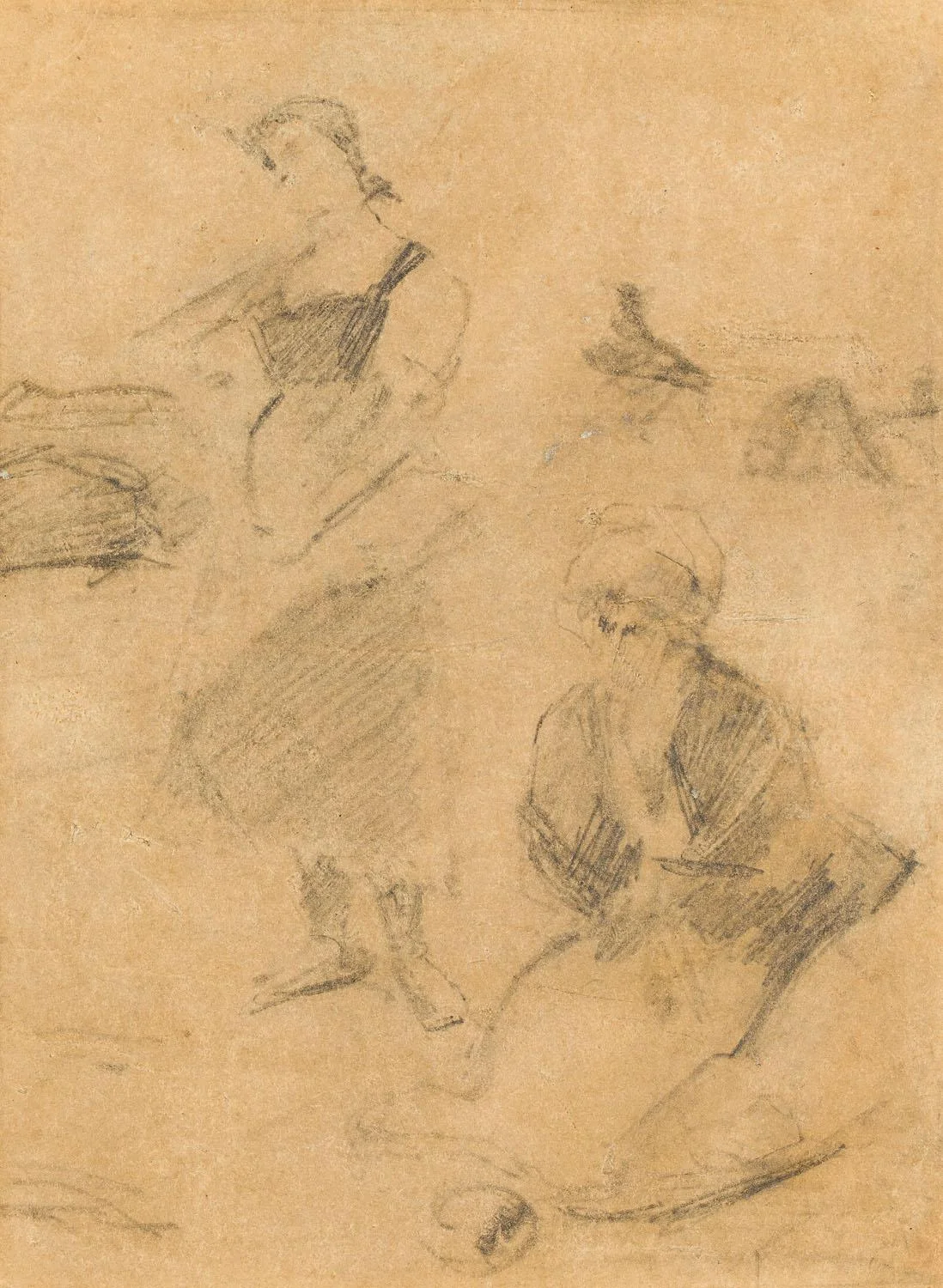
Aleksander's work is entirely different, which does not really refer to the technique but to the message of the work. Our auction presents you with a unique opportunity to purchase a sketch of one of the most important paintings of Polish realism. Of course, we are referring to "The Angelus" from 1890, which is kept in the collection of the Warsaw National Museum. In this instance, we can confidently draw comparisons between Gierymski and Jean François Millet, who created a painting on a related topic. Strongly rooted in tradition, the sketch shows an interest in folk people and ceremonies, also excellently expressing the idea of naturalism cultivated by Stanisław Wickiewicz. Other realistic depictions of a didactic character include Józef Rapacki's work or a genre scene by Franciszek Kostrzewski, which has a slightly caricatural style.
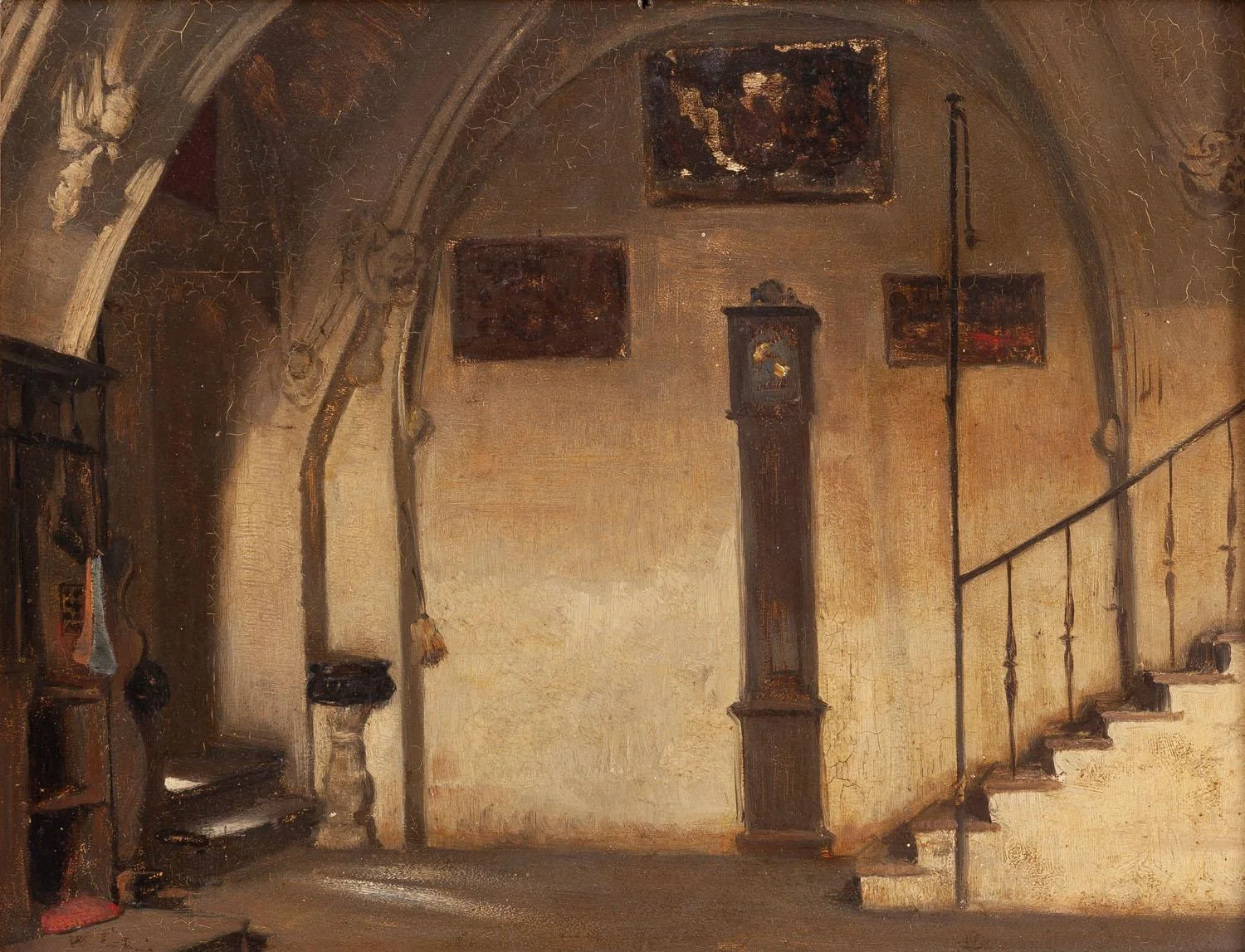
The nineteenth century was the time when major artistic centers in Europe began to emerge and solidify their positions. Alongside Paris, "Athens by the Isar River" played a significant role at that time. The name refers to the capital of Bavaria, Munich, which had a significant influence on other regions of the OId Continent. Polish painters willingly traveled there, for instance, the already mentioned Gierymski brothers, Alfred Wierusz-Kowalski, and Władysław Czachórski. Of course, Józef Brandt, who was the central figure for the majority of Polish creators, was the most significant figure in the Polish artistic colony.
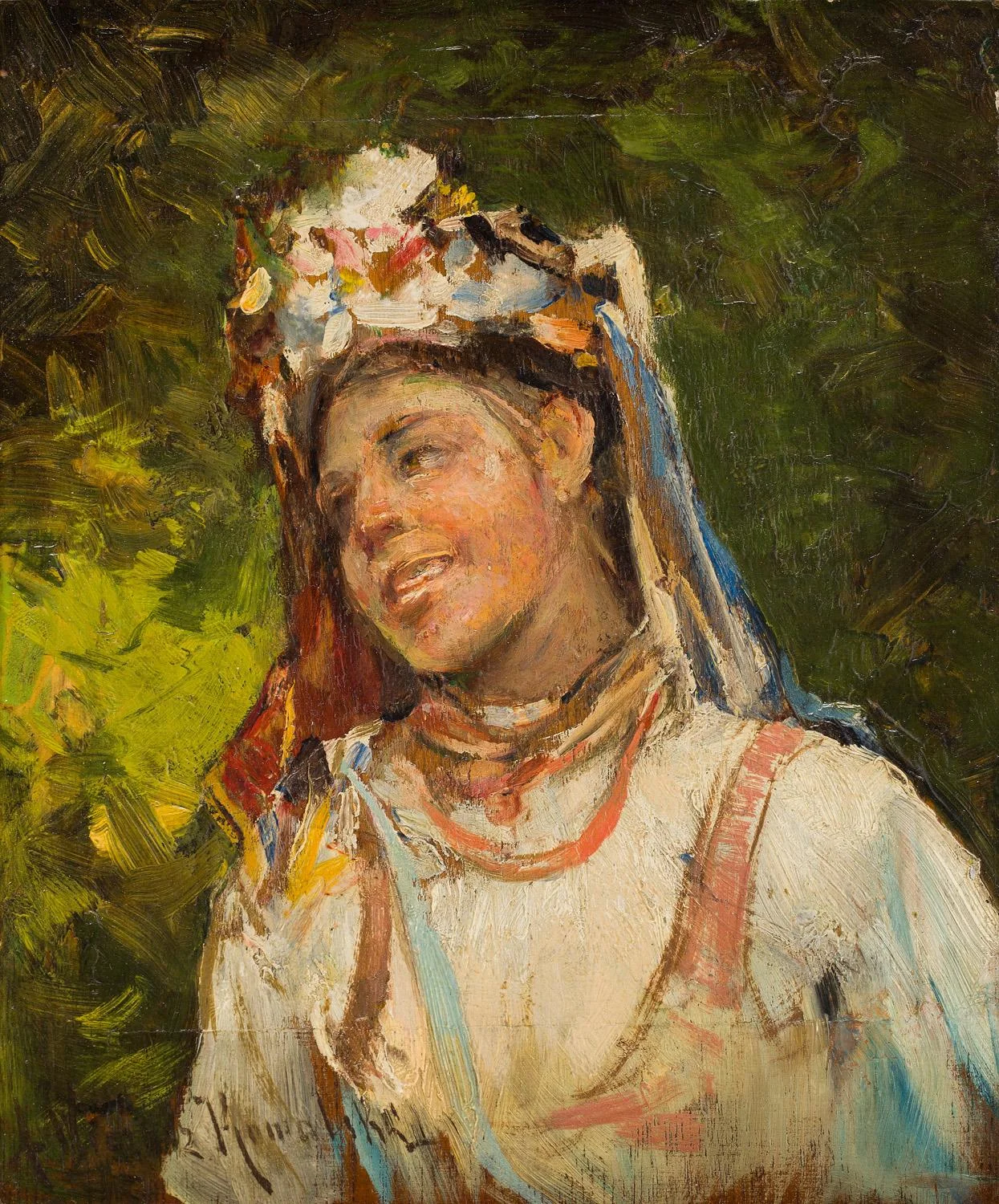
The artistic milieu that emerged in Bavaria at that time gained the title of Munich School, due to its unified style. The most iconic motifs included winter sleighs, horse teams, and dynamic rides. With remarkable causality, the artists depicted the world of nature and its relations with humans. Paintings by Józef Jaroszyński, Ignacy Zygmuntowicz, or J. Konarski are good examples of such representations. Wierusz-Kowalski's "Bride" ("Panna młoda") perfectly reflects his interest in folklore, just like Władysław Czachórski's painting presents the artist's love for the past.