
Zbigniew Makowski: Mystic and Artist
Nicole Lewandowska
Zbigniew Makowski was an original and extraordinary artist. It is challenging to define the character of his paintings, but it is important to note the artist's links to surrealism and abstraction. Mysticism and geometry were the main elements of his artistic expression. The artist would devote hours and hours to his meticulous print compositions, which were strongly based on intellectual foundations. The creator had always striven to combine his longing for geometry with his longing for language semantization.
When looking at Makowski's painting, the viewer has the impression of confronting an ambiguous, mysterious puzzle. The artist's works are full of panache; he is excellent at using signs, numbers, as well as calligraphy letters. These pieces can be both viewed and read, which makes them oscillate on the border between fine art and poetry.
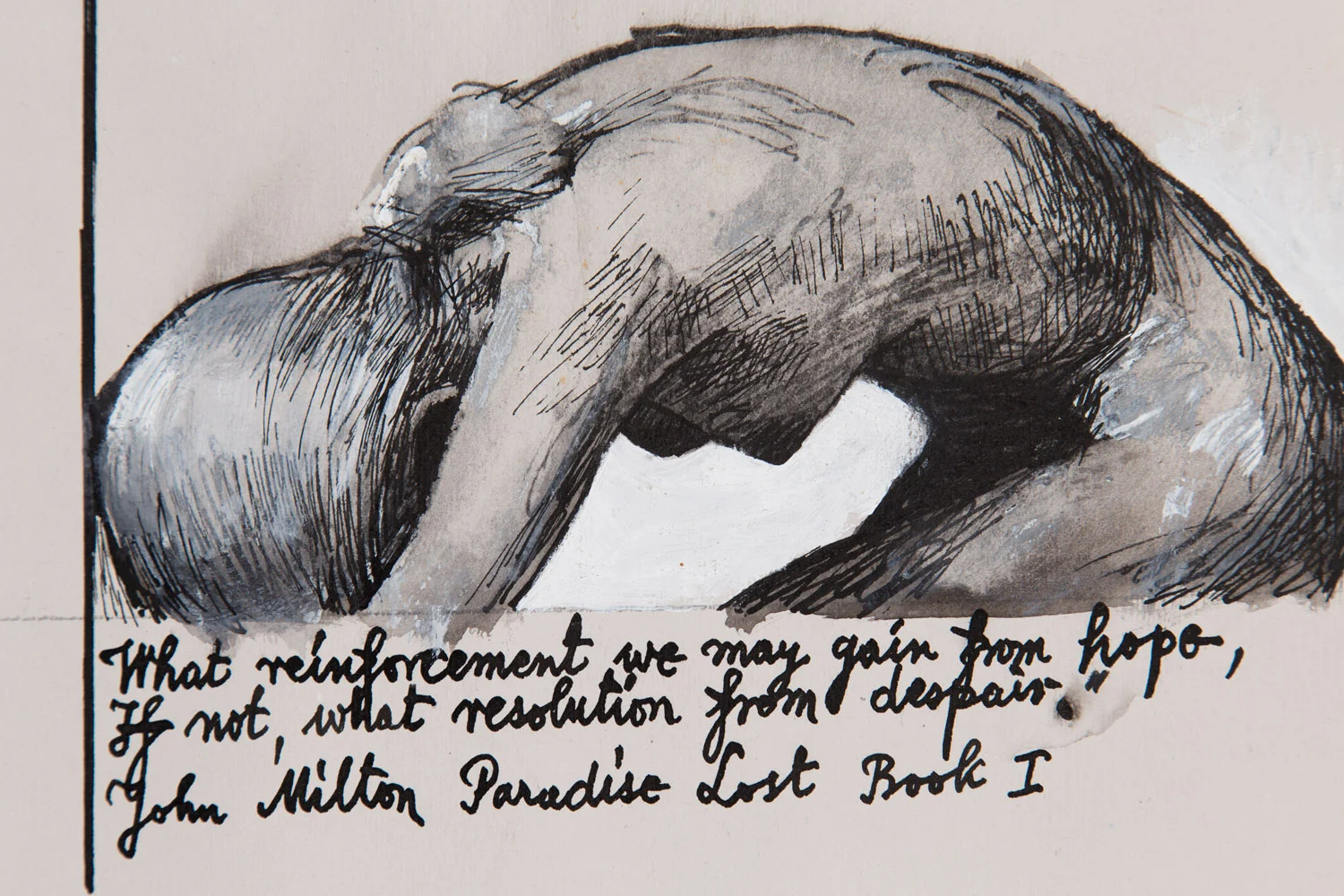
,,Each individual work shows the artist's tendencies to associate zodiacal-magical forms with mysterious and completely incomprehensible codes recorded by the author's extremely sensitive imagination." -
- Zygmunt Dowoyna-Sylwestrowicz, Józefa Wnukowa, and Zbigniew Makowski, "Tygodnik Demokratyczny" 1966, No. 9
The spiritual influence of Makowski's paintings was often compared to that of sacred icons or Kabbalah tablets.
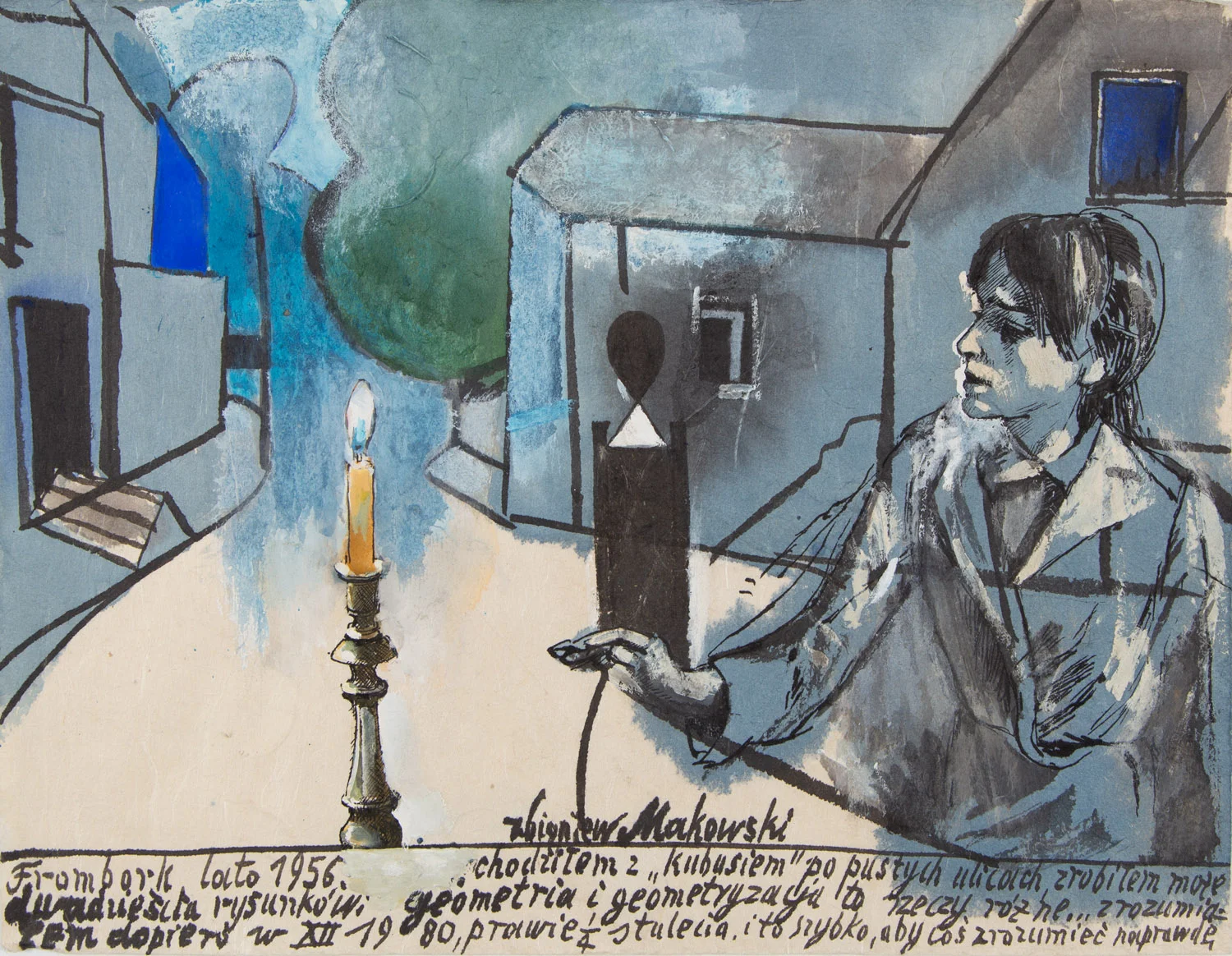
Zbigniew Makowski's painting leans towards magic and esoteric contemplation. Magic can be noticed in the works in which the artist intensifies heterogeneous elements such as stairs, cubes, blocks, tubes, wells, crosses, cups, or keys, as well as in those more "homogeneous" ones in which he limits the abundance of signs, often to one repeated element, while reducing the color palette to the basic tones. His painting underwent a subtle, almost imperceptible, but undeniable evolution. In his review of an exhibition at the Zachęta Gallery in 1966, Jerzy Olkiewicz interestingly described the artist's painting and drawing:
"Makowski's artwork demonstrates focus and contemplation. Makowski does not obsessively draw geometric shapes and symbols. He dwells on them. He relishes in their "magical" meaning. Becoming engrossed in the game of cubes, hollow cylinders, intricate spirals, and cones, he arranges them into arrays, groups of ambiguous figures forming a geometric cipher subjugated to the stimuli of painting intuition. The drawings are made with a comprehensive knowledge of the established rules of art, not by any poetically understood "magic." They have a high level of sensitivity, with all his fascination with geometry. Their graphic universe is a very thin, highly developed artistic universe. It demonstrates numerous influences from old printmaking, an unusual sensitivity to calligraphy, and old prints. This sentiment towards old prints is presumably connected with a certain sensibility to printmaking, care for the texture, paper surface, manner of placing the colors, and soft lines. The suggestiveness of these drawings primarily stems from their artistic grace based on "magic" and intellectualism. (…)The primary reason people enjoy looking at Makowski's drawings is that they are exquisitely made and drawn. The artist's colors often have more in common with the art of Kandinsky than with magic. His "metaphysical" symbols are conscious of the current shifts in fine art, and the form finds its direct resonance with the recipient, who does not always reflect on its "modernity." We go back to Makowski's jumble of concepts and geometric constructions. A distant past and ties to surrealism." -
- Jerzy Olkiewicz, Makowski and "Zachęta", "Kultura" 1966, No. 7.
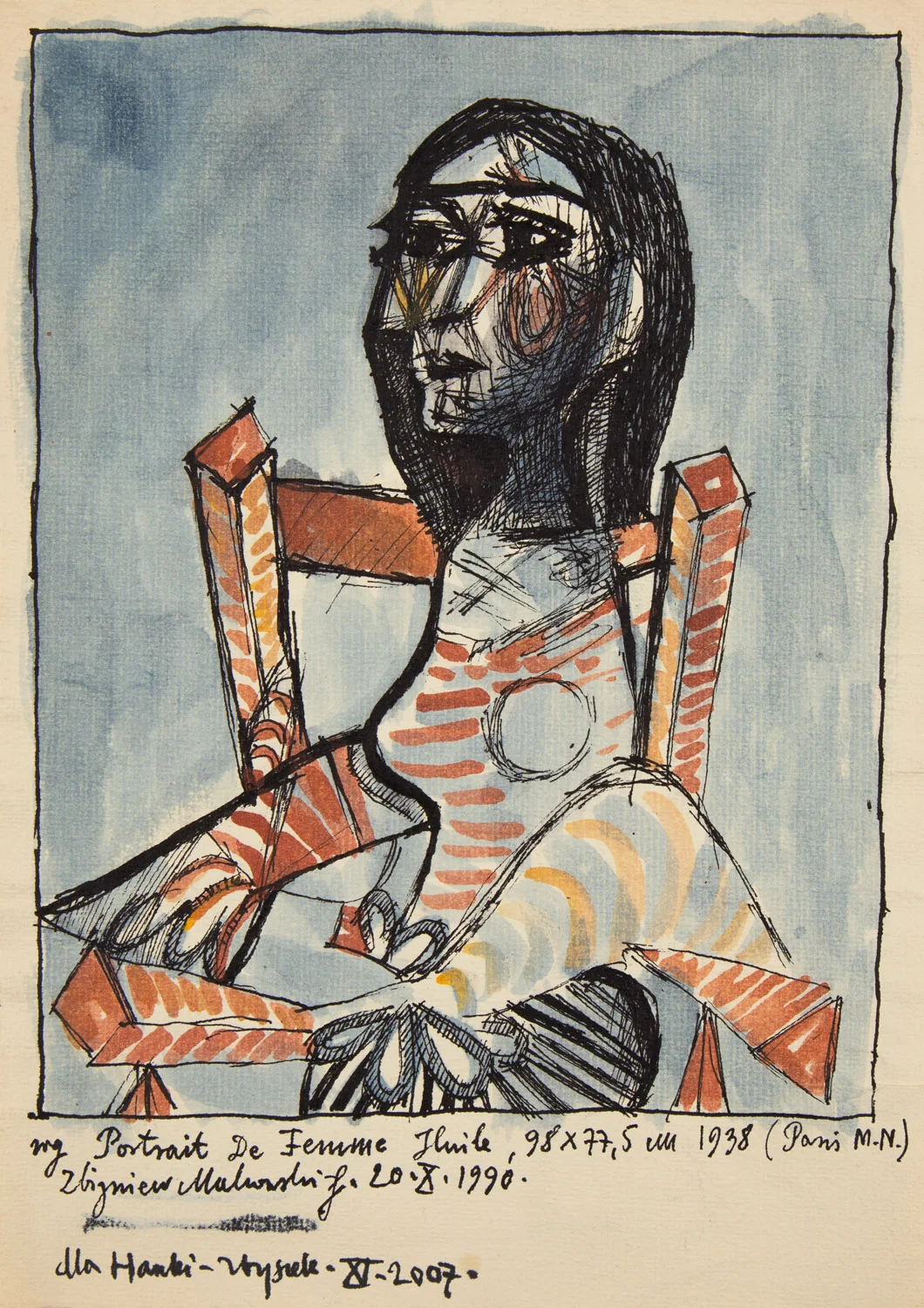
Art lovers and collectors have long valued the artist's work. His paintings and drawings have been exhibited many times in prestigious museums and galleries. Without a doubt, the artist's talent and diligence contributed to his many achievements in the field of art.