
Zakopane on Paper: What explains the popularity of paper medium in the capital of the Tatras?
There are special places on the world map whose unique atmosphere has allowed for the development of phenomenal cultural assets, not only in the form of works of art but also excellent music and literature. From a local perspective, the greatest phenomenon on Polish soil was Zakopane. At the turn of the 19th and 20th centuries, the town at the foot of the Tatras became a meeting place for Polish intelligentsia from all three parts of the partitioned country. Zakopane was located on the far periphery of Galicia, a region enjoying relatively the greatest national freedoms, making it a place of respite, especially for Poles from the Prussian and Russian provinces.
The picturesque mountain village, hailed as the “Polish Piedmont" and “Polish Athens," was considered the spiritual and cultural capital of Poland. In Zakopane, painters, poets, and politicians could freely exchange ideas, often centered around the restoration of Poland's independence. It was here that the national "Zakopane Style" was created by Stanisław Witkiewicz, and his son, Stanisław Ignacy Witkiewicz, founded the iconic “S.I. Witkacy Portrait Company." Zofia Stryjeńska drew inspiration from the Podhale landscape for her dancing highlanders, Rafał Malczewski, son of the master Jacek, created a style called “magical realism," and Wyczółkowski reached the peak of his art in the Tatra landscapes.
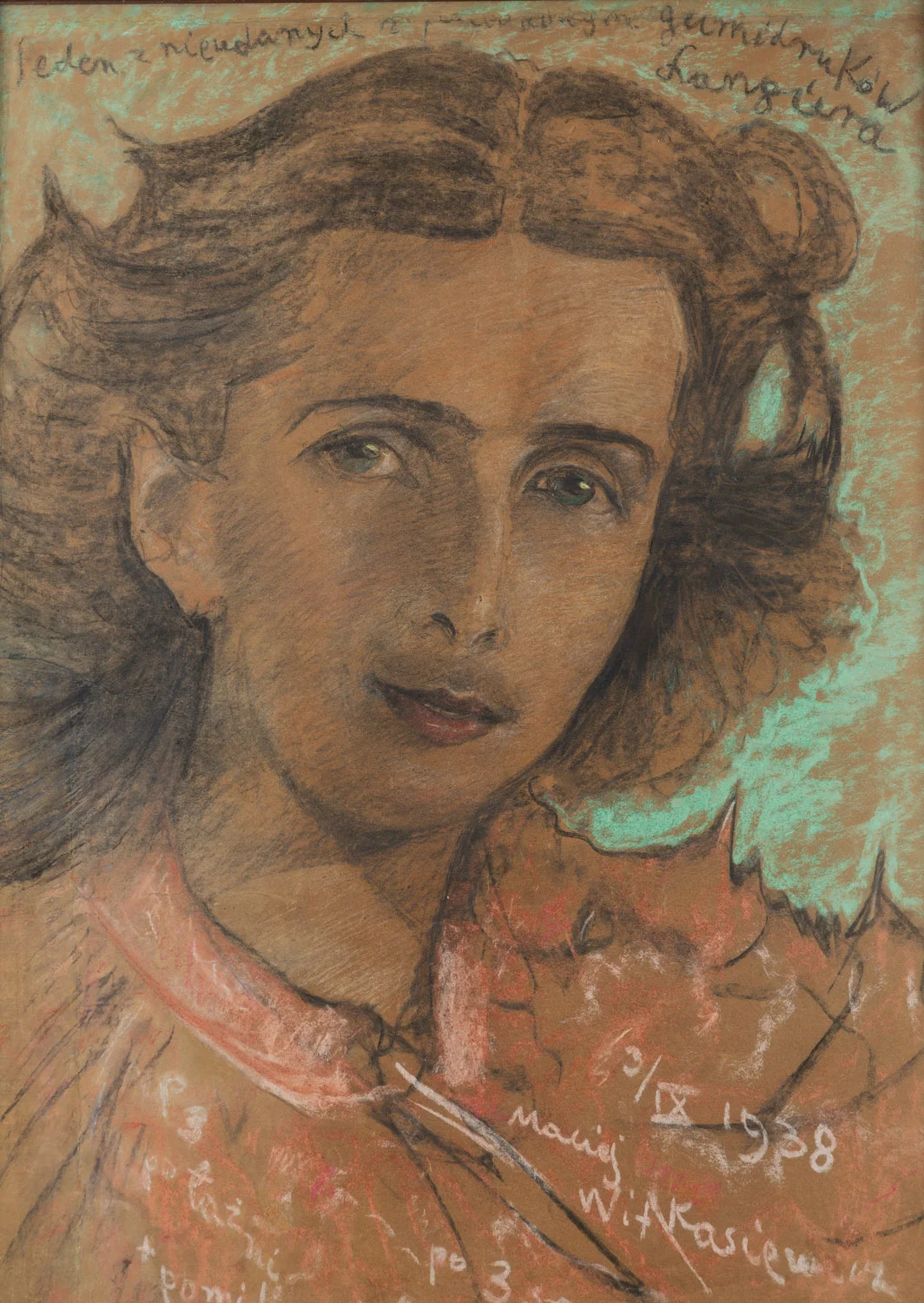
The artistic persona most closely tied to Zakopane in terms of biography was, of course, Witkacy. Although he spent practically his entire life at the foot of the Tatras, Stanisław Ignacy was born in Warsaw but moved to Zakopane at the age of 5 due to his father's health. Despite the creator's of the "Zakopane Style" dislike for academic methods of teaching, Witkacy began his studies at the Krakow Academy of Fine Arts, initially under Jan Stanisławski, then Józef Mehoffer. The period of co-creating the pioneering Formist Group resulted mainly in oil paintings, in which Witkacy tried to visualize the concept of “pure form." Creative frustration caused by the impossibility of implementing theoretical assumptions led the artist to abandon the medium of oil painting for good. Instead, he developed the phenomenal, one-man "S.I. Witkiewicz Portrait Company." With the establishment of the company, due to the artist's "business trips" to clients or portraiture during Zakopane's "orgies," the only material he used was paper and pastels. In addition to commissioned portraits, Witkacy eagerly commemorated people from his closest circle. Both social and intellectual relationships connected the rebellious painter with Bronisława Włodarska and Kazimiera Żuławska, whose portraits appeared in the May offer of the Works on Paper. 19th Century and Modern Art. Witkacy's portraits of his friends were certainly created during social gatherings. The portrait of Bronisława Włodarska is not marked with any type, but Witkacy added a note about tomatoes, which may indicate a shared meal. Similar comments are also found on other portraits of Choromański's former fiancée, such as the one from the Tatra Museum, where this time the friends were eating partridge together. The portrait of Kazimiera Żuławska, however, was created in Type C, which was intended only for people in the artist's circle, due to how close the composition was to empirically capture the “pure form."
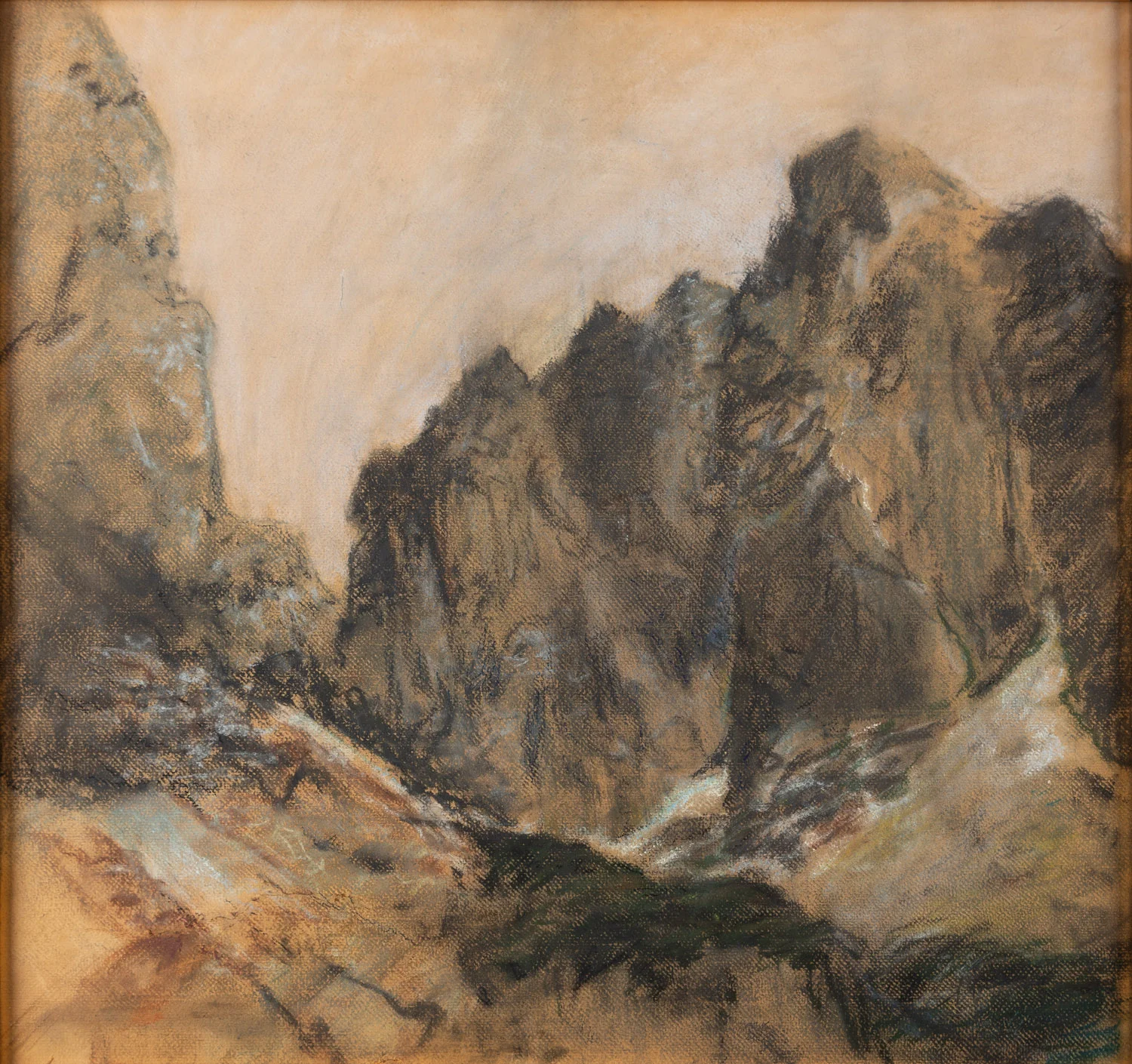
Paper as a medium offers vast possibilities for creating plein air paintings. Not only because of the ease of transporting sheets and a box of paints or pastels but also because of the artistic quality that can be achieved with crayons or watercolors. A perfect example of an artist who cared not only about capturing the “living impression" of a place and painting “in situ" was Leon Wyczółkowski. The principles of Wyczółkowski's Tatra art is perfectly evidenced by the words of the painter's friend, Teodor Koch:
“he assumed that a painting, if it is to be faithful, should be the work of one impression, he always tried to finish the painting from the first time. The harsh atmospheric conditions in the mountains did not deter him. He recounted how once under the Mnich mountain he was caught by a snowstorm. He finished the painting with a pastel under an umbrella and then, sliding down the inconvenient path to Szpiglasowa, carried it down to Morskie Oko."
The view of the Kozia Przełęcz presented in the May offer is a perfect record of both the atmosphere over the fragment of Kozi Wierch and the difficult conditions in which the over-fifty-year-old painter created a composition dedicated to the harsh landscape of the High Tatra rock massifs.
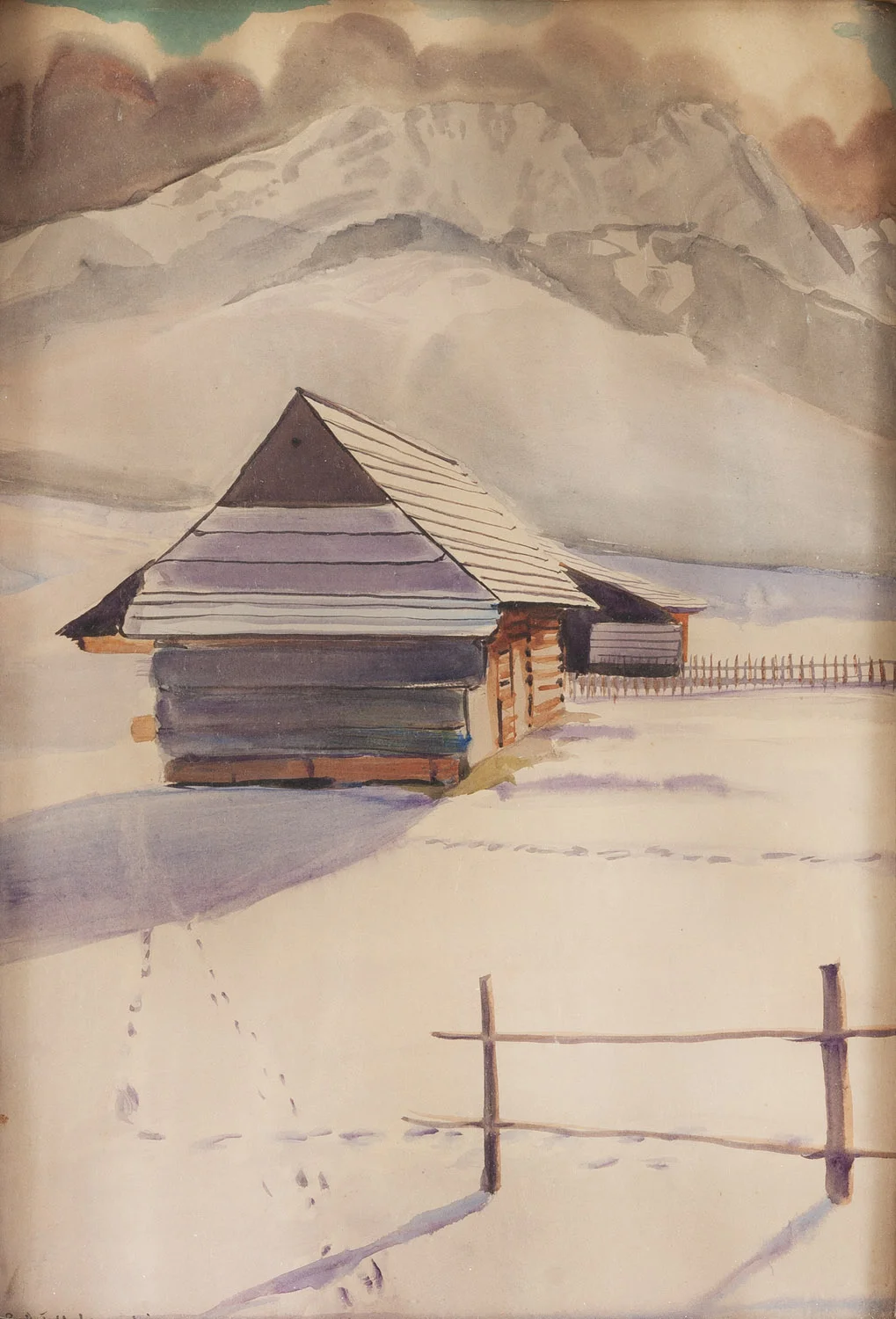
A similar approach to painting “from nature" was taken by Rafał Malczewski, an excellent painter and author of "Pępek świata" – a book devoted to the phenomenon of Zakopane in the roaring 20s of the 20th century. Watercolor painting served the artist primarily for the quick recording of fleeting impressions and views at any place and any time. It was a less personal form of expression for Malczewski than oil paintings. With the watercolor technique, he painted excellent light, yet finished landscapes. He mainly depicted his beloved mountains, often experimenting with perspective. The artist showed the wild, Tatra nature at every time of day and year and in various weather conditions. Tatra compositions breathe with the calm, dreamy poetry of Podhale vast spaces. Malczewski reached perfection in the watercolor technique, which requires extraordinary brush and composition sensitivity as it does not allow for corrections. He especially captured the snow with extraordinary lightness and great skill: its expanses in various shades, winding trails under a gray-white cover, the tracks of skiers after descents, or the white void. The artist's fascination with snow is visible in dozens of works showing the motif of winter in the mountains, each time differently. Each of these works takes a different frame, a different angle of view, while the ribbon of mountain trails arranges itself differently each time. Rafał Malczewski's watercolor landscapes, unlike his visionary oil paintings creating another world, are very direct and realistically naturalistic.
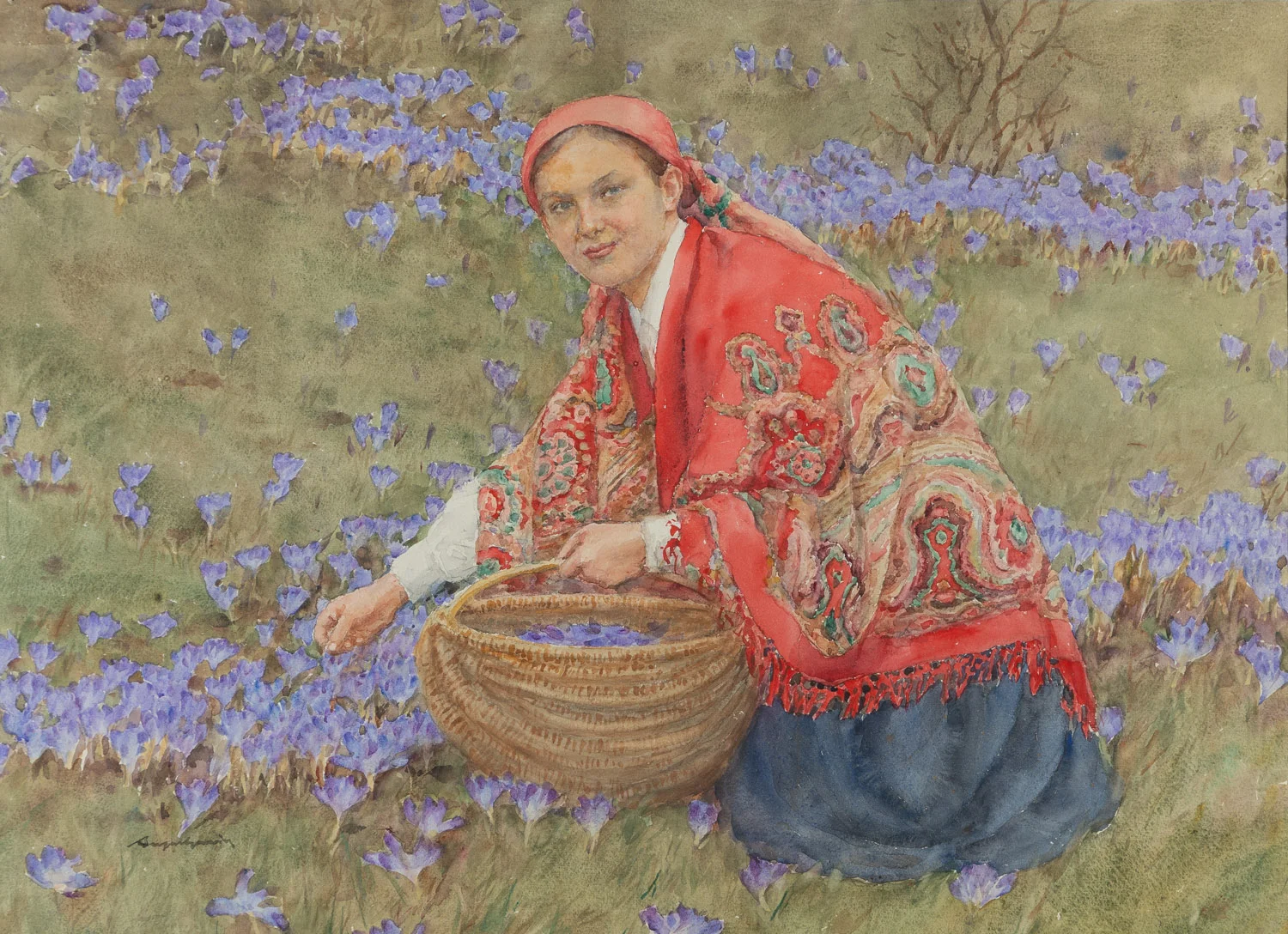
A completely different approach to his watercolor Tatra compositions was represented by Aleksander Augustynowicz, who lived in Zakopane from 1921 to 1939. In his decorative paintings painted from nature, we see a meticulous rendering of every detail, perfectly complemented by the appropriate tone of watercolor. For the artist of Armenian descent, watercolor was not a notebook of living impressions but a refined study of color and mood. In the work offered in the catalog "Highlander Collecting Crocuses," we see how the artist, with great mastery, captures the intricate pattern of the folk scarf and how meticulously he captures each petal of the spring flower. Watercolor is a capricious technique, not allowing for any corrections. Once placed, a color stain penetrates irreversibly into the structure of the paper.
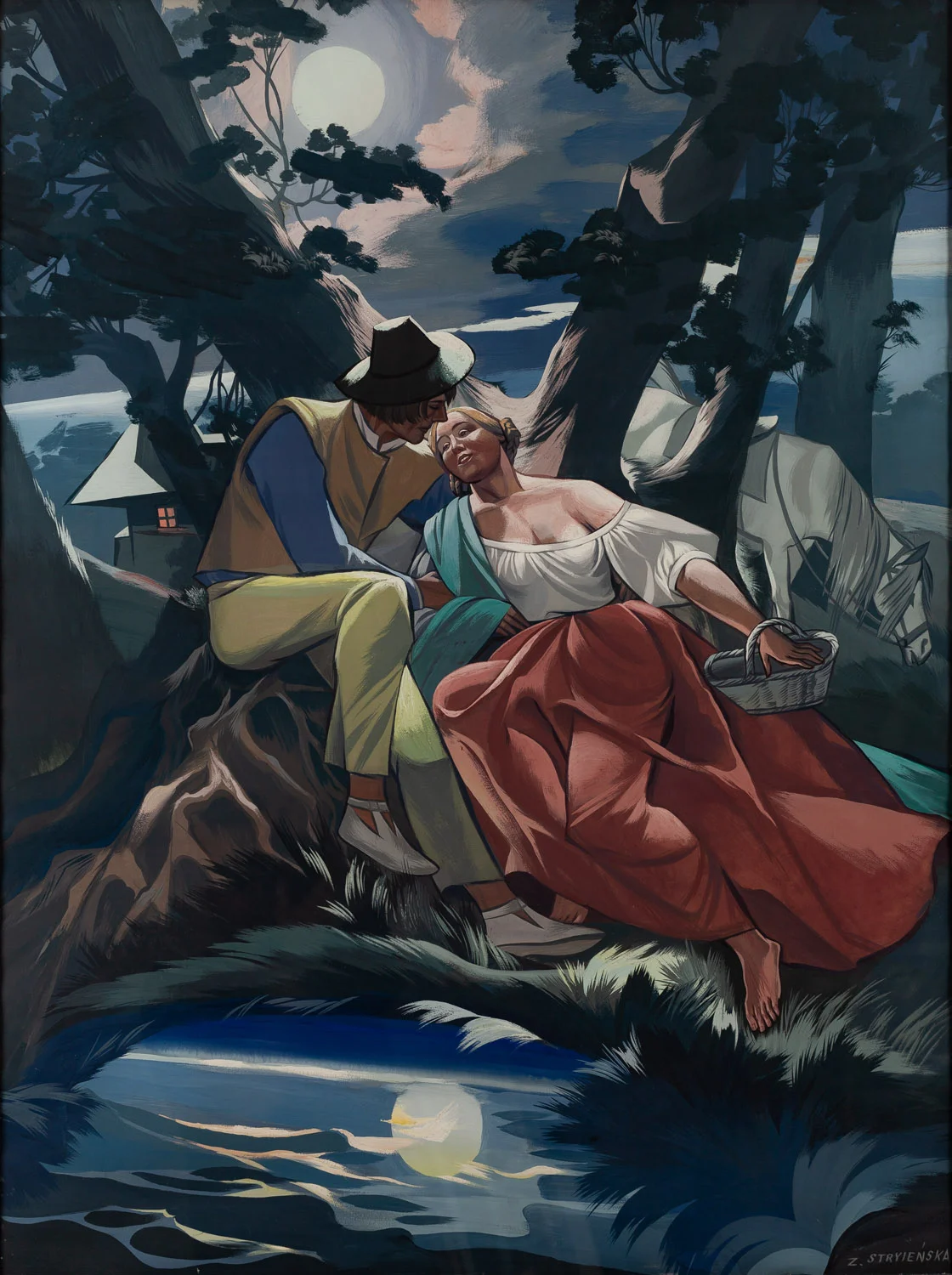
The pantheon of artists associated with Zakopane and working on a paper substrate is closed by Zofia Stryjeńska, who, at the height of her career, primarily used gouache. The characteristic flat forms of compositions with strong contrasts and perfectly harmonized tones are best realized with watercolors and perfectly penetrate the paper substrate. The “princess of Polish painting" appeared in the capital of the Tatras with her husband, Karol Stryjeński, who in the 1920s held the position of director of the School of Wood Industry. It was the motifs drawn from Podhale folklore that Stryjeńska intertwined into her joyful idylls, co-creating the national style of the Second Polish Republic and the emblem of her work.