
Uranium glass
It is generally considered that uranium glass was first produced around the 19th century in Bohemia – today's Czechia. At that time, in the region close to the town of Novy Swiat, numerous glass factories functioned. The first adding of admixtures of the uranium compound to glass objects can be attributed to a famous at the time craftsman living in the Czech Bohemia – Franz Anton Riedel (1786-1844). He was the owner of a family-run glassworks – Zenkner – which was also situated in the aforementioned town of Novy Swiat. It is thought that he was the one to first start adding the uranium compound to the produced glass. It was supposed to make it more attractive-looking by giving it a unique colour and gain the interest of buyers from other markets. Interestingly enough, Anton Riedel was the father of two daughters – Anna and Leonor – to whom series of glass in different shades were dedicated – Annagelbes and Leonoragrunnes. Riedel's family continues to produce uranium glass to this day and one is able to easily track down how their story unfolded.
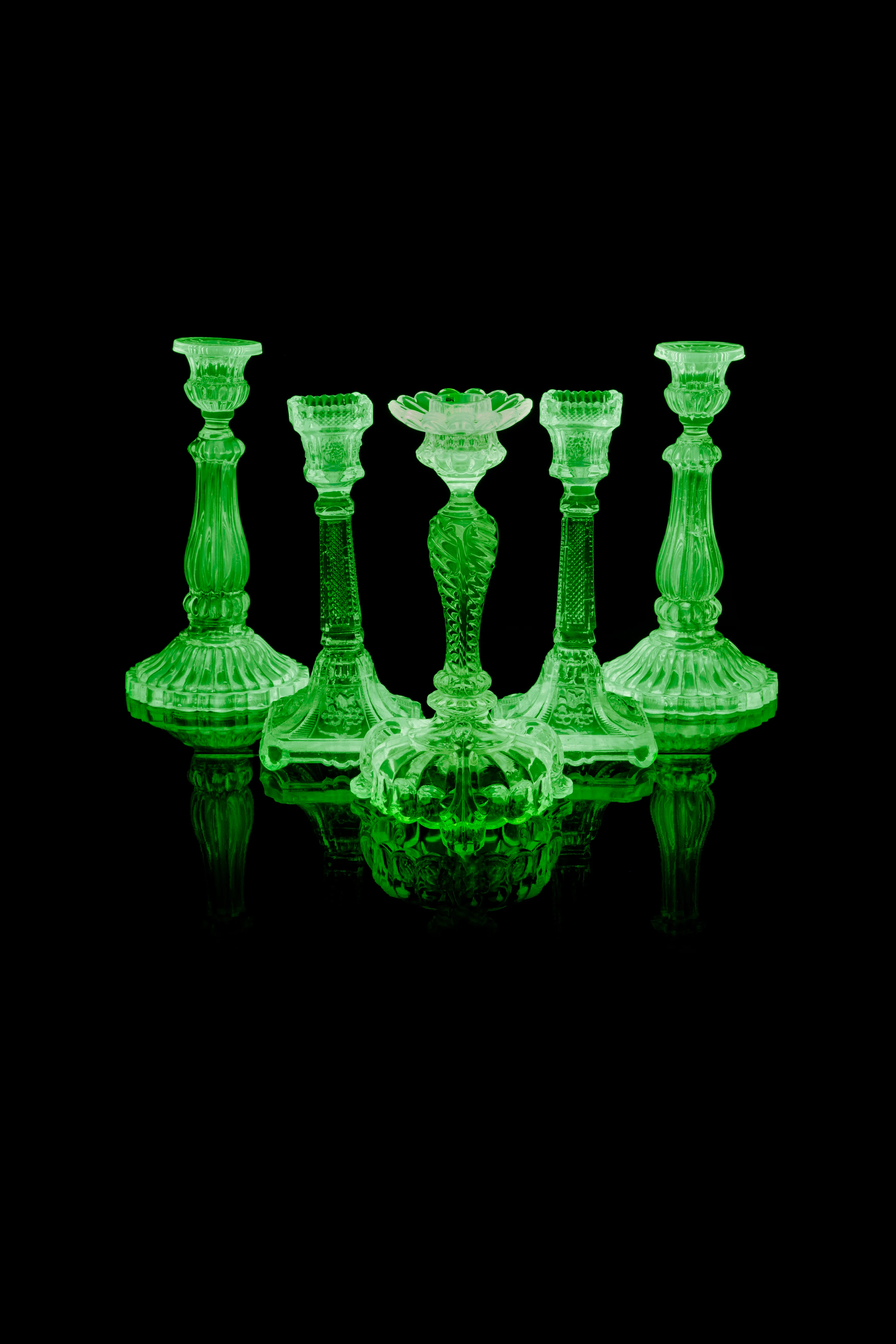
Through the years, the interest in uranium glass swayed – one moment extremely popular and en vougue, the glass would lose its enthusiasts the next. All this only to become a desirable artisanal commodity once again after few years passed. After 1840, the glass became popular among the more affluent and it was praised for the way it looked and how practical it was. At the time, the Bohemian glassworks produced varied everyday use objects such as cups, decanters, perfume bottles, or jewellery boxes. Sometimes, even cups with engraved wishes on them were produced for occasional weddings and baptisms of German speakers. In the 19th century, the interest in uranium glass gradually spread throughout Europe. One could find it at the courts of the reigning at the time monarchs – the Emperor Franz Joseph and his wife Princess “Sisi", Napoleon III, or the British Queen Victoria. The demand for uranium glass was just as high in the Ottoman Empire. At the turn of the 20th century, uranium glass also found its way to the US marked, where new glass factories were opening up. Naturally, the way the glass artworks looked varied depending on the geographical location. For instance, the glass produced on the Ottoman market could be characterised by a gold, silver, or polychrome finish. On the other hand, the glass produced in China was often decorated with red coloured landscapes. It was also the fashion and cultural circumstances that played a role in how the glass artworks were perceived and what connotations accompanied them. For instance, in Central and Eastern Europe, at one time people stared associating the glass with souvenirs from spas and thermal springs. In later years, it was also the Art Nouveau and Art Déco movements that went down in the history of uranium glass as especially significant, with many of the artists from that time using the material in their works.
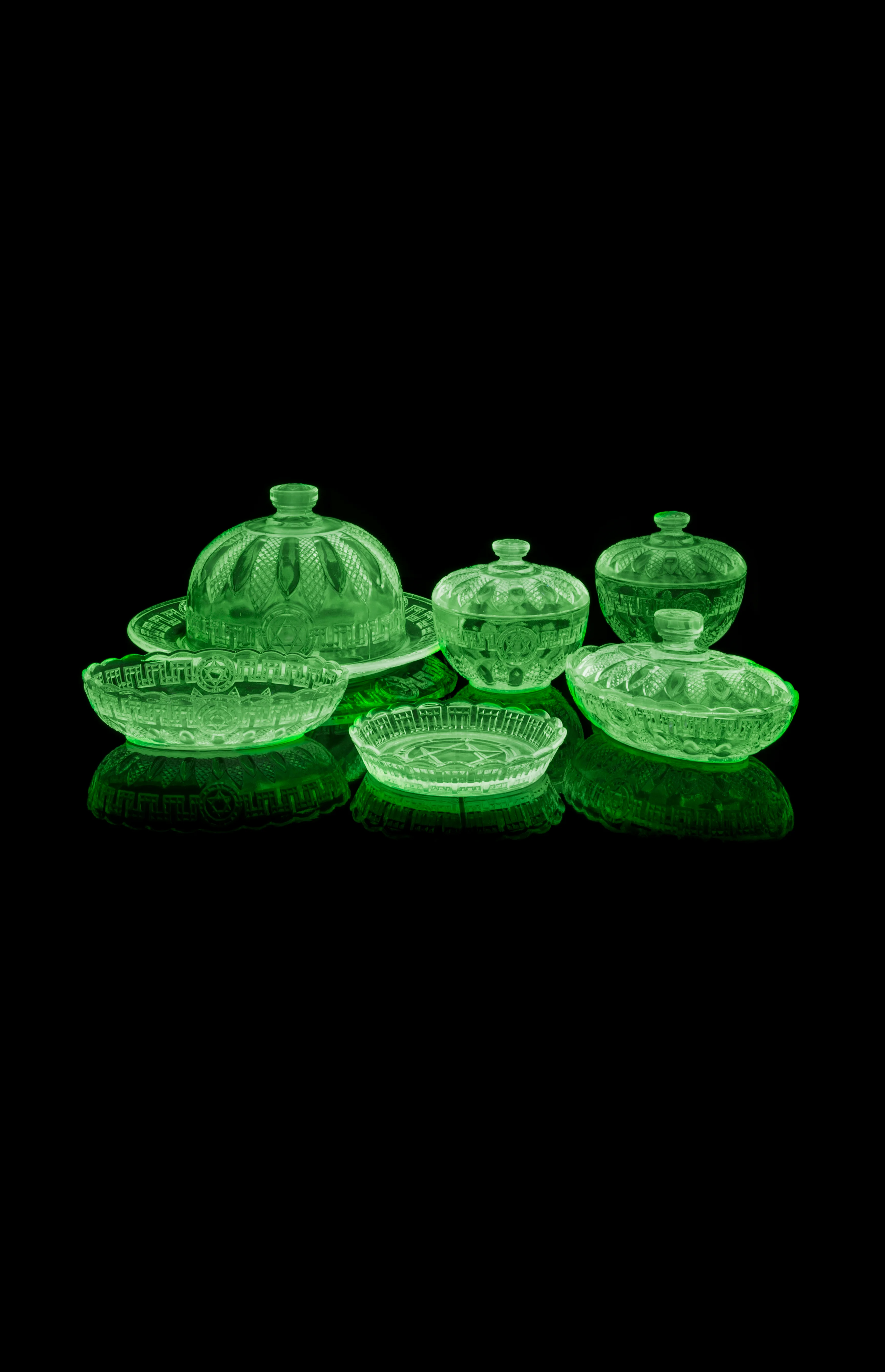
However, in the thirties, uranium glass started to drastically lose its earlier popularity. This came as a result of scientific discoveries that uncovered the uranium's alleged negative effect on health, as well as the memories of World War I and its shameful legacy. Members of the society began to fear the uranium radiation and many of the European countries banned adding the uranium compound to the objects of everyday use. In the end, it turned out the panic was unfounded as the minimal contents of uranium in glass artworks were harmless.
From the beginning of the 21st century, the tables have again turned and uranium glass seems to draw a lot of interest - numerous private collections of uranium glass came into existence, museums worldwide decide to have the glass exhibited, and some of the biggest art houses have such objects at auctions. Moreover, nowadays you can find high-class uranium glass at flea markets around Europe.
Uranium glass form the collection of His Excellency Ambassador to Poland – Alberto Salas Barahona – now at the Desa Unicum auction, was earlier shown to the public only twice – at the Zamoyski Museum in Kozłówska in 2017 at the “Magic of the Uranium Glass" exhibition and in the District Museum in Toruń in 2019.