
The Never-ending Summer of Jan Dobkowski
Polish pop art would not exist without him. He was a globally renowned innovator, which was reflected by his success at the São Paolo Biennale and in New York. Up until this day, he is considered a pioneer whose art constitutes a fascinating footprint of the hippie visual culture and the works he created at the turn of the 1960s and 1970s remain relevant. Jan Dobkowski's paintings, therefore, were among the most frequently auctioned off in 2021 on the Polish art market.
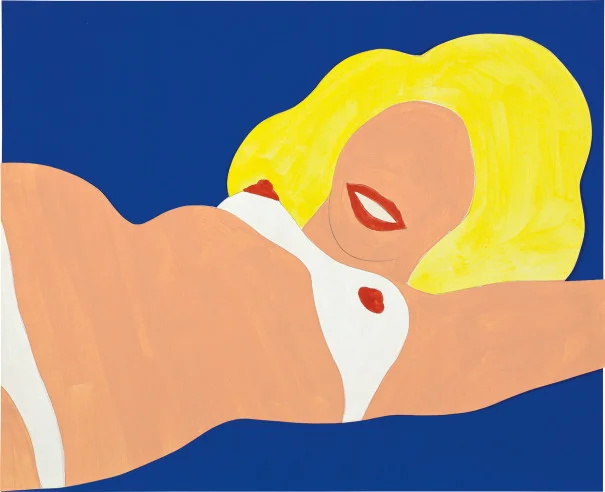
It is hard not be become captivated by the enormous, red-green, enigmatic compositions of Jan Dobkowski. While still at university, the young and rebellious artist challenged all known painting trends by creating the ‘Neo-Neo-Neo' formation alongside Jerzy Ryszard ‘Jurry' Zieliński. In their art manifesto, they wrote, ‘The name ‘Neo-Neo-Neo' means a maximum emphasis on otherness – we want to once and for all rid ourselves of being associated with what has already existed. We are ‘the newest', and we try to convey that by using the ‘neo' prefix. Repeating it three times proves that the name does not refer to any direction, style, school of thought, etc. – anything that has already existed. It is an autonomous name.' Despite renouncing all known trends, the influence of American pop art is quite visible in their paintings – especially in the surface focus of how the colours are treated. Although their originality cannot be denied, one can spot similarities to Tom Wassellmann's painting. Wasselmann was a few years older and created at the same time the American pop-art representatives worked. Like him, Zieliński and Dobkowski did not shy away from sex-related themes. In the works of the Polish artists, one can find more than just references to social taboos or the fetishisation of consumption. The love of nature and the faith in the existence of a universe of all life forms are also present in their art. In the case of ‘Jurry', you could even distinguish a harsh socio-political critique.
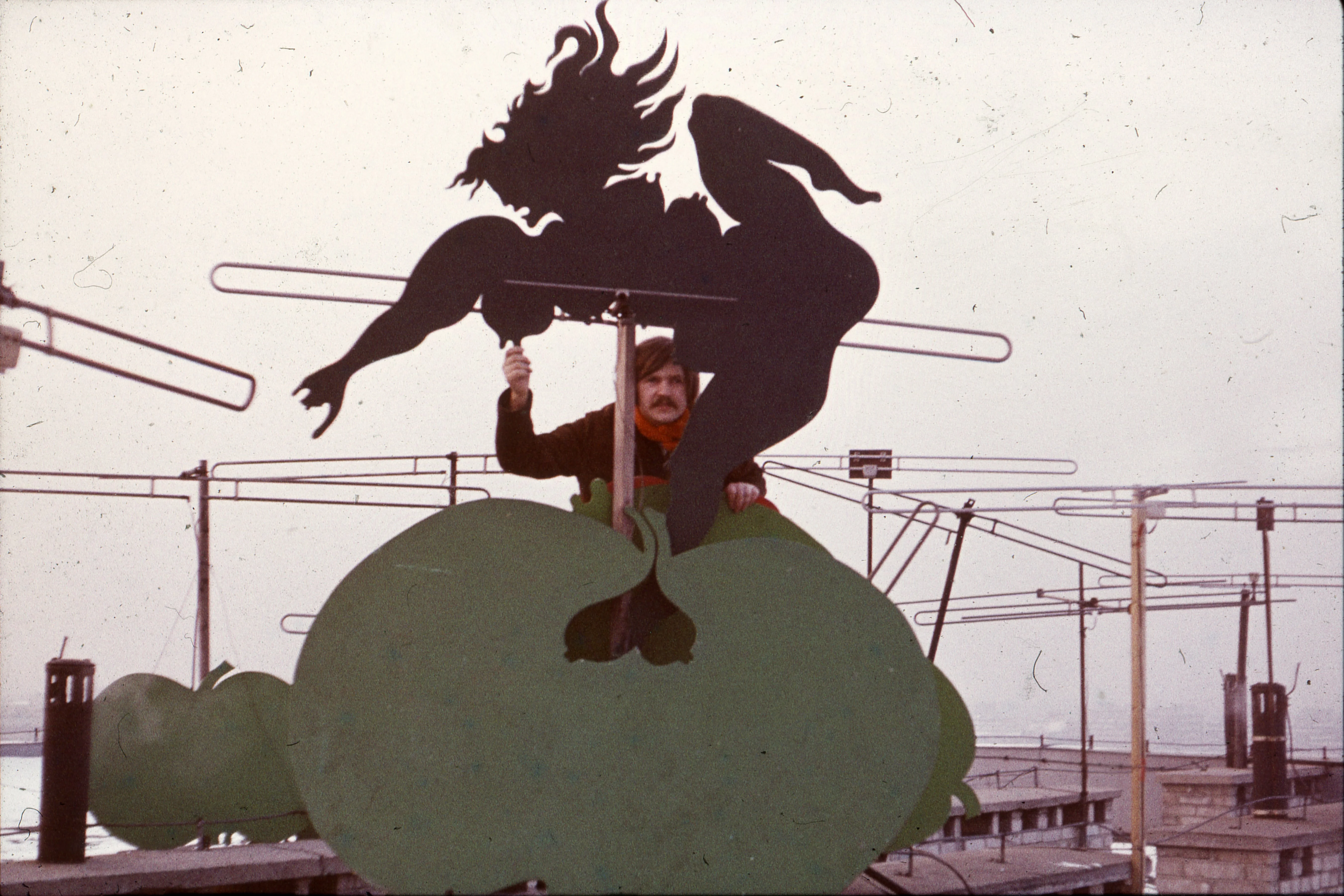
Another incredibly magnetic element in Dobkowski's painting is the unique way he approaches the imaginary space. Even though the compositions are made from flat colour spots, they are unusually spacious due to the colour contrast. Thanks to the combination of intense green and sharp red, the shapes seem to take on a three-dimensional form. This is by no means coincidental. The artist's early interest in introducing painting forms into real space is revealed upon examining the notebooks that he filled during his time spent at the Academy. With time, Dobkowski began to cut out silhouettes and place them in real space. Durable chipboard was the first material he used to create the ‘Extending the summer' cycle. Two extremely rare special forms were created as part of that cycle. The artists showed them at exhibitions, in public spaces, or less typically, in production halls. This type of event took place in 1969 in a ‘Polfa' pharmaceutical plant space in Tarchomin, where the duet's ‘Neo-Neo-Neo' exhibition was presented.
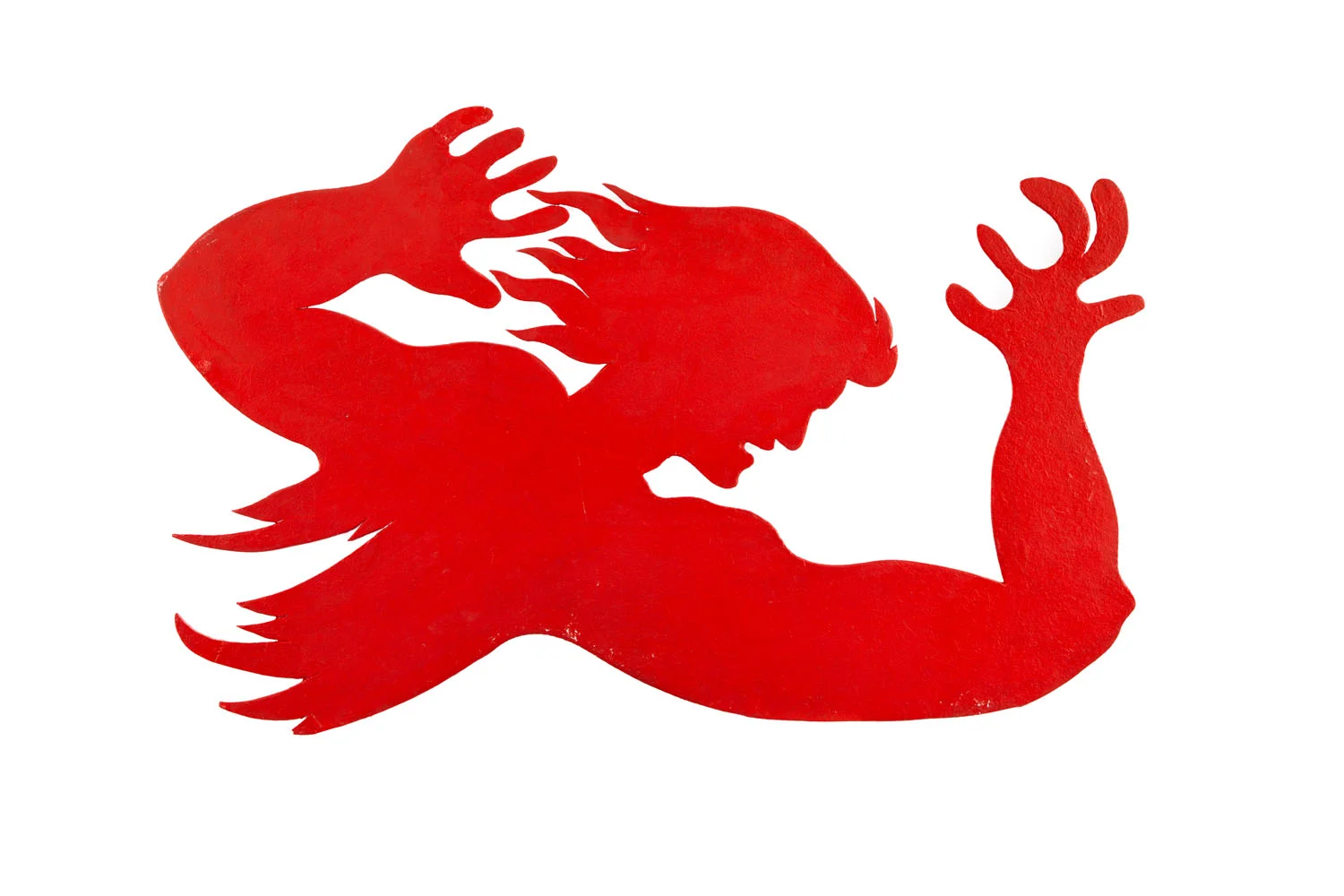
Another implementation of the concept was figures cut out of green and red foil. Slender, colourful shapes contrasted with the grey of the Polish public spaces from the communist period. Because of their light size and handy form, Dobkowski took them with him while travelling and organised ‘exposures' on sidewalks, lawns, benches, or trees. An example of such an event was his ‘exposure' in Częstochowa in 1969.
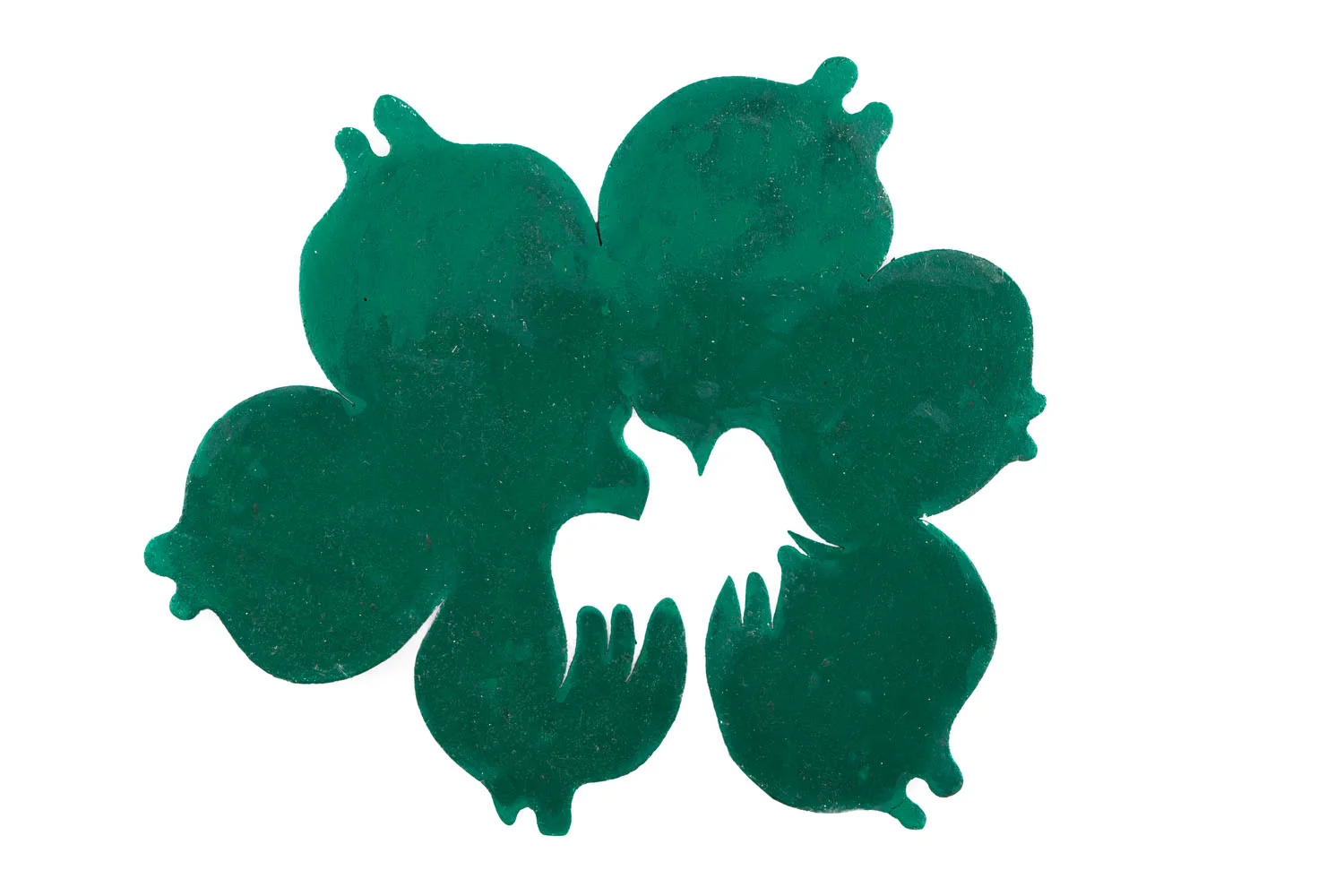
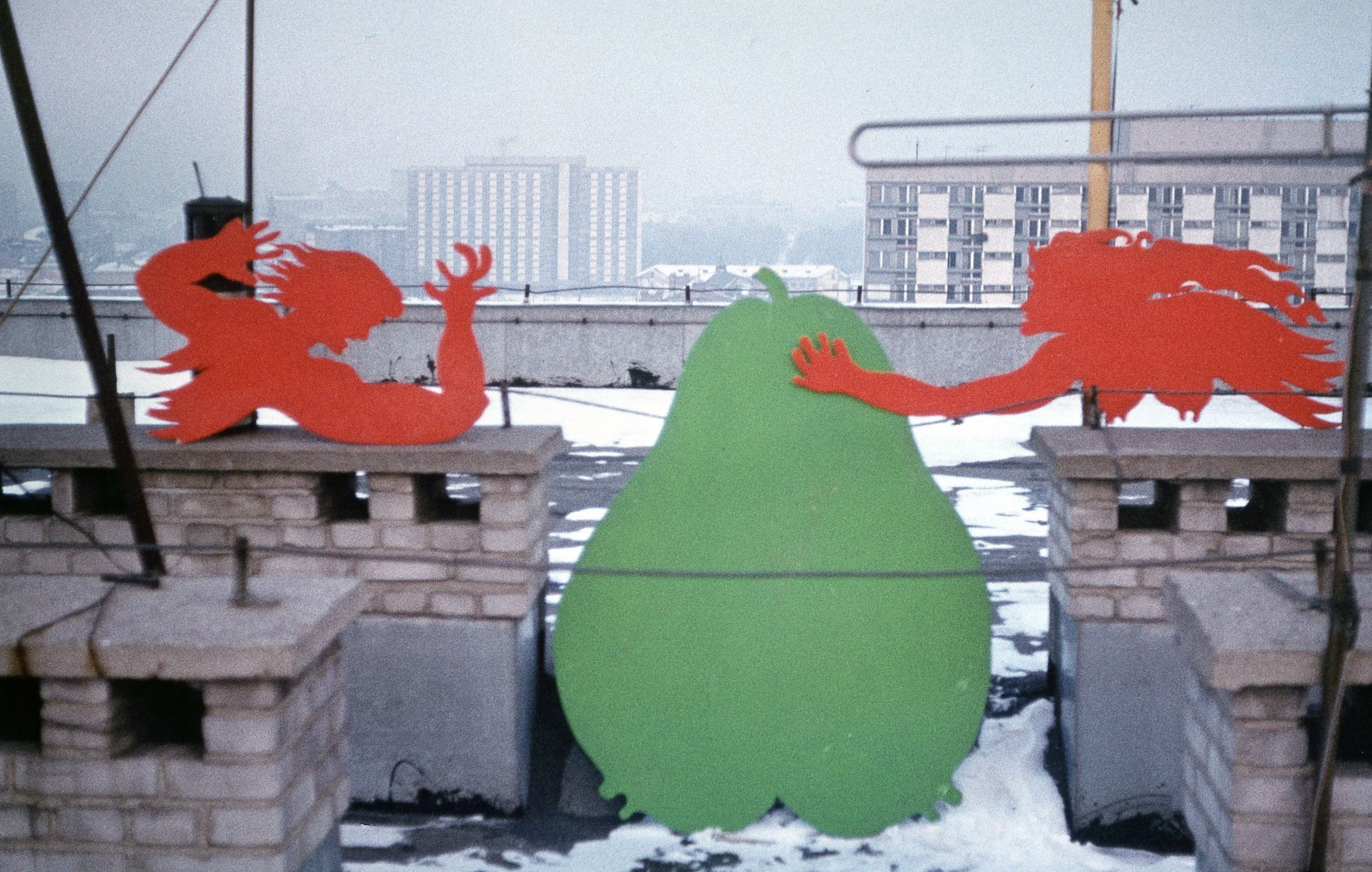
After the foil forms that were placed between two glass panes, Jan Dobkowski began to create glass forms – with the help of a glazier. The new material did not suit him due to its fragility. Plexiglass, which he brought from New York in 1972, proved to be better suited. From this material, the ‘Firstborns' series, consisting of 14 anthropomorphic forms, was cut out. After many years of displaying them in the windows of his studio, all works of that type have become part of the Museum of Modern Art collection in Warsaw.
See more
See more