
The Młodożeńcy Family
Wiktor Komorowski
There are not many Polish families that had an established fine artist as their heir. Families that had three fine artists among their heirs are truly unheard of. Even though two centuries ago artistic families of many generations were a common phenomenon, their number drastically fell. This came as a result of art knowledge being passed on in an academic environment – and passed down from generation to generation. Stanisław, Jan, and Piotr Młodożeniec are an exception. The family represents one of the most established Polish artistic clans among other such families – Kossak, Malczewski, Lutosławski, Młynarski, Rubinstein, or Mierzejewski. This list could surely be extended by a few more modern names such as Tadeusz and Tomasz Dominik, or Edward and Pola Dwurnik. Together with the mentioned names, the Młodożeńcy family are part of a canon of contemporary artistic clans.
The Brueghel family should naturally be considered the archetypical clan of fine artists with Pieter Bruegel the Elder – the clan's originator – at the forefront. The Breughel's were one of the biggest artistic families with four generations of artists. The numbers are the more impressive when we consider their extended family – the van Kessel's and the Teniers's. Including them, the number of fine artists in the family exceeds three dozen.
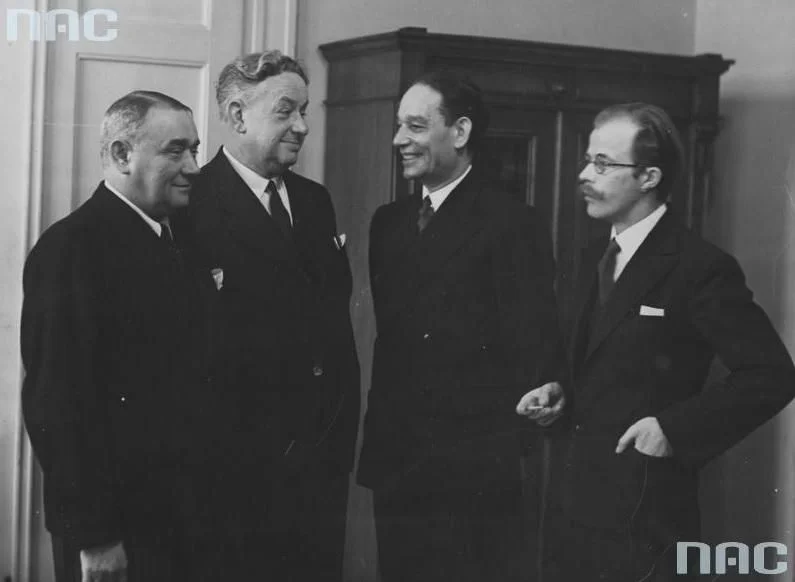
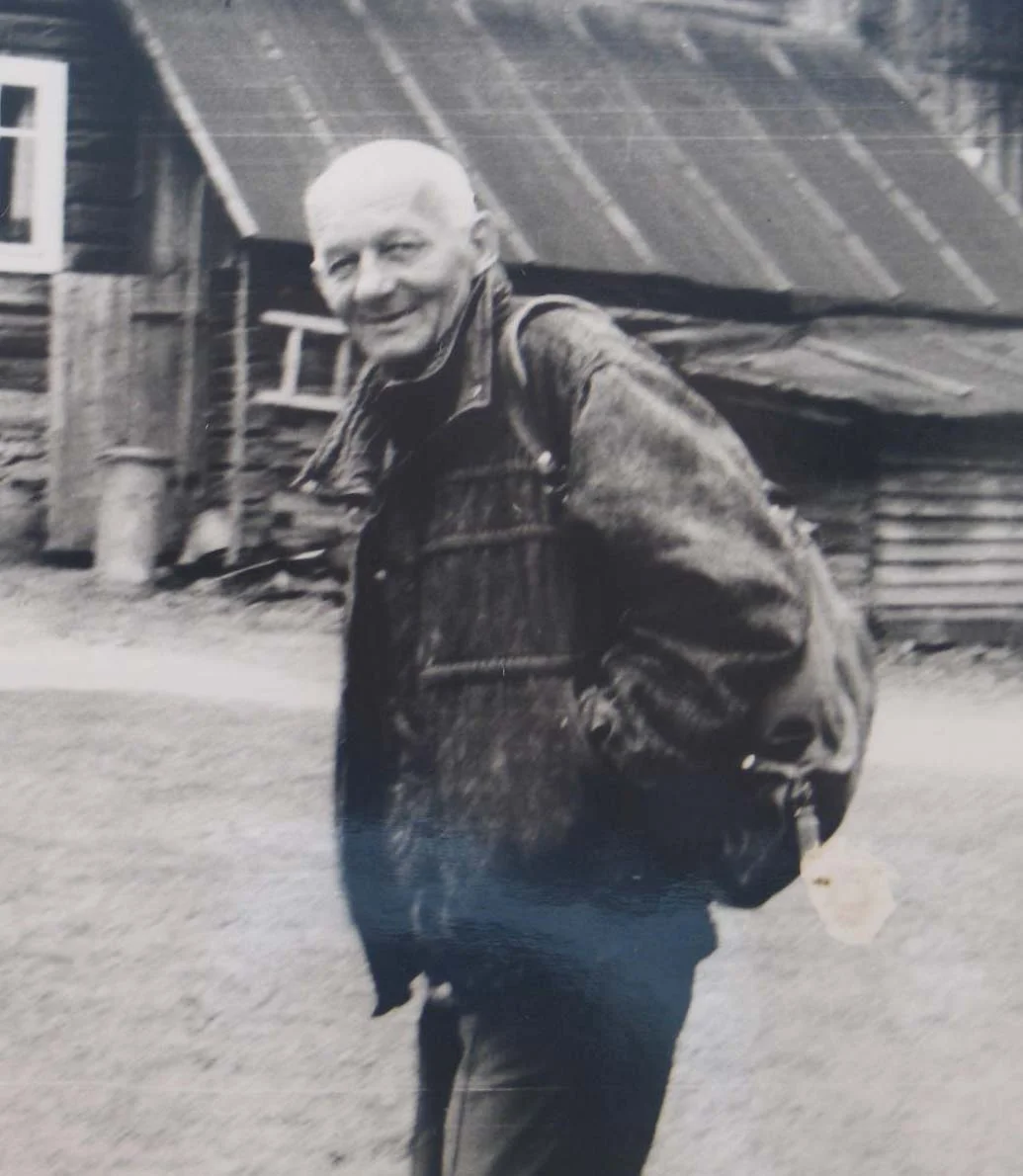
The artists in the Młodożeńcy family are not so numerous, even though they spread throughout three generations. The eldest – Stanisław Młodożeniec – wasn't a fine artist but a writer. Born in 1895, he became one of the most significant Polish poets creating in the futuristic trend. He was friends with Brunon Jasieński – a poet, prosaist, and playwright, and Tytus Czyżewski – a painter and a poet. With them, between 1919 and 1920, he established the Futuristic Club “Katarynka"). He also organised poetry evenings with his avant-garde group of friends from Cracow all around Poland. He became an established writer after the publishing of his books of poetry – “Kreski I futureski" (1921), “Kwadraty" (1925), “Futuro-gramy", and “Futuro-pejzaże" (1934). He also engaged in writing short stories and plays. Stanisław worked with Tadeusz Peiper and published in the Peiper-edited “Zwrotnica" paper. In 1939 he was taken in by the army and ended up in Hungary with his military branch and was interned. In the June of 1940 he fled the camp and got to Yugoslavia. After that, he travelled through Constantinople to Syria, where he joined the Polish Independent Carpathian Rifle Brigade. He served in the ranks of the Brigade in Palestine and Egypt. In 1941 he was left on leave from the army, and moved to Jerusalem to become the editor-in-chief of “Gazeta Polska". In 1942 he finally retired from his “war trial" and wound up in London, where his diplomatic journey began. Among others, he worked in the propaganda department of the Ministry of Internal Affairs of the government of exile. He also cooperated with “Radio Wolna Europa Europe". In 1957 he returned to Warsaw, where he died after years of a grave sickness. He had two offspring – Zuzanna Bukowska and Jan, who later became famous as a prominent graphic designer, literary virtuoso, and world-famous poster designer.
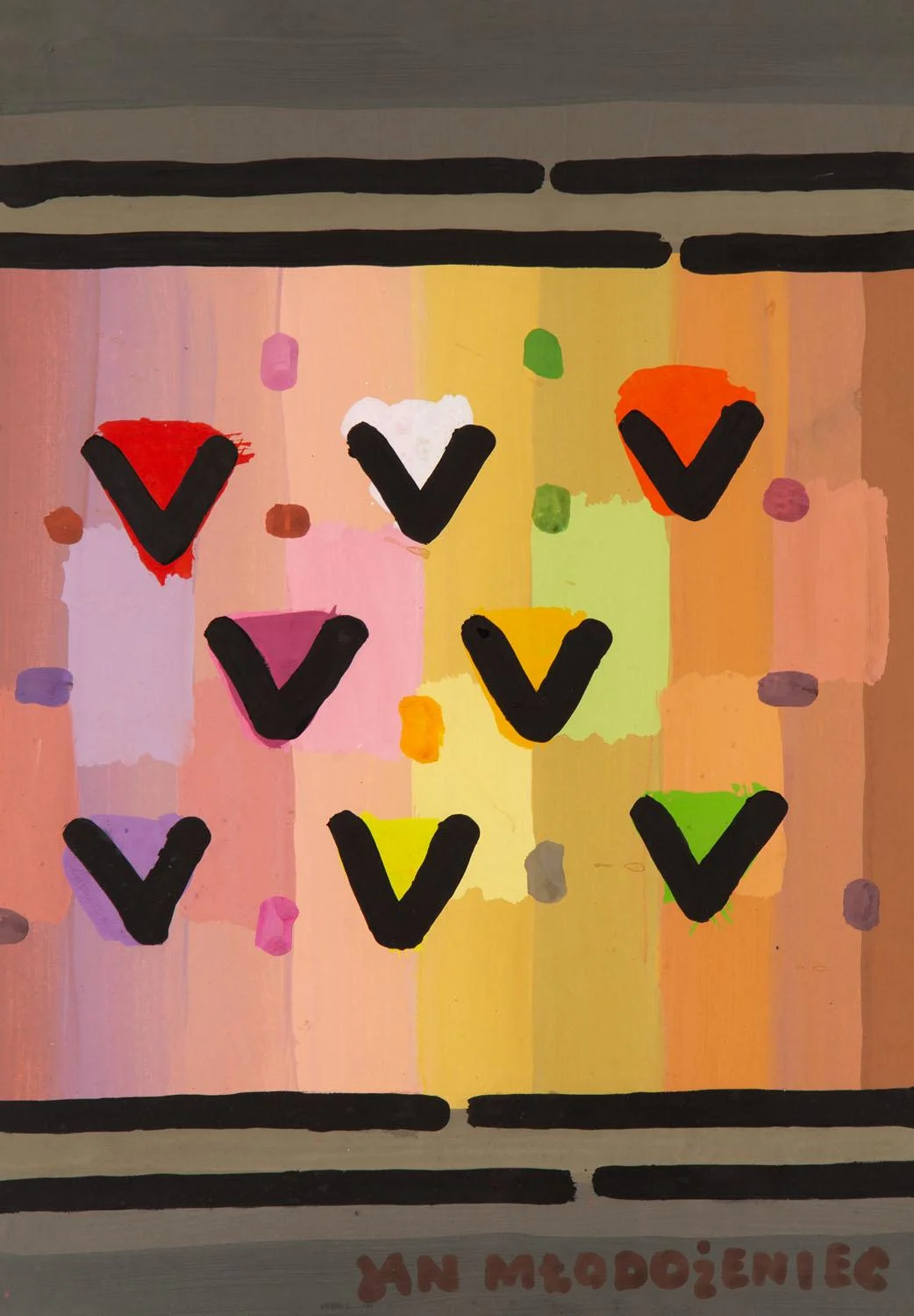
Jan Młodożeniec was born on the 8th of November 1929 in Warsaw. Between 1948 and 1955, he studied graphics and poster design at the “Wyższa Szkoła Sztuk Plastycznych"– later known as the Academy of Fine Arts – where he was taken under the wings of Professor Henryk Tomaszewski. After graduating, he devoted himself to the designing of movie posters. His posters “Once Upon a Time in America", “The Godfather", or “The Great Gatsby" synthesise his artistic style, which is full of skilful juxtapositions of colours and has a characteristic rigor of the composition. Both those elements make it impossible to mistake his works for someone else's. Jan Młodożeniec became a pillar of the so-called “Polish School of Posters". He was one of the few Polish artists whose works were sold overseas. Moreover, he was awarded some of the most meaningful graphic design awards around the world. He referred to his works as “individualistic portraits" which emphasised the individualism of his serially reproduced work. Jan Młodożeniec had a personal approach towards his works observed in the way he manually worked on different fonts styles and later attached them to his works.
Even though each of the three Młodożeniec family members represents his own style, they all have one thing in common – the use of colour. One can see that often the works are dominated by saturated colours. This manifests itself in both the father's and the sons' works. In one of his interviews for "Polskie Radio ", Stanisław Wilkoń once said it was unusual to understand the use of colour the way Jan Młodożeniec did (The figure of Jan Młodożeniec in Ewy Prządka's program from the “Portrait of an artist" series, Polish Radio, 11th July 1997). This extraordinary ability to comprehend colour may also be found in the works of Stanisław and his brother Piotr.
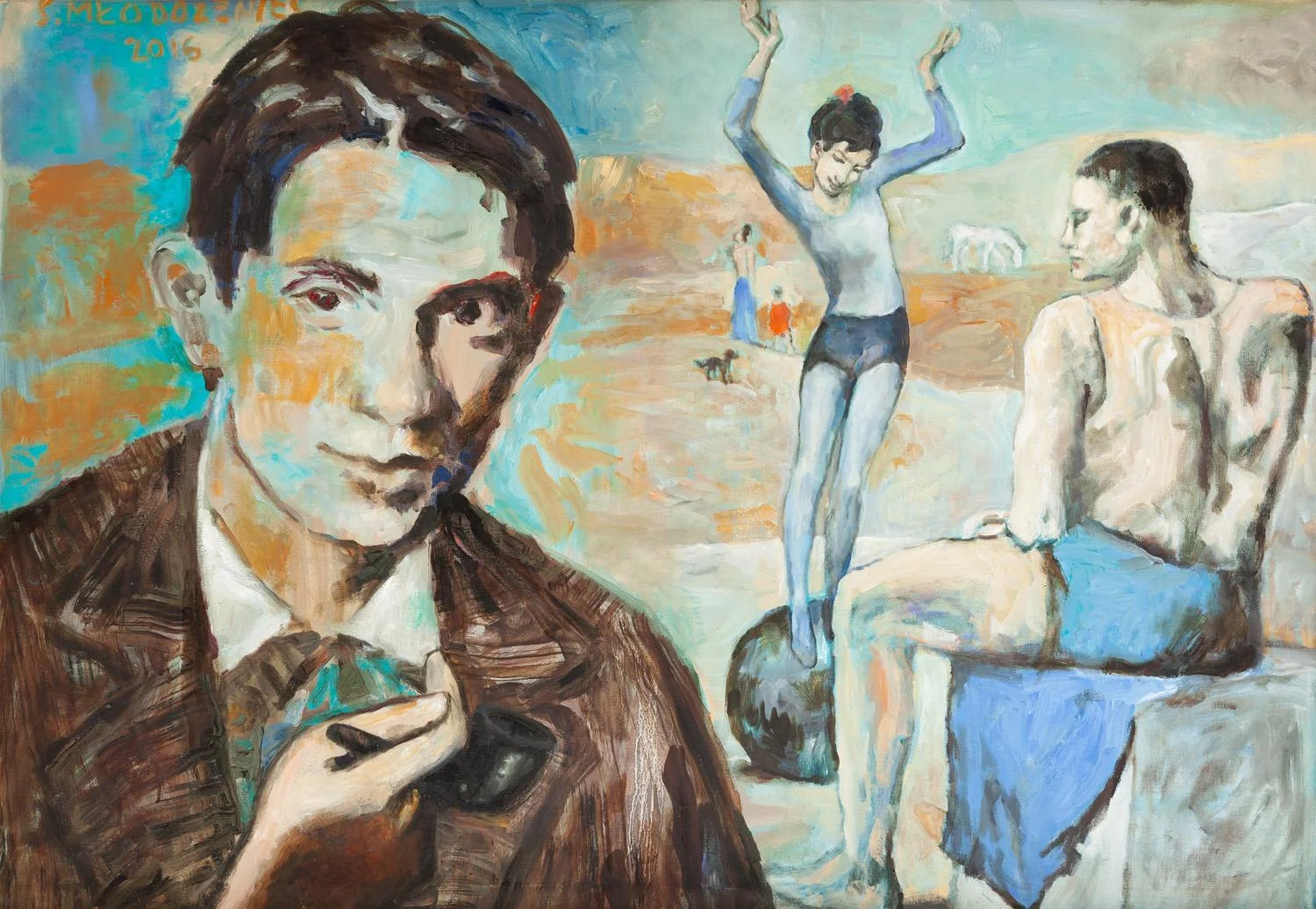
In 1978 Stanisław Młodożeniec graduated from the Faculty of Painting at the Warsaw Academy of Fine Art. He studied there in the workshops of Michał Bylina and Jacek Sienicki. During his last years, he created a series of works referring to the heritage of genius artists. His oil paintings such as “Miles Davis" and “Hendrix" from 2016 or “Picasso" from 2019 show the artists at work. Davis is playing his trumpet. Hendrix appears to be in a moment of musical epiphany. Picasso seems to be carefully studying the viewer standing in front of the painting. In Stanisław Młodożeniec's works there are also examples of graphic works. Among others he created a humorous linocut titled “Bruegel". In this work he used some of the most recognisable motives used by this 16th-century master. From 1983 on, Stanisław Młodożeniec lived and created in the United States. However, he had his works exhibited in Poland once every few years. He took a particular liking in New York, and the City quickly became one of the main themes in his works. He also sought inspiration in the work of the avant-garde artists and naïve art creators. In the June of 2013, the London-based Saatchi Gallery exhibited Stanisław Młodożeniec's works at “Polish Now: Presented by Abbey House".
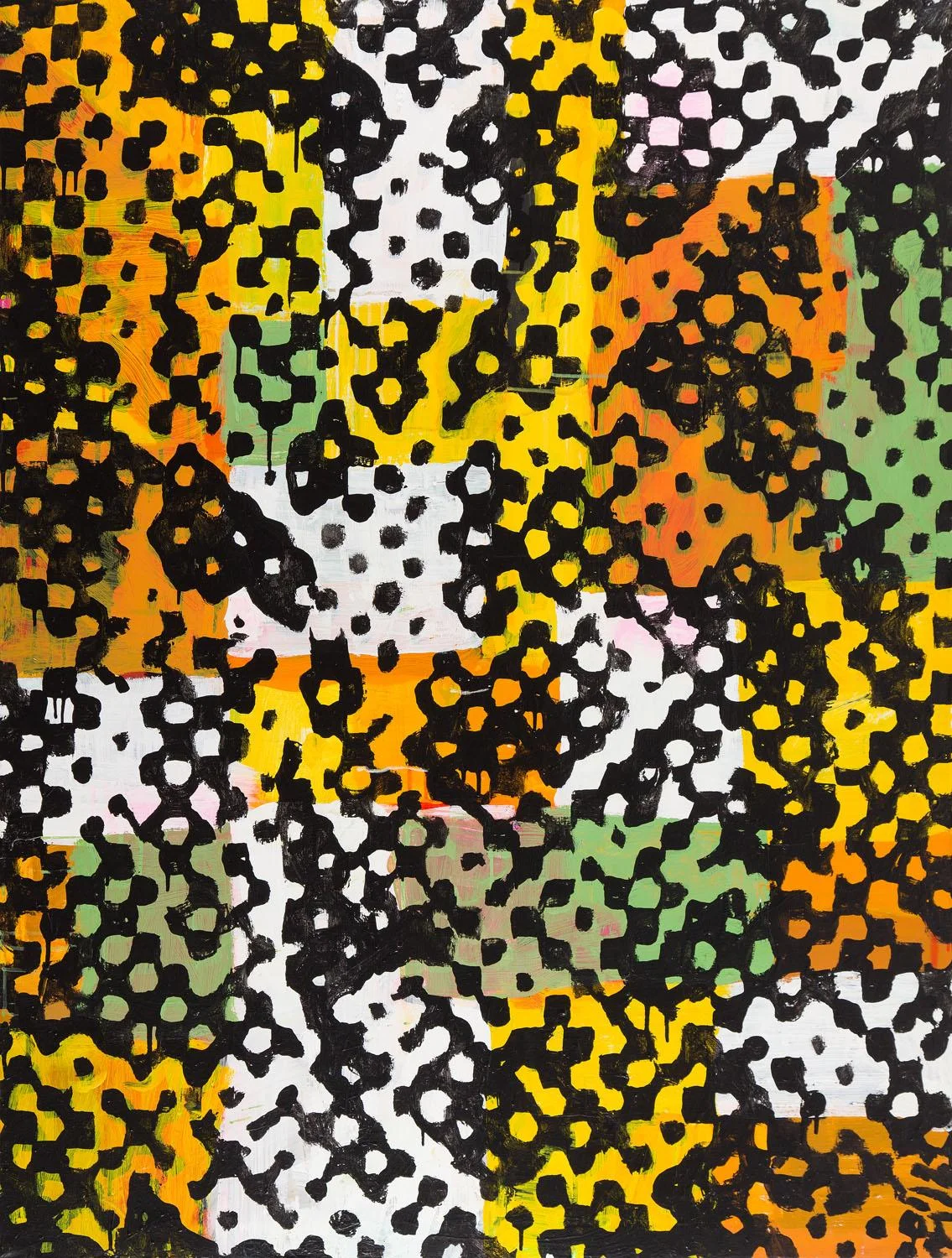
Piotr Młodożeniec mainly focuses on painting and in most of his works one can easily spot the influence of neo-expressionism. They are characterised by a specific graphic style that the artist developed after undertaking a series of experiments concerning the area of graphic design. An element characteristic for the painting style of Piotr Młodożeniec is a raster net that the artist frequently includes in the composition of his paintings. The raster net with different mesh densities tends to partly cover the composition of a given piece of art – creating two parallel spaces. Graphic design was also an important branch of Piotr Młodożeniec's work. He collaborated on it with another painter – Marek Sobczyk. It was with Sobczyk that he founded “Zafryki" in 1999 – an artistic company designing typographies, logos, graphics, even advertising campaigns. In 2001 Piotr Młodożeniec designed a Coexist sign – where the letters C, X, and T were replaced by a Muslim Crescent, Jewish Star of David, and a Christian cross. The sign was designed at the request of the Museum of the Seam in Jerusalem and was part of a collection of 36 billboards created by brilliant designers. The Coexist billboard was set up in some of the biggest cities around the world. It was also used by the band U2 during their tour “Vertigo" in 2005. It was precisely his experience in graphic design – which manifests itself in the accuracy of graphic synthesis, the skilful application of graphic design, or the precision of the lapidary expression – that influenced the character of the abstract compositions created during the artist's late years.
The Młodożeńcy family made their mark – no doubt a very colourful one – on the Polish art of the last decades. The works of the three artists become especially intriguing when put side-by-side in one space. Only then can you appreciate the common traits of the works. Among them is the use of colour but also the adoption of dark contours, or a nonchalance painting the canvas. The latter can only be associated with the most brilliant artists. Yet, it is not the technique but the unobtrusive humour and a certain lightness of the composition that place the Młodożeniec family in the canon of contemporary Polish artists.