
The Icon of Sculpture: Igor Mitoraj
Igor Mitoraj was one of the most renowned and recognizable sculptors. His fame extended far and wide, and his artworks can be admired in places such as Rome, Venice, Pompeii, and Florence. By the end of 2023, Mitoraj Museum will have been established in Pietrasanta. The institution will be established with a total area of almost 2,500 square meters among the famous quarries, where artists such as Michelangelo and Henry Moore worked. During our monographic auction dedicated to Mitoraj, you can see the master's works. You can also bid on the objects until July 7th.
Who was this extraordinary artist?
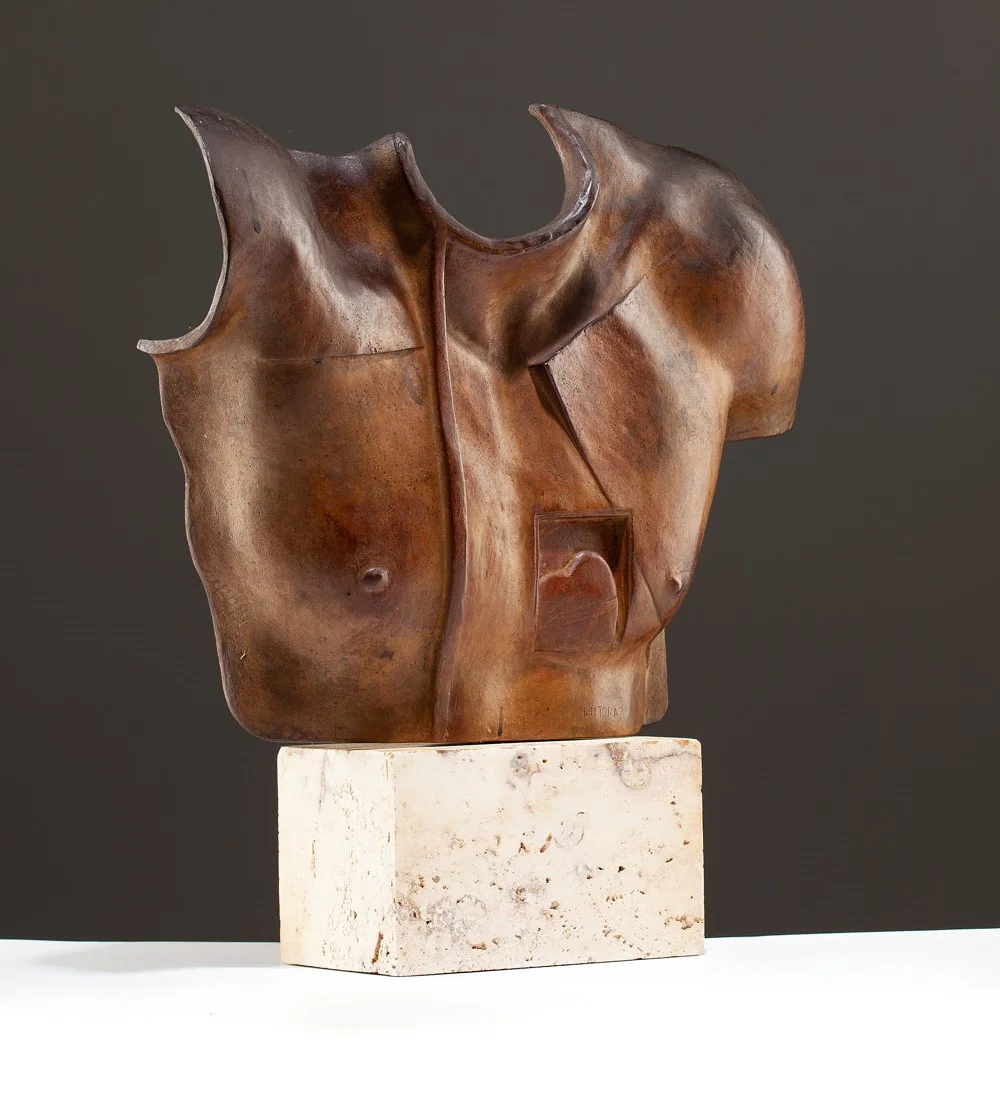
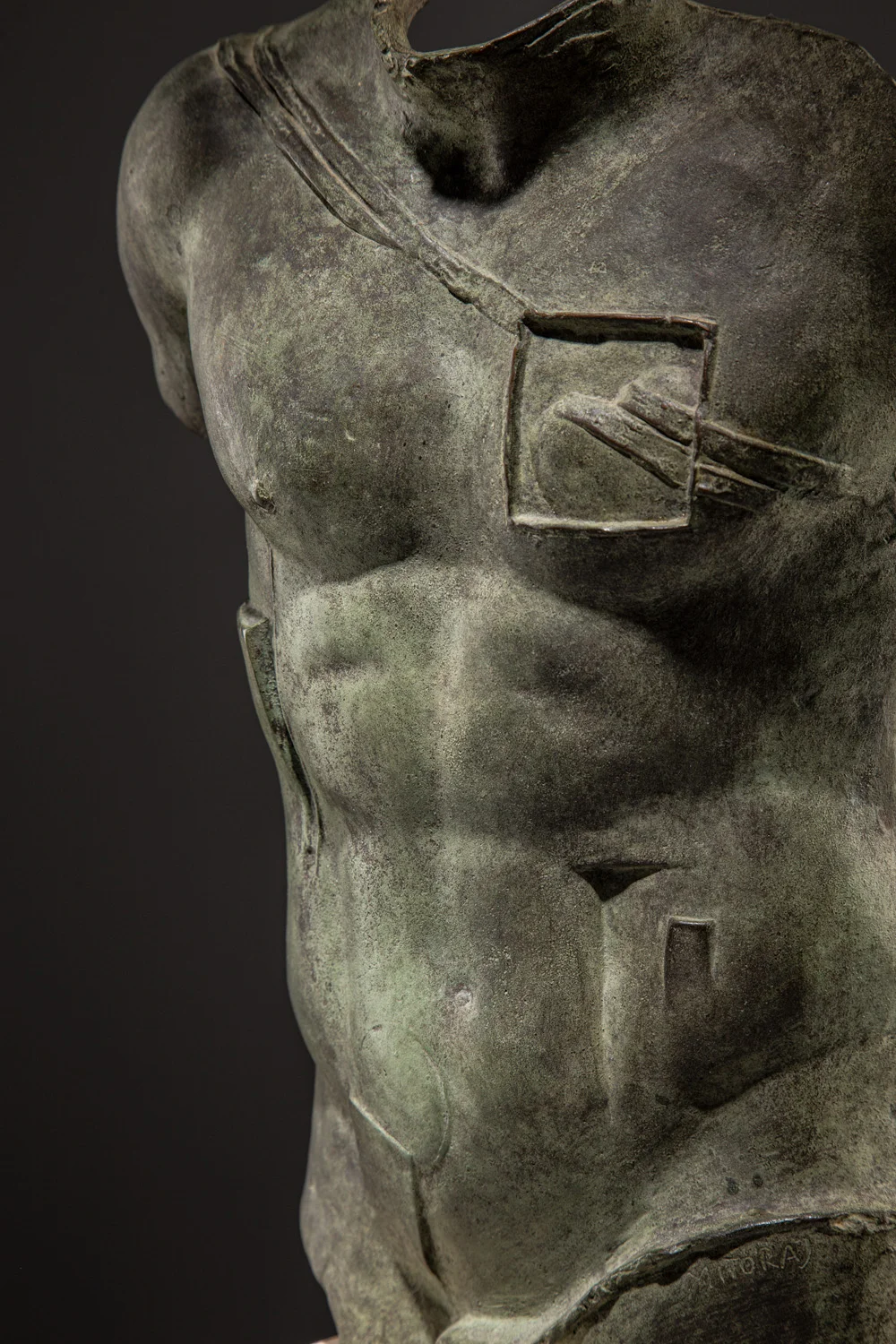
Igor Mitoraj was a sculptor whose creativity consistently revolved around themes related to the human body, especially the male form. His works were characterized by muscular torsos, bodies devoid of hands or heads, and a distinct classical form- these were the most prominent features of his art. The successive sculptural forms that emerged from his studio over the years were variations on this bodily theme, which the artist perceived not only in a material dimension but also symbolically and spiritually.
Characteristically, his works drew inspiration from Greek and Roman mythology. Similar to artifacts from Mediterranean cultures, Mitoraj's pieces are often devoid of limbs or heads, but they differ from ancient remains in other aspects-often featuring elements such as fragments of bandages or cracks. However, his works fundamentally differ from ancient relics. The artist did not merely copy the old masters; rather, he engaged in a dialogue with them. What interested the sculptor the most was the invisible -the sculptures emerging from his studio bore signs of being sometimes deprived of certain elements, chipped, cracked, or bandaged. The artist explained that the bandages symbolized protection from the world, a need he often felt, especially during his childhood.
Igor Mitoraj had an extraordinarily eventful biography. He graduated from the Fine Arts High School in Bielsko-Biała and later, in 1963, began studying at the Krakow Academy of Fine Arts. It was at the Academy that he came under the mentorship of Tadeusz Kantor, from whom he studied painting. The main teachings he received from his master were an uncompromising approach to art and being an artist, as well as experiencing emotions fully. Kantor taught the sculptor to look at artwork in the right way. The knowledge gained at the Academy determined his future. Apart from guidance on the craft and art per se, Mitoraj heard from Kantor that only by leaving Poland could a young artist spread his wings and achieve success. The decision was also influenced by the fact that Mitoraj never knew his father-a French legionnaire with whom his mother had a romance while staying in Germany.
In 1968, he left for France. The first years after his arrival were not easy. To enjoy the benefits of his new life and study at the renowned École des Beaux-Arts, Mitoraj took on various tasks. During this period, he worked as a photographer's assistant and a porter. With some of the first earned money that he managed to save, he attempted to cast small bronze sculptures, which he then showed to the owner of the La Hune gallery. The first exhibition of Mitoraj's work took place in this Parisian gallery. One success led to another, and shortly after, the artist was asked to prepare and organize an exhibition for the ArtCurial gallery in Paris. To prepare the works for the exhibition, Mitoraj traveled to artistic foundries and marble sculptors' studios in Pietrasanta, Italy. It was there that some of the most important sculptors had their studios, including Henry Moore. In these charming surroundings, Mitoraj created his first monumental sculptures from white marble.