
THE ABDUCTION OF HIPPODAMEIA BY SMUGLEWICZ - 10% GRAPHIC ART, 90% PAINTING
The scene presented in "The Abduction of Hippodameia", in a nutshell, resembles a situation in which you invite someone to a celebration (a wedding, in this case) and the person, having drunk too much, starts to "make troubles". This is what happened at the wedding of Hippodameia (daughter of King Oenomaus) and Pirithous. Everyone knows that it is generally better not to invite Centaurs to any celebration (they have pretty bad manners).
This time Eurytus, having drunk too much, decided to kidnap the bride. He holds the bride by the waist, snatching her from the hands of newlywed husband Pirithous. Theseus attacks the drunk Centaur. All ended well and the Centaurs are soon to be asked to leave the wedding. The scene and most of the depicted figures strike with their static and at the same time dynamic composition. Their dynamic movements seem to be strangely static, which is typical of classicism - each action, however heroic, should retain the dignity.
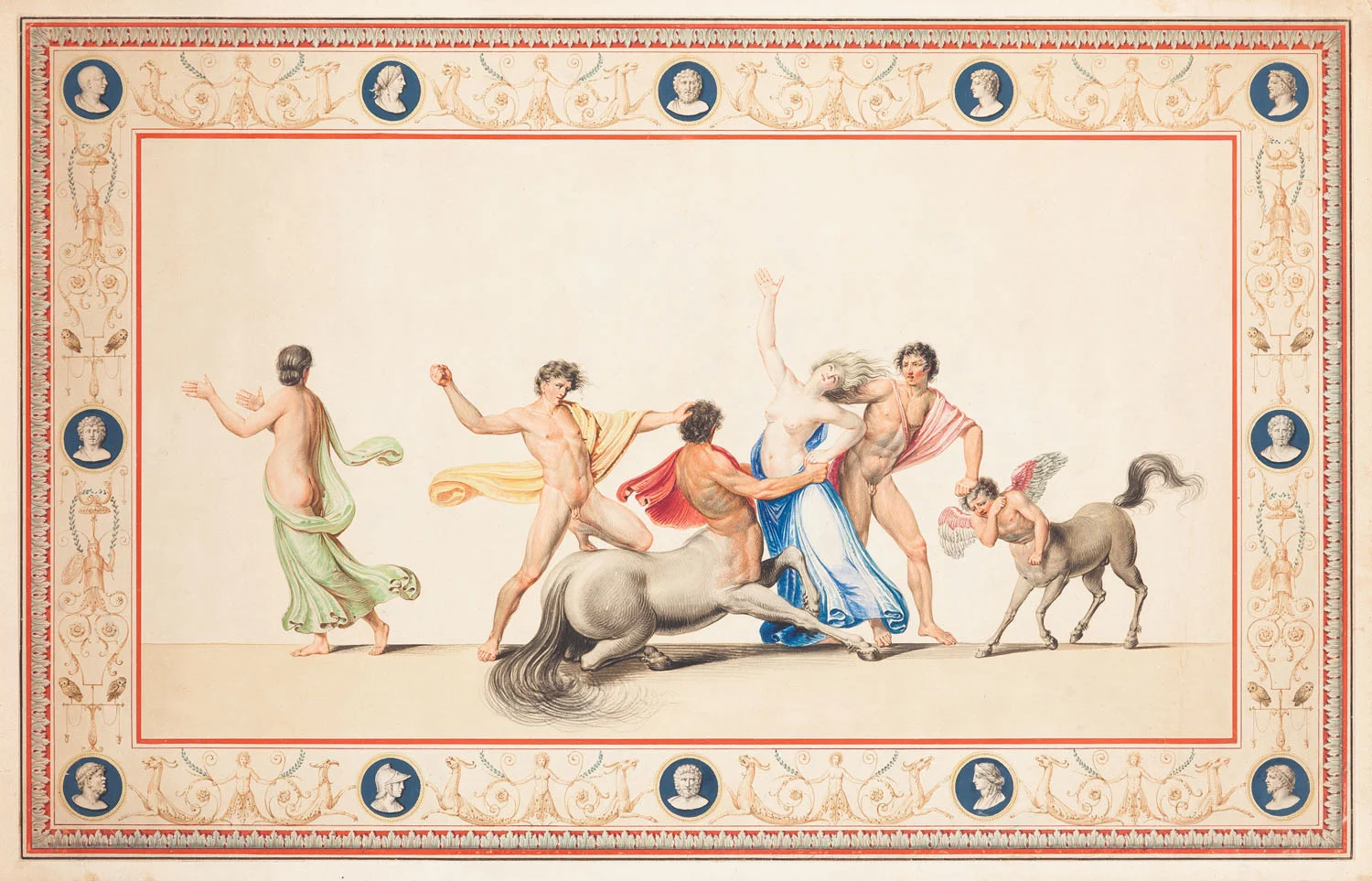
The work comes from "Vestigia delle Terme di Tito", one of the most important publications of the 18th century which presented what was left of the ancients. In fact, the publication described the interior of Nero's Golden House, confused at that time with the public baths of Emperor Titus, built on its ruins. Franciszek Smuglewicz, an outstanding artist of Polish classicism who received a scholarship from King Stanisław August Poniatowski, participated in the making of the book. Two versions were made: black and white and in color, with the latter being the exclusive one, issued only in thirty copies and twenty times more expensive than the black and white. Its price must have been considerable since it cost as much as Stanisław Kostka Potocki's six-month allowance during his first trip around Europe in 1772. Illustrations from the color version of "Vestigia" are very rare and can be found in the collections of only six museums in the world.
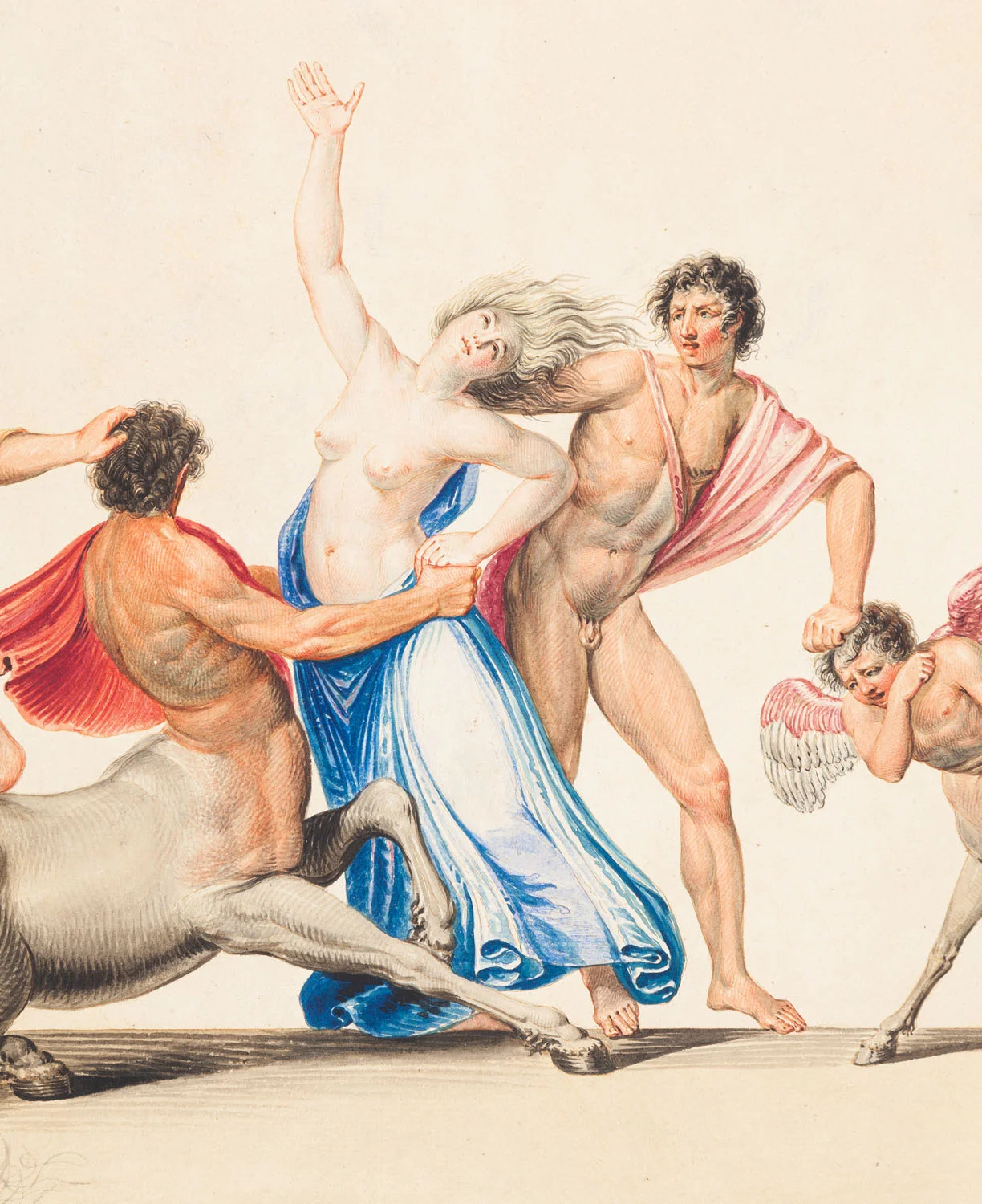
The version in color was made in a very interesting technique. Collectors of graphic art may examine the print for a long time, looking for marks of engraving. They look “disturbingly" painterly, and one may assume that the work is just Smuglewicz's finished drawing in color. The truth lies somewhere in between. Not in between, actually. What we have here is a work on paper "superimposed" on the graphic "skeleton". The artist used an etching plate, (very delicately) engraving the lines. These lines are so subtle that it was often believed that the works were painted with gouache and watercolors on paper. It is not surprising, as what see here is painting making use of graphic contours.