Sculpture of the interwar period - Classicism, avant-garde and folk
The interwar period was a time of fascinating cultural changes. These are the two decades suspended between wars, full of scandals, conflicts, artistic experimentations and the birth of new ideas. It is a time when both new artistic trends come to the fore, and concepts that were well known in the past are reborn. This is a new era for the new man, who, having just terminated an armed conflict, devoted himself to fun and creation, remaining completely unaware of the impending, next historical catastrophe.
Of course, the artists, have reacted to the changes that took place with the successive years. In the course of two decades, as many new thoughts have emerged as those that have not yet arisen in the periods preceding this era. Extremely interesting phenomena took place in the field of Polish art. It retained its individuality in this artistic ferment and brought an individual and original element to European art. Apart from painting, graphics and artistic craftsmanship, sculpture did not remain indifferent to the changes taking place. The works of early art gathered at our April auction perfectly portray this incredible variety of trends and at the same time confirm the enormous talent of Polish artists.
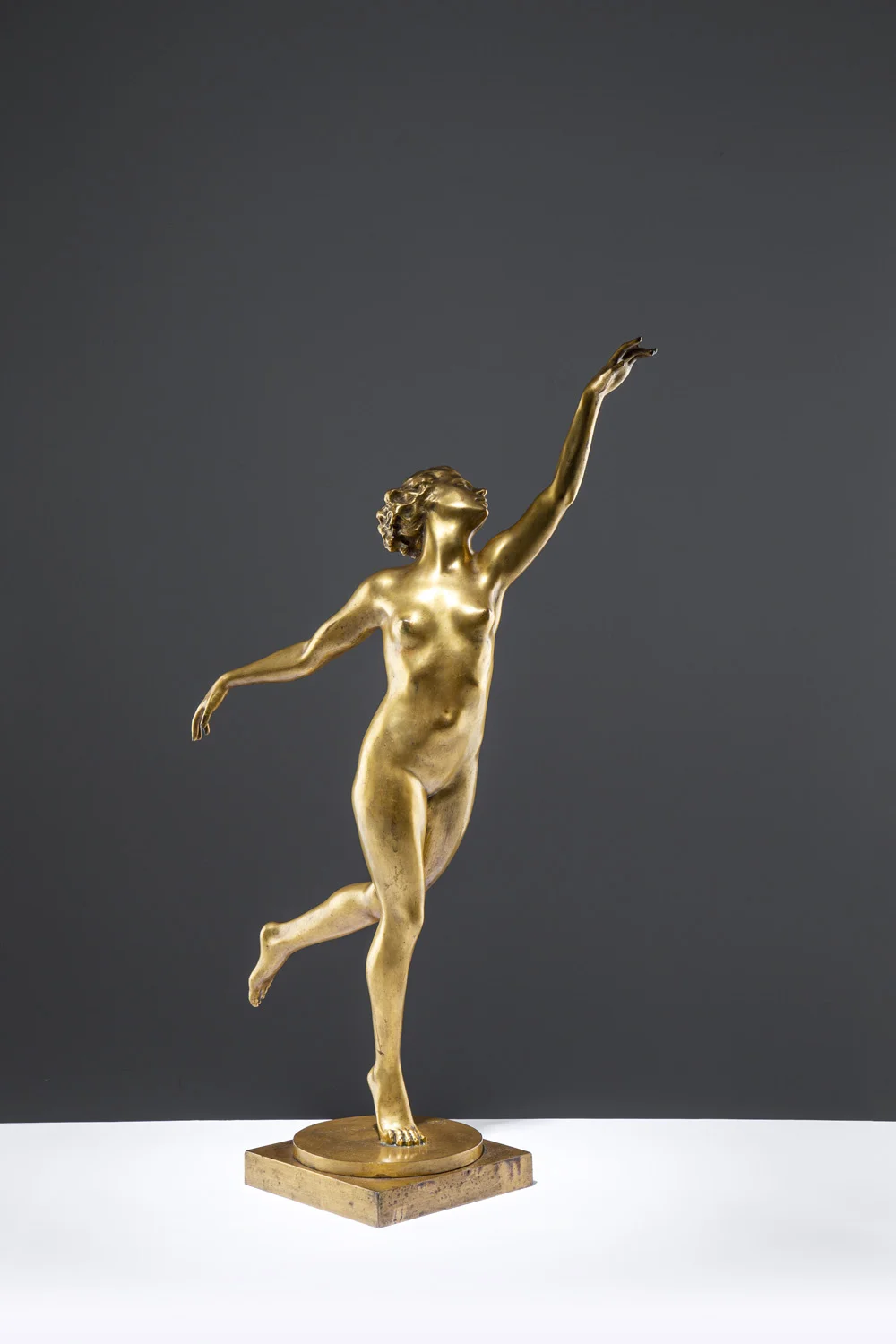
One of those valued and recognized artists of the interwar period was Stanisław Jackowski. His work, which has been developing dynamically since the 1920s, consists mainly of monumental sculptures. For example, the figure of Jan Kiliński in Warsaw's Old Town or the figure of the Reaper from the park next to the palace in Śmiełów can be mentioned here. Undoubtedly, however, his most famous work of an iconic character is the figure of a dancer displayed from the end of the second decade in a rose garden - a picturesque corner of the Skaryszewski Park in Warsaw's Praga district. It was the woman and her body that were for Jackowski an inexhaustible source of inspiration, from which the artist drew abundantly. The creator showed the characters in sophisticated, tasteful and elegant poses. The figures of the dancers gave him the opportunity to study movement and gestures. The fanciful lines noticeable in the structure of Jackowski's sculptures are a clear reference to the art of the turn of the century, in particular decorative art nouveau. The popularity that the artist gained in his time is evidenced by his works themselves. The nude dancer offered at the auction was created in one of the Parisian foundries, which shows that Jackowski's fame went far beyond the borders of Poland.
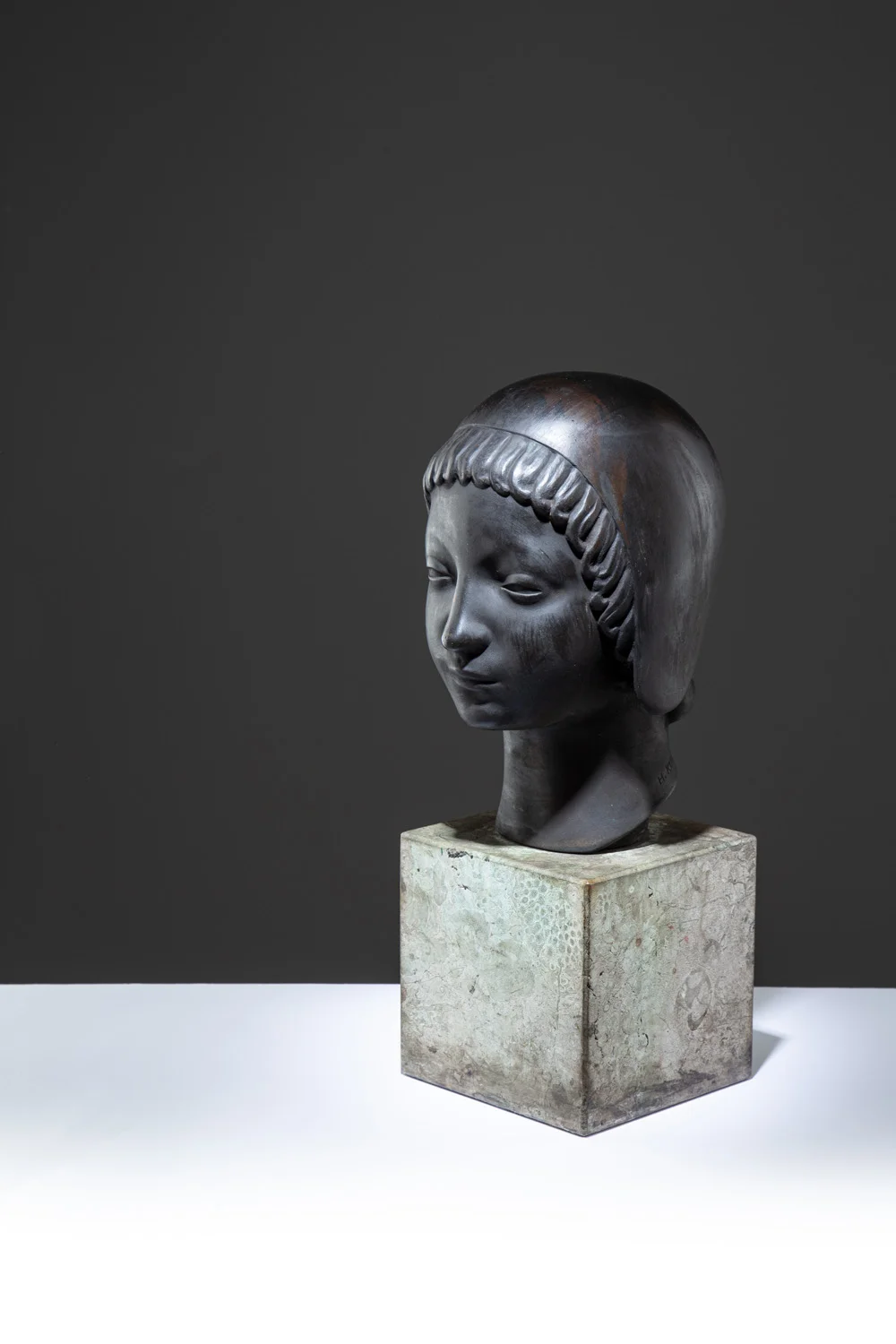
Another very popular form in the interwar period was "The Girl's Head in a Hood" by Henryk Kuna. Interestingly, it was created much earlier, around 1910, and is associated with the artist's second stay in Paris. When Kuna came to the Seine in 1903, the city of lights made a great impression on him. It was then that he encountered the giant of modernist sculpture - August Rodin. Under his influence, he began to create Art Nouveau-impressionist sculptures, in which fanciful lines and irregular surfaces are noticeable. It seems, however, that it was the second stay in the French capital that had a decisive influence on the artist's career. In 1913, Kuna met in Paris with an extremely popular French sculptor at the time, Aristide Maillol. Thanks to his works and approach to form, he began to synthesize and slightly geometrize shapes. Paris museums, and in particular the spectacular works of the Louvre, additionally enriched his new inspirations. The statues of Oriental cultures, as well as the sculptures of ancient Greece, pushed Kuna towards the path of antiquity. The 'Head of a Little Girl in a Hood' presented in our auction offer is therefore a prelude to the concept which the artist had fully developed during the interwar period, working in the circle of the formerly known group 'Rytm'. The history of the building and its provenance are equally valuable. This sculpture was in the excellent collection of the Warsaw sculptor Karol Tchorek.
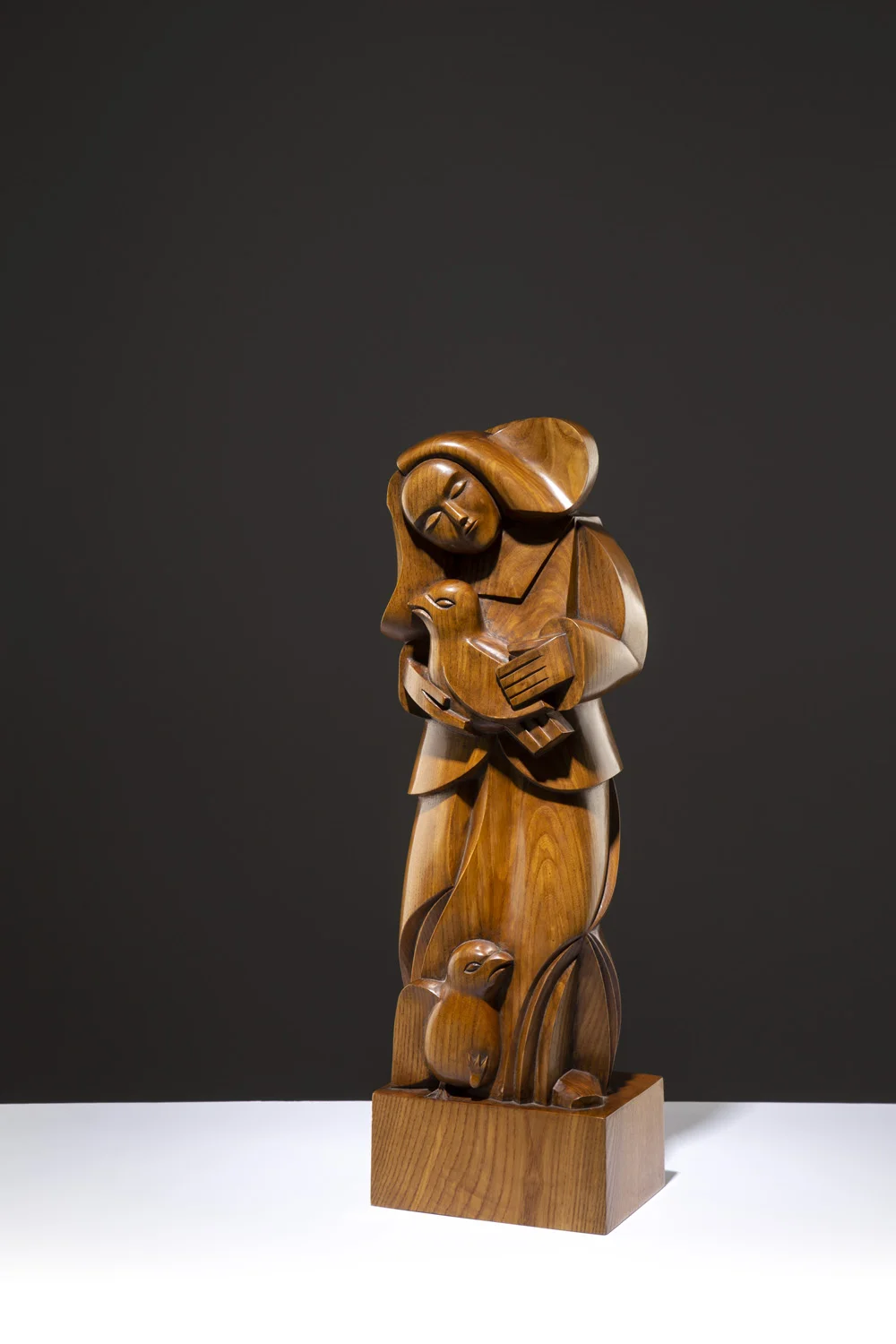
The formerly mentioned Stanisław Jackowski and Henryk Kuna are sculptors mainly associated with metropolitan environments. However, we should remember that the interwar period was also a lush development of the Zakopane artistic colony. It was then that a whole variety of the country's social descent came to Zakopane. Zofia Stryjeńska, Rafał Malczewski and Witkacy himself were active in the Tatra Mountains. The winter capital of Poland witnessed many scandals and fascinating within the art world. The 20s and 30s of the twentieth century was also a dynamic development of the so-called "Zakopane School". Although this artistic phenomenon has not yet been properly developed by the scientific history of art, it nevertheless arouses great interest among collectors, as evidenced by the constantly rising prices of works from this area. Many outstanding artists, often anonymous today, were active in the State School of Wood Industry at that time.
They drew on the folklore and colourful folklore of the Podhale region, combining it in a peculiar way with the achievements of the boldest avant-garde trends, such as cubism or futurism. These influences are clearly visible in the sculpture "Girls with birds" offered at our auction house on April 7. The extremely dynamic structure is composed here of separate, intertwining forms. The unknown artist from Zakopane assimilated the assumptions of the avant-garde very well, breaking up the shapes. At the same time, he retained the reality of the character. What is extremely important in the sculpture of the "Zakopane School" is also the truth of the material. The structure of the object shows both the rings of the mountain elm and the precise cuts of the chisel.
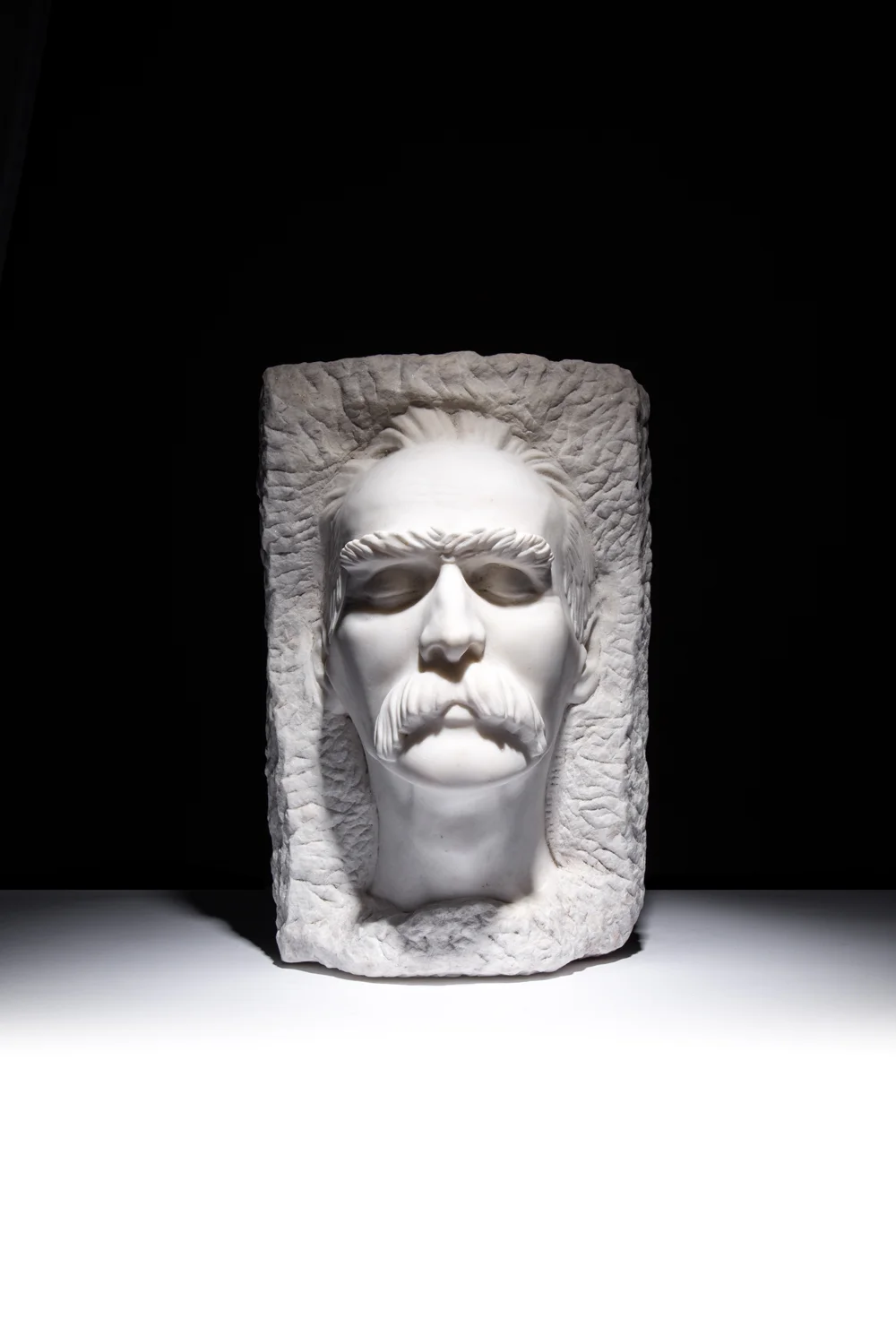
The 20s and 30s were also a cult of great figures and a flourishing of careers of artists who, in today's language, would be called celebrities. This state of affairs was conducive to the development of portrait creativity - both in painting and sculpture. The marble death mask of Józef Piłsudski presented in our auction offer fits perfectly into the glorification of national heroes that has been widespread during the time of the Second Polish Republic. This was related to the political situation and the enthusiasm that was still alive after regaining independence. One of such beloved figures was Piłsudski. The cult of the marshal intensified especially after his death. In the former Palace of the Krakow Bishops in Kielce, in 1938, its Sanctuary and the Museum of the Polish Legions were opened, designed by Stanisław Szreniawa-Rzecki. The location was not accidental, due to the fact that it is strongly connected with Piłsudski. In the space of the museum, a prototype of the nowadays lost death mask was placed, showing the face of the leader, rendered with reverence.
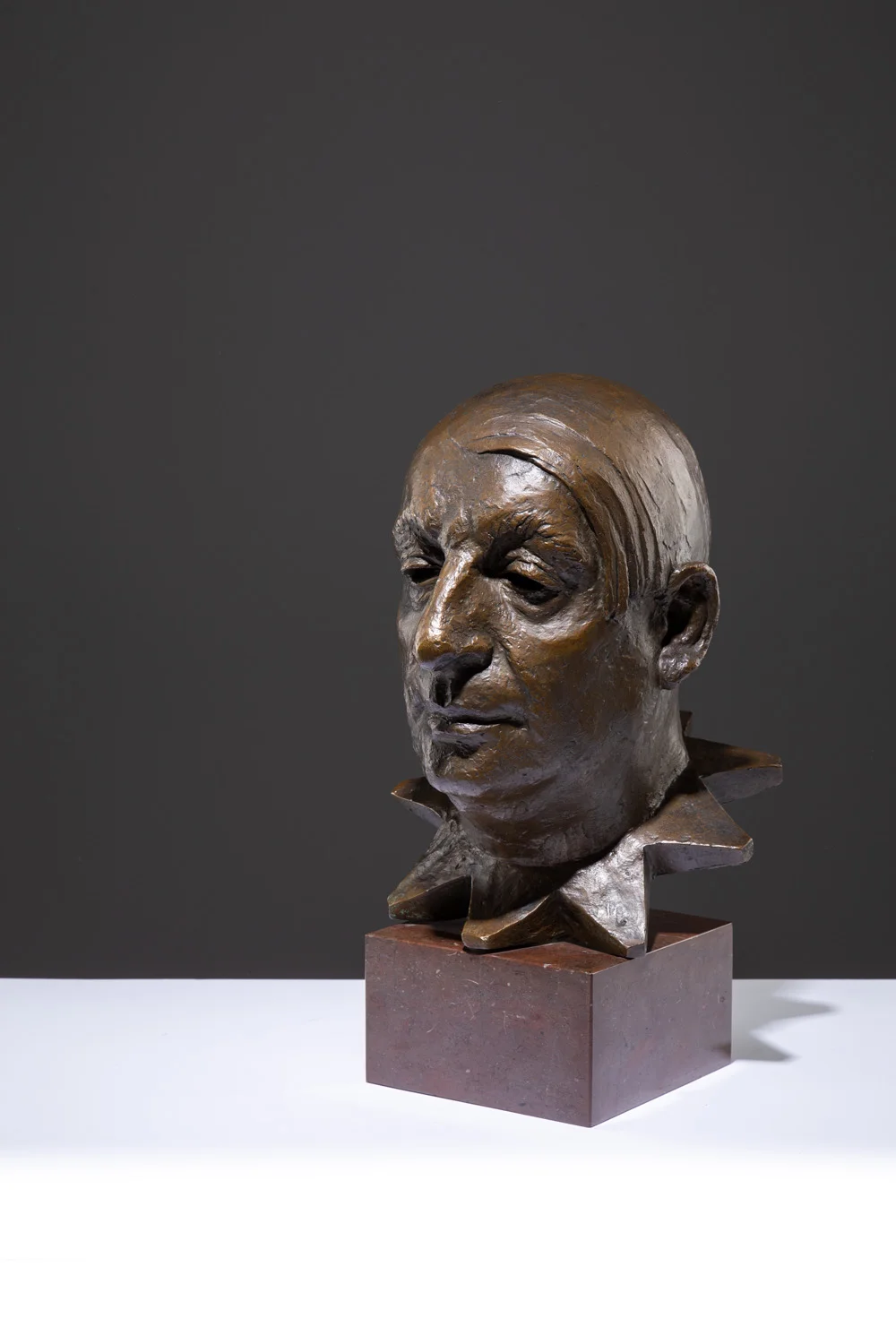
A completely different group of objects includes the bronze portrait of Leon Wyrwicz, which can be safely called the enfant terrible of the Polish cabaret scene. Extremely popular during the interwar period, the monologist and cabaret actor was associated with scenes in Krakow and Warsaw. As reported by the press, his performances, often referred to as the "Carousel of Humor", attracted crowds of spectators. Wyrwicz shocked not only through his acting, but also through his original, extravagant image. Here he is presented in a characteristic collar that reminds him of the figure of Stańczyk. The portrait offered at the auction is not only a high-class sculpture, but also a large collector's unique item, because Józef Henelt's works are a huge rarity on the art market.