
Roman Opałka's Astralography
Several short texts have been written about Roman Opałka's prints, but this episode in the artist's career remains largely unexplored. Opałka began as a printmaker working for the People's Army of Poland, creating posters using the technique of lithography. Many of his early works, such as "Tactile Studies" from the late 1950s, exhibited print characteristics, meaning they were "imprinted" or reproduced. These works were created on paper and covered with ink.
This method of execution naturally resembles the traditional drawing technique of wash. However, while wash is typically used as an addition to the overall composition, in this case, the gradations of diluted color and its variable intensity become the main focus of the image. Bożena Kowalska, an art historian and author of a monograph on Roman Opałka's work, as well as his friend, compared these works, due to their vertical format, to traditional Japanese painting. Opałka created "Tactile Studies" by applying ink to a surface and then transferring it onto paper, turning the work into something like a stamp or imprint that revealed the artist's activity. Opałka was deeply involved in working with various matrices, but his greatest successes were in the field of lithography.
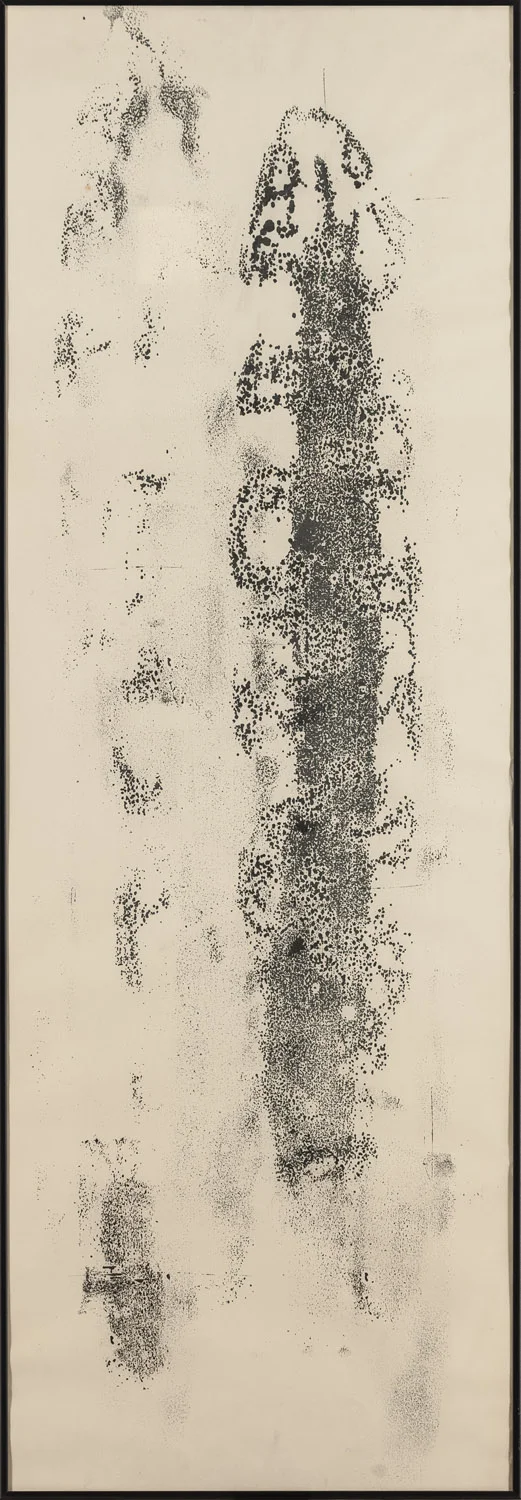
Although Opałka studied painting at the Warsaw Academy of Fine Arts, he was not exclusively involved in painting, which he is usually associated with. He also practiced other forms of creativity, such as graphic design, photography, medal making, and graphic techniques. Multiplication was one of the central themes in Roman Opałka's work. In the early stages of his career, it wasn't just his counted paintings but, more importantly, his prints that contributed to his international success. Opałka began receiving recognition for his prints with the "Description of the World" series. He was awarded the Grand Prix at the 7th International Print Biennial in Bradford for a etching titled "Adam and Eve." His prints were also appreciated at the 3rd International Print Biennial in Krakow in 1969. Until 1972, when he exhibited at the William Weston Gallery in London, printmaking served as a guiding light in his creative journey. During that exhibition, Opałka symbolically broke away from his previous printmaking work. He dramatically laid his etchings on the gallery floor and hung one of his "Counted Paintings" on the wall as an ideal, a direction he intended to follow.
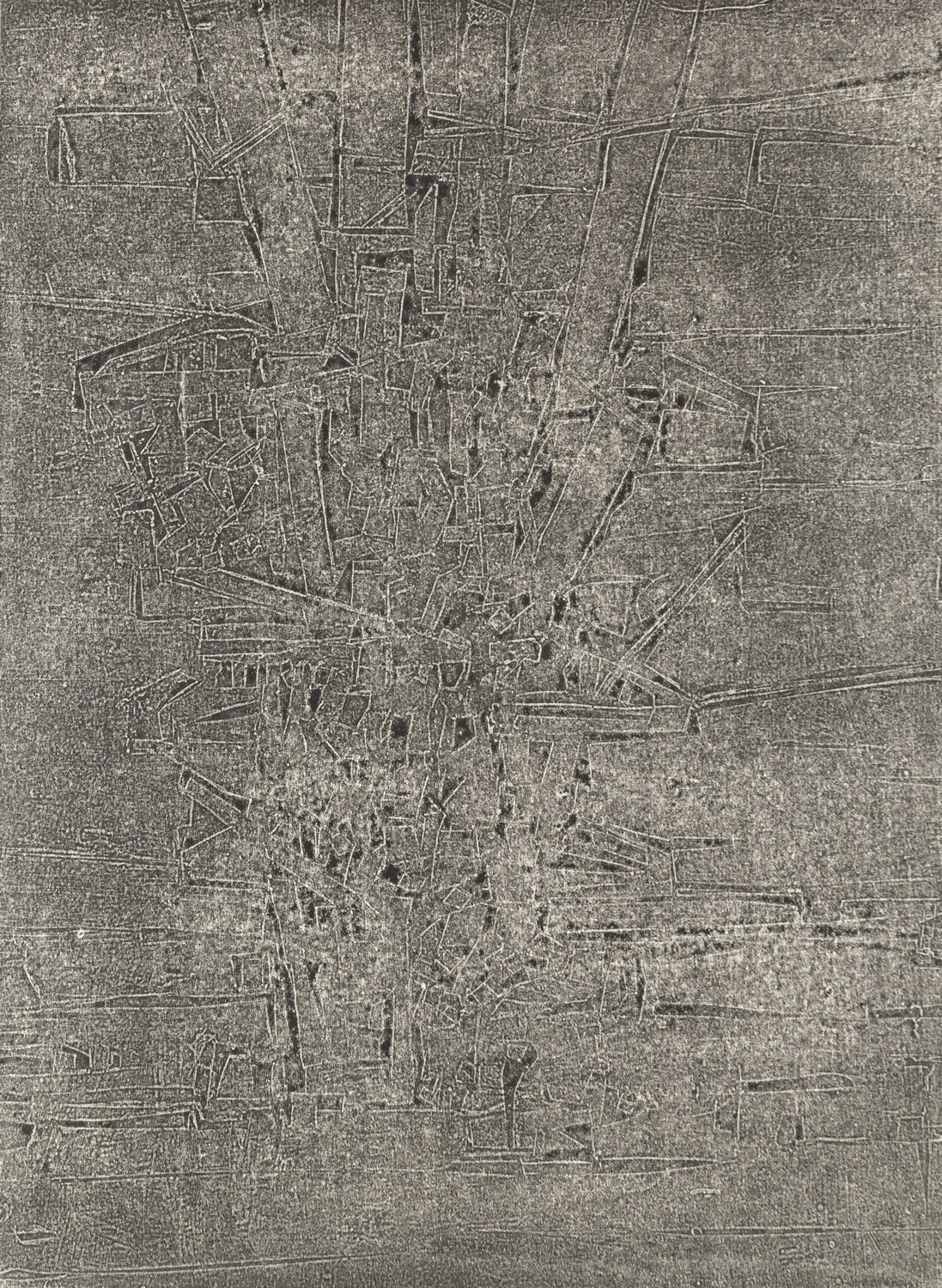
Roman Opałka's astralographies, dating back to the mid-1960s, are exceptionally rare in the Polish art market. Astralographies were created at the beginning of Opałka's artistic career during a period of formal experimentation related to multiplication methods. They represent a unique example of the artist's artistic exploration. At that time, Opałka produced a series of geometric abstractions and graphic representations of soldiers using a technique he had developed for himself. The secrets of creating astralographies are not well-known, as Opałka provided little information about the process. However, it is known that he used photographic plates and likely an enlarger. Astralographies, with their texture and characteristic graininess, resemble lithography, but they differ in their distinct gray color and very low color saturation. Astralographies were printed on thin white paper and were not signed. Only a few works created in this technique have survived, and only a few copies have appeared in the Polish auction market to date.