
Perceptual Challenges according to Julian Stańczak
Nicole Lewandowska
At the beginning of the 1960s, op-art started to be increasingly popular, with the Hungarian painter Victor Vasarely being considered the precursor of the current. Artists associated with optical art in the second half of the 20th century were interested in evoking the illusion of movement in planes and composition systems. They produced optical illusions like the image waving, pulsing, or flickering that hypnotized and fascinated the viewer at the same time. Painters used the language of abstraction, employing primarily geometric shapes and playing with color.
The pioneers of op-art include Julian Stańczak, a Polish painter who lived permanently in the United States. In 1964, Martha Jackson, an art dealer, became impressed by Stańczak's paintings and organized a solo exhibition of his work in the same year. "The Optical Paintings" exhibition, held at the esteemed Martha Jackson Gallery in New York, is credited with giving rise to the artist's great success in the future and referring to the current of visual art as op-art. The critic Donald Judd, who saw the artist's exhibition at MJG, is believed to be the originator of the term. Interestingly, Julian Stańczak was not satisfied with the name of the exhibition, as well as calling his paintings "optical" and associating him with op-art. He disliked reducing the value of his art to purely visual aspects, disregarding its affective value.
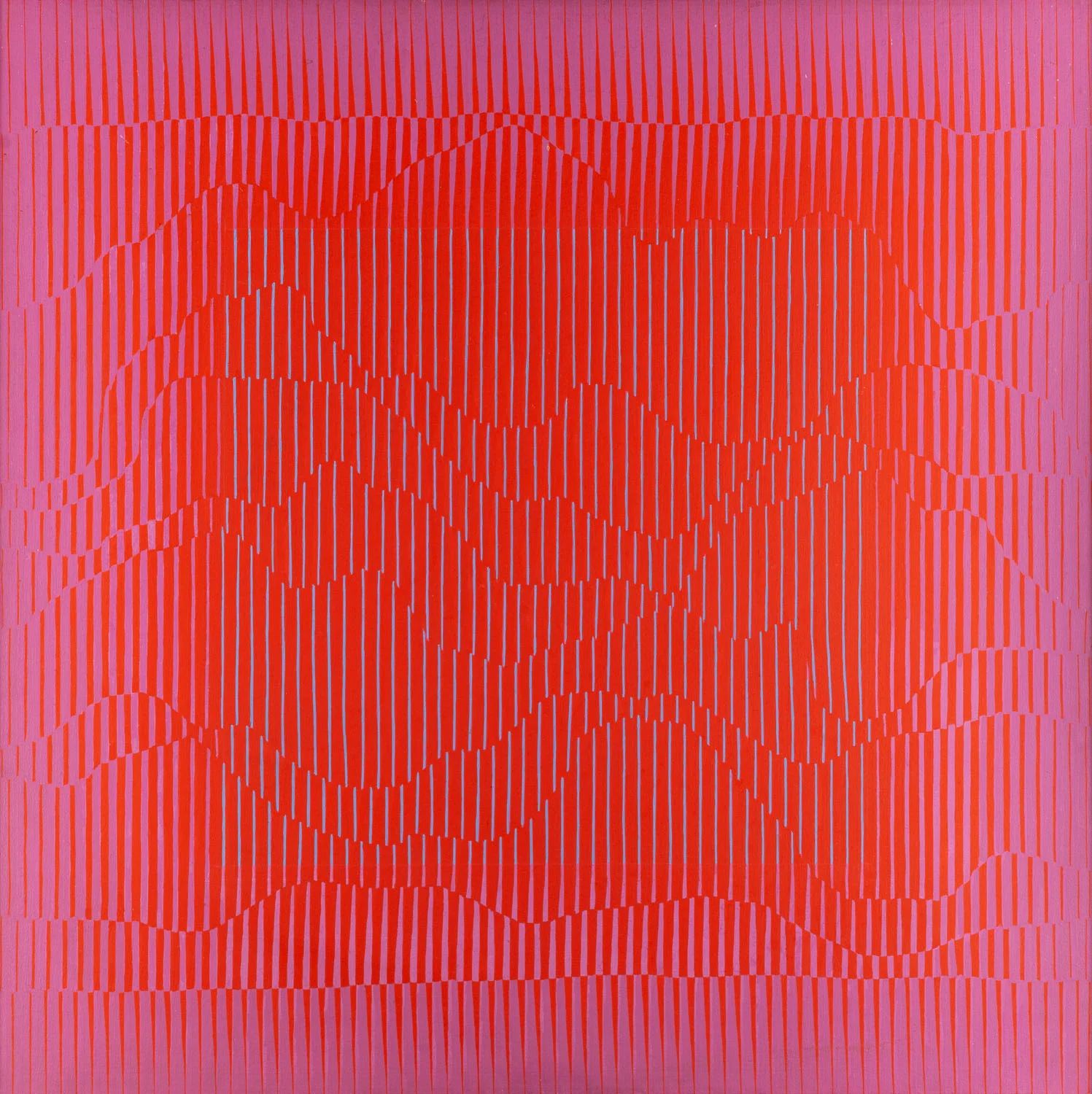
The painter's life was full of traveling around the world, which is very visible in the colors of his artworks. Nature and the wilderness of nature were provocative stimuli for the creator to make art. He spoke about the moment of his life he spent in a refugee camp in East Africa as follows: "I could watch the jungle change colors from purple to almost red, then back to blue-green or black again. They were enticing color spells. I was fascinated by this performance and wanted to depict it" (Marta Smolińska, Julian Stańczak. Op art i dynamika percepcji, Warsaw 2014, p. 14). Stańczak aimed to give colors an emotional expression while avoiding overt allusions to the natural world. At first, the artist thought that geometry ruthlessly removed personal allusions and feelings from the painting, but over time, he started to express these aspects using color. The artist admitted that he could mix paint for days to get the exact shade he wanted. In her book devoted to Stańczak, Marta Smolińska describes the artist's further development of his creative process after establishing the color scheme: “The idea of the visual structure's skeleton and its recurring rhythms goes next, and this requires selecting whether the composition will be based on the motif of a grid, or, for example, vertical, oblique, or horizontal lines. For the purpose of establishing a close relationship with the recipient, every step is performed depending on the size of the canvas or plate. The starting point of the image, or the so-called foundation, is typically composed of two colors that are in contrast to one another, such as white and black, which together give the impression of a ‘spongy' or active substrate."
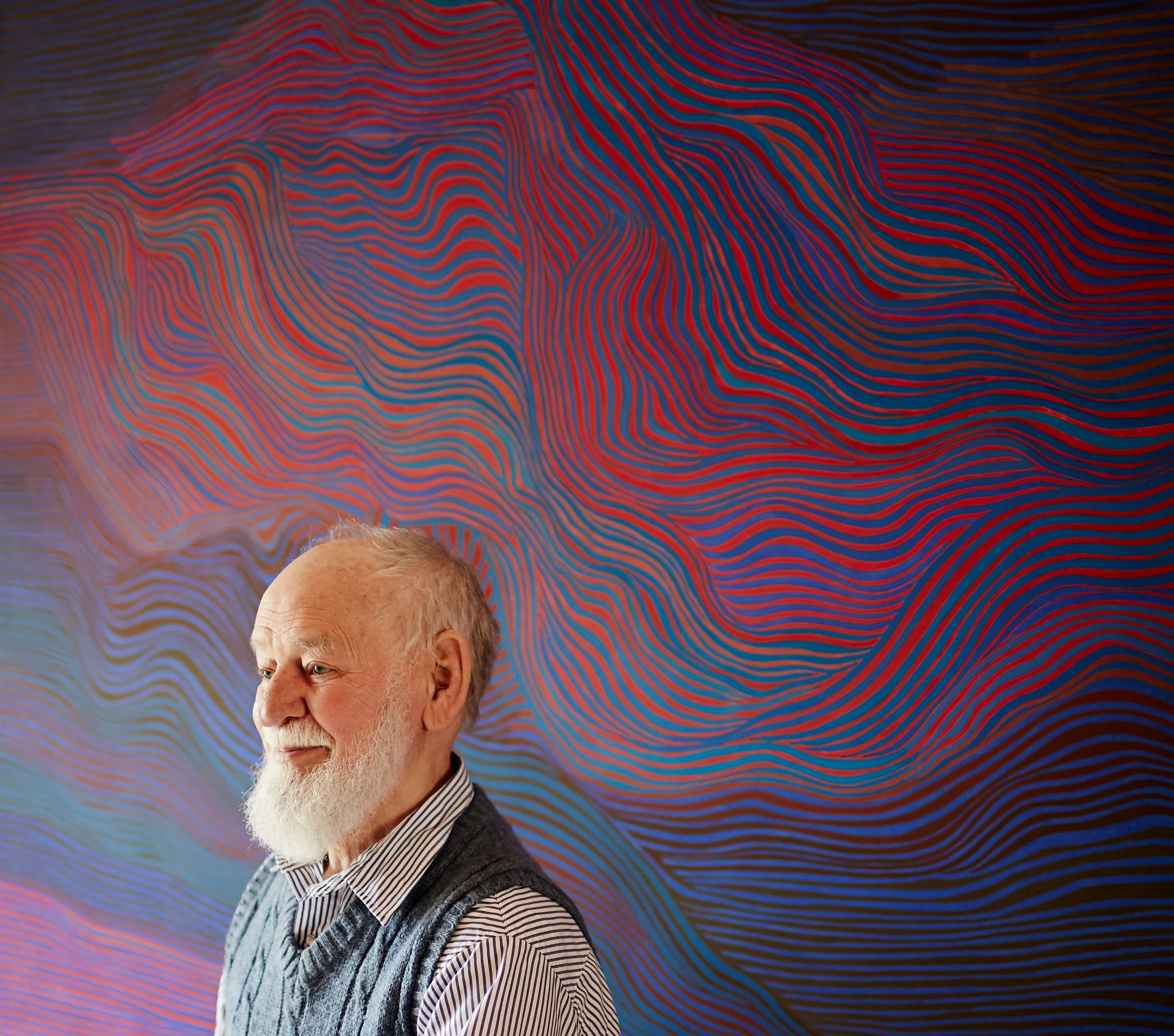
In his work, Staczak came close to capturing the effect of color radiation. He painted in a way that makes it impossible to recognize the method of applying paint. The first artworks displayed in Marta Jackson's gallery in 1964 were handmade by the painter. In 1966, Stańczak began to use tapes to obtain evenly painted lines. The artist worked with extreme precision, adding up to a dozen layers of paint, using specially prepared pieces of material.
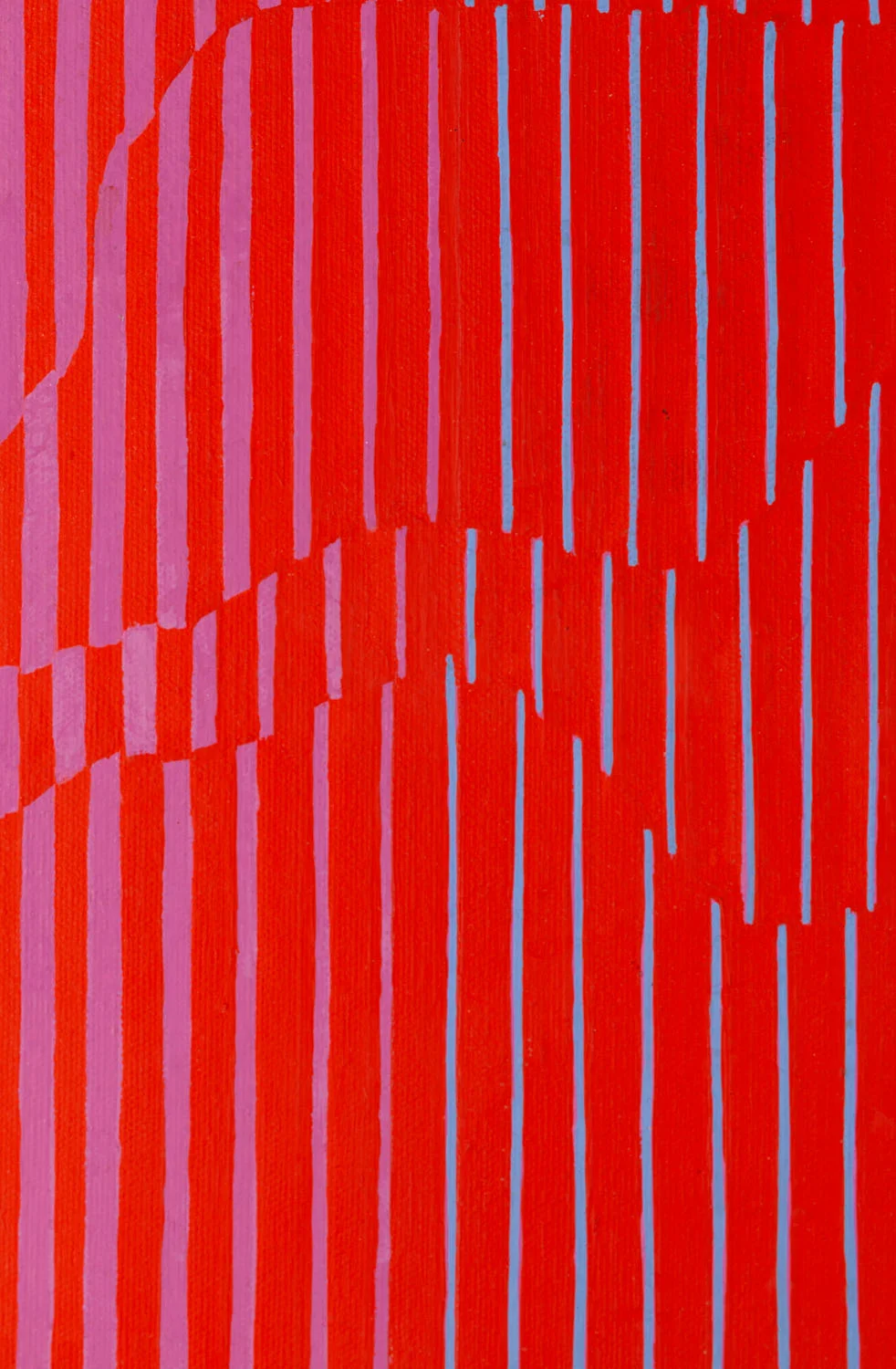
Stańczak addressed man's tendency to seek order in the world. Line layouts with regular spacing between them and grids of various densities create repetitive rhythms in the image and evoke a sense of relief due to their regularity. Certain disruptions to the image's rhythm, coherence, and ubiquity creep into this harmony, prompting the viewer to comprehend it with a higher intensity, which leads to an attempt to organize what they see as the image's structure becomes dynamic and optically unstable. Julian Stańczak's "Concurrence," from 1963, presented at the "Post-War and Contemporary Art" auction, is one example of such a game with the viewer.