
Nikifor/Warhol. Artistic kinship
Nikifor and Andy Warhol. Much sets them apart, but even more unites them. The primitive painter from the province and the greatest celebrity among artists share not only common roots but also a similar understanding of art.
The pioneer of pop art was born in Pittsburgh, but his parents – Andrij and Ulija Warhola – hailed from the Lemko Greek Catholic minority. Warhol's family village, Miková, in Slovakia, is only 120 kilometers away from Krynica. Speaking of Nikifor's early biographical facts, we can only rely on assumptions. He was likely born in 1895 in Krynica-Wieś, the son of a lone, poor Lemko woman who earned a living cleaning at spa guesthouses.
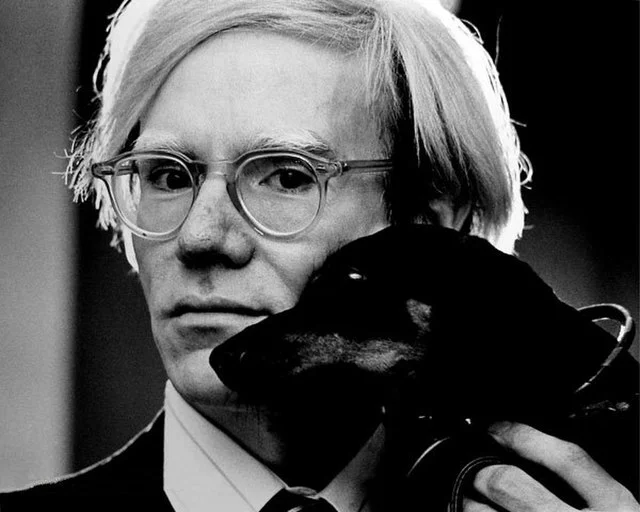
"Today, a Warhol-style wig costs less than 20 dollars on AliExpress. If Warhol had painted it black, pressed it with a worn-out hat, and grown a mustache, he and Nikifor would look almost identical: the same dark eyes, large horn-rimmed glasses, and prominent cheekbones. The resemblance is not accidental: both were Lemkos. The journey 'from Nikifor's origins to Warhol's origins' is just four days of intense walking"
(Wojciech Bartkowiak, Od Nikifora do Warhola w cztery dni, Gazeta Wyborcza, https://wyborcza.pl/magazyn/7,124059,23325569,od-nikifora-do-warhola-w-cztery-dni.html).
The similarity in facial features was not the only connection between the Lemko artists; they also shared lifelong struggles with various illnesses. Nikifor, disabled in many aspects, also had articulation problems due to a significant hearing impairment. He suffered from tuberculosis and had mobility issues. Meanwhile, Warhol dealt with chorea, a condition characterized by involuntary body movement, also known as St. Vitus' dance. As a young boy, Warhol spent entire days in bed due to complications after scarlet fever, constantly drawing and creating collages from cut-out comics.
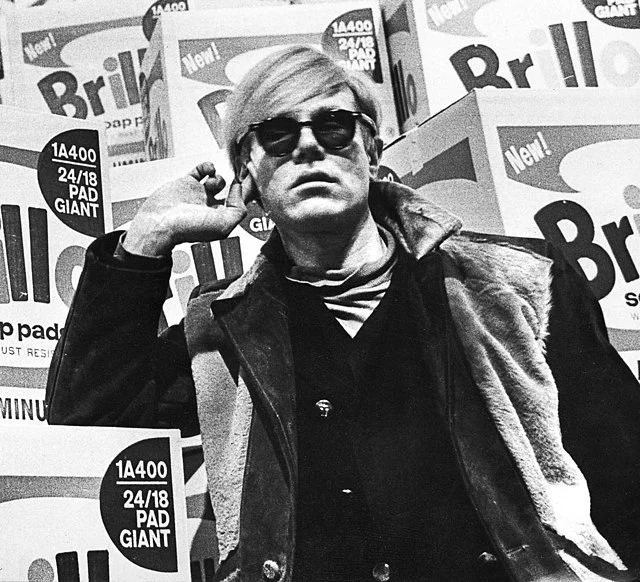
However, the artists' kinship lies primarily in their approach to creating art. Both Nikifor and Warhol grew up in Orthodox culture, and the influence of icon painting is undeniable in both artists' works. The hieratic, flat compositions centered in the frame are a common point in the Lemko artists' stylistic approach.
"Warhol was raised in the Greek Catholic tradition, and icons accompanied him both in childhood and adulthood thanks to his mother, a fervently religious person with whom he maintained constant contact. The influence of icon painting in Warhol's work is indisputable and served as an impetus for the birth of early American pop art. This, as we know, initiated the history of Western European neo-avant-garde. Hieratic representations of 'saints' creating the American reality dominated by pop culture took the form of flat signs – akin to icons. Let's recall his famous portraits of Marilyn Monroe, Elvis Presley, or Mao Tse-Tung, as well as paintings depicting one-dollar bills, Coca-Cola bottles, and Campbell's soup cans. The inspiration from icon painting allows us to perceive a particular kind of transcendent interpretation in Warhol's work, cleverly understood by him. Icons accompanied Nikifor throughout his life as well, growing up in the Eastern Church tradition. He enjoyed spending time in temples – more in Orthodox churches than in Catholic churches – because of the images they contained. The religious core is visible in his entire body of work. In some paintings, references to the world of icons are immediately apparent, whereas others display the hieraticism of the presented elements and the monumentalism characteristic of this world. Almost always, similar to icons, Nikifor applied a central composition in his paintings"
(Andrzej Kisielewski, Nikifor, awangarda i ikony https://teologiapolityczna.pl/prof-andrzej-kisielewski-nikifor-awangarda-i-ikony, dostęp: 8.12.2023).
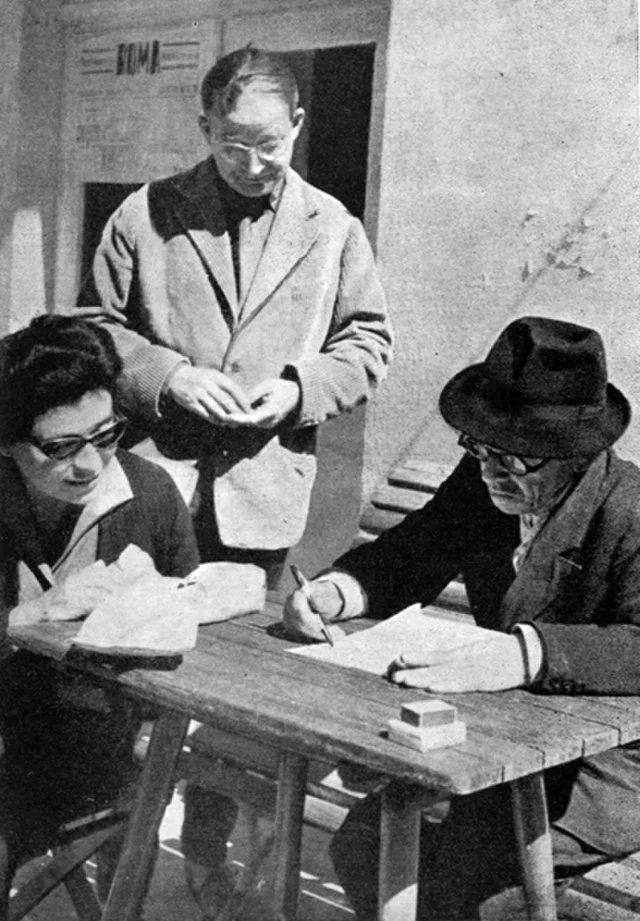
Another crucial aspect for both Nikifor and Warhol is the fact that they worked in cycles. The painter from Krynica, in his immensely rich legacy, addressed constant themes in numerous variations, including self-portraits, cityscapes, fantastical architecture, railway stations, portraits of spa guests, scenes inside temples, or images of saints. Warhol adopted the same method, transforming recurring motifs in various ways, changing color schemes, or multiplying themes.
The working method of artists with Lemko roots is also significant. Nikifor created his works "for sale" in enormous quantities, estimated to be in the tens of thousands. The name of Warhol's studio, "The Factory," encapsulates the artist's modus operandi. The artist himself explained: "The reason I paint this way is that I want to be a machine. Everything I do, I do like a machine because that's what I want." Consequently, Warhol abandoned painting as a medium in favor of printmaking to "produce" as many works as possible from his groundbreaking factory.
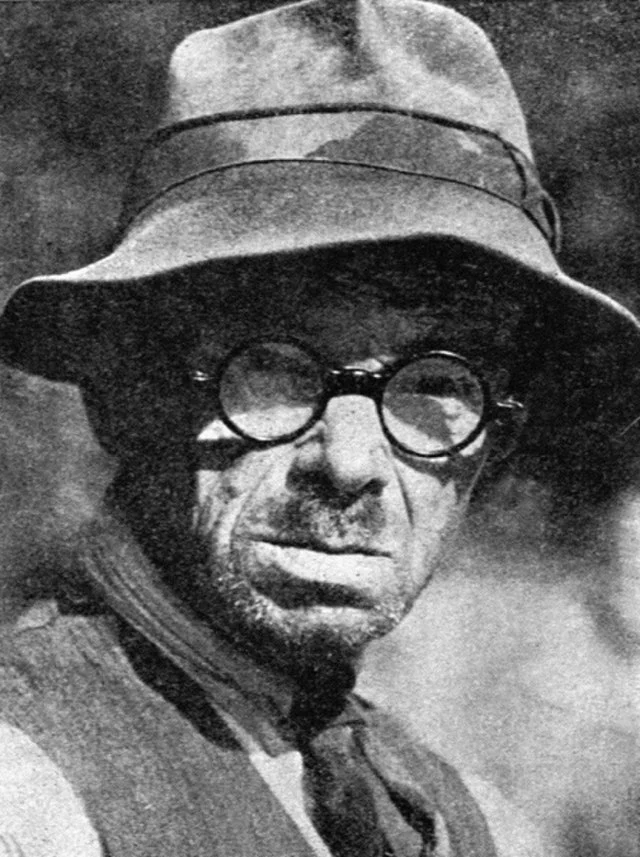
The final convergence connecting both artists is fame. Although Nikifor struggled with extreme poverty throughout his life, the popularity brought by numerous exhibitions and studies of his work is incomparable to any other naïve artist worldwide. Displayed in New York, Chicago, London, Amsterdam, Brussels, Liege, Haifa, Baden-Baden, Frankfurt, and many other significant global galleries, Nikifor's works made him one of the most outstanding representatives of global naïve art. Additionally, Nikifor's societal awareness in Poland is so significant that the Polish language has the term "nikiforism," meaning "engaging in a field without professional preparation." On the other hand, Warhol's popularity places him among the most famous artists of all time.