
Master revives the canon. Jan Matejko and the project for the iconostasis of St. Norbert's tserkov
The partition separating two worlds-the spiritual and the material-is the iconostasis. The iconostasis appeared and developed gradually in the liturgy of the Eastern Church. It originates from the stone partition in early Christian temples. In Byzantium, it appeared in the form of a small wall (templon) crowned with a cross, placed between the presbytery and the aisle, where the faithful prayed. In Rus', it grew into a tall, wooden partition adorned with five rows of icons arranged in a specific order.
To this day, the iconostasis remains a fundamental element of Orthodox tradition, and each row, each icon within its scope, visibly shows what is invisibly transformed in the Eucharist. The iconostasis is a barrier between the empirical reality and the heavenly one. It reminds us of the fundamental truth that the essence of our existence must remain unfathomable. Despite the canon of painting holy images, icon painting contains a significant element of abstract thinking while being specifically transfigurative, operating with a significant transformation of the natural world, not favoring empty archaism.
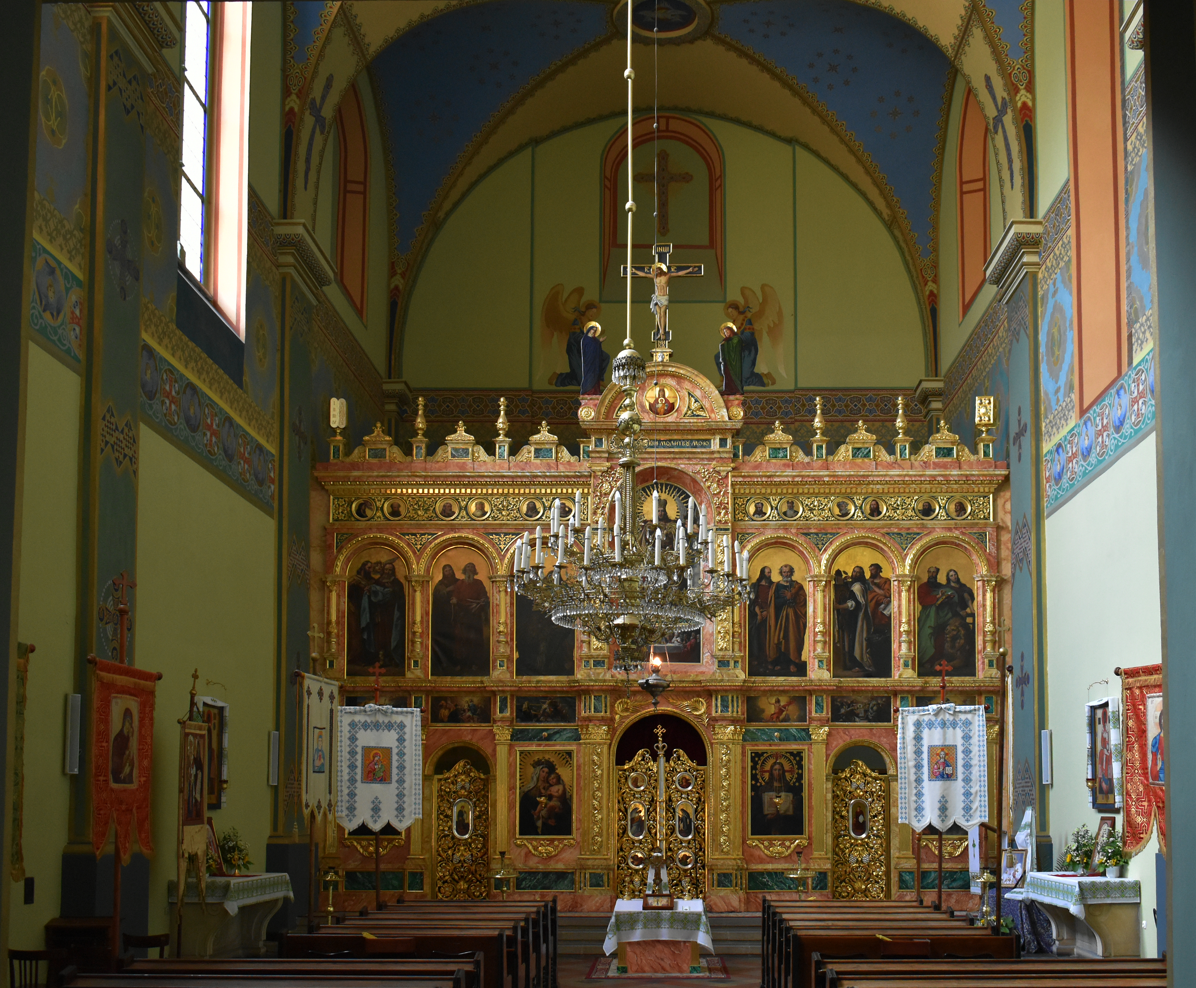
How did the master of historical painting approach the sanctified tradition of the icon canon? Matejko, with great respect for the creators of Eastern sacred art, permeated orthodox patterns through the "filter" of his own personality and artistic predispositions, which had already been developed in a different cultural environment and based on completely different aesthetic patterns than the canonical icon. The result, on the one hand, of respect and admiration for church art and the enormous vivacity inherent especially in Matejko's drawing works, is a unique cycle dedicated to St. Norbert's tserkov in Krakow. In 1888, when Father Jan Borsuk, undertook the renovation of the ruined temple on Wiślana Street in Krakow, Matejko, being a friend of the parish priest, created 30 pencil sketches as designs for the most important place in the church-the iconostasis.
"When drawing, he tried to connect with the character of orthodox paintings, but Byzantine stylization, statics, and hieraticism were foreign to him, so in some drawings, the artist's individuality prevailed-we see dynamic figures typical of Matejko, distant from Byzantine traditions"
- Maria Przemecka-Zielińska; Malarstwo religijne Jana Matejki, Krakow 1994, p. 22
The sketches depicted, in accordance with the canon, saints from the Old and New Testaments, or the Deesis Group. The oil paintings, which, in terms of creative richness and artistic expression, did not match the master's designs, were created by Matejko's student, Władysław Rossowski. Despite the canonical approach, the final realizations were liked by the nestor of historicism.
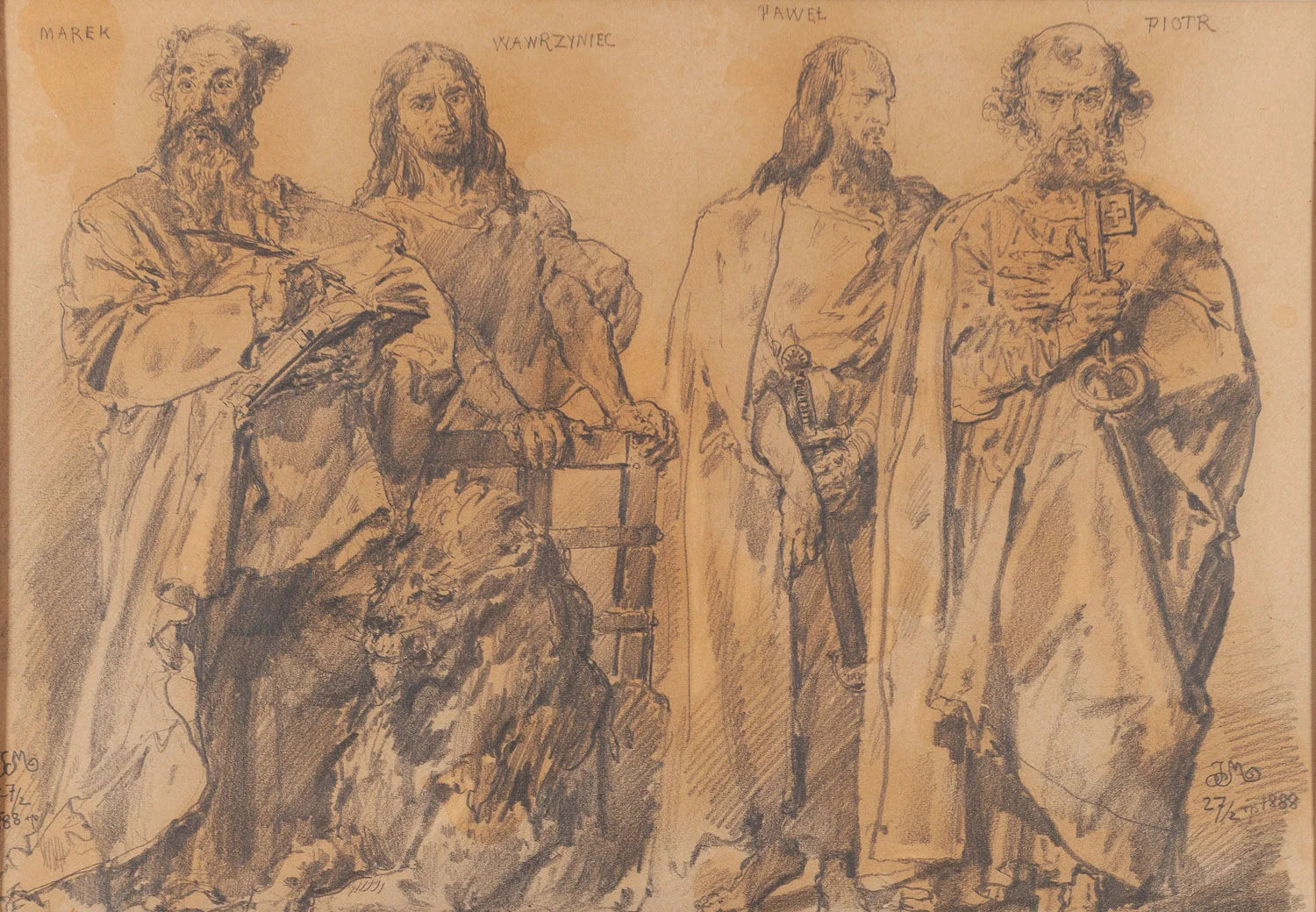
The subsequent fate of one of Jan Matejko's few religious works was somewhat difficult. In 1947, the temple was taken from the Greek Catholics, and the new hosts were the Salesian priests. At that time, the paintings adorning the iconostasis were transferred to the collections of the Matejko House, only to return to their place in 2004. Most of Matejko's sketches made for this extraordinary project are kept in the collections of the Matejko House and in the Lviv Gallery of Paintings.
The sketch by Jan Matejko presented at the auction is not only an incredible rarity on the art market but also one of the most important drawings in the master's entire oeuvre. Moreover, the appearance of this class of work perfectly fits into the celebration of the year 2023, whose patron is Jan Matejko.