
Malczewski and Chełmoński. Sensational discoveries on the art market
This year's spring edition of the Old Masters. 19th Century and Modern Art auction brings two sensational discoveries to the Polish art market. After over 150 years since its first presentation at the Zachęta Gallery in Warsaw, we are showcasing to a wider audience the painting "There Is Mummy!" by Józef Chełmoński, which has been considered lost for decades. The pre-auction exhibition also features Jacek Malczewski's self-portrait with three Gorgons, which seems to have never been exhibited before. These two paintings are not only outstanding works of art in themselves but also collector's gems with incredibly interesting stories.
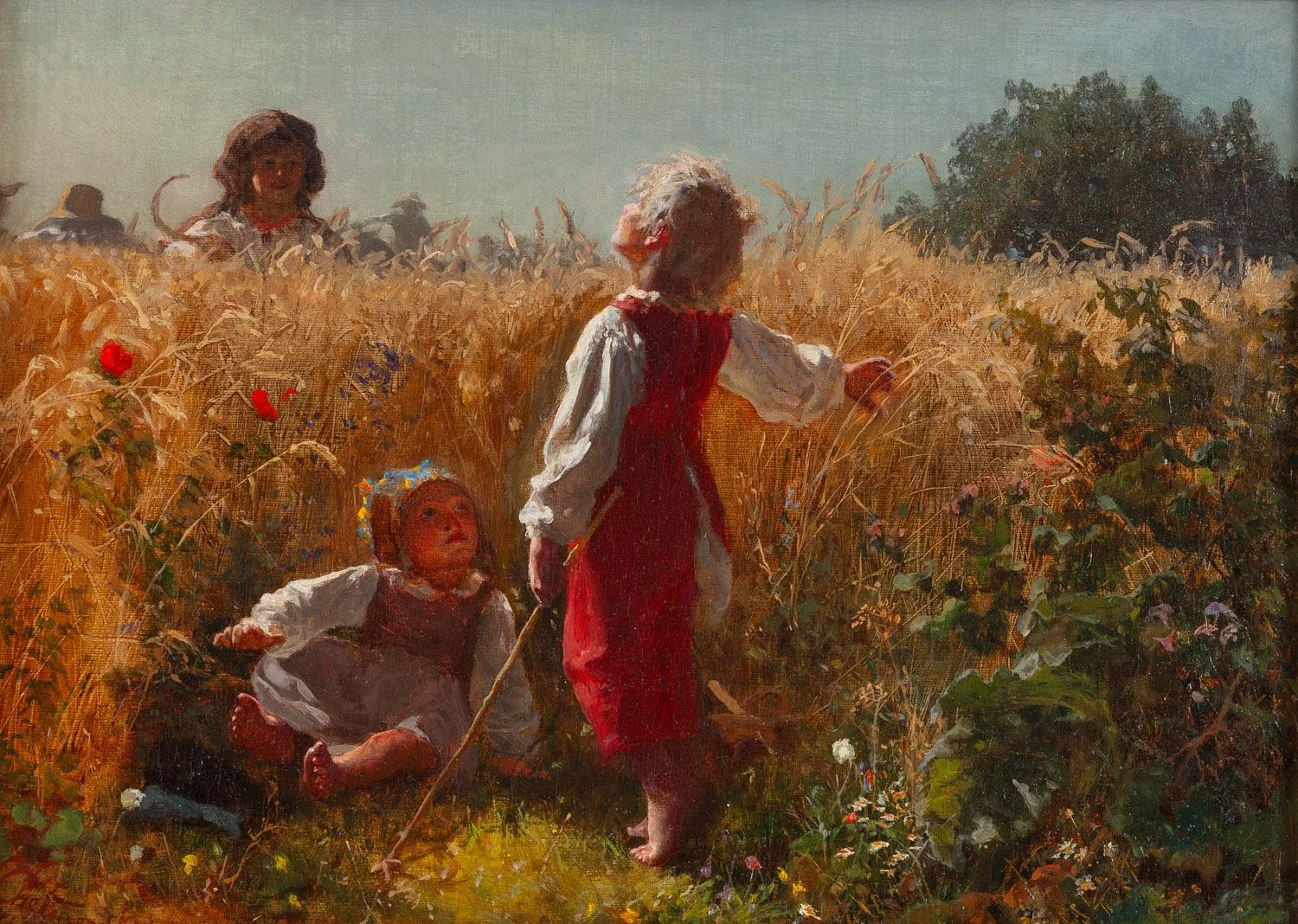
"There Is Mummy!" – Discovery after 150 years
Józef Chełmoński presented the painting "There Is Mummy!" in 1871 at the so-called current exhibition at the Society for the Encouragement of Fine Arts in Warsaw. Critics and the public reacted very positively to the work of the young artist, who was then only in his early twenties and was just making his debut on the local art scene. An anonymous reviewer from the "Kurier Warszawski" wrote about him as follows:
"A few-year-old village girl, her height barely reaching the lush grain, sits beside a small child on the ground and asks the standing reaper: 'There Is Mummy?'. This is the subject and title of the tiny painting that Mr. Chełmoński's painted. The eye rests with pleasure on this familiar little picture. It is grateful both in concept and execution"
(S, [Wystawa Towarzystwa Zachęty Sztuk pięknych...], "Kurier Warszawski" 1871, no. 113, p. 1).
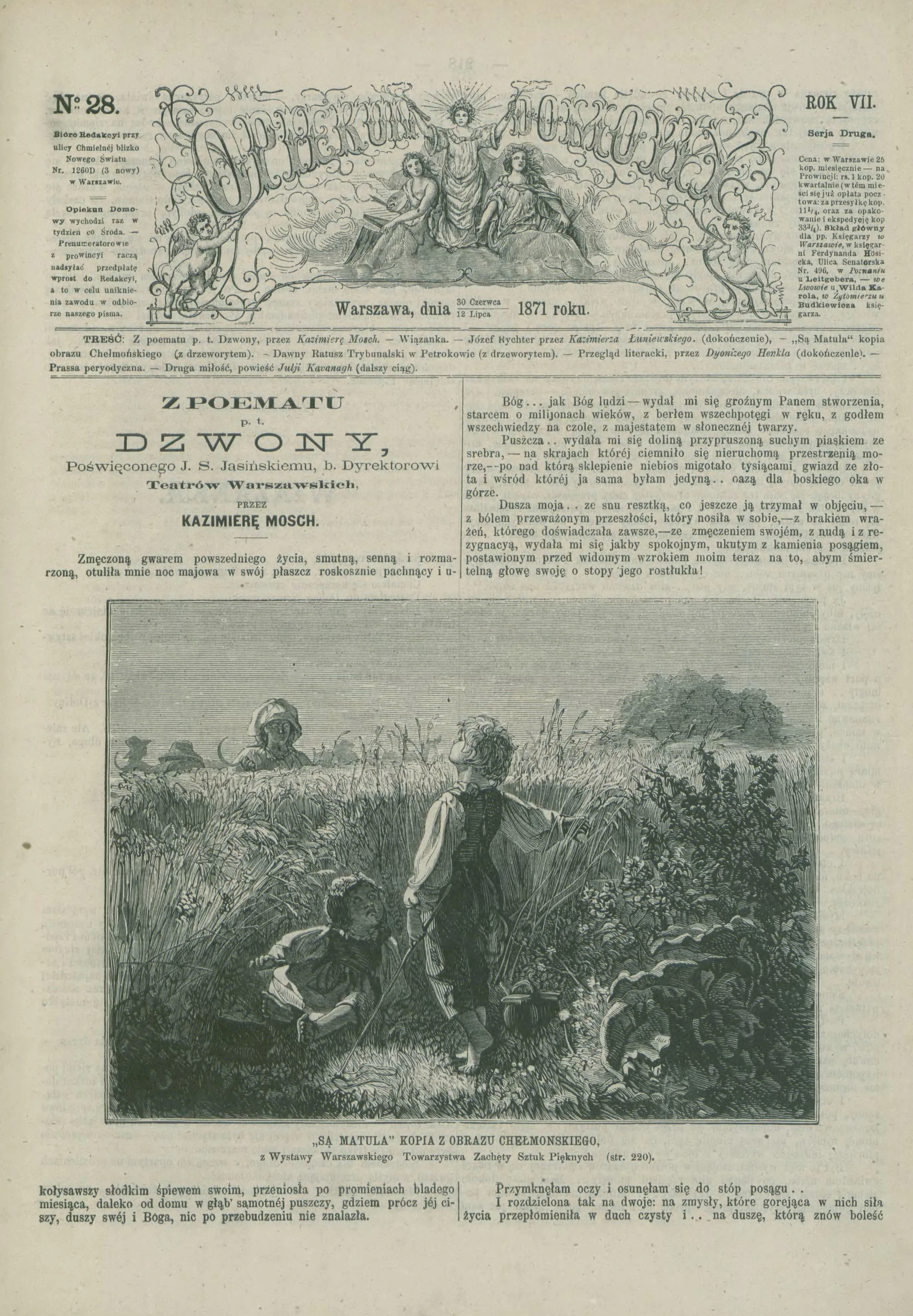
Words of praise also came from Chełmoński's master and teacher, Wojciech Gerson, who appreciated his student's endeavors. A woodcut reproduction of the work already appeared in the era on the cover of the magazine "Opiekun Domowy" ("Opiekun Domowy" 1871, no. 28), which, as emphasized in the accompanying study of the discovery by Tadeusz Matuszczak, a researcher of the artist's work, was "a huge honor for the budding painter, who was Chełmoński at that time" (quote from: Tadeusz Matuszczak's study dated February 15, 2024).
The painting was so well-received that it was purchased right after the exhibition by an unknown buyer. To whose collection did it go? Unfortunately, there are no precise data here. The organizers of later individual exhibitions of the artist in 1890 and 1907 appealed in the press to the owners of the work to make it available for display. Unfortunately, without success. The painting only reappeared much later, in the collection of Wanda Czernic-Żalińska, the owner of the Warsaw Salon "Skarbiec," where it remained until her death in 1986, and then disappeared again for several decades. When in early 2023 the National Museum in Warsaw published a list of sought-after works for the upcoming monographic exhibition of the painter, "There Is Mummy!" was at the top of that list. There was no indication yet that the painting, known only from a black-and-white photograph, would see the light of day. Its sensational discovery therefore takes place at the exhibition in DESA Unicum, where you can see this early composition by Chełmoński, vividly illustrating the crystallizing style of one of Poland's important modernist artists, for the first time in many decades.
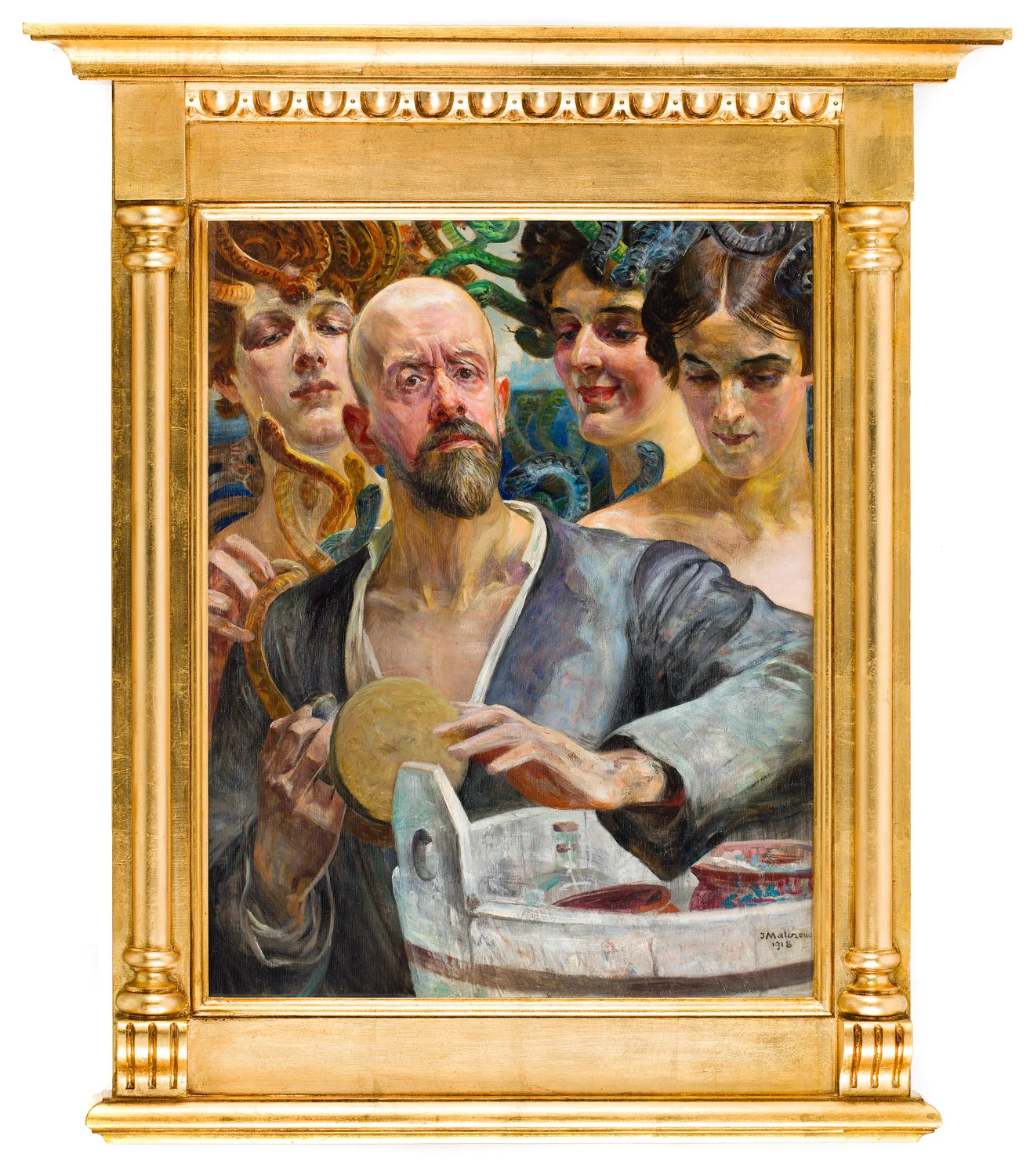
Malczewski's Self-portrait from the senator's collection
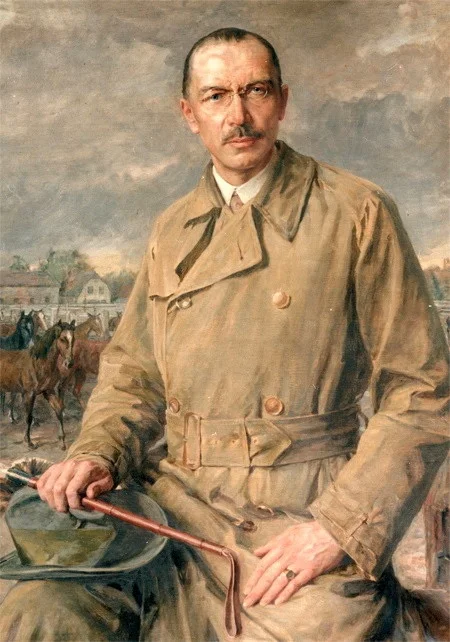
Equally interesting, though perhaps slightly less complex, is the story of the self-portrait of the leading Polish symbolist, Jacek Malczewski. Since the interwar period, the painting has been in the collection of the palace in Szelejewo. This estate was acquired in 1921 by Stanisław Karłowski, a prominent entrepreneur, banker, and politician. He took over the existing palace from Prince Hugo Schönburg-Waldenburg and created a model farm on the surrounding lands, introducing bold innovations for that time. Karłowski was a well-known figure in the area and a respected art collector. Against the backdrop of his horse stud, he was portrayed by Kazimierz Pochwalski, a recognized and renowned painter – portraitist of the elite of that time. This also speaks to Karłowski's much broader contacts, which extended far beyond the land of Gostyń; after all, he was also a senator of the Republic of Poland from 1930 to 1935. Due to the wartime turmoil, it is difficult today to reconstruct the appearance of Stanisław Karłowski's collection in Szelejewo. It seems that only a few objects survived from the rich collection after the war, including this monumental self-portrait by Jacek Malczewski. Fortunately, on its reverse side, a paper label with a ownership stamp has been preserved, identifying the objects from the collection of the palace in Szelejewo.
The history of art collecting in the Wielkopolska region has a rich tradition. It is associated with many prominent Polish artists, such as Michał Gorstkin Wywiórski or Wojciech and Jerzy Kossak, who in the 1920s and 1930s embarked on a kind of Grand Tour around the manors and palaces of Wielkopolska, painting portraits of landowners and the aristocracy. The same applies to Jacek Malczewski himself and his collaboration with one of the most prominent collectors in Wielkopolska at the turn of the century – Count Edward Aleksander Raczyński. The two gentlemen met in the 1890s. Raczyński progressively acquired Malczewski's paintings, resulting in a magnificent collection. Over the years, iconic works of the Young Poland master entered his collection, such as "Melancholia" (1890-94, Rogalin Gallery) or "Vicious Circle" (1895-97, National Museum in Poznań). In 1903, Malczewski painted a portrait of the count, which is considered by many researchers to be one of his best works of this type. The man is depicted seated at a desk, with a whole procession of mythical figures behind him – satyrs and frenzied maenads who seem to participate in a wild and wine-filled procession in honor of the god Bacchus. Malczewski's self-portrait presented at the exhibition in DESA Unicum also features mythical heroines. Three Gorgons surround the figure of the master, and from their heads flow snake hair. It seems that this painting is being presented to a wider audience in our gallery for the first time in its history.