
Journey through foreign canvases. Mela Muter
The metaphor of the road as an existential experience which is used in the title of the exhibition refers to Mela Muter's life in two ways. First, she painted as an émigré in France where she became, over time, a member of the local artistic circle, and she was influenced by her near and far journeys. After leaving her home city, Warsaw, in 1901, Muter traveled extensively. She went to plein airs, and she moved often because of life vicissitudes, including the danger of dying (for example, when she stayed in Provence during World War II). The travels provide a timeline for her artistic output. Each period is characterized by specific motifs and changing stylistic devices.
Second, the metaphor of the road represents Muter's path to becoming a notable personality in the artistic world. That process began when she moved from Warsaw (at that time, still in the Russian Empire) to Paris. In the interwar period, she became an independent and respected artist, under the pseudonym of Mela Muter. While Muter used to be marginalized in art history, especially after the painter's death in 1967, nowadays, there is great interest in her life and work, both among collector and the broader audience. Gradually, as a result of changes in the canon of Polish modern art, her paintings are being included in Polish public collections.
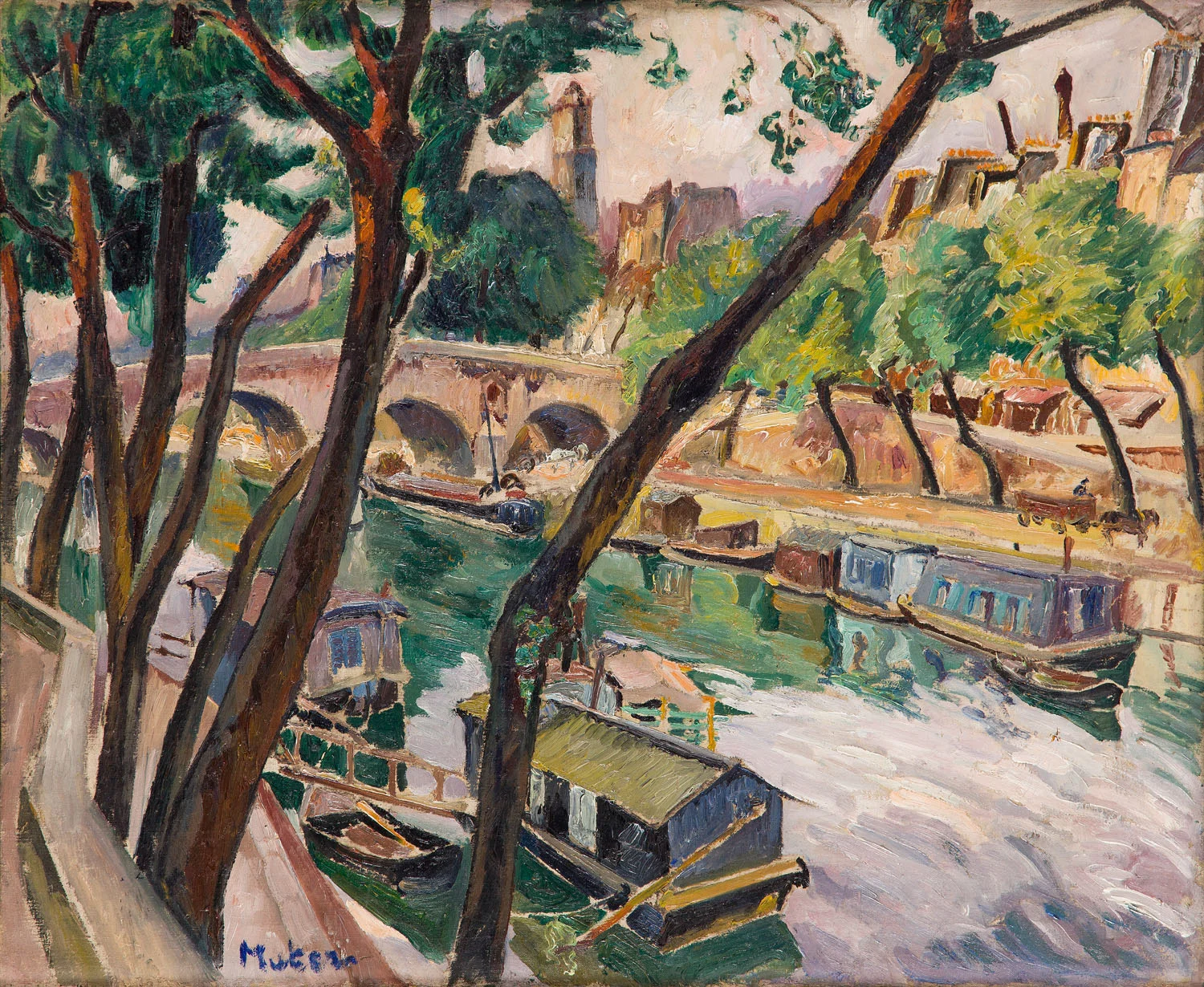
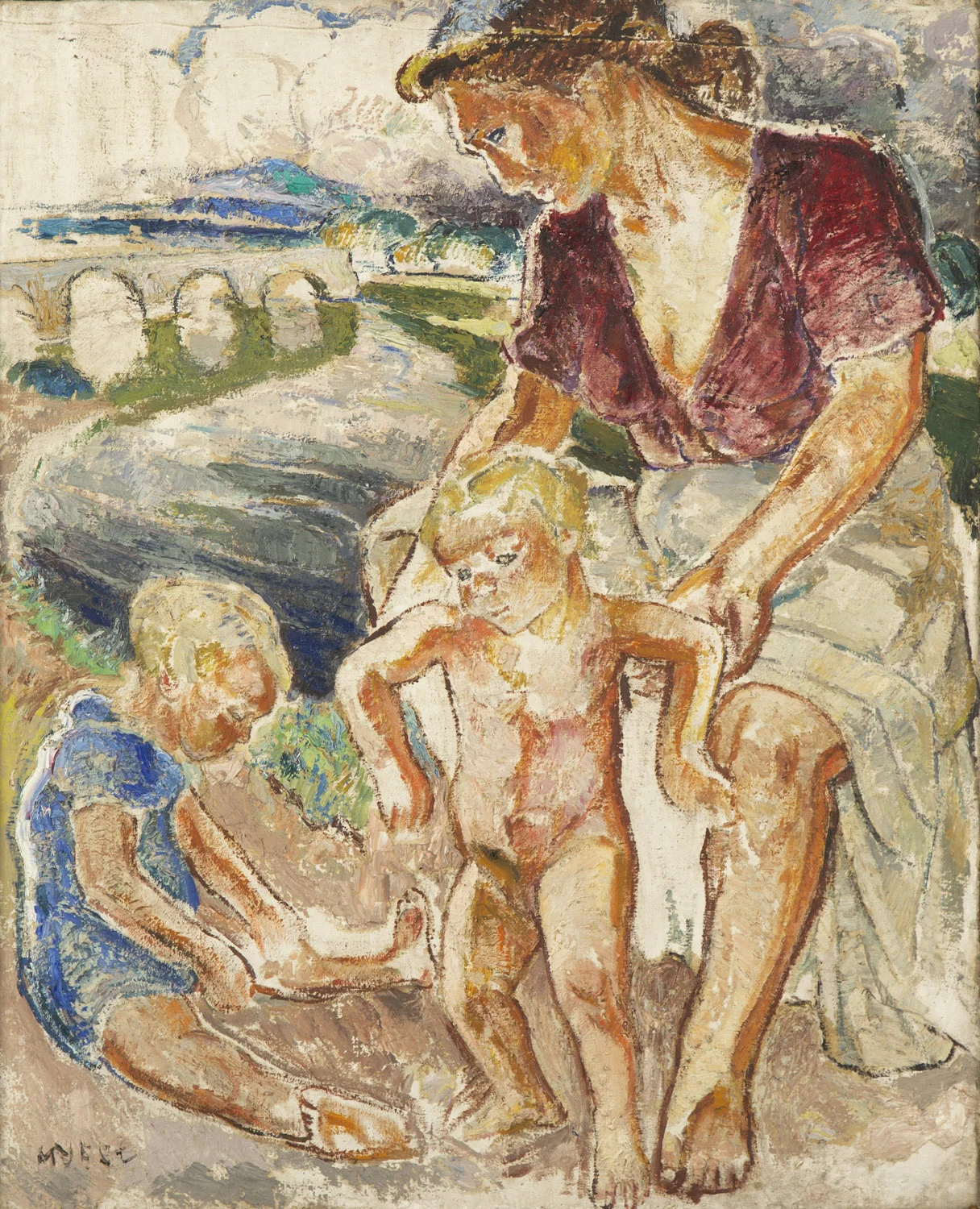
This exhibition is divided into five parts. The first one is pertains to Muter's life and work in Paris, where she lived, with some interruptions, in 1901–1967. The artist's views of Parisian streets are not infused with modern or rakish spirit. Instead, they are a poetic documentation of her experience of places in which time had stopped. Thus, she painted bridges on the Seine River, Île de la Cité, and the narrow streets of the Latin Quarter. Her models were the old men and children with their mothers or nannies whom she encountered, which was characteristic of her lifelong miserabilist interest in suffering, disabled, or lonely subjects. At the same time, just as she was gaining great recognition on the art market in Paris, she quietly painted portraits of famous Parisian intellectuals – such her friend Henri Barbusse, a writer (items 17 and 18) or poet Liang-Tsong-Taï (item 16) – in her studio. Around 1924, Muter created idealized images of maternity, synthetic and somewhat cubist in form and monumental in nature. These were preceded by drawn studies (items 13-15).
The second part of the exhibition is dedicated to an early episode of Muter's professional path, connected with Brittany. Although Muter received elementary artistic education in Warsaw, and she attended two well-known ‘free' art academies in France (Académie de la Grande Chaumière and Académie Colarossi), she considered herself to be self-taught. She made up for the lack of formal education by exchanging ideas with the modern artists she got acquainted with and by traveling. In 1918, she traveled mostly to Brittany. That region, attractive to Paul Gauguin and the Pont-Aven School, played a key role in the birth of symbolism, synthetism, and primitivism at the end of the 19th century. Muter visited Concarneau during her very first holidays in France, in 1901. Later, she also visited Audierne, Douarnenez, and Pont-Aven. The selection of Muter's very rare drawings from Brittany which we present at the exhibition allows the viewers to get a glimpse of her artistic searches at the beginning of her career. The motifs in those works are typical: Brittany women in picturesque (for the visitor) traditional clothes, rendered in a synthetic, expressive way. These are sketchbook or study works, quick records of visual impulses transformed into spontaneous artistic impressions which exude intimacy. The drawing Bretonki (Brittany women, item 20) is directly related to the subject matter of Muter's most important Brittany painting, Smutny kraj.
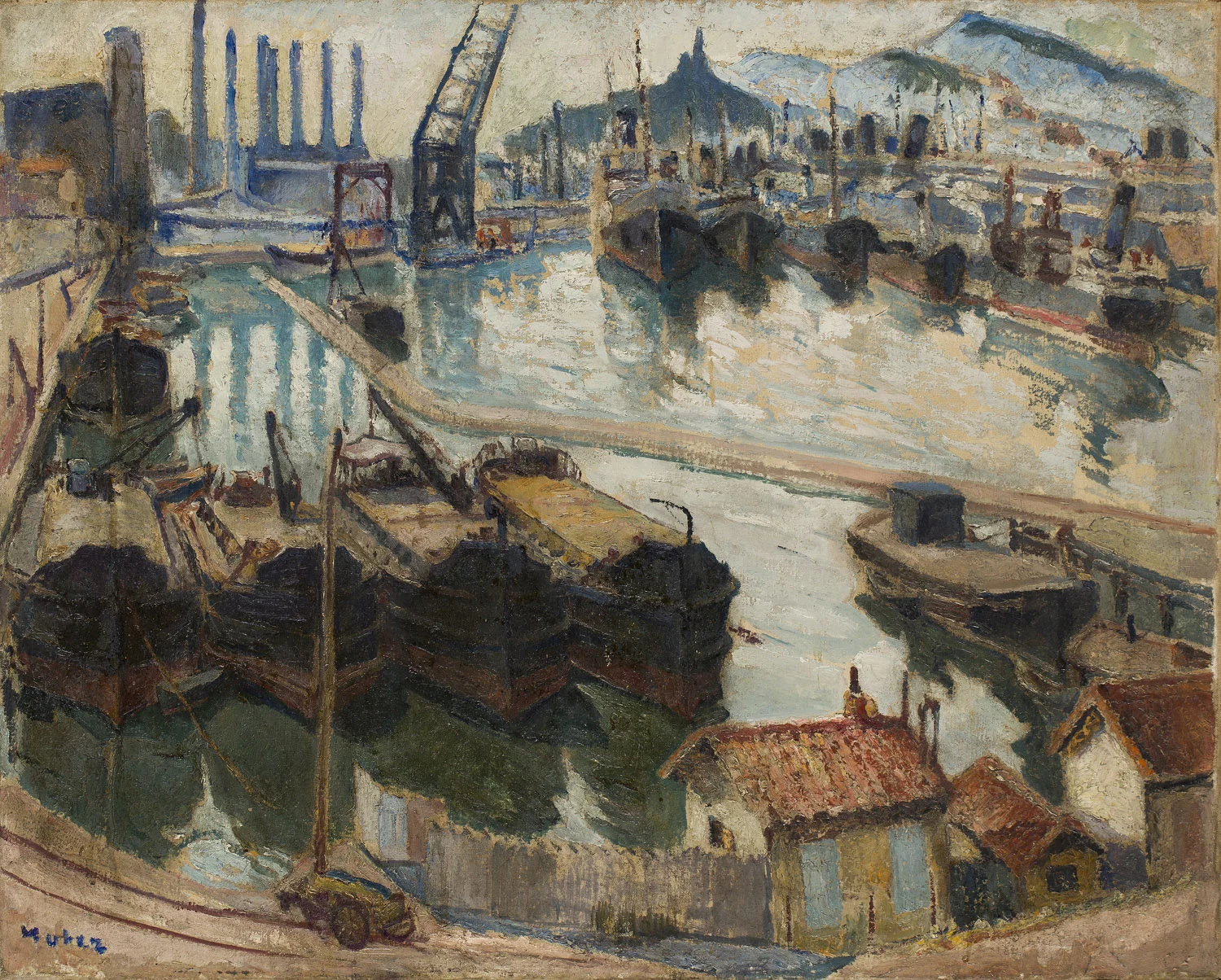
Since the beginning of the 1920s, she often traveled to the south of France. She regularly visited Collioure, a Catalan seaside commune in the Pyrénées-Orientales, and Côte d'Azur, where she was especially attracted to the old port in Marseille. The views from the waterfront offered insight into human toil as well as into the workings of nature which was encapsulated in Muter's paintings in clear, concrete forms. Since the beginning of the 1920s, her interest in Paul Cézanne's work and in early cubism also began to manifest itself in her art. Muter's watercolors from L'Estaque (items 25-26), a small town near Marseille, seem to embody the spirit of the work of the master of Provence. They show exactly the same views as Cézanne's classic landscapes with the chemical factory buildings and the sea.
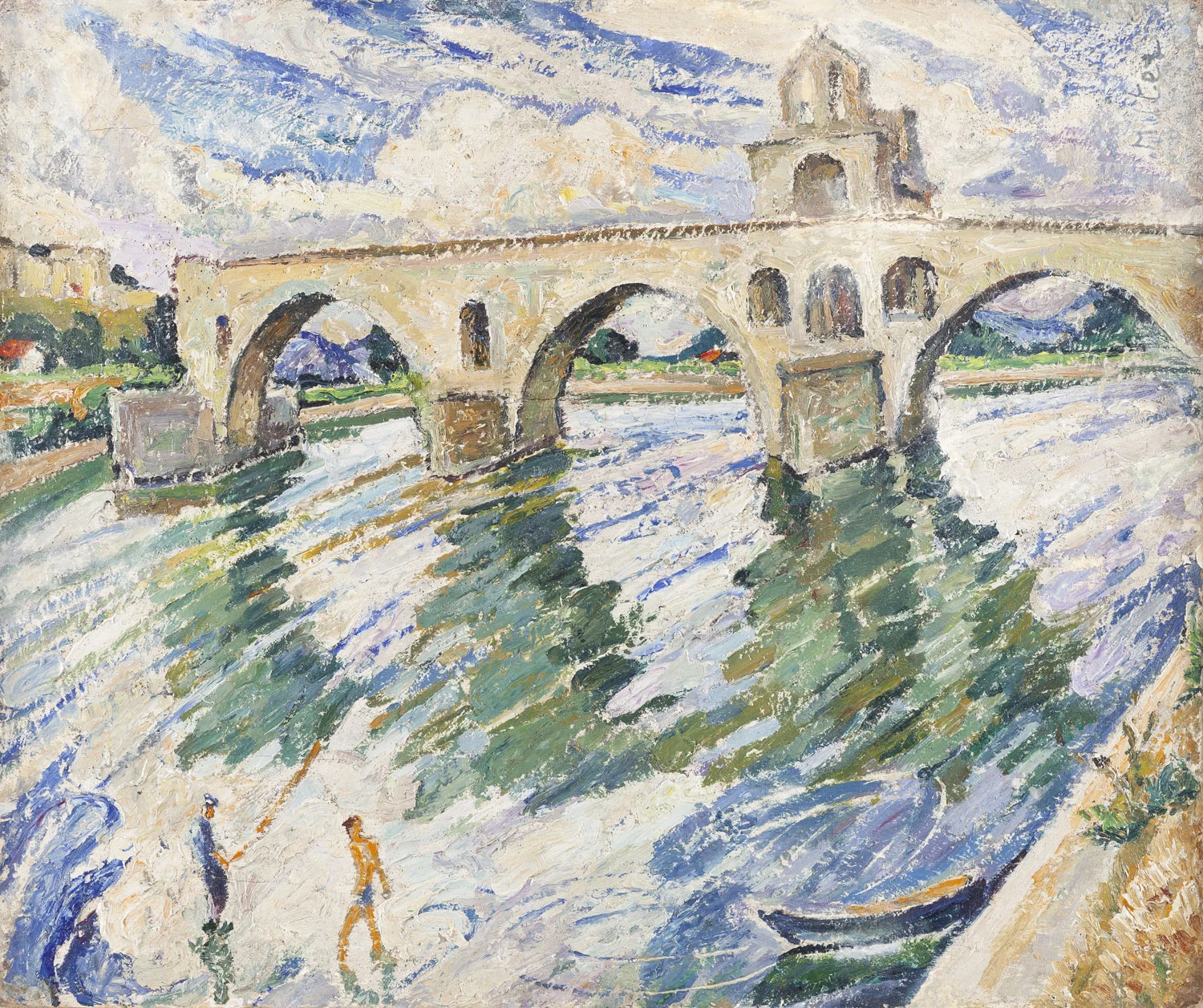
During World War II, Muter lived in Avignon and its vicinity. In the south of France, she taught drawing and art history in Collège St. Marie (a girl school), but she was in hiding. Still, her works from that period are cheerful and expressive, painted with thick impasto. Many of them are large, including the representations of maternity (item 41) and perhaps the most enigmatic of Muter's works – her monumental religious and allegoric compositions referencing the life of Christ and the Holy Family. The artist showed such scenes as: annunciation, the birth of Jesus, crucifixion, or lamentation. In those paintings, Biblical characters are sometimes accompanied by anonymous women and children, which directs the interpretation toward the universal theme of the joy and suffering of maternity (item 35). The artist plays with Christian iconography and experiments with the painting technique. Many of those works are on plywood (measuring about 1.5 m × 1 m) covered with absorbent gesso, so their surface is more matte, and they are reminiscent of fresco walls.
The fifth part of the catalog represents Muter's travels abroad. In 1912, she went to Spain for the first time. In 1913, she had “one of the best and most fruitful times in her artistic life" there, as described by Barbara Brus-Malinowska. It was then that she vacationed in Ondarroa, a Basque town, where she painted her masterpiece Taniec hiszpański and the painting Kamieniczki w Ondarroa (Tenement houses in Ondarroa, item 49) included in this exhibition. Muter's drawing oeuvre encompasses mysterious works which show the landscape and people of North Africa (items 51–54). Although neither sources nor literature on the subject confirm such a journey, it is possible that she went to Tunis, where her works were exhibited in Galerie Selection (in 1939). On the other hand, those paintings could portray the artist's visions of Maghreb landscapes and the colonial activity of France in Africa.