
Henryk Musiałowicz
Wiktor Komorowski
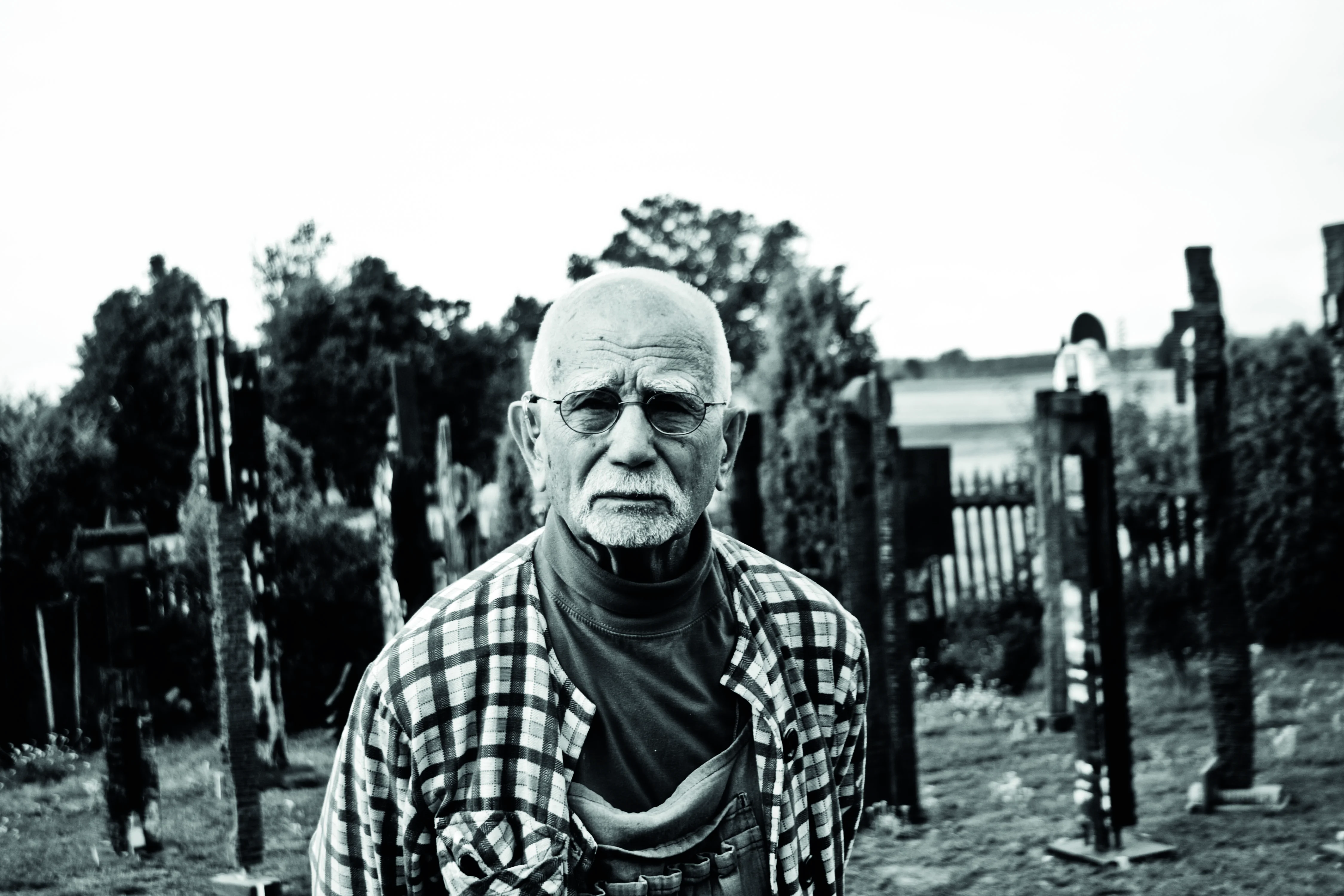
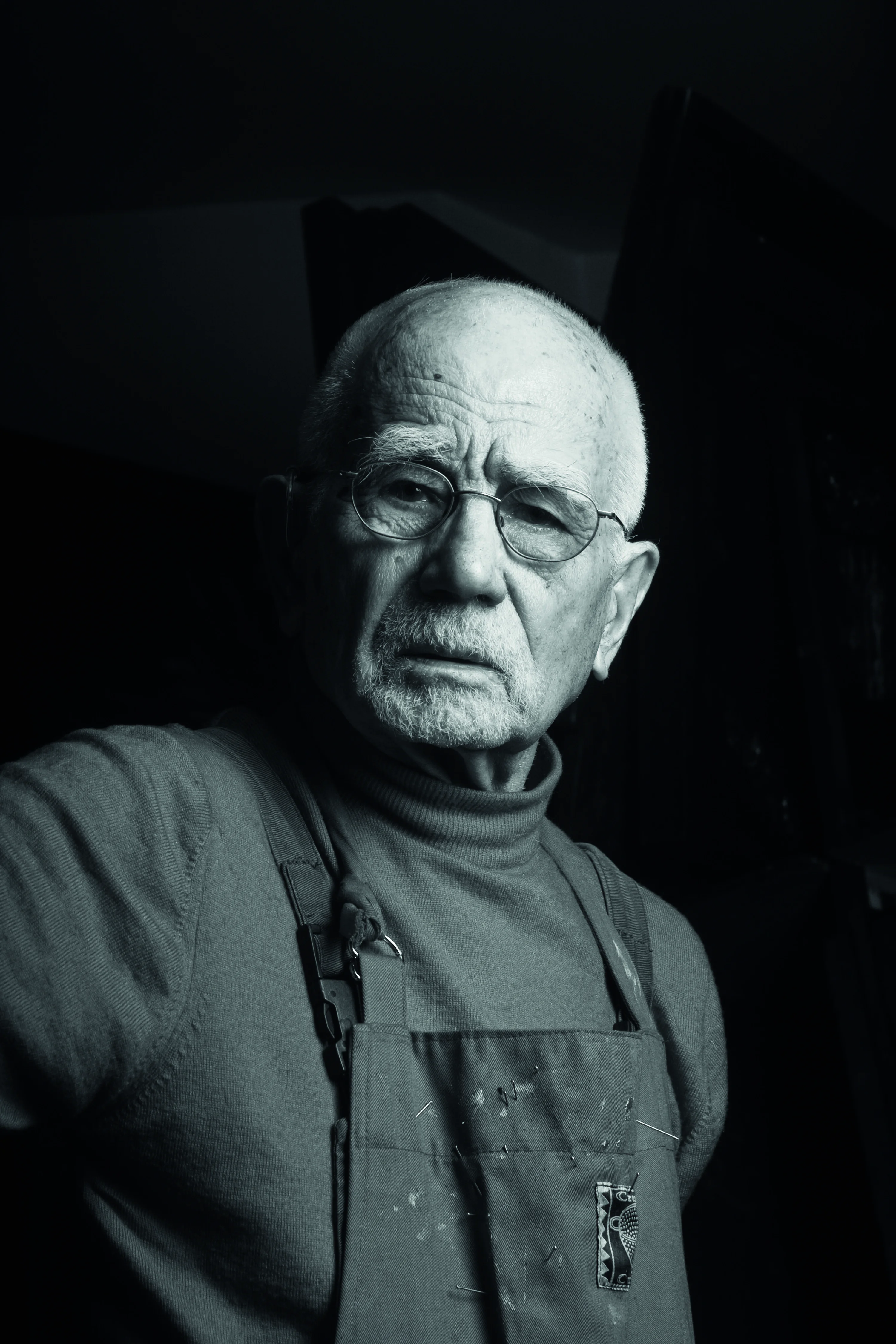
Henryk Musiałowicz was an outsider artist who did not identify himself with any movement or artistic group. He became known to collectors all over the world mainly as an artist who created extensive series of works dealing with the issue of human existence. The August online auction includes a selection of works which were created during the most important period of his artistic activity.
It started in 1944 with a secret exhibition that Henryk Musiałowicz and his friend organized in a wooden manor house in Warsaw's Rybaki. Since then, the artist would constantly refer to the tragic events of World War II, in which he himself participated and carefully observed. Testimony of past events in Musiałowicz's works is devoid of pathos and far from martyrdom. In this aspect, Musiałowicz is never patronizing but presents himself more like an inquisitive student, who with simple, yet accurate questions, is able to reveal the extent of the problem and embarrass even the most experienced professor. This inquisitiveness in his artistic expression allows the viewer to see the world of complex interpersonal relations, everyday choices during the war, and the related dramatic consequences. The works presented at the auction, such as the series "War Against Man" or "The Portrait from Imagination", which refer to war events, may be perceived as peculiar open questions with which the artist invites the viewer to enter into discussion with the work of art.
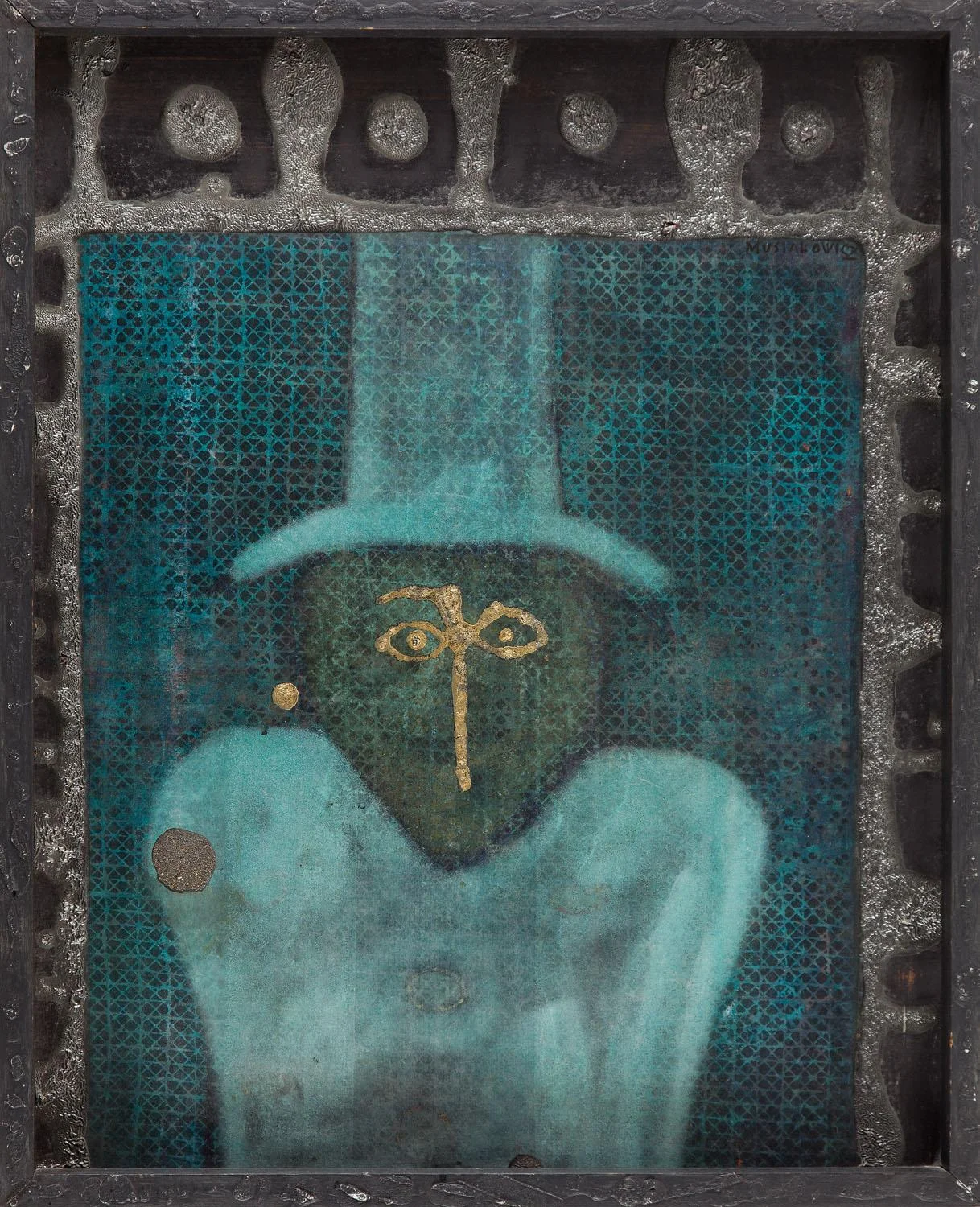
Interestingly, Musiałowicz does not approach this topic literally. His works are devoid of smoking rifle barrels, white bones on the fields, or tangled, inertly scattered bodies after bomb explosions. In this respect, he is closer to the mystery and vagueness known from Goya's works than to the literal depictions typical of artists such as Jonasz Stern, Erna Rosenstein, or Andrzej Wróblewski. As the artist himself recalled, during World War II, he received from a friend a book illustrated with reproductions from the "Horrors of War" series, which Musiałowicz used as a textbook for reflections on the sense and tragedy of war. Based on reproductions of Goya's graphics, he drew his studies on blank sheets of German documents, which later were used to create the "Occupation 1939-1945" series.
Over the years, the subject of war had been evolving in Musiałowicz's works, however, it remained to be his invariable source of inspiration for further investigation on the meaning of human suffering. The work titled "Animalistic Landscape" constitutes an example of such an investigation. In this painting, one may notice a special fascination with the atavism liberated in a human as a result of a conflict.
The art of Henryk Musiałowicz is an important testimony of past events, but most importantly, all his works should be perceived as an invitation to undertake your own reflection on the meaning of conflicts, not only military activities but, most of all, those internal ones that can be experienced every day. The inner anxiety is perfectly depicted in two totem sculptures from the "Books of Life" series, in which the artist "suspends" a simplified human figure in a vacuum and exposes it to be stigmatized by the viewer.
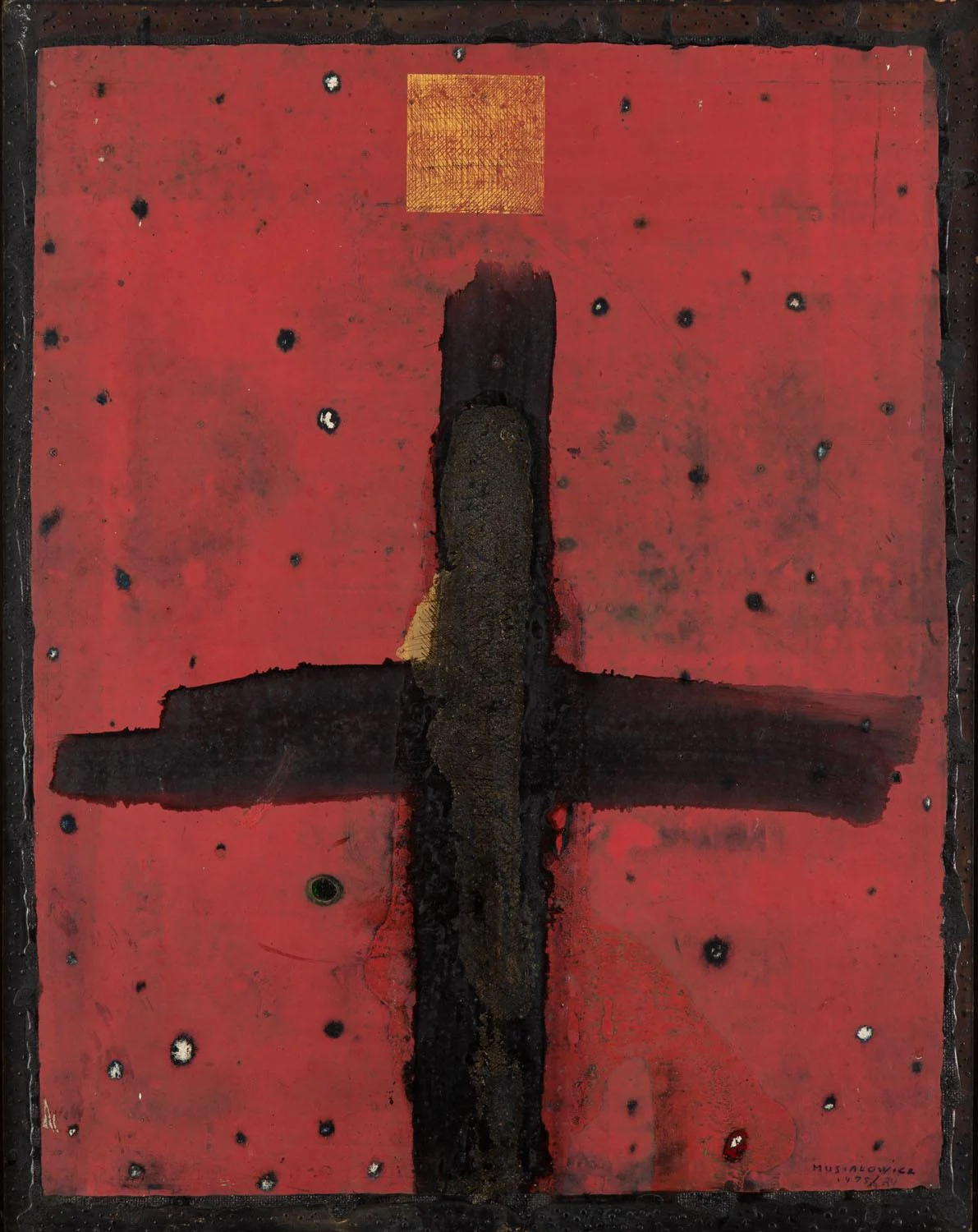
Musiałowicz's works are characterized by deep humanism, which is most fully revealed in the manner the artist constructed his artistic compositions. The artist used composition patterns that gained their final form after his travels to the Netherlands (1956) and France (1957), which were present in the artist's works until his death. These motifs were used in the paintings "Angels" and "Thinking" presented at the August auction. In the center of the composition, we see a simplified human figure, being a backbone and a sign to which the artist applies successive layers of paint, creating additional areas of meaning. In Musiałowicz's works, the outline of a human figure is almost always a starting point for further personal reflections on the uncertainty and fragility of human existence, which brings to mind works from the series "Corpes de dames" by Jan Dubufett. As the artist himself admitted, "painting aims to make viewers find the truths of faith and anxiety, to find the content and my thoughts. Because only the person for whom creativity is the essence of thoughts and life has the right to paint. Because painting is a human! The human who paints to find himself and what is in him, what connects the individual sensations of humanity." (Henryk Musiałowicz: Malarstwo i Rzeźba, Płocka Galeria Sztuki, July-August 2014, Płock: Płocka Galeria Sztuki, 2014, p. 9).