
Emballaged objects
Tadeusz Kantor was undoubtedly one of the most colorful figures in Polish art after the war. He was an artist constantly seeking new forms of expression, keenly observing what was happening in Western art. It's worth noting that Kantor, as one of the few artists at the time, had direct contact with world art, encountering the latest trends and directions. Throughout his life, Kantor stubbornly challenged the definitions of traditional painting, pushing and breaking boundaries, trying to free art from its rigid definitions.
At the end of the 1950s, Tadeusz Kantor began to feel tired of informel painting, which, by avoiding figuration, began to acquire a too decorative character for him. Informel painting brought Kantor his first successes beyond Poland's borders and marked the subsequent stages of his artistic activity. Already in the early 1960s, the artist began to feel a strong need to return to figurative painting, but his version was far from pure naturalism. He compared his quest for "retrieving" the object to the myth in which Orpheus is consumed by the desire to regain his lost beloved wife, Eurydice. His efforts to discover a new way of presenting objects led him to create "emballages."
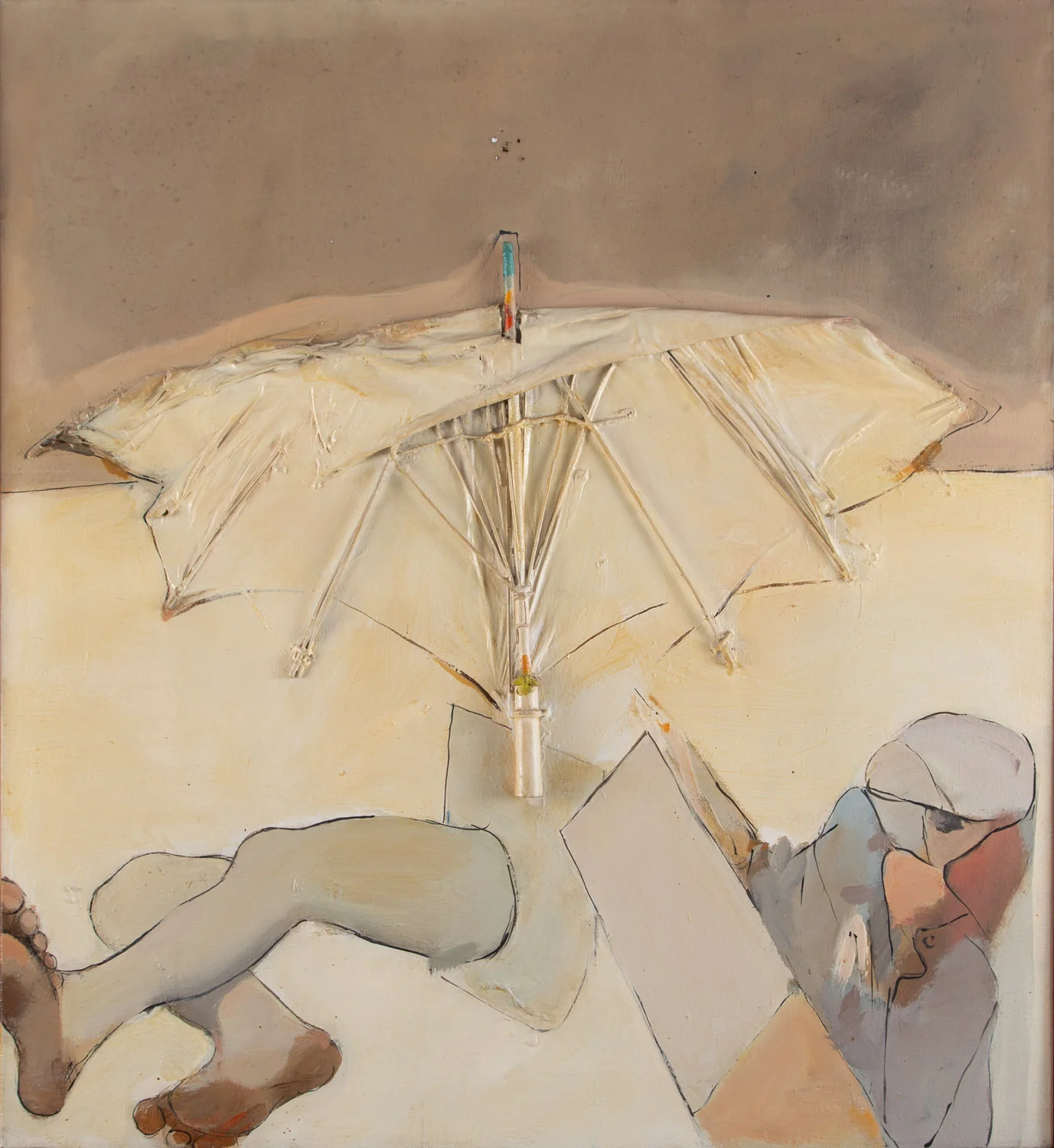
Tadeusz Kantor began creating his first emballages in 1963, and a year later, in Chexbres, he wrote the Manifesto of Emballages, initiating a new phase of his artistic work. The Manifesto of Emballages is still considered one of the most outstanding artistic manifestos of the 20th century. Kantor expressed himself there as follows:
"The object has always interested me. I realized that it is unconquerable and inaccessible by itself. When realistically reproduced in a painting, it becomes a more or less naive fetish. The color that tries to touch it immediately becomes involved in a fascinating adventure of light, matter, and phantoms. But the object remains unfathomable. Is it possible to 'touch' it in a different way? Artificially. Through a negative, an imprint, or by hiding it. By something that conceals it"
- Wiesław Borowski, Tadeusz Kantor, Warszawa 1982, p. 147-148.
As Lech Stangret wrote:
"[Kantor] gradually began to incorporate into his painting objects 'on the verge of transitioning into matter' and materials emerging from his theatrical experiences. Crumpled paper and foil bags, boxes, and sacks, fastened to the paintings with strings, acted with their material aspect, focusing attention on the hidden load of meanings and poetry within them. These procedures allowed Kantor to move away from informel, leading his imagination towards the idea of 'emballages' - although he had to overcome several obstacles along the way"
- Lech Stangret, Tadeusz Kantor. Malarski ambalaż totalnego dzieła, Kraków 2006, p. 47.
The objects that interested the artist had a "low" status, not evoking any associations with so-called high art. These banal, uninteresting objects taken from everyday life, in Kantor's works, gained importance and meaning. Isolated objects, through the hands and imagination of Tadeusz Kantor, transformed into works of art, expressing the poetic value of ordinary objects. Kantor's emballages, both objects and their packaging, eventually began to hide the human figure itself. From fragments of clothing and painted, fragmentary bodies emerged human figures, wrapped and concealed, along with their dreams, concerns, and the substance of life.
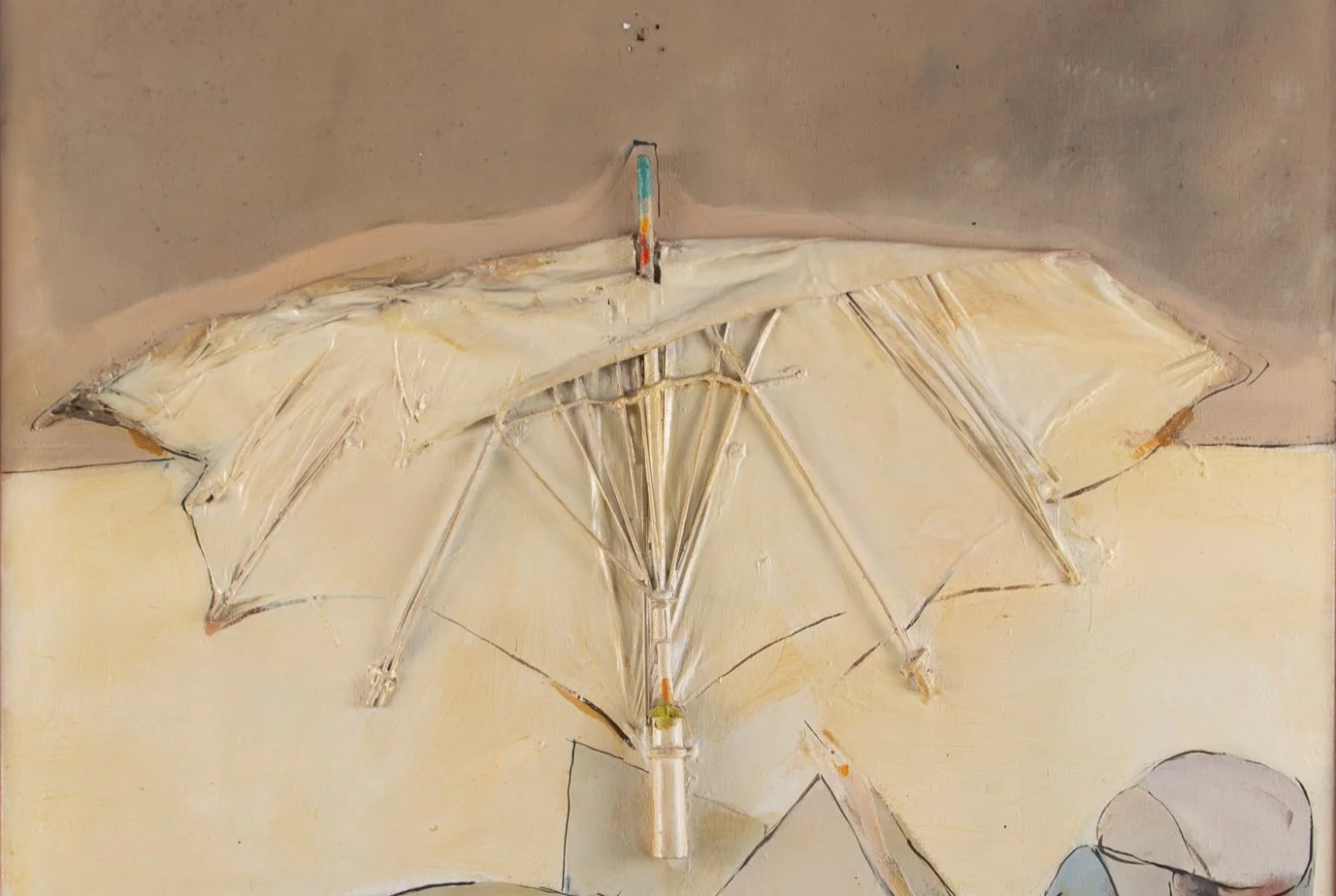
One of the objects that Tadeusz Kantor particularly favored were old umbrellas. The artist began collecting them shortly after the war, treating them as the most precious treasures. In 1964, he began to use them in his works. The umbrella became the most characteristic attribute appearing in the artist's work. For Kantor, it symbolized the ultimate crossing of the boundaries of informel. As Lech Stangret wrote about umbrellas in the artist's work:
"The least 'artistic' of the equipment, possessing only utilitarian value. Damaged and broken, it fell into the 'lowest rank,' destined for the trash. It was entirely outside painting, always recognizable, it could not transition into matter, like clothing, bags, or rags"
- Ibidem, p. 62.
Emballages were the most important stage in the development of Tadeusz Kantor's art, serving as a metaphor for his entire body of work. The actions performed by Kantor when creating ambalages took on a philosophical dimension, and the objects themselves became carriers of content and conveyors of new meanings. The objects themselves generated meanings, not only being part of the surface of the painting but also evoking associations with covering or concealing something. In this way, they created an impression of something akin to surrealist "uncanniness" and mystery. When asked whether his works reduced themselves to simply showing objects, to being objects, Kantor replied:
""It's not just an object or, as it was with the Dadaists, a provocative presence of the object; it is also a process and action. By analogy to this insignificant, degraded reality, the artist must continually leave his illusory position, striving to 'elevate' and establish himself in the world of artistic illusion, and descend into the realms of the ridiculous and life's margins"
- Wiesław Borowski, op. cit., p. 65.