Comic Book Worlds
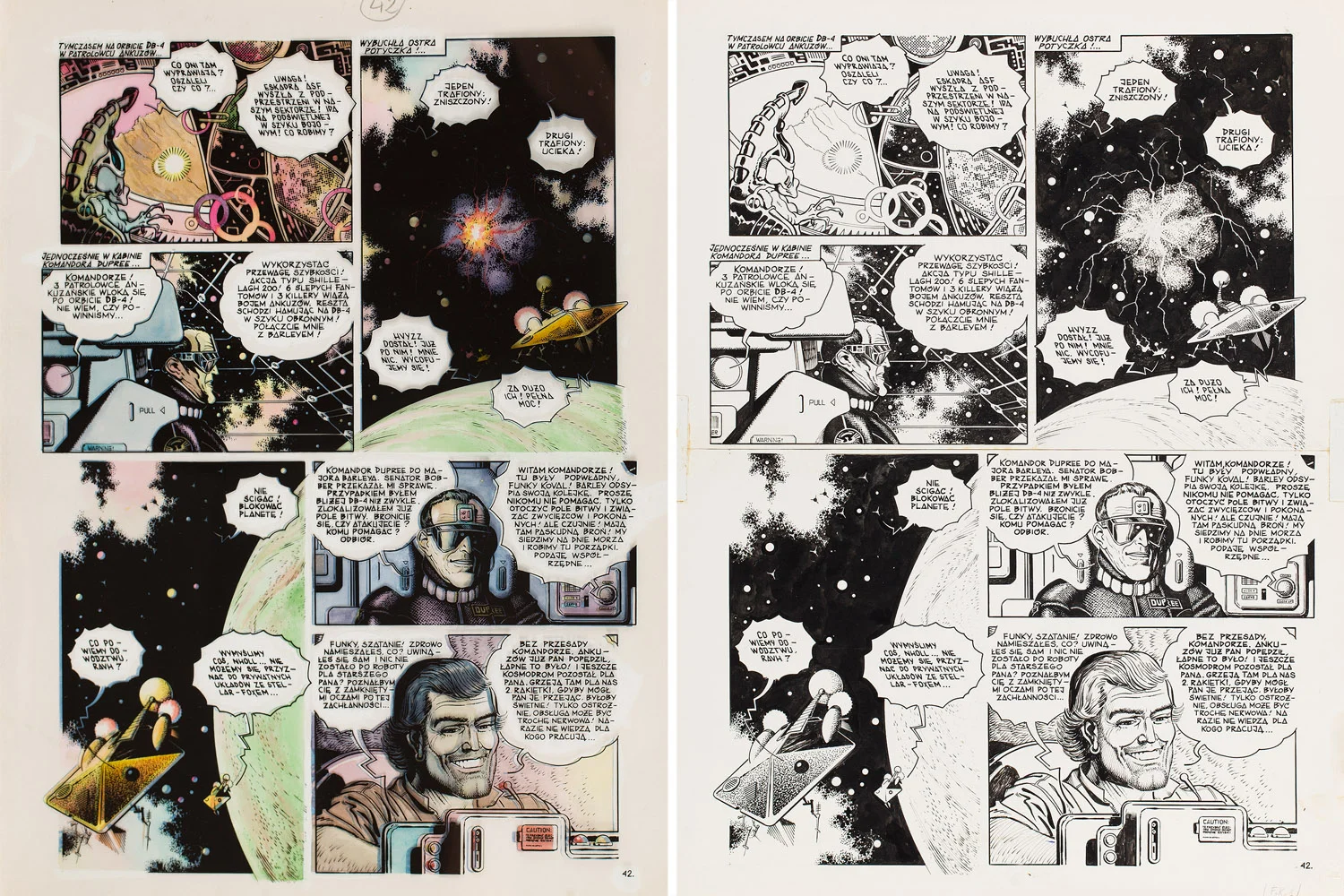
In parallel with the growing global interest in comic books, the genre had a chance to develop in Poland thanks to Henryk Chmielewski and Janusz Christ. The golden era of comics in Poland dates back to the mid-1960s. It was a result of the expansion of propaganda campaigns employing kid-friendly picture books, as well as the rise of fiction and illustration artists who employed clever humor and satire. Martial law significantly changed the situation, and restoring a positive image of the government finally became impossible. In this way, the comic industry went underground, without much chance of mass production. It was then that "Funky Koval" was released, a work that is considered one of the best Polish comics of all time.
The story about a private detective was published in the monthly "Fantastyka" and was well received. Releasing a separate magazine did not carry any financial risk; success was sure. Later issues of "Komiks Fantatyki" also featured the work by Western authors, but Polish pieces remained the most important for most readers.
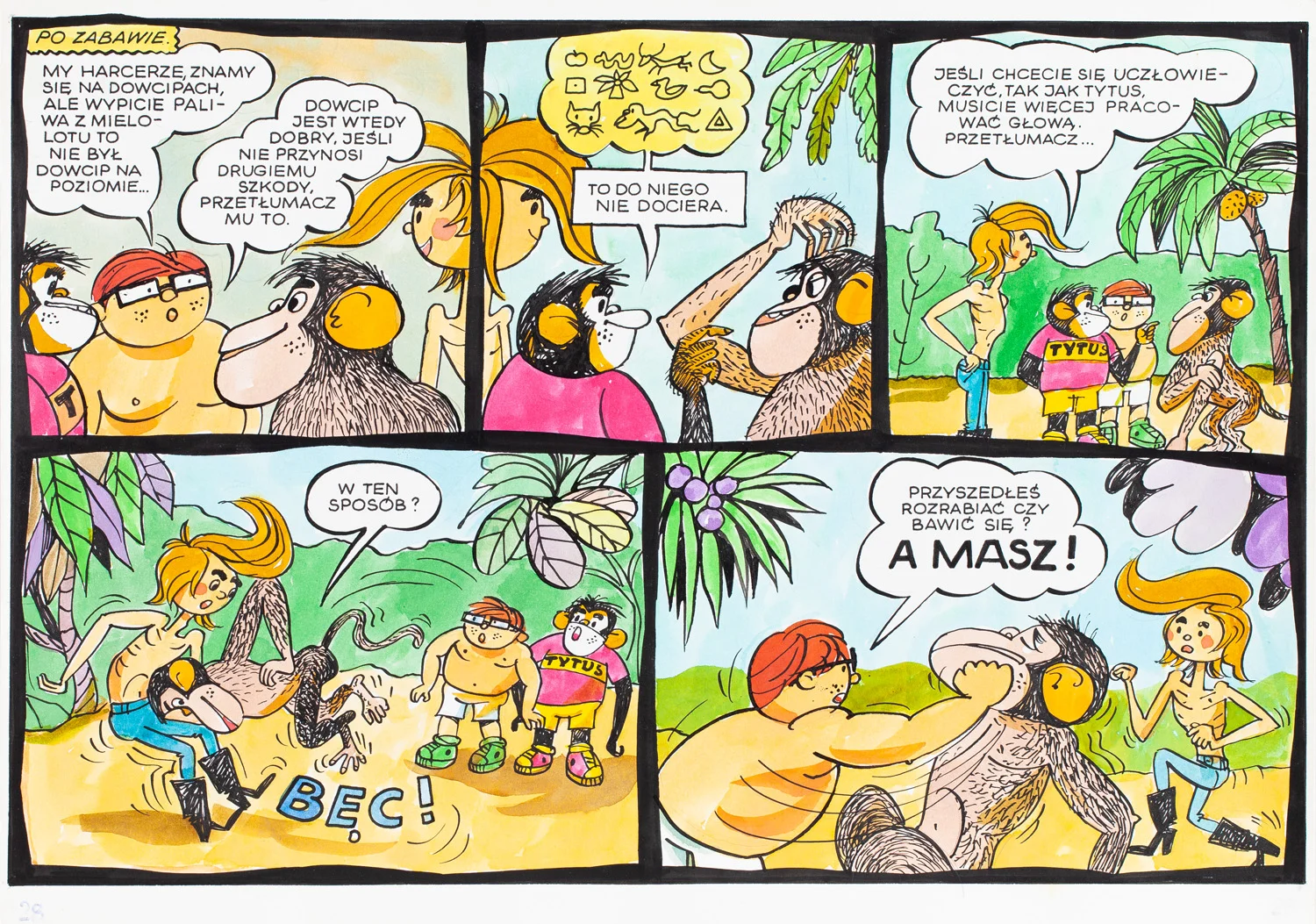
Henryk Jerzy Chmielewski was a visionary, an outstanding artist, and a member of the Polish Home Army. He fought in the Warsaw Uprising in the 7th Infantry Regiment of the Home Army "Garłuch," holding the rank of a private first class (alias Jupiter). He had been drawing comics since 1947, working as an illustrator for magazines "Świat Przygód" and "Świat Młodych." The first adventures of the anthropomorphic chimpanzee Tytus de Zoo and two scouts appeared in 1957. In the same year, Artur Bartłomiej Chmielewski, the artist's son, currently the manager of space missions at the NASA research center, was born. Henryk Chmielewski was awarded the Order of the Smile, the Commander's Cross of Polonia Restituta, and the Gold Medal "Merited to Culture Gloria Artis." In 2019, he received the Medal of the Centenary of Regained Independence from the President of the Republic of Poland.
Grzegorz Rosiński is the most famous Polish comic book creator in the world. After graduation, he illustrated books and magazines, making his debut with the comic "Tamara's Diadem" from the "Captain Żbik" series in 1968. In 1976-78, he was the artistic director of "Relax" magazine, but he resigned from his position due to pressure from the communist government, which expected him to produce ideological content. Thanks to this, he started cooperation with Belgian publishers, which allowed him to pursue an international career and great success. "Thorgal" is a comic book famous all over the world. Grzegorz Rosiński and Jean Van Hamme invented the series in 1976. The first episode appeared a year later in the Belgian magazine "Le Journal de Tintin" and in the Polish magazine "Relax." Since 1980, it has been published in the form of individual volumes by Le Lombard. The plot of the series is set in the conventions of fantasy, science fiction, and historical drama, using many motifs from mythology. Rosiński is extremely appreciated for his masterful skills, precise and dynamic drawing. The artist has received two Prix Saint-Michel awards given by the Brussels authorities, as well as two audience awards at the Festival in Angouleme and the Prix Albert-Uderzo.
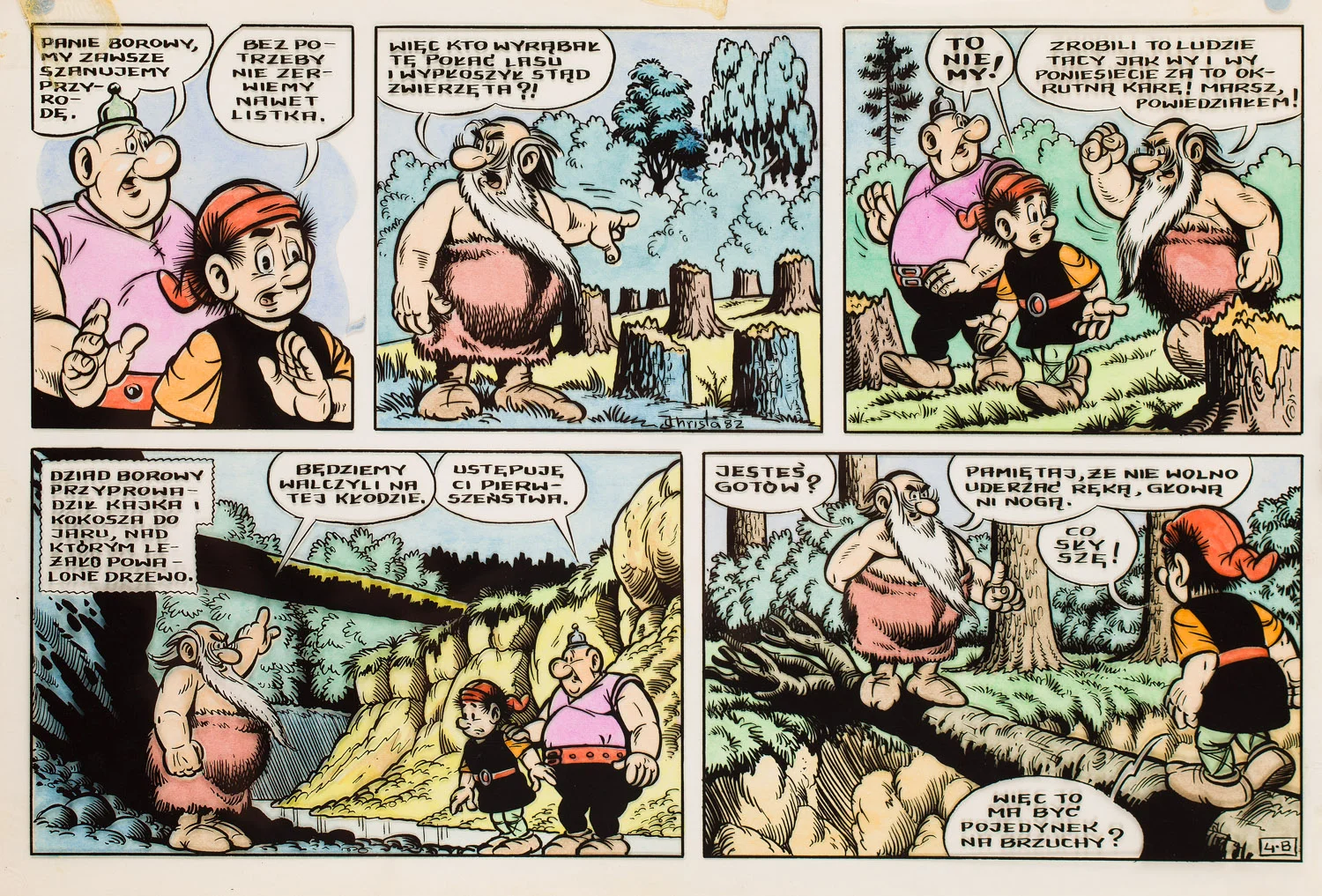
Janusz Christa made his debut in "Przygoda" and "Jazz" magazines in 1957. A year later, he started publishing a comic book about two sailors called Kajtek and Majtek, who soon changed their names to Kajtek and Kok, in the afternoon newspaper "Wieczór Wybrzeża." The popular adventure series was first published in "Wieczór Wybrzeża," and then in "Świat Młodych." The first album release took place in 1975. Initially, it was in black and white, then in color. The author often reached for a fantastic or adventure theme; he is valued above all for his masterful skills and perfect lines. His illustrations were very stylish, the strokes of pencil and ink were confident, expressive. He was able to tell great stories, the plots were lighthearted and witty, often included allusions to the reality of the Polish People's Republic. Christa managed to create very expressive and original characters. He drew and wrote in consonance with his sensitivity, thanks to which he created his own unique world. The artist created until the 1990s, he had to give up drawing due to deteriorating health. Alongside creating comics, his greatest passion was jazz.