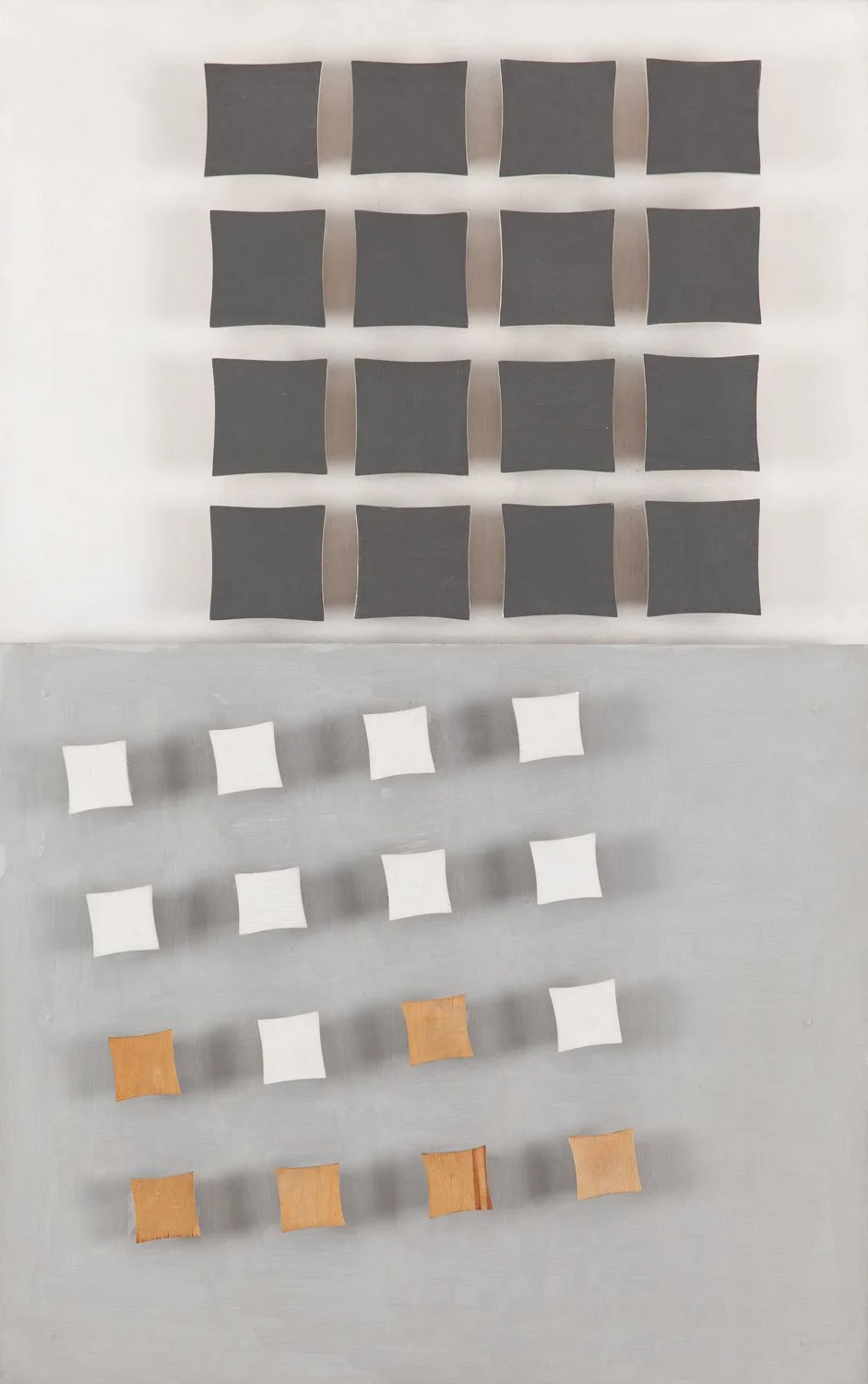
CITY-SPACE-MACHINE RELIEF BY HENRYK STAŻEWSKI AT THE I BIENNALE OF SPATIAL FORMS IN ELBLĄG
Anna Szynkarczuk, Wiktor Komorowski
Although the art of Henryk Stażewski from the second part of the 20th century is quite substantial, works such as "White-black-gray Relief No. 23" are extremely rare on the art market. In 1965, the father of the Polish avant-garde presented this piece at one of the most important exhibitions in Polish post-war history-the 1st Biennale of Spatial Forms in Elbląg. The historical and artistic value of the relief was recognized already 20 years ago - it was auctioned for a record price in 2002, becoming the artist's most expensive work. On June 30, we will see if history tends to repeat itself.
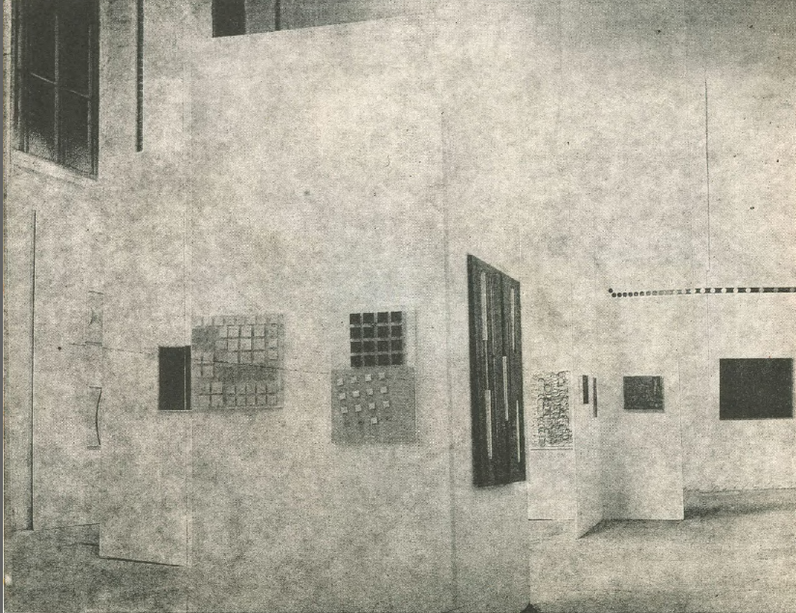
"White-Black-Gray Relief No. 23." perfectly illustrates the art of Henryk Staewski in the 1960s. The composition was divided into two parts, featuring spatial elements. It comes from the period, when Henryk Stażewski limited his color range to white, black, and gray, neatly arranging individual elements. Chronologically, the work may be placed somewhere between monochromatic, white reliefs in which the artist addressed the issue of order, and his copper compositions, in which convex was emphasized by light leaks on the surface of the metal. The limited color range allows the relief to disturb the geometrical order by leaning over the squares in the lower part of the work. It aimed to disrupt the usual two-dimensionality of abstract composition and give the illusion of movement.