
Between Warsaw and Kazimierz. The phenomenon of Prusz's studio
The interwar period was a truly unique time in Polish culture and art. While various avant-garde movements were flourishing in the field of Polish visual arts, the prominent painter Tadeusz Pruszkowski began his pedagogical activities within the circle of the Warsaw School of Fine Arts. Over the course of two decades, a whole group of creative individuals gathered around him, dominating the artistic scene not only in the capital.
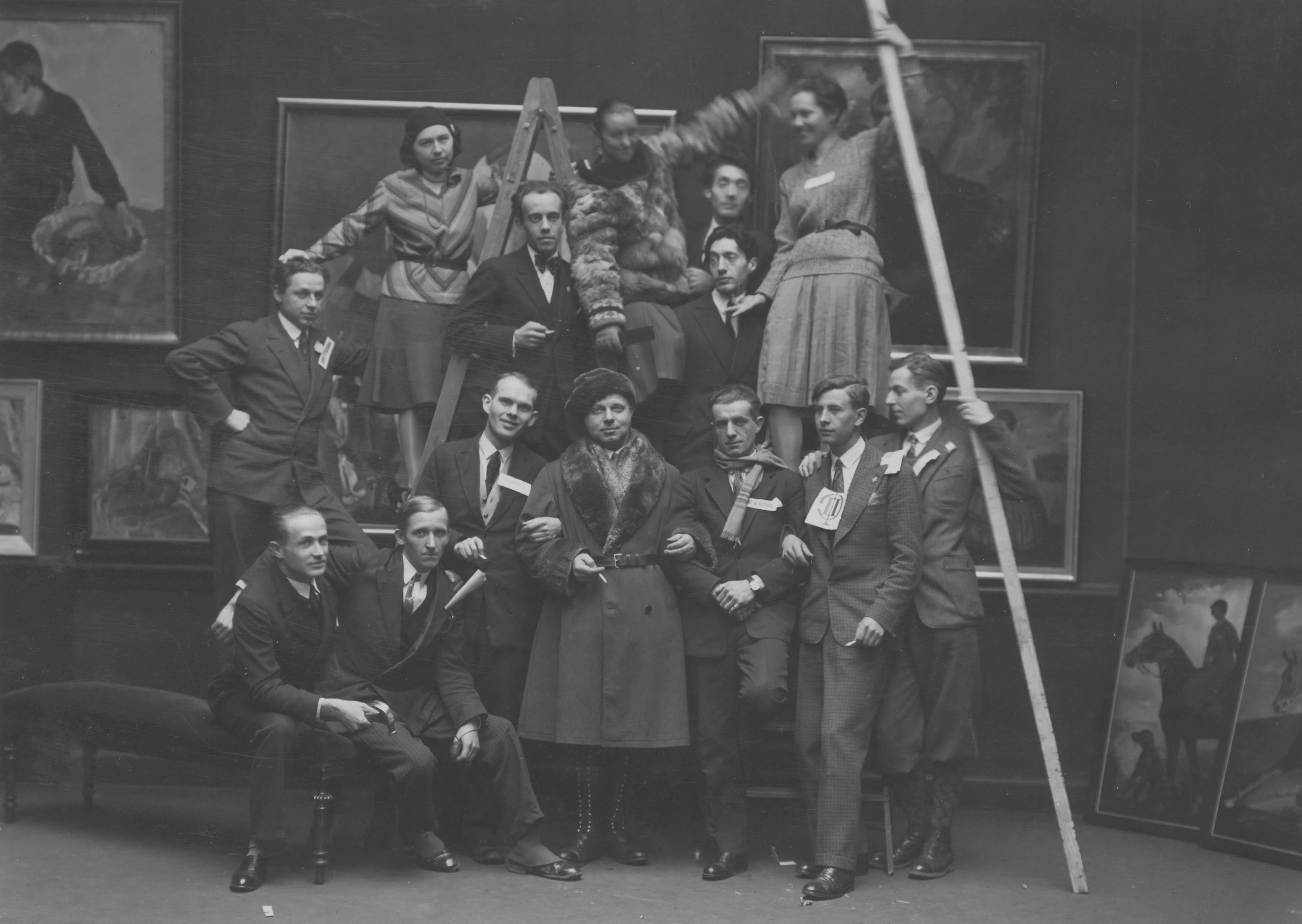
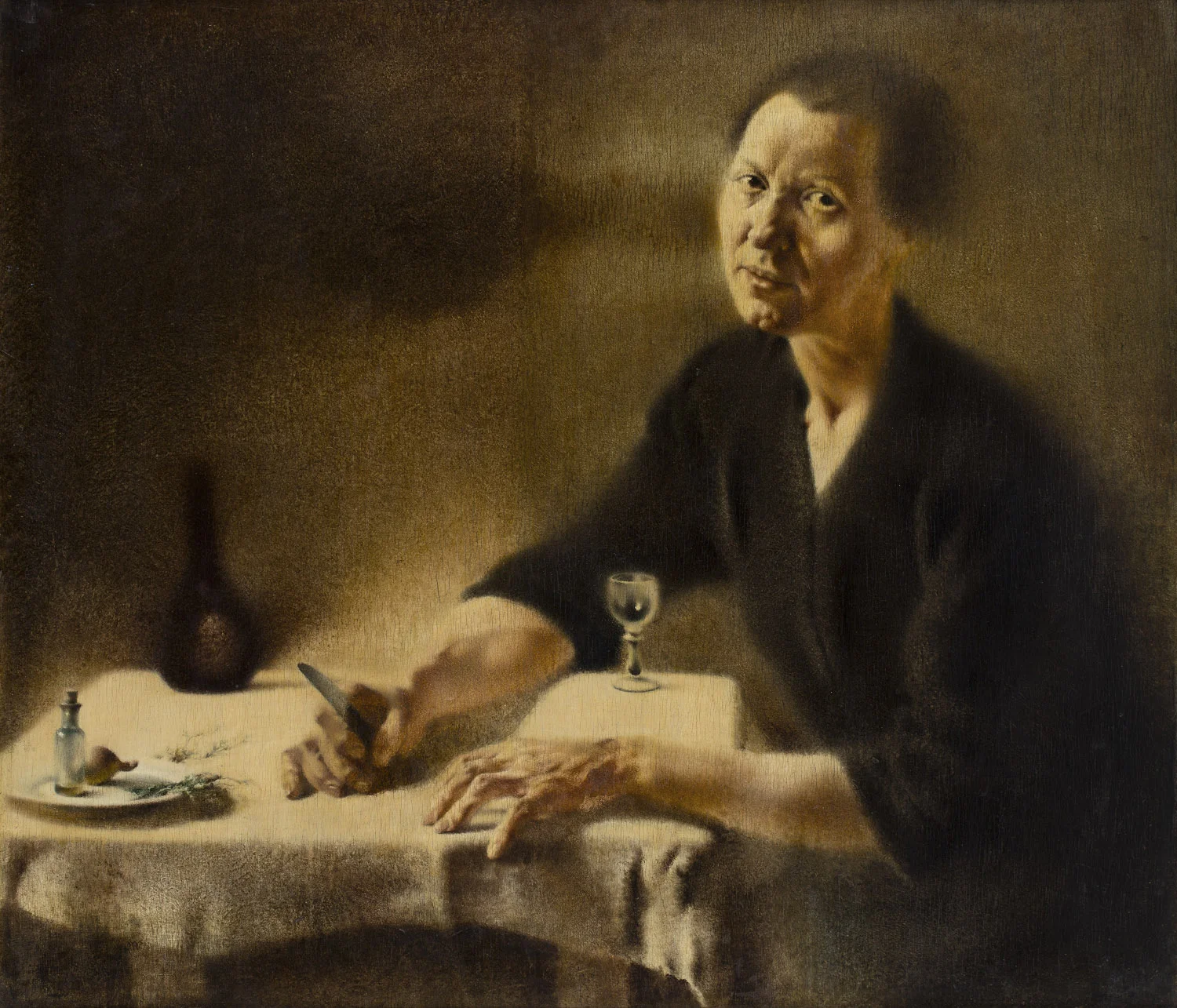
Interwar Poland saw the emergence of two strong artistic communities with classical inclinations. One was the circle of the Vilnius school, and the other was the circle of the Warsaw school. In Vilnius, Ludomir Ślendziński played the leading role, strongly influencing his colleagues and students. In Warsaw, a similar position was taken by Tadeusz Pruszkowski, who instilled in his students a love for the art of the old masters and tradition. He taught them about technical mastery, the values of art, and precision in drawing. Over the years, thanks to the initiative of the professor, who was known as "Prusz" among his friends or, caricaturistically, "The Chubby One," four innovative groups were founded by his studio graduates. The oldest and ideologically most important was the Brotherhood of St. Luke. Its members, including artists such as Bolesław Cybis, Jan Gotard, Eliasz Kanarek, Jan Zamoyski, and Janusz Podoski, engaged in a profound dialogue with the masters of Italian Quattrocento and 17th-century Dutch art. The co-creators of later groups-the Warsaw School, the Freepainters's Lodge, and the Fourth Group-preserved just these traditions, although their art often leaned towards modern colorism. Pruszkowski's pupils were popularly called "Pruszkowiaki." Their love for broadly understood tradition was evoked by interwar European art. The art deco style, German New Objectivity, the so-called "return to order"-all that allowed Warsaw to establish a thriving artistic community that could boldly compete with the achievements of their foreign counterparts. After years of partitions, artistic activity in the reborn country flourished everywhere. Art gained a new role and was somewhat involved in the state's propaganda activities. Poland gave rise to the myth of the "state-building artist," one who was involved in building the power and glory of the nation. In this context, we should undoubtedly look at the most important works of Pruszkowiaki, especially those commissioned by the state, church, and private entities.
There are many unique towns in Poland, but in the 1920s, one place stood out as a magnet for students from the Warsaw School of Fine Arts. Of course, the formation of this peculiar artistic colony in Kazimierz had its roots much earlier, already in the 18th century. For example, Zygmunt Vogel, Wojciech Gerson, Leon Wyczółkowski, and Władysław Ślewiński traveled to the Vistula River, painting extremely picturesque floodplains. They all "portrayed" the town in their own way. As Waldemar Odorowski wrote:
"Each era has its own type of depicting reality, and Kazimierz's example is very distinctive. The same motifs of Kazimierz's views were repeated for years, but always differently-from the works that carefully crafted, faithfully depicted realities of the town to paintings that convey the mood that arose from the painter's contact with Kazimierz."
- Waldemar Odorowski, Malarze Kazimierza nad Wisłą, Warsaw 1991, p. 6
Various factors influenced the interest in Kazimierz. The most important of them was undoubtedly its unique topography. The town, located on the back of the Vistula River in Lesser Poland, offered extremely attractive landscape views, appreciated not only by tourists and vacationers but also by artists. Added to this were cultural aspects: a rich history and its witnesses in the form of monumental buildings, some of the most magnificent representatives of the Polish Renaissance and Mannerism. The space of Kazimierz Dolny was like a microcosm where two distinct religious communities, Christian and Jewish, coexisted. This environment drawn young apprentices. The center generated its own kind of magic, enchanting all who visited it. It's no wonder that Maria Kuncewiczowa wrote that "two moons" shine in the night sky over Kazimierz's market square, suggesting its mysterious and enigmatic duality.
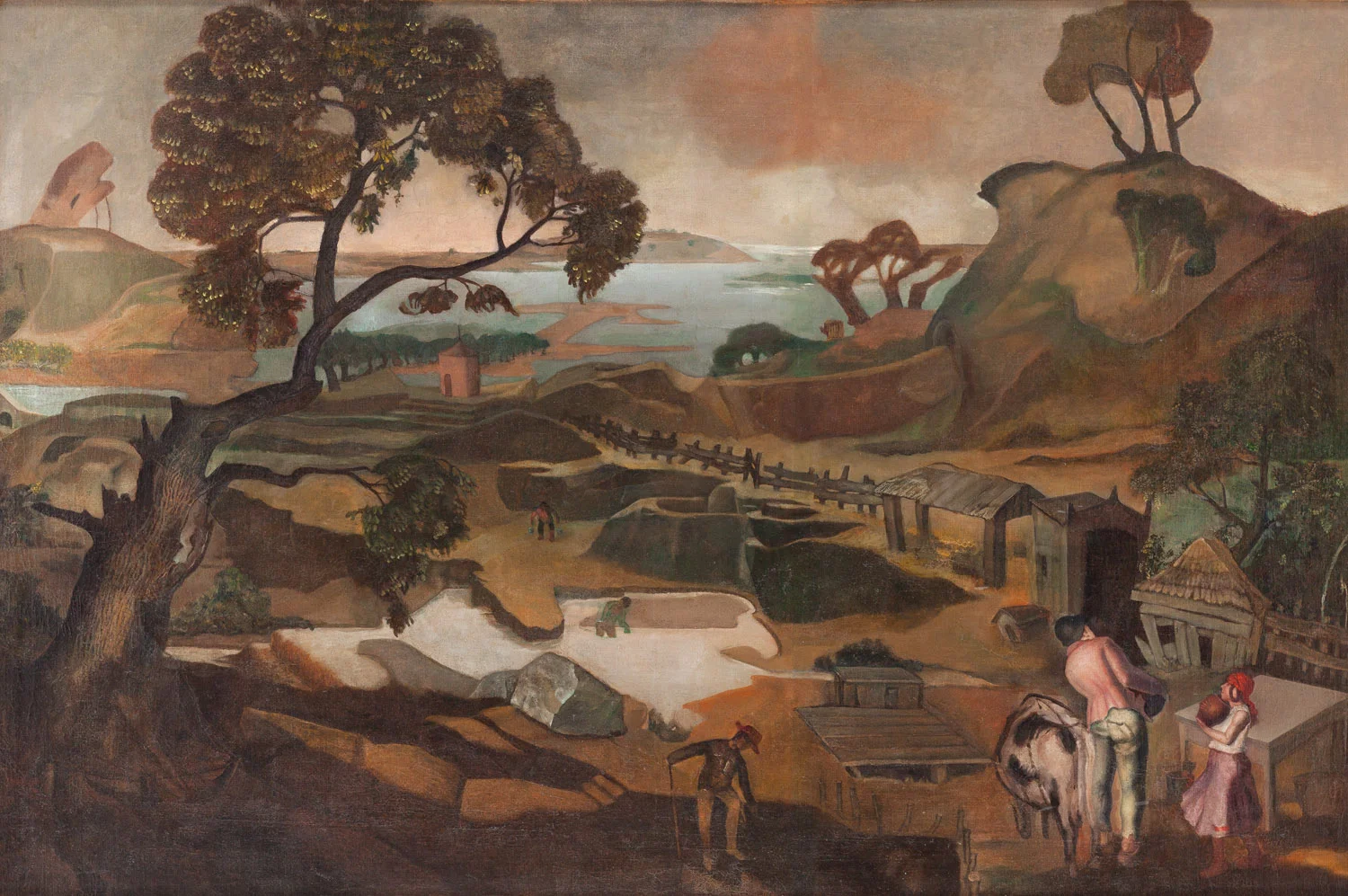
Starting in 1923, Tadeusz Pruszkowski began organizing summer painting outdoor sessions in the town, linking Warsaw with Kazimierz. This initially small group of students grew rapidly from year to year. The sessions became legendary, and the activities of Pruszkowski's students created many fascinating myths. With the arrival of summer, the space of Kazimierz became a metaphorical stage for the atmospheric Theatrum Mundi, ruled by visiting artists. Years later, Jan Zamoyski remembered this time as follows:
"We were simply enchanted by the town. In vain would you search for another place that provides such a variety of impressions as the small area of Kazimierz. Almost within reach, we had a richly carved area with hills furrowed by deep ravines, a wide river with jagged banks and sandbanks creating a magnificent beach; (...) an enchanting architecture of the town perfectly incorporated into the terrain, with noble silhouettes of churches and unique, artistically valuable tenement houses (…)".
- Jan Zamoyski, Łukaszowcy, Warszawa 1989, p. 9
Presence of young painters provided residents with lots of entertainment. Often a whole group, amused like during ancient Bacchanalias, would walk through the narrow streets. The paintings by the Pruszkowiacy group excellently depicted the surrounding reality, including the one in Kazimierz. Grotesqueness and an incredible sense of humor, typical of the genre-moralistic painting of the old masters, often accompanied them. Allegedly, a short film titled "The Happy Hangman, or California in Poland" was even recorded there, but unfortunately, the rolls burned in the Warsaw Uprising.