
Innovator and scandalist - Jerzy Ryszard "Jurry" Zieliński
Anna Szynkarczuk
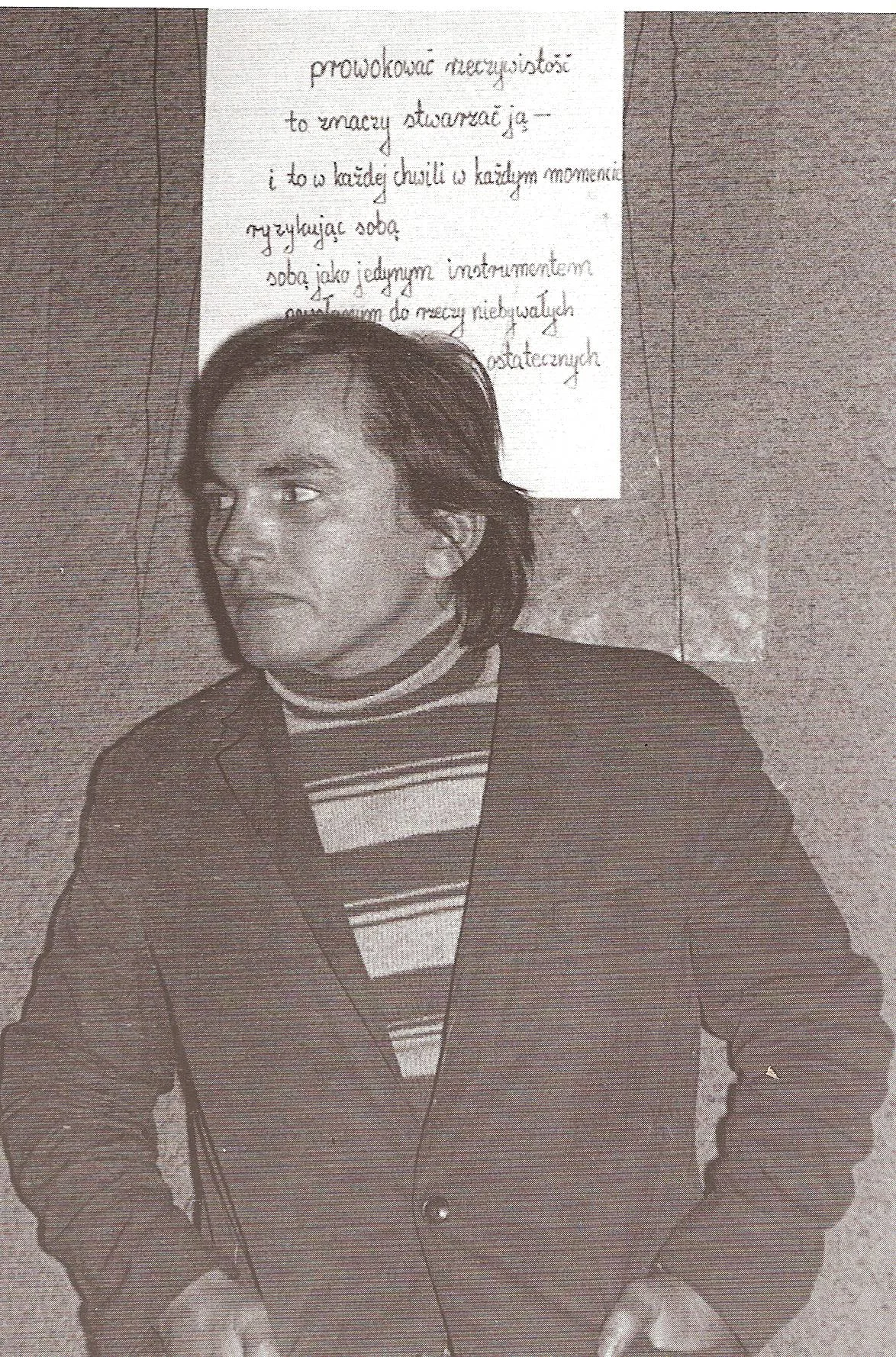
Jerzy Ryszard "Jurry" Zieliński is one of the most fascinating figures of Polish culture in the second half of the XX century.
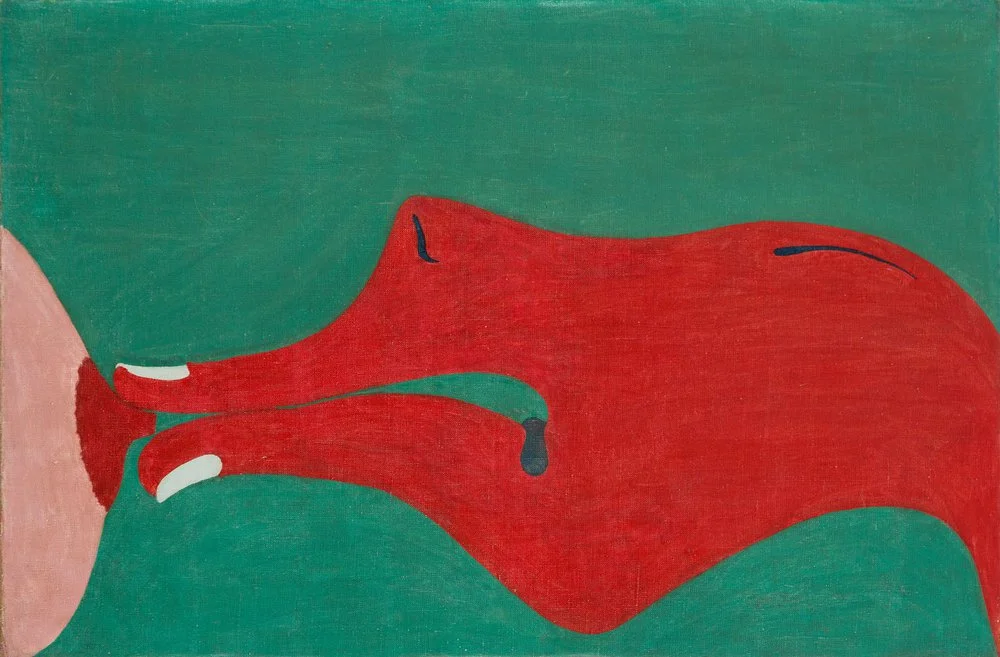
A non-conformist, original, innovator, scandalist - the circumstances of his tragic death remain unclear to this day. At the Classics of Avant-garde after 1945 auction, we present the work "Oh, oh", which does not originate from the artist's most interesting painting period, but also shows the characteristic style of "Jurry".
The work of Jerzy Ryszard Zieliński, a painter, does not easily fit into the narrative of the art of the second half of the In the twentieth century in Poland. The basic trick of the artist's painting rhetoric was a metaphor: sometimes unclear, and sometimes using a palette of obvious associations and allusions. As far as the content of "Jurry" is concerned, it referred to both universal phenomena and the political context at the time. In addition to painting, he created poetry and reflective texts. His works were called "road signs of the political existence of the People's Republic of Poland". The best period of his work was at the turn of the 1960s and early 1970s. It was then that his most famous paintings and the picture "Oh, oh" were created.
Forgotten for many years, "Jurry" has re-emerged in the history of Polish culture in the last few years. Descriptions of his intriguing work are often accompanied by biographical threads, the most famous of which are the mysterious circumstances of his tragic death in 1980. He graduated from the Academy of Fine Arts in Warsaw in 1968 in the studios of Jan Cybis and Jan Wodński. The first characteristic pictures, heralding his later work, were painted by "Jurry" in 1963, two years before the formation of "Neo-Neo-Neo" together with Jan Dobkowski. The duo's first exhibition took place at the Medyka Club in Warsaw. The event, which took place in an atmosphere of provocation and scandal, has gone down in history. Young artists organized a symbolic funeral of the current trends in art. At the ceiling in the Medics Club, they hung a coffin with the words "cubism", "abstractionism", "dadaism". The exhibition was watched by distinguished guests: Marian Wnuk, rector of the Academy of Fine Arts, professor Jan Cybis, poet Stanisław Grochowiak, and many famous writers, poets and painters in those years. The well-known songwriter, actor and cabaret singer - Jonasz Kofta - took on the event's host. The exhibition was widely echoed in the artistic community of Warsaw. It was "Jurry" and "Dobson" who proclaimed pop-art in Poland in two, which in their reception is expressed in flat biological forms drawn with a decorative line. It was an expression not only of rebellion, but also of delight.
Compared with various styles of the 1960s and 1970s, the paintings of "Jurry" constitute a kind of mosaic of trends that experienced a renaissance in that period - apart from Western pop-art, and the so-called Polish poster school and Art Nouveau. Jurry and Dobson's paths parted in 1970 and the Neo-Neo-Neo duo ceased to exist. "Jurry" was involved in artistic bohemian circles. He was a frequent guest at the "U Hopfera" cafe, where he was seen in the company of his close friend Edward Stachura.
The uniqueness of "Jurry's" painting consisted primarily in the oscillation between the universal meaning of the symbols used and their ideological and political reference. The artist openly contested the PRL system, pointing to its paradoxes and the resulting dilemmas. Reaching for the symbols used by official propaganda was aimed at activating the recipient, who had to reconstruct the meanings he knew. The artistic strategy of "Jurry" was irony, a perfect example of which is the sign of the lips, which is often in his work. A pattern popular in the culture of the 60s and 70s appeared in the works of Andy Warhol and Tom Wesselmann.
It can certainly be said that the aesthetics of Zieliński's paintings owe much to the American pop culture. In its message, "Jurry" goes beyond the erotic and sensual connotations of American artists. Rather, his works express various emotions and fears that accompanied life in a totalitarian system. The ironic comments concerned not only politics, but also national symbols, the pathos of native colors, the scheme of the map of Poland, signs of history and tradition. It can be assumed that Zieliński's long-term strategy was to create a new painting language that would constitute an opposition to the compromised formula of his time. Both the formula of socialist realism and the sanctified, insanely apolitical - and therefore associated with escapism - abstraction, were not sufficient for the artists of the 1968 revolution. "Jurry", created during the prosperity of Gierek's times, distanced himself from the opportunism of the time, which affected the artistic and intellectual elites, always remaining in opposition - even in the face of his own fame.