
Women from the Krakow Group
Among the members of the Krakow Group there was a strong representation of female artists, whose achievements clearly marked the history of post-war art. Teresa Rudowicz, Erna Rosenstein, Jadwiga Maziarska and Wanda Czełkowska are some of the most interesting characters of the Polish art scene. Below, we present the profiles of the artists who rarely appear in textbooks.
One of the co-founders of the 2nd Kraków Group was Teresa Rudowicz. For many years, the painter exhibited with her colleagues from the group, including during the second Exhibition of Modern Art in Warsaw (1957), preceding her solo debut at the Artist's House, which took place in 1958.
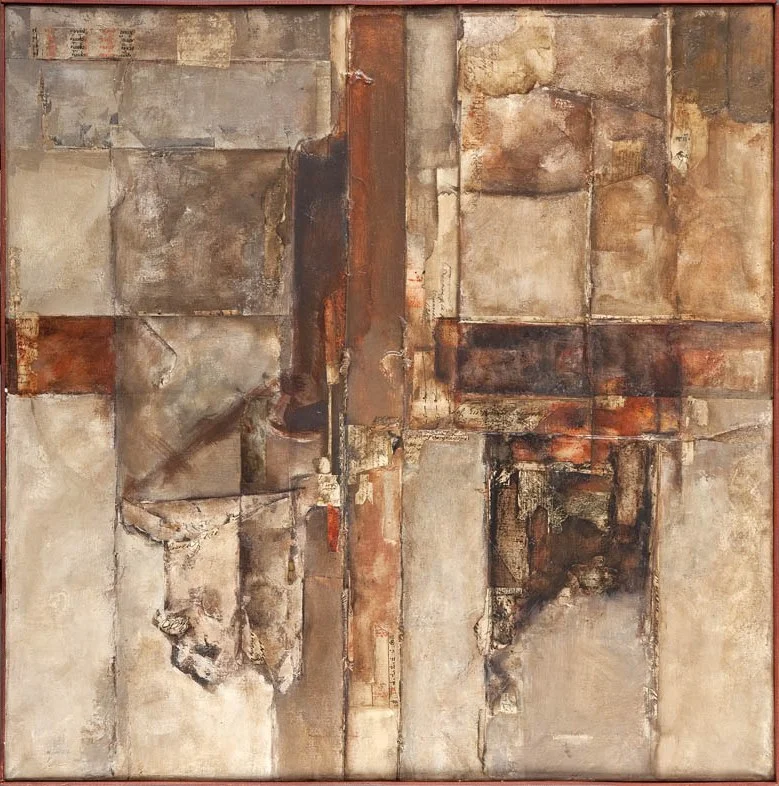
Almost from the very beginning, Rudowicz worked in the abstract convention that arose from her first surreal experiments. In the 1960s, the artist mainly created works situated on the border of collage and painting, assembled from fragments of written sheets of paper. At the end of the decade, her works started showing enriched colours and a dirtied texture, heralding the pursuit of matter towards independence manifested in the use of found objects. Works from this period are related to the Italian episode in the artist's biography, when she went south with Marian Warzecha. At one of the flea markets in Rome, she found books with genealogical notes, which for the next few months served the artist as materials for her studies and contributed to the development of an original formula combining painting with collage. The works from the series made in Rome were appreciated by art critics and art dealers. Rudowicz and her husband achieved financial and artistic success in Italy - their works were then purchased for private and museum collections.
In the context of Teresa Rudowicz, there is often talk of a poetic interpretation of time. She chose this artistic formula in the late 1950s and remained faithful to it for the next decades. By enriching formal means to a minimal extent, it oscillated around the universalist concept of time and memory.
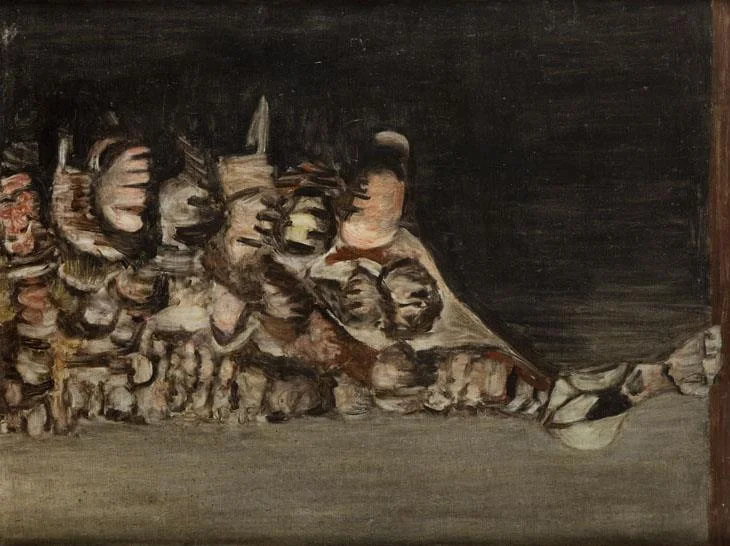
Another interesting artist, working with the Krakow Group, was Jadwiga Maziarska. Maziarska is one of the pioneers of the art of matter on the Polish, maybe even international, art scene. The relief character of her compositions emphasized the importance of the physical structure of the work. The use of sculptural methods served to emphasize the rhythm, which is the main element of shaping the work surface. Although the artist was considered an innovator, an important aspect of her art was staying outside the inner circle of the most influential representatives of the 2nd Kraków Group, including Tadeusz Kantor, Jonasz Stern and Maria Jarema. The attitude of an outsider connected Maziarska with Erna Rosenstein, her dear friend. They often corresponded, exchanged pictures, visited each other's studios and created together. Although the painter's art remained aloof, it was quite widely commented on when reviewing exhibitions. Maziarska's artistic experiments were hidden in her studio for many years. Rediscovered in the 1990s, the artist is now very popular with art researchers, and her works are sought after by collectors.
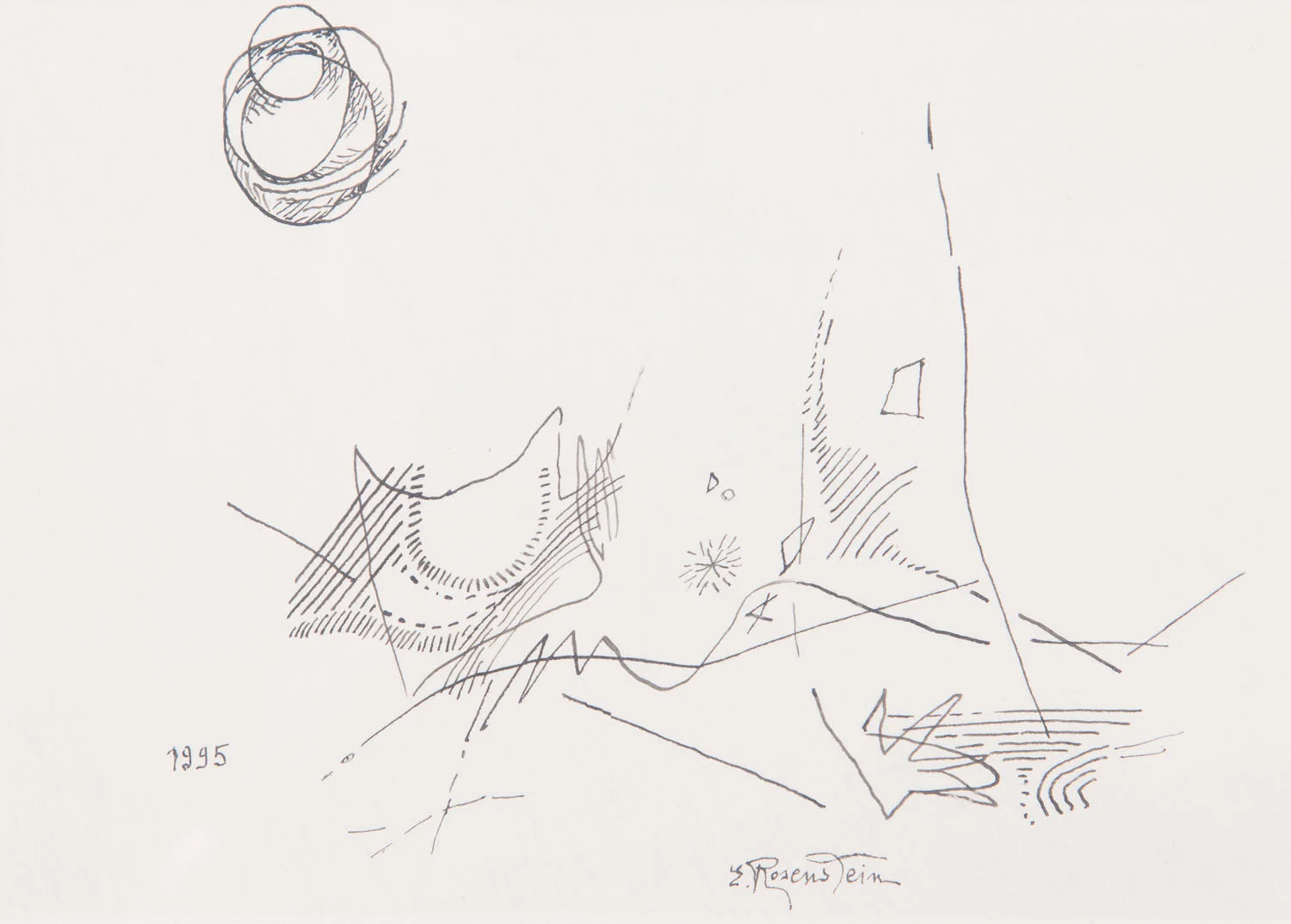
It is also worth paying attention to the extraordinary work on paper made by Wanda Czełkowska. The artist is one of the most original Polish artists working mainly in the field of sculpture. As early as during her university years, she developed an interesting, avant-garde language of spatial imagery with an expressive character. Czełkowska lived in Krakow for many years, where in the years 1969-1981 she was associated with the post-war Krakow Group, but always remained somewhat aloof.
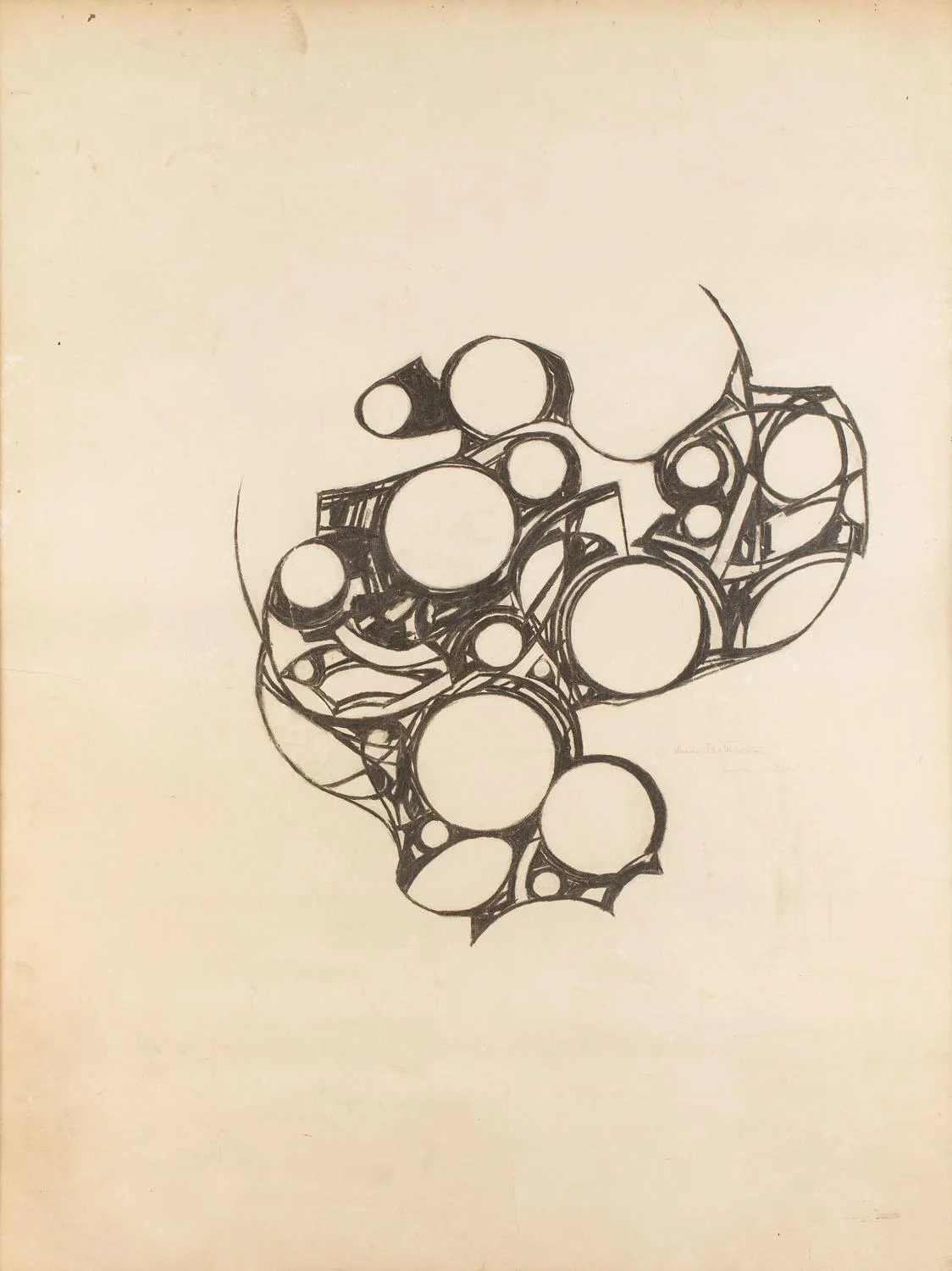
For many years, the artist's work has not been widely known and researched by art historians, however, it has recently gained well-deserved publicity, among others due to subsequent exhibitions and international successes. It is worth mentioning here, for example, the international Frieze fair in New York, where several of her works, presented at the collective exhibition at the Broadway 1602 Gallery, were recognized by Artspace critic Andrew M. Goldstein as one of the ten best works by Frieze New York.