
When a photographer becomes an artist
Magdalena Krajenta
"True artists do not think about the message of their work at all, because it is contained in them naturally, just as a person naturally breathes." -
- Jiří Menzel
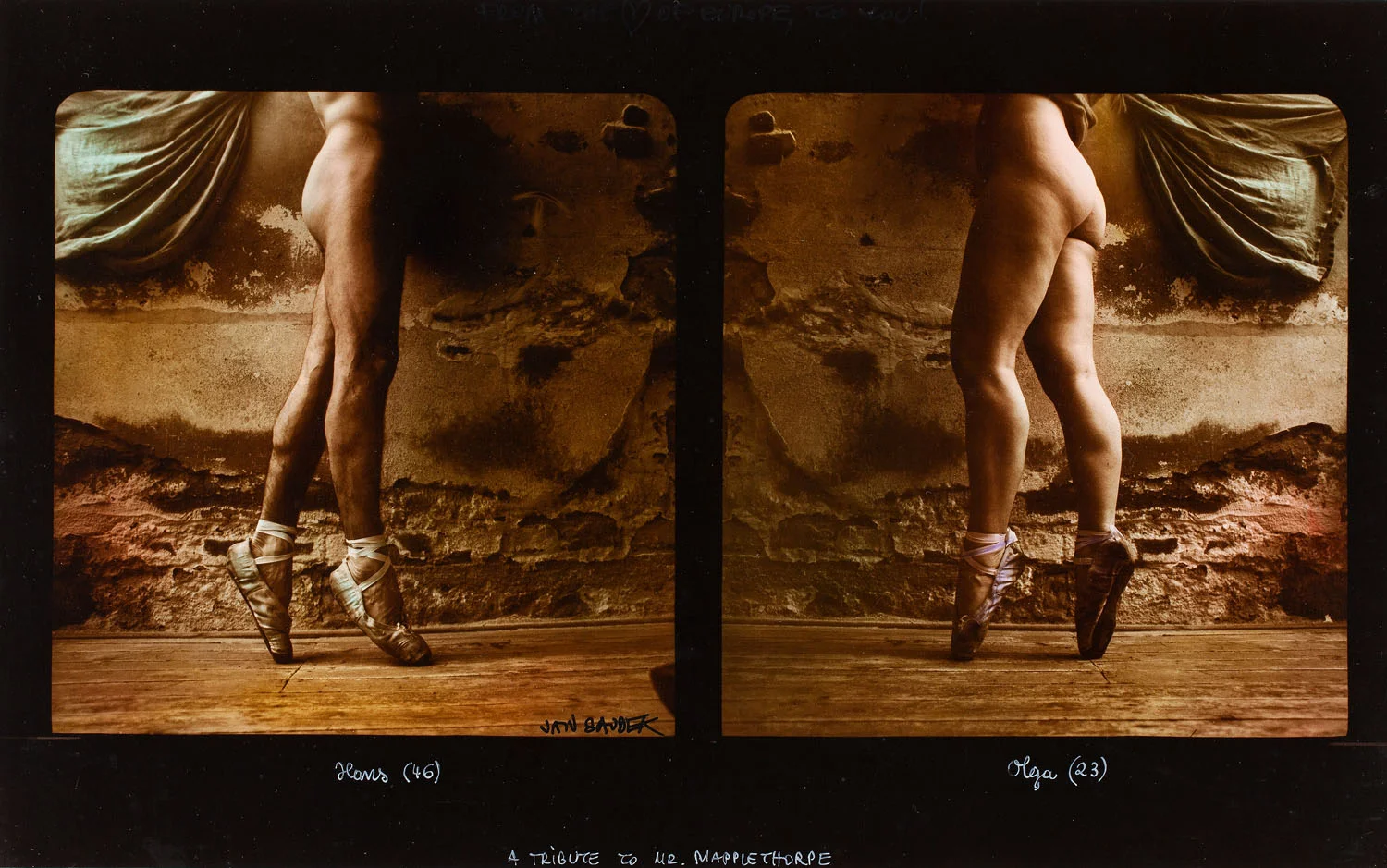
In contrast to most works of 20th-century art, the works of Jan Saudek are almost universally understandable. It could be said that they reference archetypes-it's naive symbolism based on the unquestionable nature of the photographic medium, on its seemingly complete authenticity. Despite its vulgarity, Jan Saudek defines himself as a traditionalist. In an old-fashioned way, he allows himself to be called a "Czech photographer" (the sign Czech photographer was visible on the door of his studio in Prague's Žižkov), and in his arrangements, he uses attributes from the Austro-Hungarian monarchy era.
Jan Saudek was born on May 13, 1935, in Prague, into a Jewish family. He spent the end of the war with his twin brother, Kája, in a German concentration camp. He received his first Baby Brownie Kodak camera at the age of fifteen, and from the late 1950s onwards, he consistently dedicated himself to photography. As he often emphasizes, the book The Family of Man by Edward Steichen had a significant influence on his work.
Although the style of Jan Saudek's work is perceived as a "trademark," his art has undergone several significant turning points over the years. In the 1960s, Saudek translated the post-war humanistic pathos into symbolically arranged portraits, formulated straightforwardly and unambiguously. Under the influence of American staged photography, he also began to focus on series of tableaux (e.g., Deset let Veroniky) and staged series (Death of a Soldier).
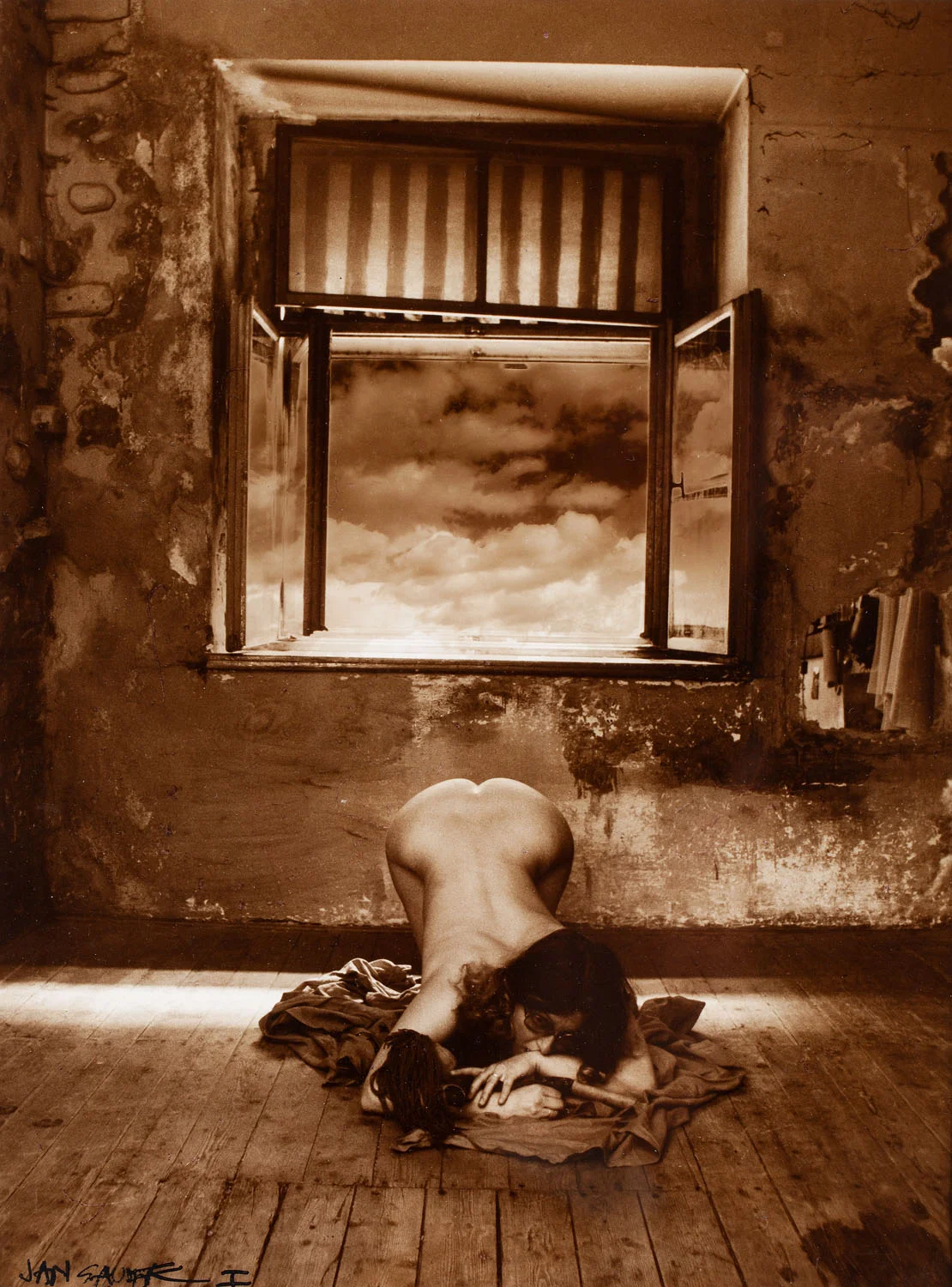
For a long time, Jan Saudek lived in a single room on the ground floor, which also served as his studio. There, by the chipped wall, with a window overlooking the courtyard, he created his first dreamlike nudes.
In the 1980s, with the relaxation of political conditions, there was further liberation of themes, and his work was definitively enclosed in the "Saudek template," defined by the famous lichen-covered wall of his studio in Prague's Žižkov.
The chipped "Wall" became a typical element of his work. One of his favorite motifs was an open window, in front of which there was a woman, a man, or lovers in various situations. His work became even more erotic, animalistic, and sometimes perverse.
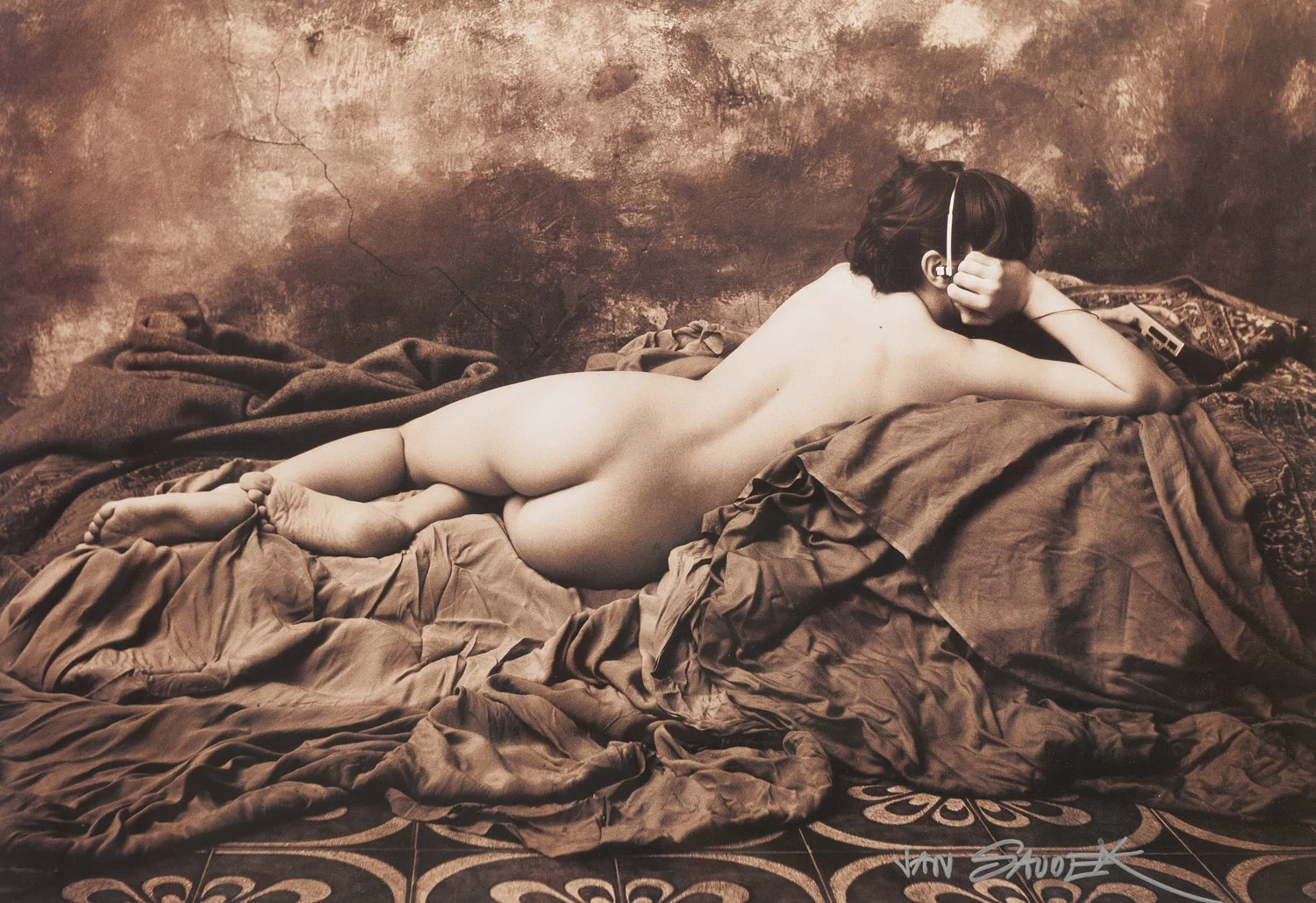
One of Saudek's fundamental themes is time itself, its flow, and changes. The author seems to return to a mythical era, uncorrupted by technology. Saudek places emphasis on the "truth" of the camera and does not hesitate to depict anyone or anything in front of it. He breathes life into his photographs with the women's bodies of various shapes, from painfully slender and obese, to deformed. Since 1977, he started coloring and hand-painting his developed photographs, which bring to mind the works of erotic photographers from the mid-19th century.
Jan Saudek is not only a photographer but also a painter. The artist is also known for his tumultuous nature, multiple marriages, and numerous offspring. He has three children with his last partner, journalist and photographer Pavlína. In 2015, the film "The Photographer" premiered. Saudek also became the subject of an essay titled "Czech Photographer" in the book "Zrób sobie raj," where the renowned expert on Czech culture, Mariusz Szczygieł, critically examined the artist's attitude.