
VANITAS: FROM THE 17TH CENTURY TO TODAY
The fragility of life and transience are an indispensable symbolic dimension of still lifes. Still life, which as an individual painting genre was born around 1600, already around 1620 acquired a separate type: vanitas still life.
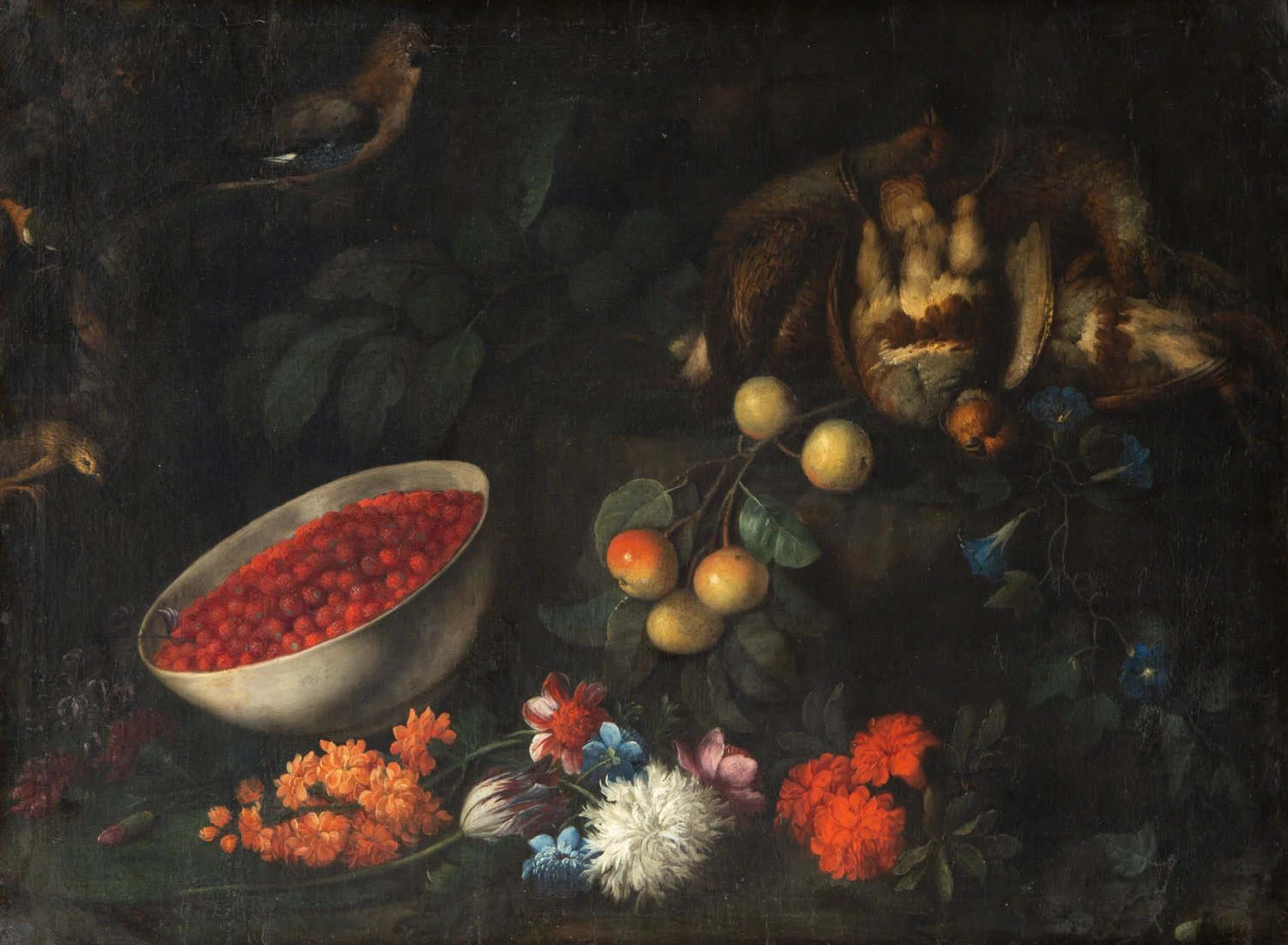
The first paintings of this kind appeared in Leyden near Amsterdam and were created to meet the needs of the patriciate of this reach university town. Both wealth of the Netherlands and also radical Calvinist ethics, accenting poverty of earthly life, created favorable conditions for their creation. The paintings, filled with symbols, were rebuses and the cause for meditation on the nature of life. Referring to the Old Testament (“Vanity of vanities," saith the Preacher. “Vanity of vanities, all is vanity", Koh, 1,2), the painters put in their works the objects explicitly relating to transience – extinguished candles, partly spoiled fruits, dead animals, sculls or clocks, but also musical instruments, natural objects or other valuables as warning against collecting earthly wealth.
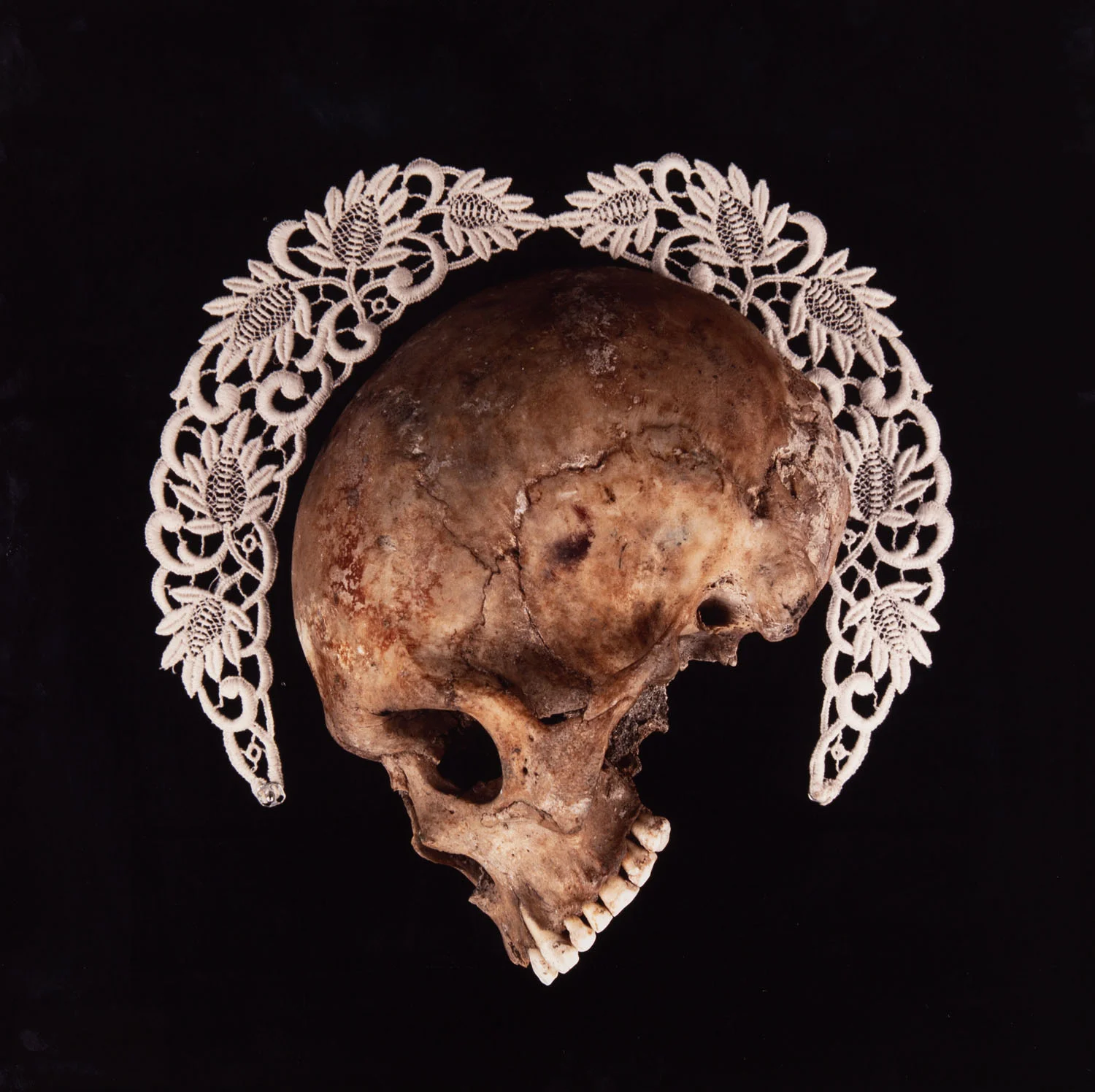
Still life – this strongly developing branch of the 17th-century genre painting – gained great popularity both north and south of the Alps. In modernity and contemporary era this genre was popular among those artists who entered an open dialogue with old masters. On the auction “The Object of Desire. Still Life and Object in Art" we present the works of artists from the 20th and 21st centuries who directly referred to this great tradition. Mojżesz Kisling, in his still life creates his individual interpretation of Rembrandt's “Slaughtered Ox" from Louvre. A scull is a standard motive in Jacek Sienicki's painting. It also appears in the works of Zofia Kulik and Grzegorz Bednarski. “The objects of art – closed and finished works – appeared rather late and they were the symptom of Zofia Kulik's entry into maturity. Their creation was preceded by years of work with models, most often with Zbigniew Libera and Robert Rumas, who endlessly repeated poses known from canonic works of mediaeval and early modern art but also from anthologies of paintings and drawings and masterpieces of contemporary cinema" (Anda Rotenberg, Zbliżenia. Szkice o polskich artystach, Warszawa 2020, p. 146). Similar references may be found in smaller compositions by Kulik, such as the still life presented here. The artist has juxtaposed here a human skull and two pieces of lace which crown the skull like an emblem of power. The vanitas context is easy to read here and Kulik enters into the dialogue with Baroque masters of painting by the chiaroscuro poetics.
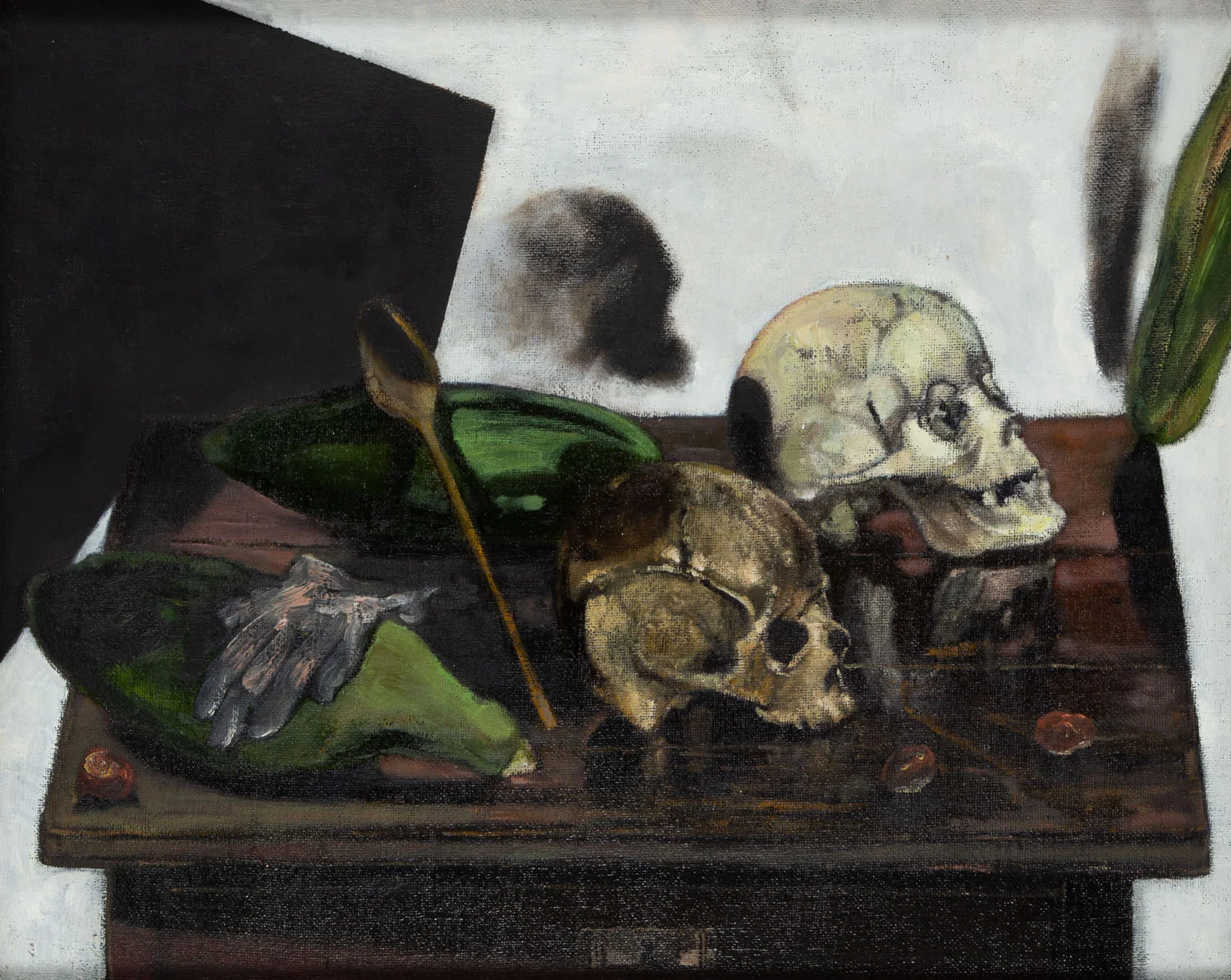
The aesthetic composition depicts death as approachable or even attractive which includes a meta-reflection over the power of pictures, characteristic for the artist's oeuvre. Grzegorz Bednarski dialogues with tradition in an unusual way. His still life in entitled by the author “Good evening, Mr. Derain". One can suspect that “Good evening Mr. Derain" is some kind of a tribute paid to the work of a French artist, André Derain, based on great modern works entitled similarly: “Bonjour, Monsieur Courbet" (Gustave Courbet, 1854, Musée Fabre, Montpellier) and “Bonjour, Monsieur Gauguin" (Paul Gauguin, 1889, Národní Galeri v Praze). In the work presented here, however, we cannot see a human figure, instead there are such objects as: a spoon, a glove, zucchinis and, most of all skulls, which may be a quotation from Derain's paintings (e.g. “Still life with a skull", 1912), and – at the same time – a tribute to this master of modernism who, after the period of fauvistic and cubist experiments, turned himself towards New Classicism, cultivated in a specific way by Bednarski himself.