
Tomasz Tatarczyk – The Art of contemplation
The presented work "Pile" from 1986 is a characteristic piece by Tomasz Tatarczyk. It is full of contradictions. Painted on a large sheet of paper, it is both delicate and monumental. It depicts a fragment of mundane reality, a pile of branches collected in the forest, while also embodying monochromatic abstraction. The black lines on a white background are simple in form, yet the painting is filled with a distinct spiritual atmosphere.
Tomasz Tatarczyk began working on the "Piles" series in 1986, first showcasing it to the public at an individual exhibition at Foksal Gallery in February of the following year. The exhibition space was filled with large-format oil paintings on canvas and tempera paintings on paper, presenting various compositions of branches – organized, arranged in compact pyramids, or scattered dynamically, as seen in the work displayed at the auction. In early 1988, the series was exhibited at two shows in New York, where the artist was on a scholarship from the Kościuszko Foundation: at the Soho Center for Visual Artists and the Bustamante Gallery. The artist explained the significance of his paintings in an interview with the American press:
"The destiny of these objects is ash, they are logs of wood for burning. My paintings tell the story of the death of trees, which has a broader, symbolic meaning"
- Tomasz Tatarczyk"Wolę pracować w Polsce", interview by Krzysztofa Kłopotowskiego "Nowy Dziennik. Polish Magazine", Nowy Jork 1988, 21.01.1988
This statement captures the artist's oscillations between the tangible, the immediate, and the essence of things detached from a specific place and time. Tatarczyk drew inspiration for his paintings from everyday surroundings. Since 1984, he lived in Mięćmierz, a small village three kilometers from Kazimierz on the Vistula River. He depicted fragments of reality observed during walks: not only piles of brushwood but also saws and gates from nearby farms, hills covered with dark forests, winding roads, and the whirls of Vistula backwaters.
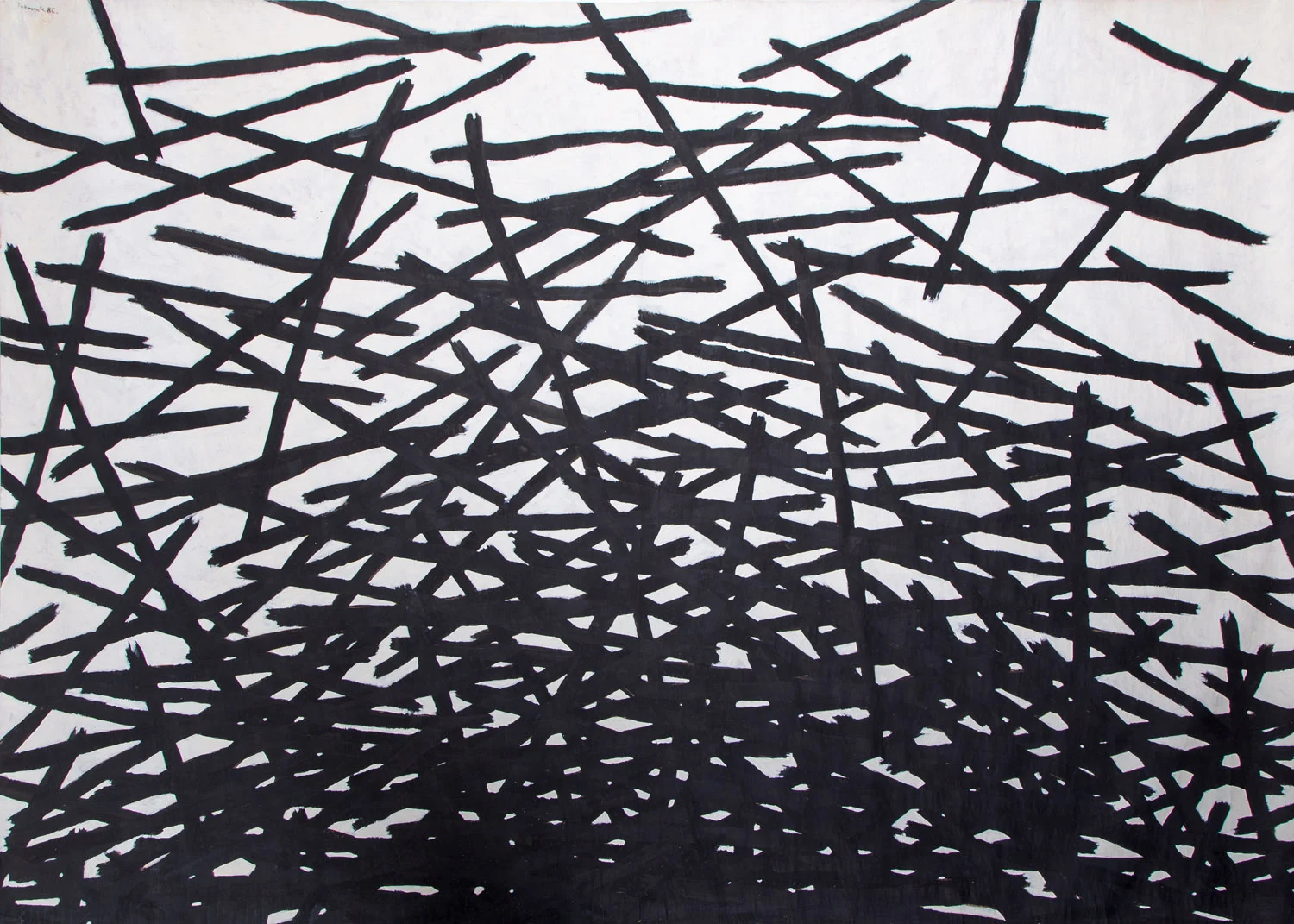
However, Tatarczyk subjected the observed objects to a far-reaching reduction. He removed them from their context and eliminated unnecessary details. He limited the color palette to black and white, also forgoing chiaroscuro effects, depriving the representations of depth. His compositions seem almost abstract, of which the "Pile" exhibited at the auction is a perfect example. Breaking away from the title, one can contemplate the arrangement of tensions between intersecting lines at various angles, building a black network on a white background.
A noteworthy technique employed by Tatarczyk is to always depict only a fragment of a larger whole, as if the view were confined to a narrow frame. This prompts the viewer to complement the representation with their own memory and imagination. Focusing on the title, recognizing the black lines of branches on white snow, suggests the thought of a kindled fire to warm oneself in a cold, mountainous climate. However, equally justified are more profound and less pleasant associations. Throughout history, a pile has often been a place of death for witches and others, often innocent victims.
Tomasz Tatarczyk acknowledged that he felt like an heir and participant in Western European culture, and his creativity was influenced as much by the local landscape and current mood as by remembered works of art and film frames. He particularly valued late Gothic and Renaissance religious paintings, as well as symbolic landscapes by Caspar David Friedrich. In a sense, he considered himself a romantic, as his goal was not merely to represent nature but to capture the hidden essence of things. As the art historian Wojciech Bałus rightly noted in the catalog accompanying the exhibition on the occasion of the awarding of the Jan Cybis Prize: Tatarczyk is a thoroughly modern creator. In his paintings, he did not reveal divinity, the sacred, but rather what is extraordinary in the transient, well-known world.
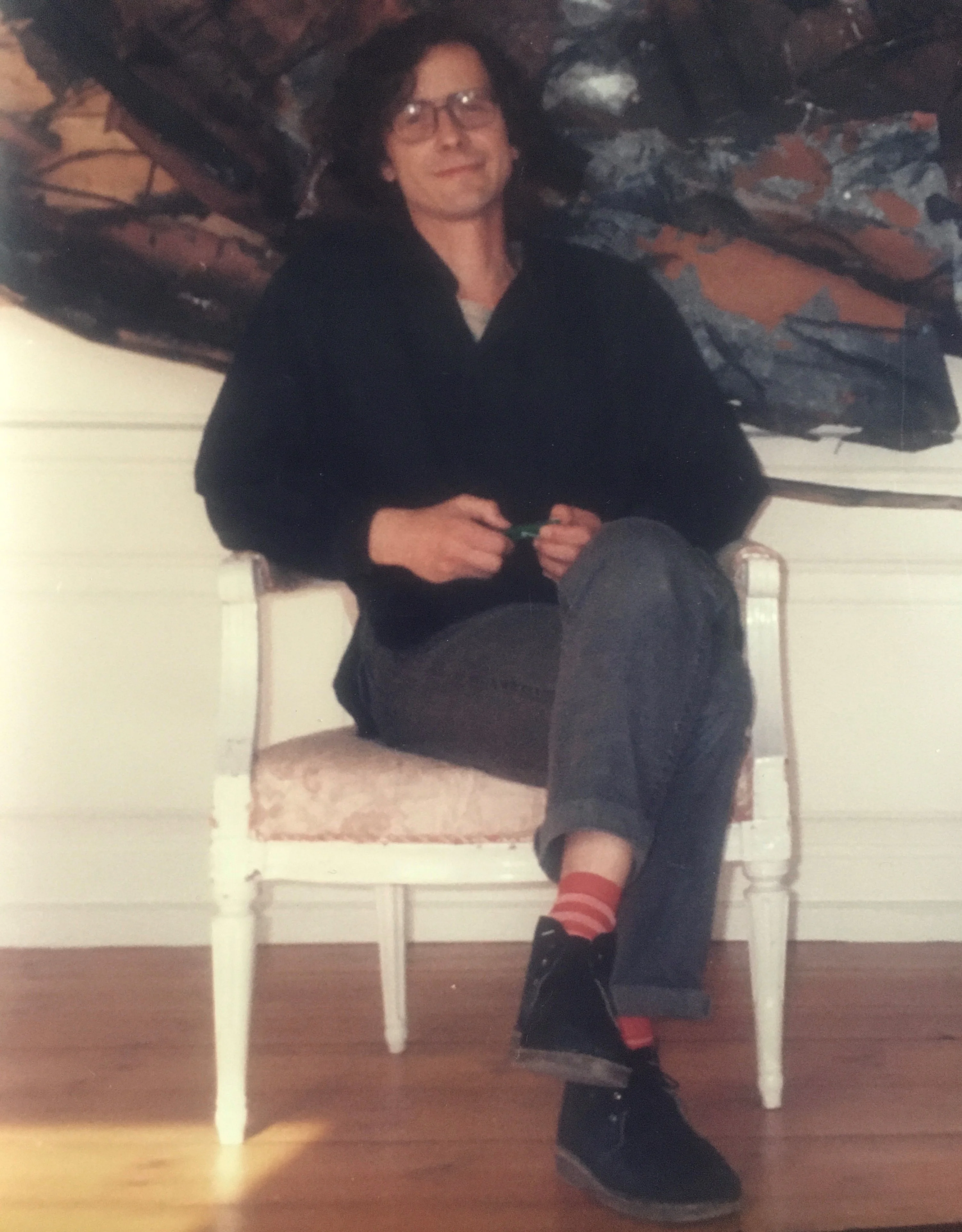
Tomasz Tatarczyk's ascetic but diverse art is appreciated in Poland and worldwide. Paintings from the "Piles" series can be found in the collections of the Museum of Art in Łódź, the National Museum in Poznań, the Regional Museum in Bydgoszcz, the Foksal Gallery, the Moderna Museet in Stockholm, and in private collections.