
Tireless Pilgrim. Andrzej Strumiłło
"I have spent years on Asian peregrination, I know the silence of Mongolian steps, the dazzling glare of the Himalayan glaciers, the green, ever-wet velvet of the Indo-Chinese jungles, the smoke of the piles in Benares, the gardens in Kyoto, the palaces and graves of the emperors of China, tempting eyes, begging hands that go into oblivion."
Andrzej Strumiłło
Andrzej Strumiłło was an artist of extraordinary imagination and biography, and his art is increasingly noticed by cultural institutions. You can appreciate the "Mandalas" exhibition in Kordegarda, the Gallery of the National Centre for Culture. The display is devoted to a series of works that were created in the artist's late period. The monographic auction "Andrzej Strumiłło. Travelling through Art" presents you with a fragment of the painter's oeuvre.
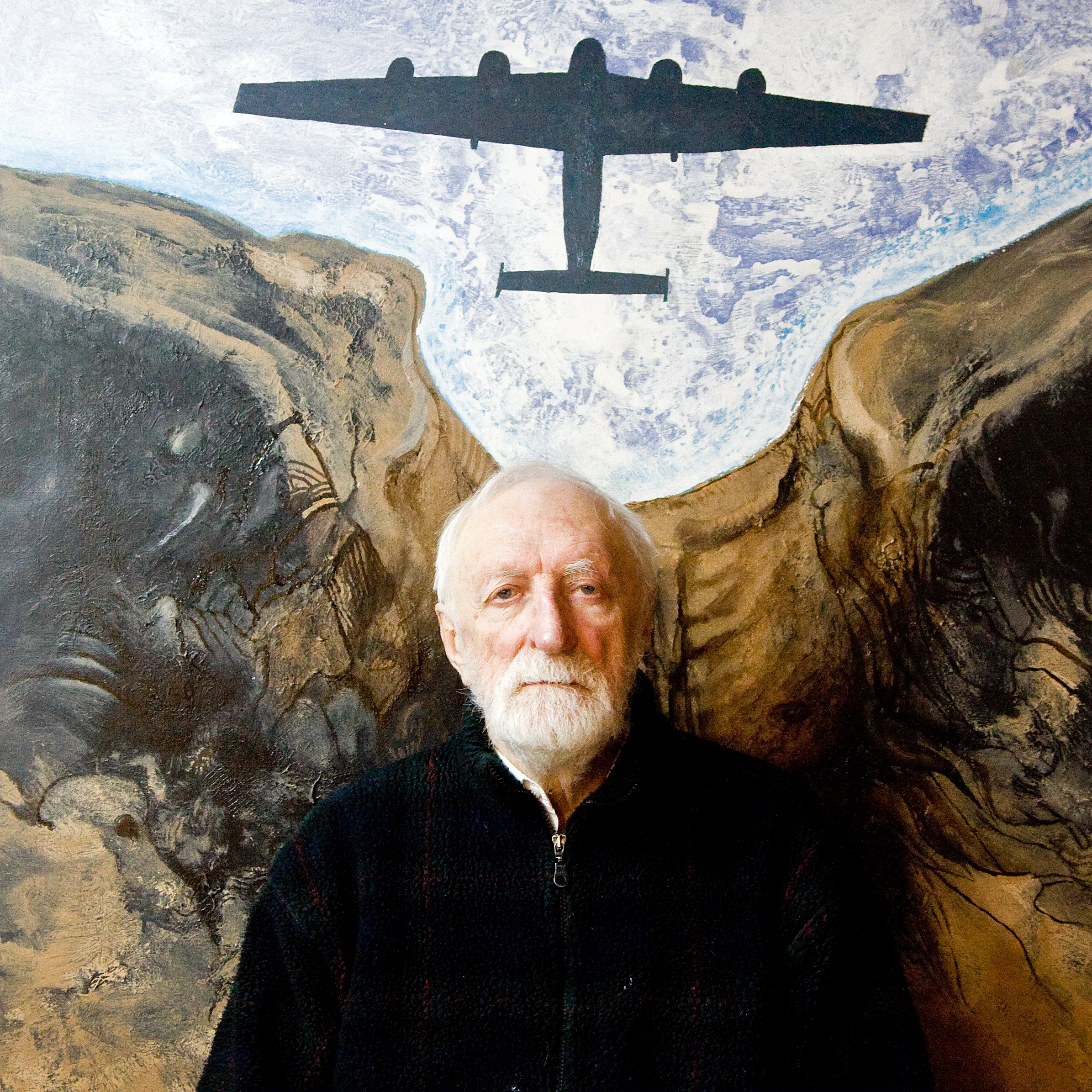
The title of the auction was inspired by the artist's numerous travels, which took place after his studies at the Academy of Fine Arts in Krakow and Łódź. Being a designer of exhibition pavilions, he often traveled both around Europe and the Middle East. He visited, among others, Vietnam, Mongolia, Nepal, Japan, and Thailand. Each of the journeys left a mark on his art. Mieczysław Porębski described this artist and globetrotter as follows
"For Strumiłło, the world is wider than a painting. You start creating on your knee and end up traveling. Strumiłło has traveled extensively, and these are not typical tourist routes or business trips related to exhibitions. In the Mediterraneum, he crossed Sardinia on foot. In the Levant, he found hard-to-reach remains of Hellenistic-Greek sculptures and buildings. However, it was Asia that captivated Strumiłło the most. Its magnitude, its vastness, its history, its scale, its contrasts. Being an experienced hunter, he tracked a bear in the Siberian taiga and a tiger on the Ussuri River. He went on mountaineering expeditions to Nepal and Mongolia. He knows China, Vietnam, and India well. Wherever the artist had been, he documented his trips by collecting unique items: trophies, products of culture, handfuls of minerals, thousands of photographs, hundreds of drawings, notes, and poems. All this is necessary, everything complements each other." -
- Mieczysław Porębski, Andrzej Strumiłło, Catalog, Zachęta, 1976 [in:] Andrzej Strumiłło. Malarstwo 1988-1998, Warszawa, p. 6
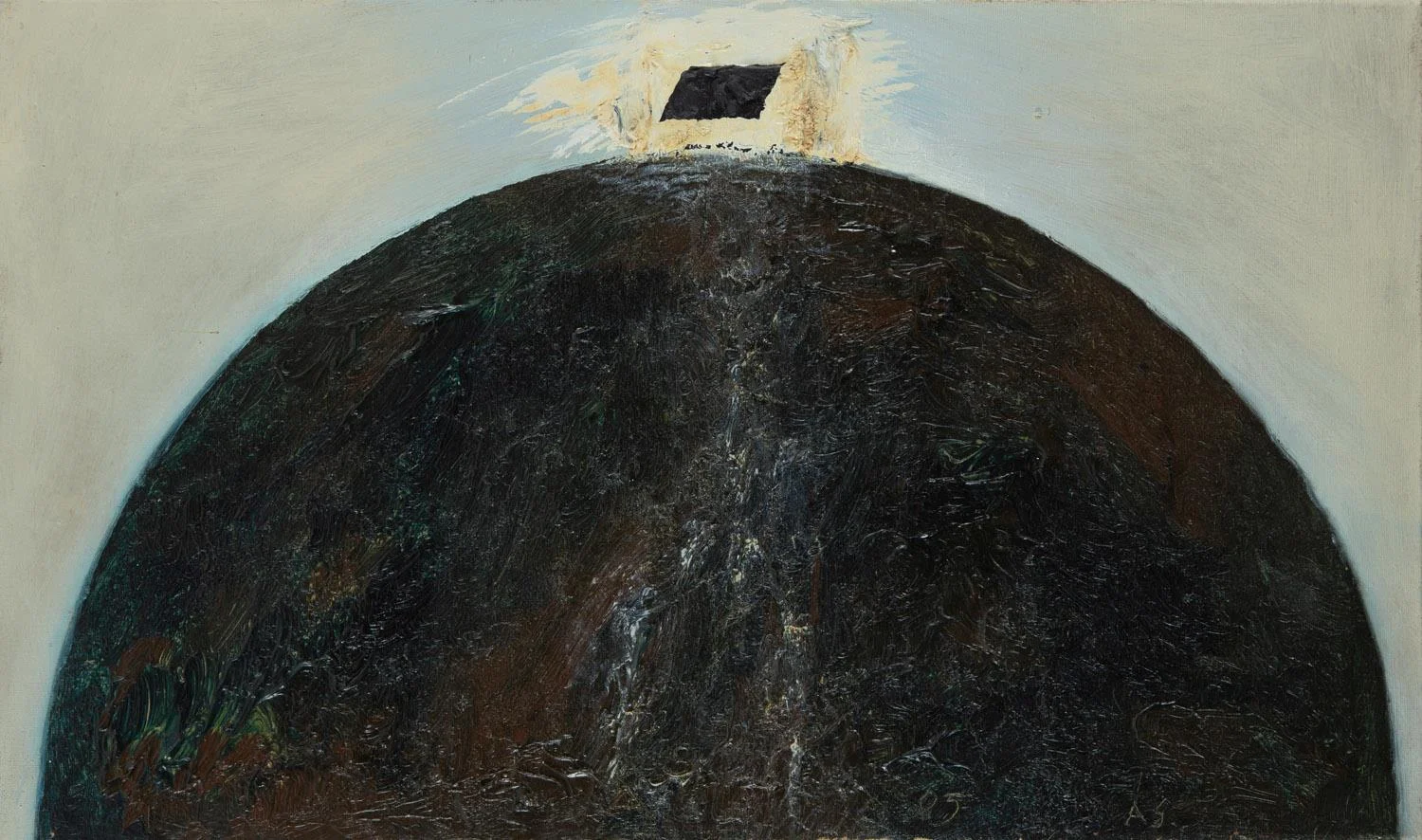
Travel inspirations are visible, among others, in the series of works titled "Mount Meru". Meru is a mythical mountain that, according to Hindu and Buddhist cosmology, is the axis of the world. As stated in the tales, its top is inhabited by divine creatures, and its ridges are covered in gold.
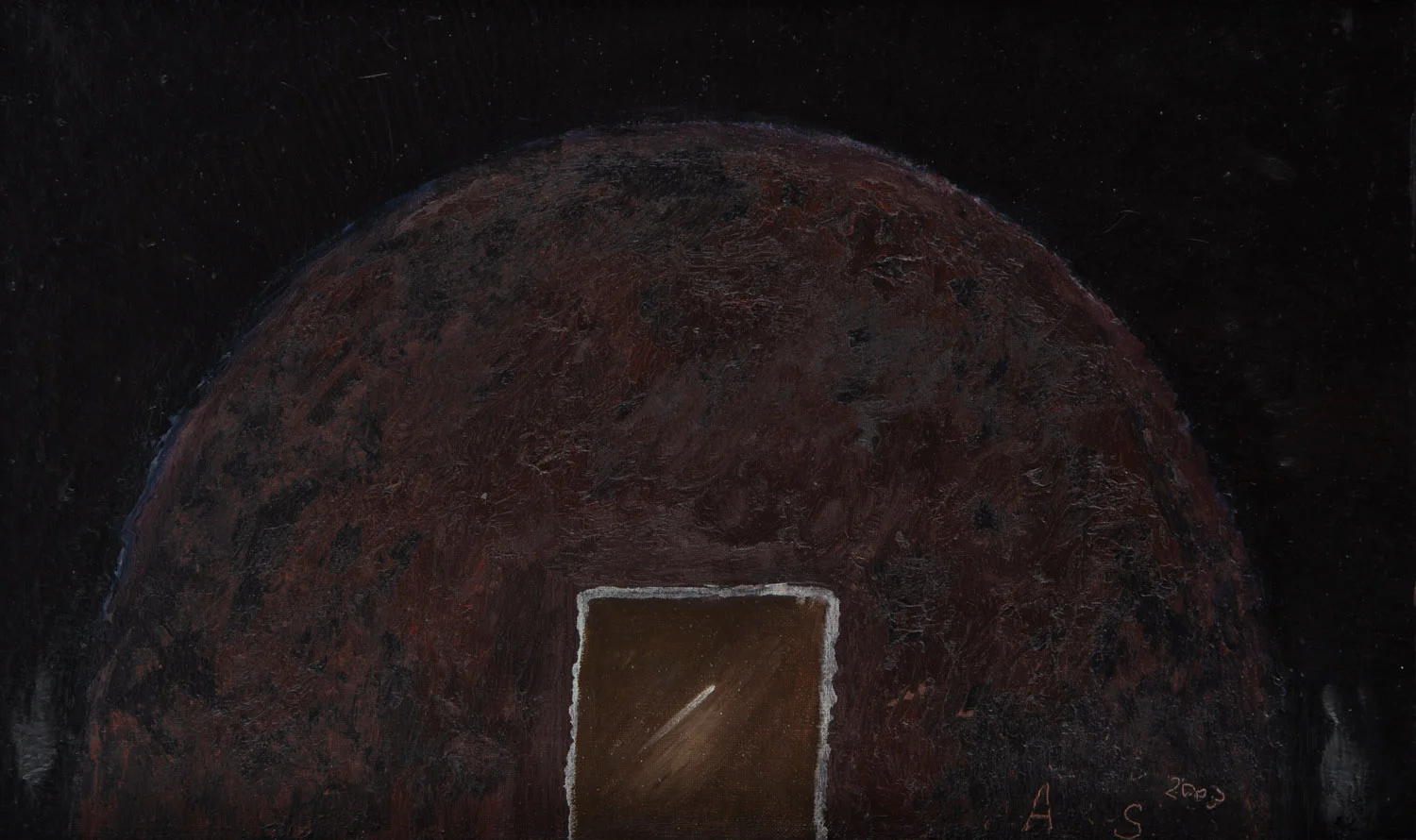
"I have doubts whether we are capable of getting to know and expressing the essence of things with the use of the personal tools we are equipped with. The Cartesian maxim – cogito ergo sum – I think, therefore I am – seems to apply solely to a particular human being with a unique brain and subject to a finite amount of experience. The idea of a limitless, completely unrecognizable world seems to be more accurate. No one knows the height of Mount Meru. No one was on top of it. A pilgrim sees only grass and stones on his path. Some people attempt to deduce the universe's laws on the basis of their shape. We are able to look deeper, "beyond the particle," thanks to critical thinking and our imagination, just like an ancient Chinese painter who saw a forest in a branch, a mountain in a stone, a monster in a sign, and death in whiteness. All complex constructions – genre paintings, scenes, massive landscapes, descriptions of landscapes containing authorial opinions – seem to be uncertain today. After many years, I am fully aware that I am taking part in a dramatic performance, lifting the curtain of darkness alongside others in order to reveal the whole truth and lift the next curtains" -
- Andrzej Strumiłło, City, Art Museum in Łódz, 1993.
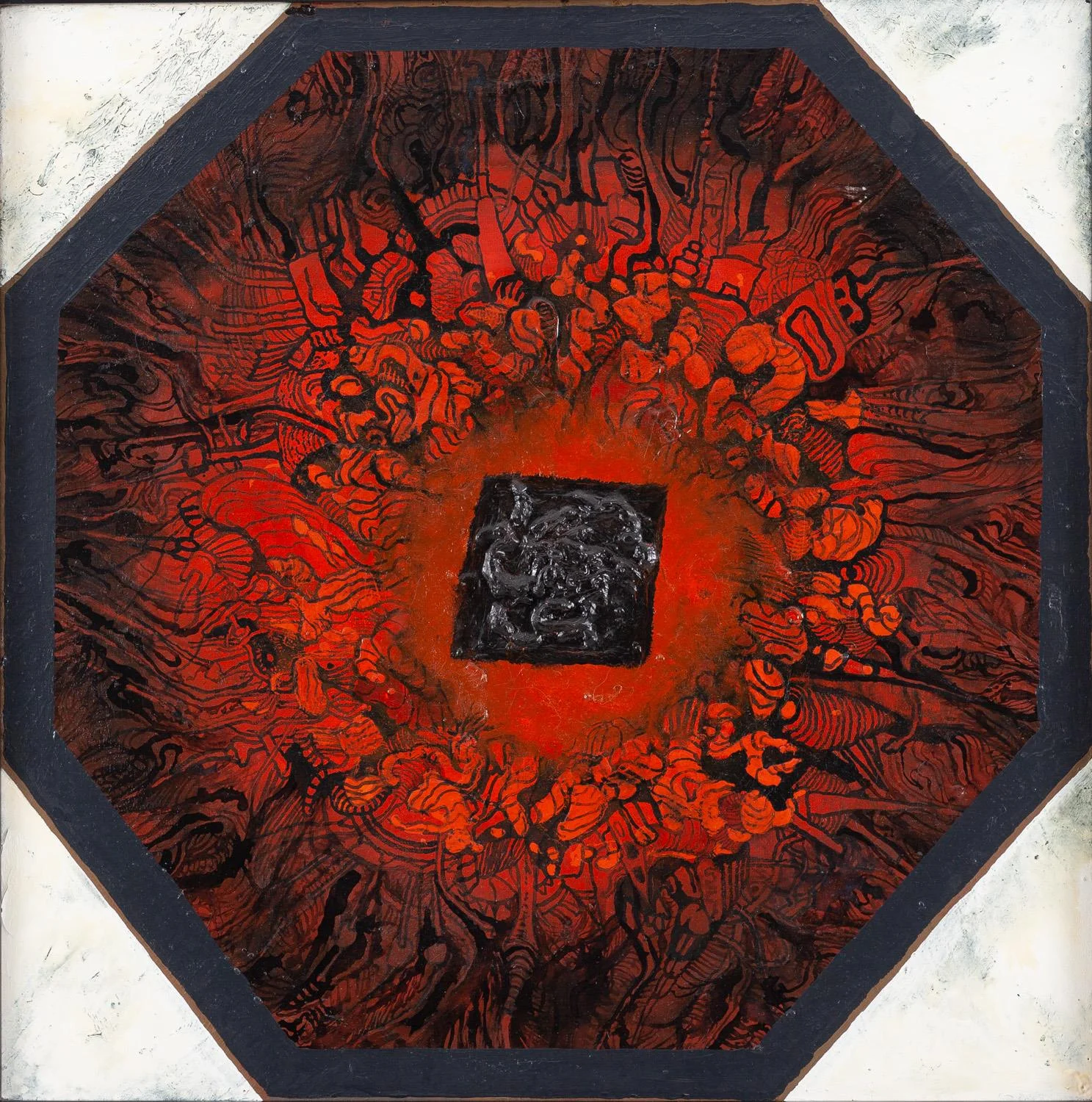
The offer also includes work from the "Mandalas" series-an artistic motif appearing mainly in the art of Buddhism. Mandala is a harmonious synthesis of a square and a circle, with the square representing the bond between man and the earth and the circle representing transcendence and heaven. Making mandalas using multi-colored sand, as well as destructing them, is believed to be a form of meditation.