Theater of Zofia Stryjeńska
Theatrical projects by the "princess of Polish painting," Zofia Stryjeńska, hold a special place. Right from the beginning, it was the world of theater that fascinated the artist, who achieved great success in this field early in her career.
The success of the projects dedicated to the theater is evidenced by various thematic projects exhibited in monographic exhibitions in the interwar period. "Her works, full of color, dynamism, and decorative stylization, though not always realized on the stage, were often exhibited in Poland and abroad. Her sketches of theatrical costumes were presented during an exhibition at the Zachęta gallery in Warsaw in April 1919. These were sketches of costumes for Penelope and Telemachus, most likely for Stanisław Wyspiański's 'Powrotu Odysa' ('The Return of Odysseus'), as well as fifteen costume sketches for 'Bajki' ('Fables'). Costumes for Wyspiański's 'Skałki' ('Rocks') were exhibited in November 1930 at an exhibition of works by Zofia Stryjeńska and Henryk Kuna at Philips' gallery in Warsaw. In the fall of 1931, in Paris at the Grand Palais des Champs Elysees, Stryjeńska's works were displayed at the Autumn Salon of Polish Theatrical Art, alongside the works of prominent set designers, including Wincenty Drabik, Karol Frycz, and Andrzej Pronaszko. These were two works inspired by Stanisław Wyspiański's 'Skałka' and Jan Kasprowicz's 'Marchołt' ('Marcolf'). In Warsaw's IPS (Institute for Art Propaganda) on May 23, 1935, she presented watercolor sketches of costumes for the ballet 'Harnasie' (14 plates), the mystery play 'Pascha' ('Passover') (22 plates), and 'Korowaj' ('Korovai') (46 plates). All the works were acclaimed by critics" (Monika Chudzikowska, Talent Stworzony do teatru, [in:] Zofia Stryjeńska 1891-1976, National Museum in Krakow, Krakow 2009, p. 44).
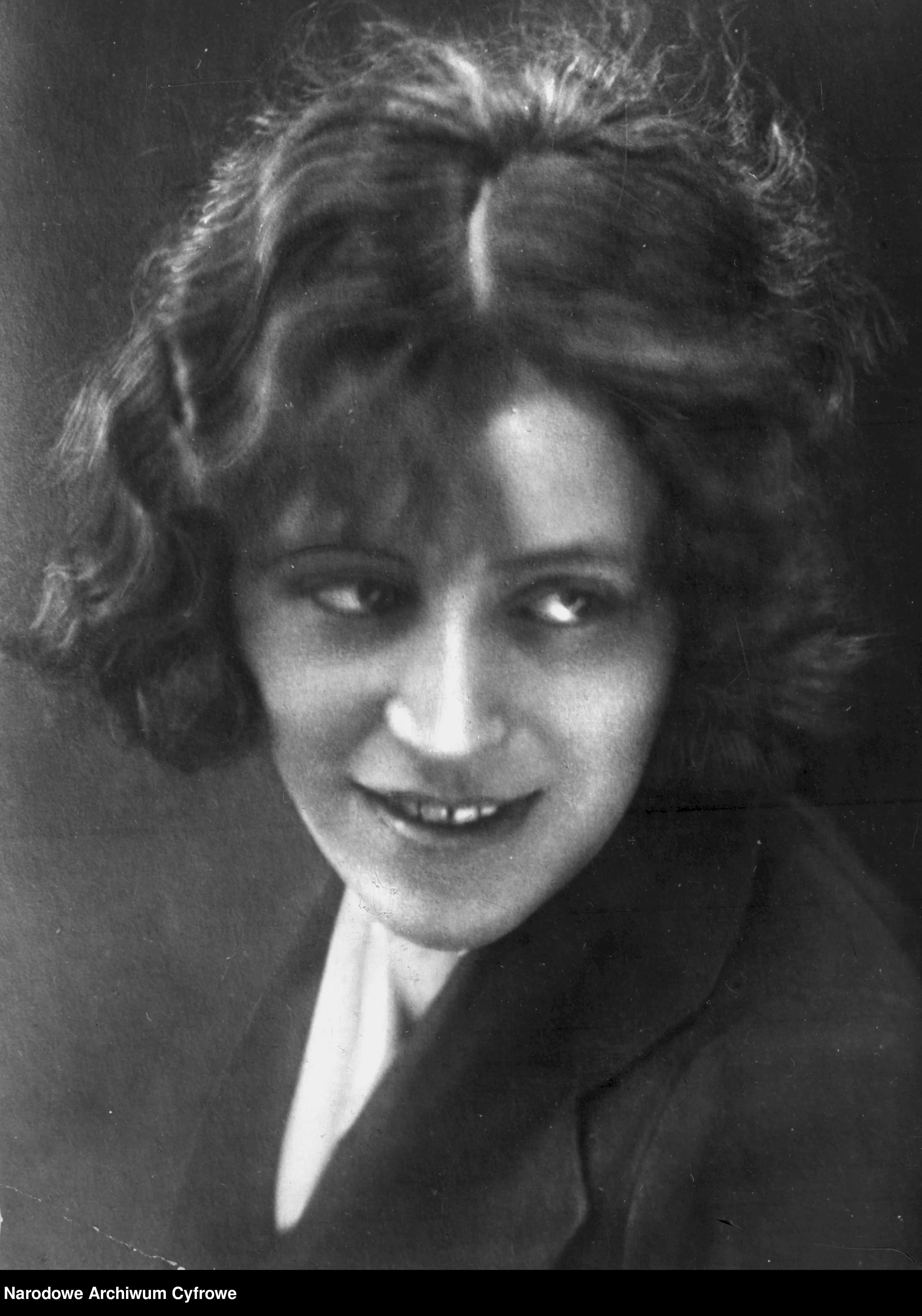
"Stryjeńska's talent seems to have no bounds. It is also made for the theater. We mentioned this at the beginning; we know her predisposition in this direction. She thinks in series of images, connected into a whole. She treats the themes either hellishly humorously, deeply dramatically, or endlessly nostalgically. She laughs until she cries, dances until she faints, goes wild, and moves people to tears. She emphasizes, characterizes, exaggerates, and fantasizes. She prepares, dresses, and decorates her actors with precision and love. She creatively stages and makes them act. Already in her youth, she organized amateur performances in the Krakow theater, presenting a pantomime 'O Maćku Piecuchu i pannie Gapiomile – Królewnie' ('About Maćko Piecuch and Lady Gapiomile – Princess') with inventive staging, scenery, and exquisite costumes. Ten years later, in 1927, she staged 'Balladyna' by Słowacki at the Krakow theater, and she made it a splendid performance. It is said that she prepared a series of other theatrical works. In the West, under those conditions, there would undoubtedly be a special theater dedicated to Stryjeńska"
- Jerzy Warchałowski, Zofja Stryjeńska, Warsaw 1929, p. 25.
Such were the words of Jerzy Warchałowski, a great enthusiast of Stryjeńska's talent and the author of the first monography about the "princess of Polish painting." The art critic pointed out her interest in theater in a visual context right at the beginning of the artist's creative path. The opportunity for creating innovative set design was provided to Stryjeńska by the director of the Krakow City Theater, Teofil Trzciński, who introduced the latest theatrical innovations and young artists responsible for the visual aspects to the theater stage. At that time, Stryjeńska was responsible for the brightly colored sets in the first act and the paradise garden, filled with exotic plants and birds appearing in the second act. Stryjeńska's great success, not only in her homeland, was the set design prepared in 1927 for "Balladyna," which was released on the occasion of bringing the poet's ashes to Poland. After watching the play, Jarosław Iwaszkiewicz admitted that the costumes and decorations made by Stryjeńska were among the best achievements in Poland. The designs for "Balladyna" were displayed at Stryjeńska's exhibition alongside her individual visual works. Another breakthrough realization was the set design and costume design for "Harnasie" in the Lviv and Paris opera (which ultimately did not take place). Choreographer Feliks Parnell wrote about the genius of this production as follows: "In her painterly vision, 'Harnasie' was a masterpiece in itself."
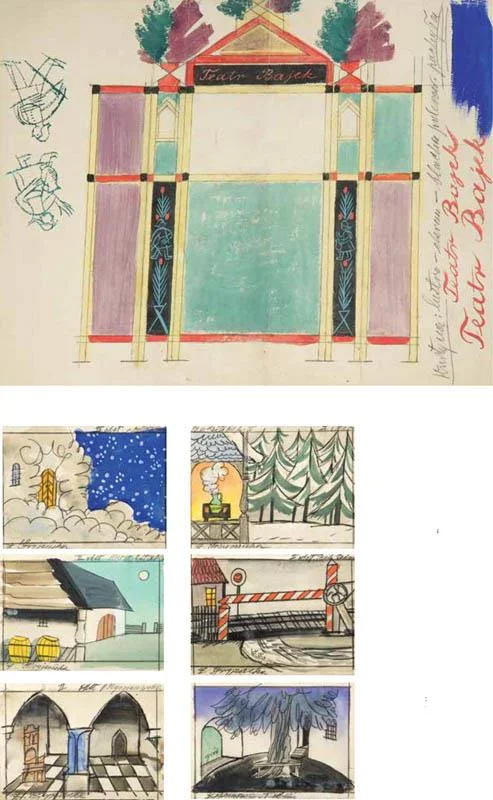
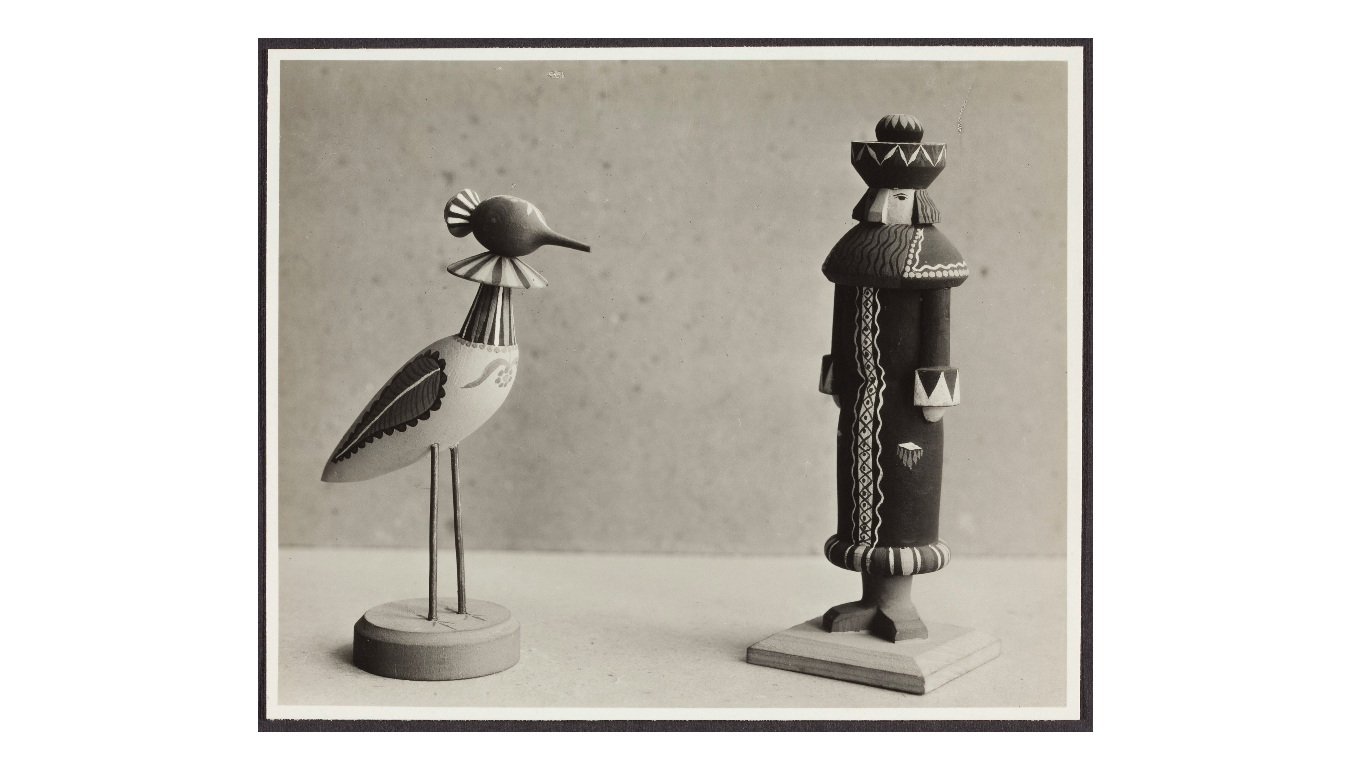
A little-known but absolutely fascinating moment in Stryjeńska's work was her joint venture with her sister, the puppet theater. After experiencing the design of theatrical scenery and costumes and the realization of figures at the Stowarzyszenie Warsztaty in Krakow, which the artist showed at a solo exhibition organized at Zachęta in 1919, and later, in 1925, at the Paris Exhibition of Modern Decorative and Industrial Arts (for which she received an Honorary Diploma), she created unique puppet projects, all in Stryjeńska's characteristic style. Vivid colors were combined with the geometric form of the figures and the attention to detail did not yield to the humorous aspect of the artist's work. As a result, a unique project emerged; they were emblematic of Stryjeńska and also had a touch of childlike sensitivity and imagination. According to the artist's memories, the theater operated for only one summer season and unfortunately ended its activity. Authorial scripts written by Stryjeńska for the puppet performances have not survived, but the variety of characters suggests a colorful plot, just like the artist's personality.