
The Magnetic Sculptures of Czesław Zuber
The expressive and full of vitality work by Czesław Zuber, which will appear at the upcoming Polish Glass: Art and Design auction, particularly attracts the collectors' interest. The work was created by an artist known to the wider community principally from his metallurgical projects. The presented type of sculpture appears on the Polish market for the first time.
Czesław Zuber began his journey with glass by designing utility forms. The artist graduated from the State College of Fine Arts in Wrocław, where he studied under Zbigniew Horbowy and Ludwik Kiczura. After finishing school, he designed for the ‘Barbara' Glassworks in Polanica Zdroj. Following Zuber's idea, the glassworks created glass vases and ashtrays with a ‘rolled up' collar, today is commonly known as ‘donkeys.' They are well known to all design enthusiasts. The experiments with colourful metallurgically formed glass and other experiences gained at the glassworks made the realization of Zuber's later projects considerably easier.
Thanks to being awarded scholarships and invitations to international symposiums, Zuber was able to travel numerous times in the 1980s. That allowed him to visit glassworks all over Europe. In 1982, the artist moved to Paris permanently. His move to the French capital was a turning point in his career. At that time, he first encountered the works by the German ‘Neue Wilde' (New Wilde) group. Their neo-expressive realisations, full of contrasting colour combinations, became a great inspiration for the Polish artist. Finally, when in Paris, he abandoned the metallurgical techniques in favour of extremely original and multi-coloured glass sculptural compositions.
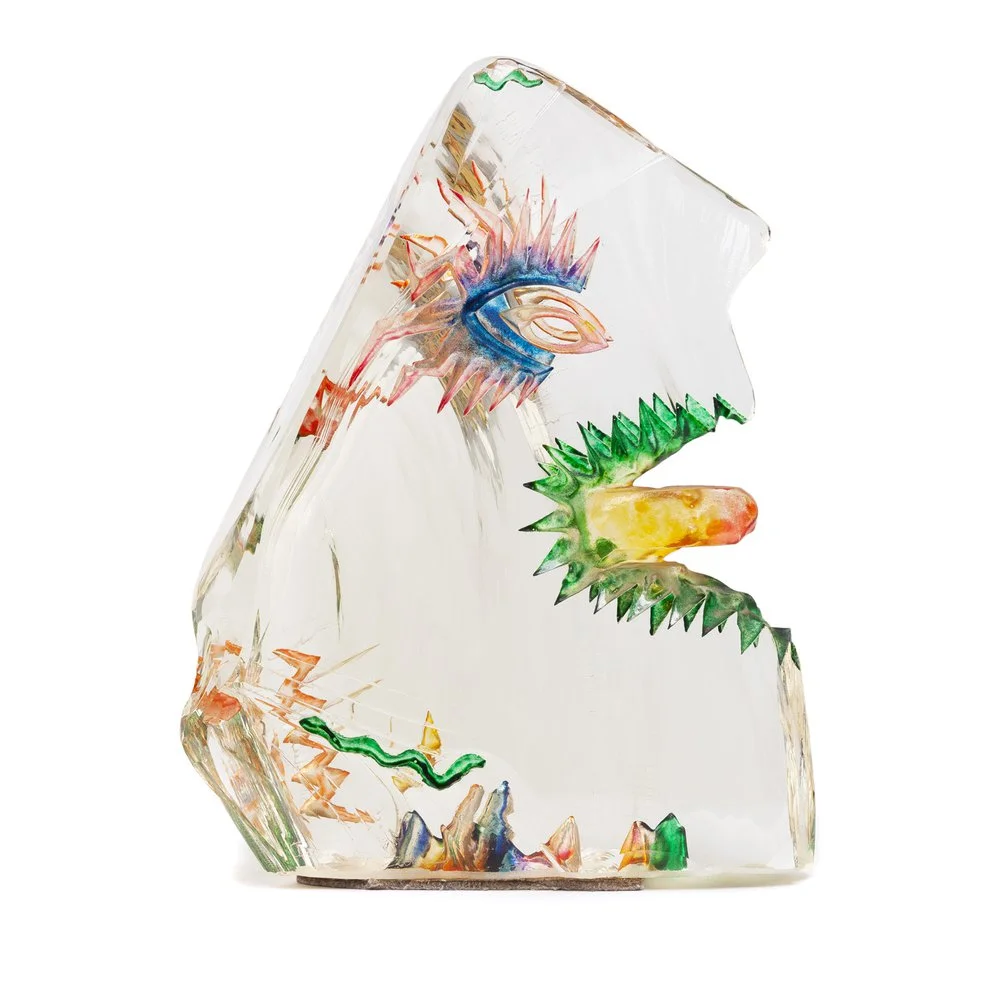
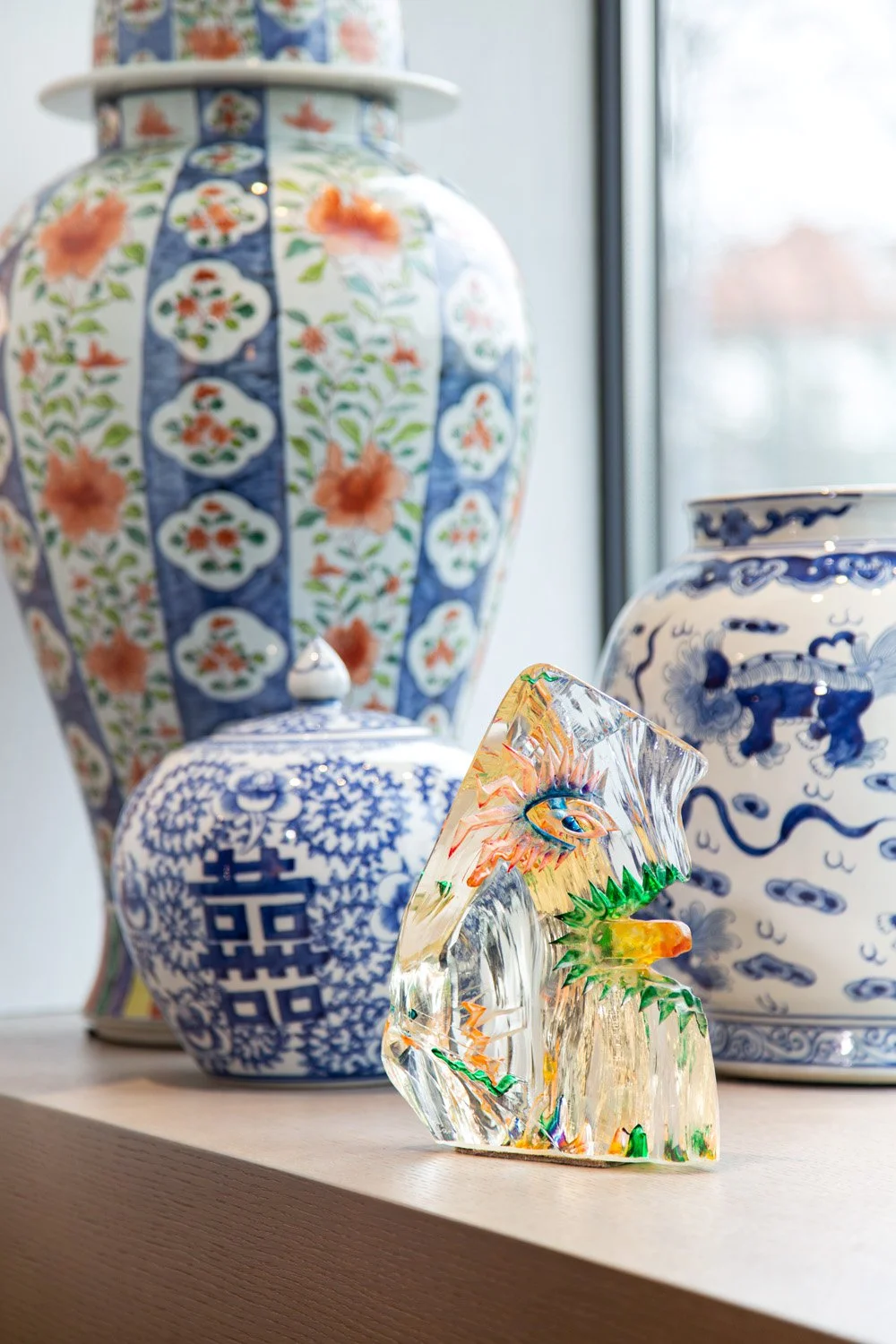
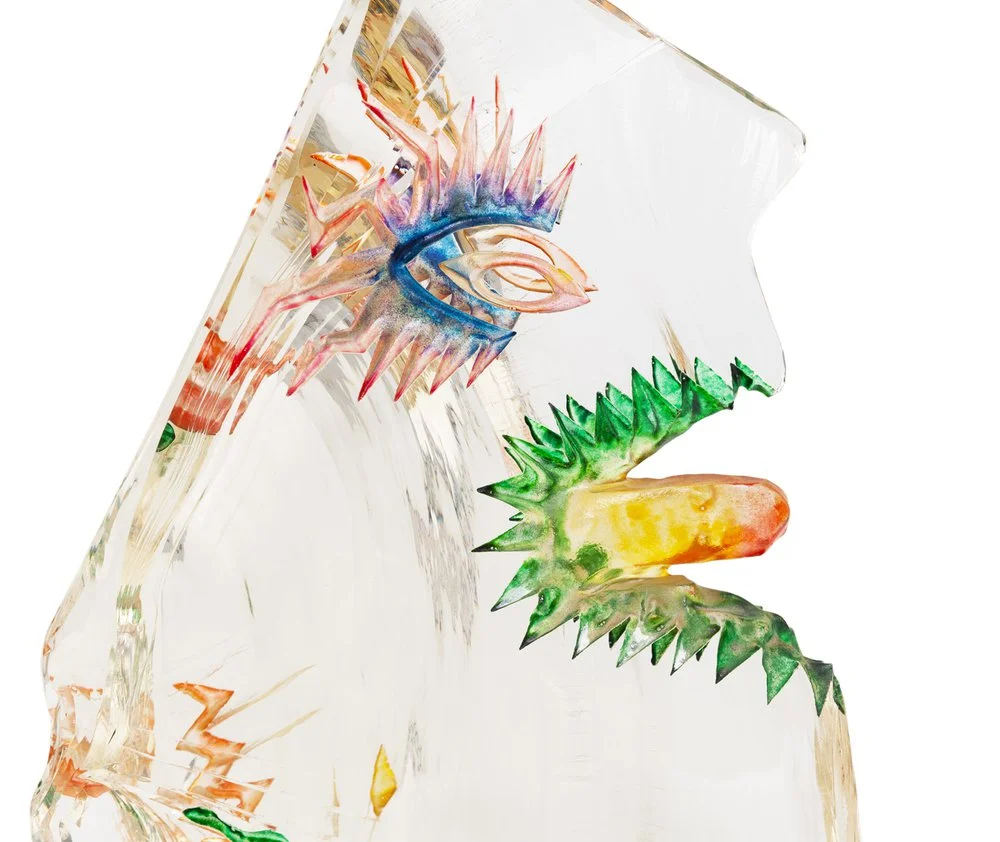
He used large, transparent lumps of glass to create his expressive sculptures most often resembling fairy-tale characters of animals and people. To work on the optical glass, which is hard and difficult to process, the artist used chisels, hammers, saws, or grinders - all of which enriched the compositions with additional optical effects. Afterwards, Zuber would cover the glass with intense colours - reds, greens, yellows, purples - thanks to which the forms became even more expressive.
The play with light and texture turns Zuber's sculptures into incredibly energetic and expressive compositions. The transparent glass, enriched with neon and contrasting in colours enamel, scatters sun rays, creating unique visual effects. The uneven texture bearing traces of the violent strokes made using the carving tools creates an ideal plan for a multi-level play of light and colour.
The glass sculptures by Czesław Zuber have gained international acclaim and were presented at over 40 exhibitions, both in Poland and beyond its borders. The artist is also a laureate of numerous prestigious awards and distinctions. His works are in the collections of many museums around the world.
See more
See more