
The Magical Frame of Stanisław Fijałkowski
Helena Majak
Stanisław Fijałkowski, when asked in 2013 in a conversation with Janusz Janowski about what truth is, responded with laughter that a judgment is true if it speaks of something as it actually is. This judgment itself is indisputable, much like the physical boundaries of an image, the edge of a canvas, or the edge of a sheet of paper that define the area of a visual artwork in a prosaic manner. Thus, they serve as the physical borderline of imagination, delineating the objective point of contact between art and reality. However, Stanisław Fijałkowski's art is far from prosaic, despite operating on the border of opposing elements like flatness and spatiality, objectivity, and abstraction.
Stanisław Fijałkowski, born in 1922 in Zdołbunów in Volhynia, made his debut as a painter, printmaker, educator, and perhaps above all, an art theorist, formulating esoteric meanings of his "spiritualized forms" in painting. His first autonomous creative explorations date back to the period of German occupation. From 1946 to 1951, he studied at the Łódź State School of Fine Arts under the guidance of Władysław Strzemiński, shaping his theoretical thinking in the circle of artists centered around the pioneer of the Polish constructivist avant-garde. As Fijałkowski himself comments, the most crucial bond in his collaboration with Władysław Strzemiński was their shared deep conviction that art can transform society in accordance with the cultural needs of modernity. It should function as an element of creative power, demanded by artists due to their artistic integrity and human morality. He initiated his autonomous creativity by referencing the achievements of impressionists, cubists, and informel artists. He remained fascinated by great artists like Michelangelo and Leonardo da Vinci. The creator consistently recognized the potential for reinterpreting surrealism or the art of Dadaists through new theoretical prisms and the changing sensibilities of the contemporary era.
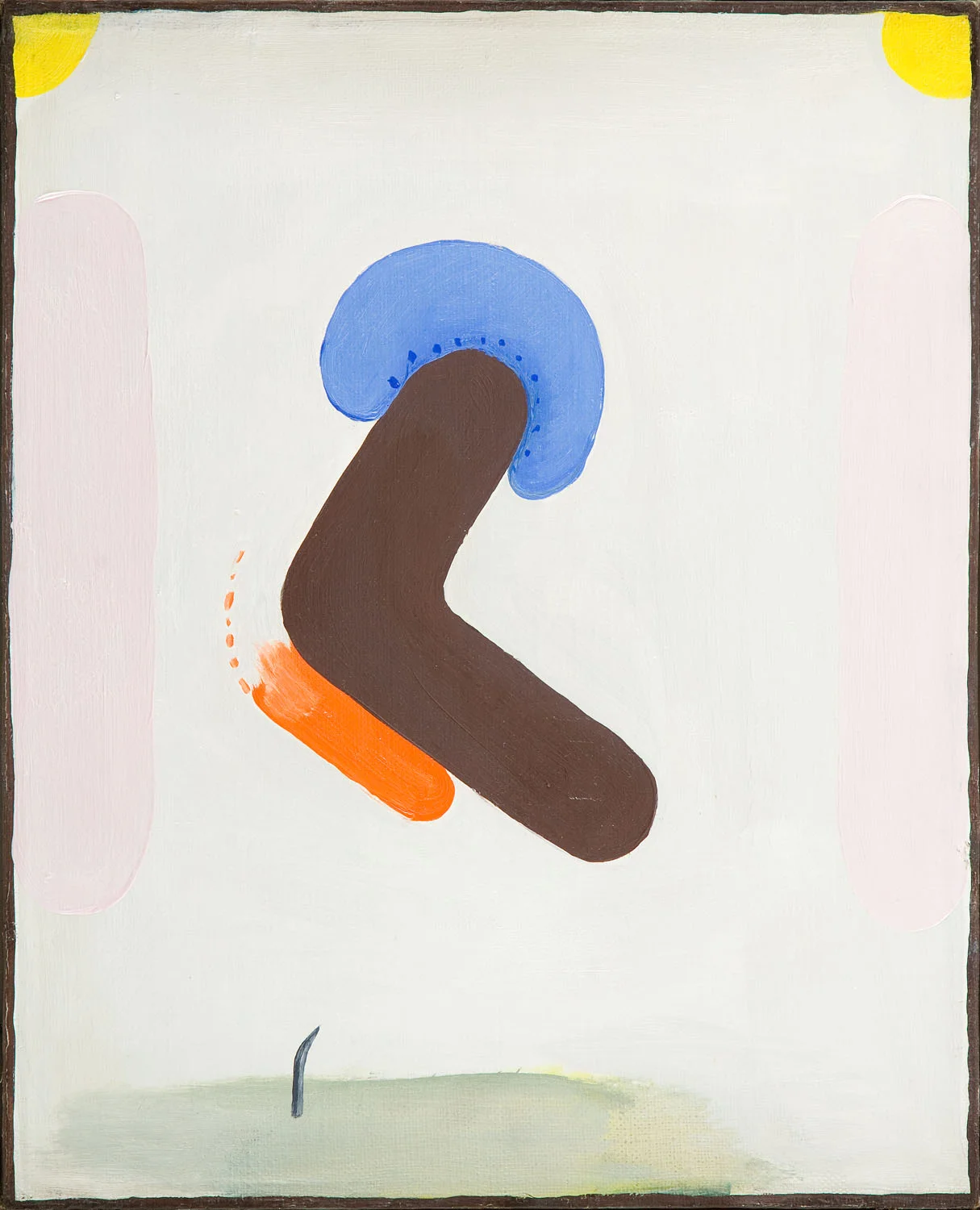
Fijałkowski advocated the belief in an autonomous, objective reality emerging within the image itself: "I have tried and continue to create a form that is only the beginning of the viewer's creation, each time in a different form." Thus, the artistic object is treated as a subject with creative possibilities, and the artist, by creating it, opens the path to the world of spiritual values. Through the minimum form, he achieves maximum expression, contained within basic artistic gestures elevated to the rank of symbols. Critic Alberto Zanchetta, in the context of Fijałkowski's monographic exhibition at the Dep Art Gallery in Milan, described this art as minimalist but far from Minimalism. In these works, the essence of painting is extracted. His pieces, referred to as "opere aperte" (Italian for open work), pulsate with meaning, contributing to the symbolism of modernity and leaving creative space for delving into the seemingly simple forms of abstraction. They provoke the observer to approach the plane of the painting to explore the details, vibrations, flickers, and tensions. As Andrzej Turowski writes in the text "Stanisław Fijałkowski's Magical Square":
"Fijałkowski, referring to Umberto Eco, believed that the essence of artistic creation lies in the pursuit of a "suggestive image," one that does not materialize in a familiar representation but triggers new and unexpected associations in the viewer. It opens up a field of sensations and emotions, where indefinite ideas blend with experiences of phenomenality, mystery, magic, and exoticism".
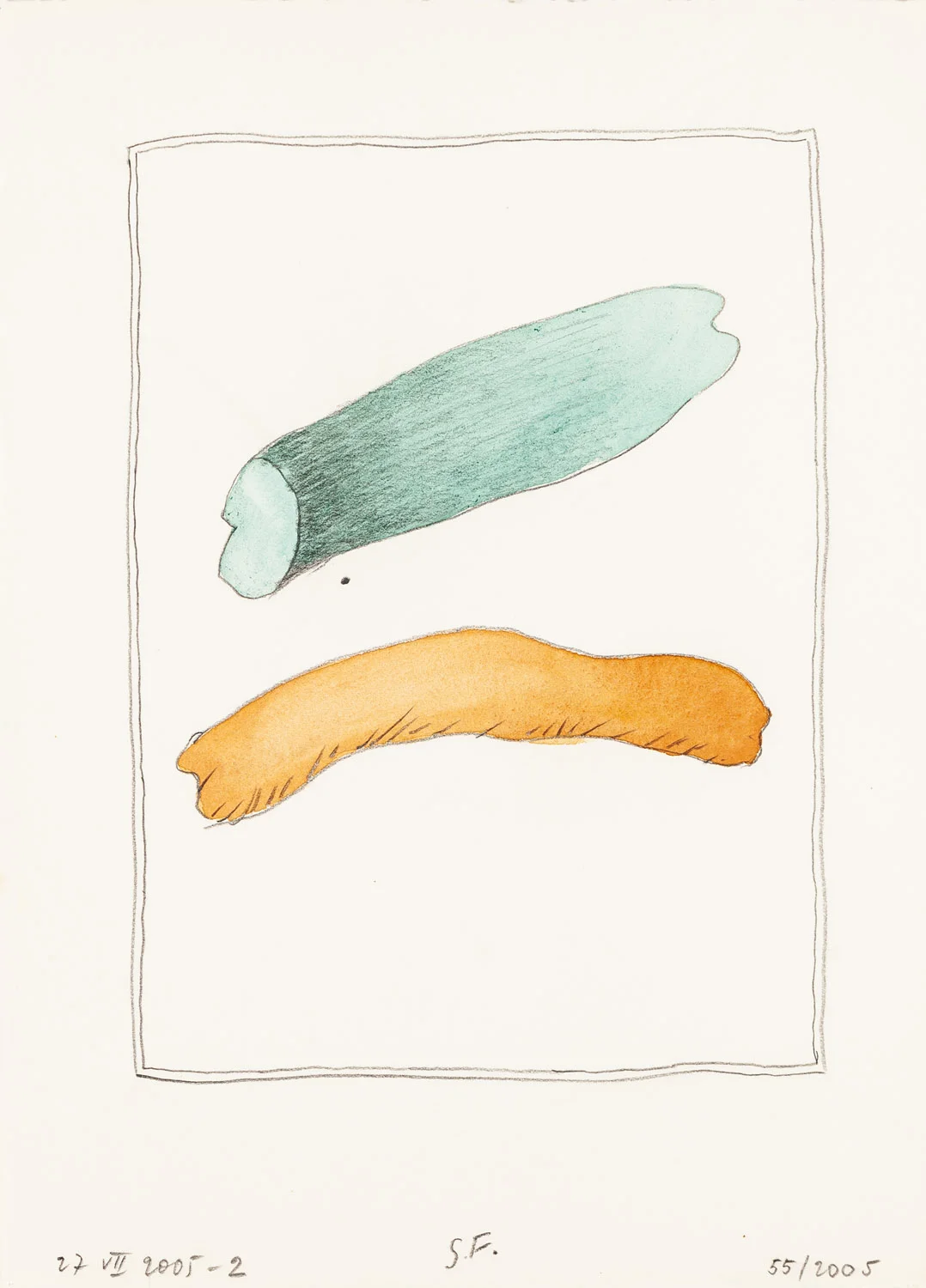
The phenomenon that Fijałkowski strived for in his works, aiming for mysticism or even transcendental self-creation, is their "margin," which is referred to as parergon in the philosophical thought of Immanuel Kant, signifying the "outside-work." In architecture, it could be a column, and in painting, it could be the frame or passe-partout. He criticized "marginal" and decorative forms, which, intended as additions, end up dominating the artwork without adding new meanings, obstructing the perception of the piece. In Jacques Derrida's philosophy, the parergon does not have an external framing character; instead, it enters the realm of the ontology of the artwork itself. The tension between what is external and internal proves to be more complex. In his text "Around the Frame," Stanisław Fijałkowski wrote:
"The frame into which we insert the image mechanically isolates it, containing the painting as an object, but it does not contain the image as a work of art. Only the closing or opening of tensions existing within the work reveals to us its open or closed compositional character. An open composition at least partially refers to the reality beyond the image, dispersing attention. Concentrating attention on the image as a work of art requires the closure of tensions existing within it. The dynamics of all elements composing the image must be closed, or their resultant must be closed".
Inspired by the theoretical texts of Kandinsky and Mondrian, he interprets the means of abstraction as symbols, thus finding a language of modern painterly symbolism. The frame is recognized as one of the constitutive elements of the artwork, challenging the Albertian tradition of the picture-as-window. For Stanisław Fijałkowski, the boundary between ergon and perergon blurs, and the artist posed a challenge to contemporary art, revising the fundamental painterly gestures in an attempt to explore the "mystery contained within the spiritualized object, which is the painted canvas".