
The Chance of colorism
Painting in the spirit of colorism was devoid of controversy and revolved around purely painterly issues. The most important aspect was the quality of the painting technique and the mastery of laying down the spot of color. After the war, colorism, as a pedagogical method and as a means of expression, was accepted by the authorities of the communist People's Republic of Poland. This created space for many artists who could develop their careers at newly established art schools. It was a huge opportunity for female artists who could step out of the shadow of male artists. Painting focused primarily on painterly skills limited the critical voices skeptical of female artists' achievements. In this context, it is worth mentioning the profiles of Hanna Rudzka-Cybis and Hanna Krzetuska-Geppert, who seized the opportunity provided by painting in the spirit of colorism.
Hanna Rudzka-Cybisowa was a total painter, undoubtedly deserving in the history of Polish art, the author of outstanding paintings, co-founder of the Kapists group, propagator of Polish art abroad, and engaged in opposition activities during the communist regime. She was the wife of Jan Cybis, an eminent colorist, whose unquestionably remarkable artistic legacy remained in his shadow for a long time. Throughout her life, the painter dedicated herself to art, fighting for a her position in a world dominated by men. She was a strong woman who, against the conventions and prejudices of the time, took over the chair at the Krakow Academy of Fine Arts, later becoming the dean of the Painting Department. Despite the vicissitudes of fate, the difficult geopolitical situation, and personal setbacks, the painter remained faithful to her painterly principles, creating paintings of high quality until the end of her days.
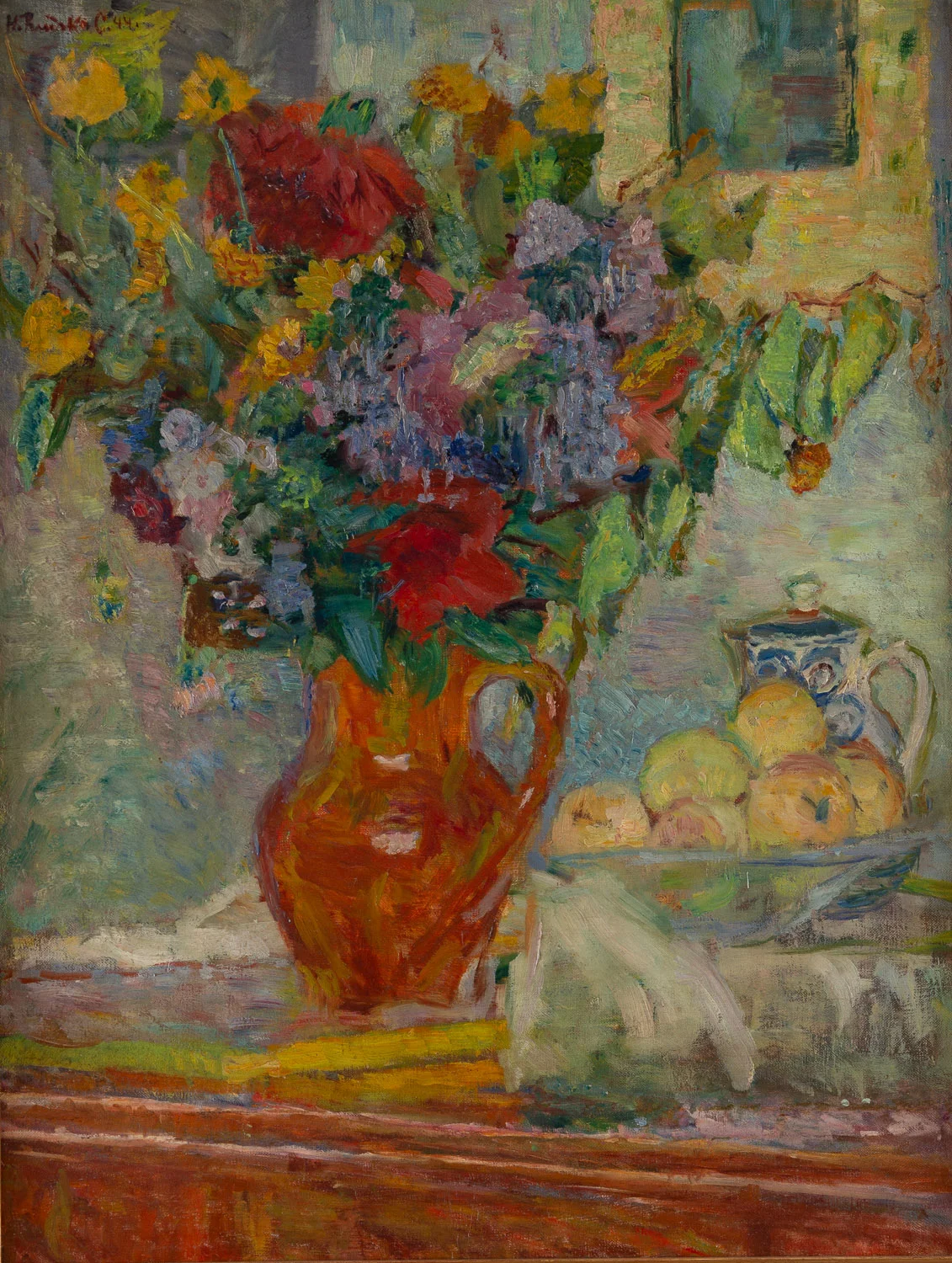
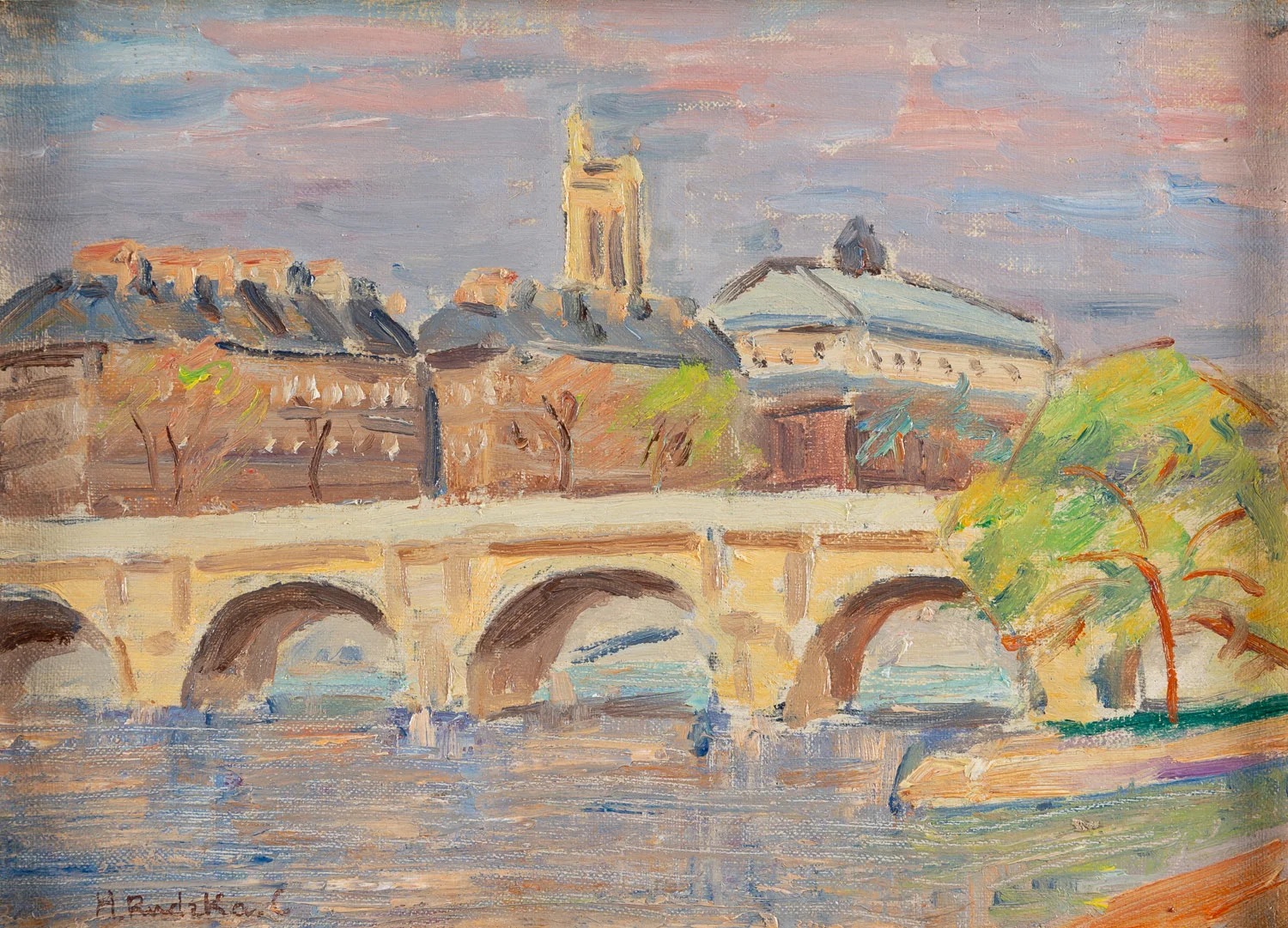
The artist began her studies at the School of Fine Arts in Warsaw in the studio of Professor Miłosz Kotarbiński in 1917, and in 1921 she continued her education at the Krakow Academy of Fine Arts. In Krakow, she was associated with a group of artists gathered around Józef Pankiewicz, who in 1924 formed the "Paris Committee." Just before leaving for Paris, somewhat spontaneously and against the prudent advice of her parents, who did not like this impulsive idea, she married Jan Cybis. The couple settled in Paris, where, along with the rest of Pankiewicz's loyal students, they led an artistic life, oscillating between intense work on seeking the most perfect painterly solutions and the struggle for relative stability to sustain themselves. It is no secret that before Jan Cybis's paintings began to fetch high prices, Hanna took on the financial burdens of the marriage, taking on temporary jobs. At the same time, she never gave up painting, perfecting her technique and developing an individual style. Along with the Polish artistic colony, she traveled to the south of France and toured Europe on the occasion of exhibitions where she displayed her works. When World War II broke out, Hanna Rudzka-Cybisowa was staying in Wiśniowa with the friends of the couple: Hanny and Jan Mycielski. She spent the occupation period in Krakow, where she engaged in the activities of the Polish resistance movement and organized aid for her friends, supporting the poor with warm meals and a roof over their heads. Her invaluable services during the war demonstrated how strong and resilient she was. After the war, she remained in Krakow, where she became closely associated with the Academy of Fine Arts, actively participating in the city's artistic life. She won numerous national and international awards for her paintings. Her marriage did not survive the difficult wartime period, and the couple decided to separate. In 1954, the painter received an award for the portrait of the sculptor Xawery Dunikowski, a painting widely regarded as a masterpiece. In 1960, she became the dean of the Painting Department, and after retiring in 1967, she did not give up painting, continuing to engage in social issues related to defending the Constitution and workers' strikes. Hanna Rudzka-Cybisowa was a woman of moral authority and an incredibly strong personality. Painting was the meaning of her life, but it did not divert her attention from mundane matters, to which she could devote herself entirely if she deemed it necessary. The creator firmly grounded herself, which was also evident in her meticulous artistic searches, based on the power of color and its functions. Her theories and thoughts on art have been enshrined in history as unquestionable programmatic principles specific to Polish painting. The memory of Hanna Rudzka-Cybisowa does not fade away but takes on new tones, and with the passage of time, her contributions to Polish painting and the nation resonate more and more loudly, a recognition the artist undoubtedly deserves.
When it comes to Hanna Krzetuska-Geppert's work, people often presume that the artist created in the shadow of great artists. While this cliché can be applied to the status and position of the artist within the artistic community, her work itself was far from being in the "shadow." Krzetuska-Geppert's works should not be regarded as second-rate paintings, as they certainly were not. Both works in the spirit of colorism and later abstract creations fit into the activities of the artists of the period and can be placed on par with the achievements of the most important contemporary creators. As she mentioned in her book titled "15% Abstraction" from 1965: "I experienced my ups and downs very differently. I was usually nervous when I encountered the opinion that I existed only because I was Eugeniusz Geppert's wife. Yet this was never the case because I started my career (if I may say so) in 1926, when I hardly knew Geppert (...)". The artist created in two manners. In a less characteristic coloristic manner, which sometimes evolved into abstract painting.
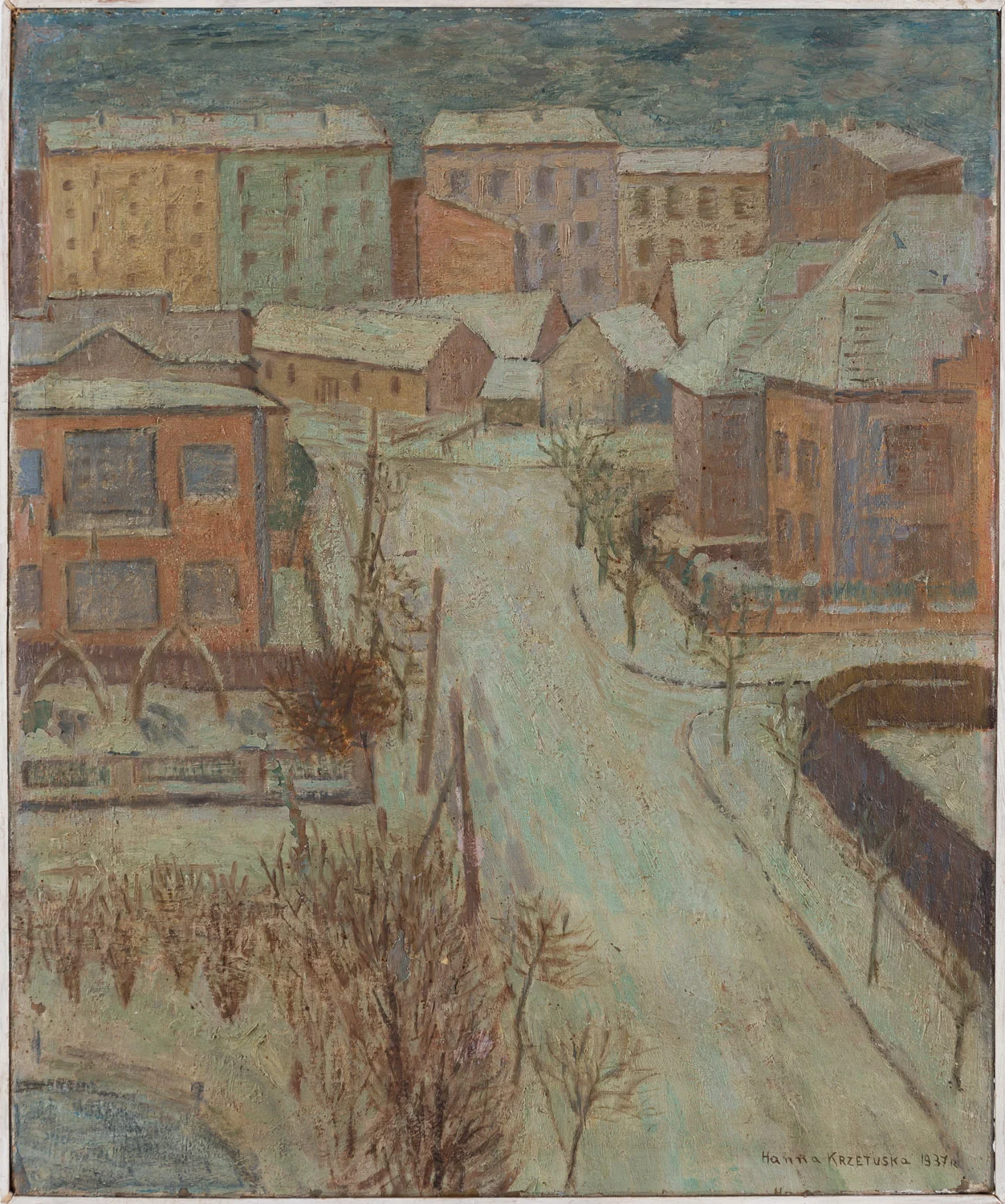
Krzetuska-Geppert was the daughter of Karol Krzetuski (1869–1940) – a major in infantry and co-founder of the Alliance of Democrats, a Polish centrist party. She studied from 1920 to 1924 at the Ludwika Mehoffer Free School of Painting and Drawing in Krakow, under the guidance of many outstanding artists associated with the colorist movement, including Zbigniew Pronaszko. She also completed artistic Higher Courses for Women. In 1925, she went to Paris to continue her education. The trip defined the style that Krzetuska-Geppert employed until the mid-1960s. The outcome of this trip is the work maintained in the spirit of colorism presented at this auction. In the 1930s, Krzetuska-Geppert became a member of the Association of Polish Artists and the Zwornik group, an artistic association founded in Krakow and active from 1929 to 1939. Its members included Emil Krcha, Tytus Czyżewski, Zbigniew Pronaszko, Jerzy Fedkowicz, Czesław Rzepiński, Jerzy Wolff, Henryk Gotlib, Eugeniusz Geppert, and Stanisław Pochwalski. From this group, it was Pronaszko who had a significant influence on Krzetuska-Geppert's work and the character of her art in the pre-war period. Also in the 1930s, the artist met the painter Eugeniusz Geppert, whom she soon married. During World War II, she was active in the Polish resistance movement under the pseudonym "Błysk," collecting materials from radio intercepts for the Information Bulletin of the Polish Home Army. In 1946, she settled in Wrocław, where she and her husband Eugeniusz contributed to the opening of an art school. For a short time, she worked as a teacher at the State Higher School of Fine Arts in Wrocław. Krzetuska-Geppert was very involved in the activities of the Wrocław artistic community, although often this community was unfriendly towards her.
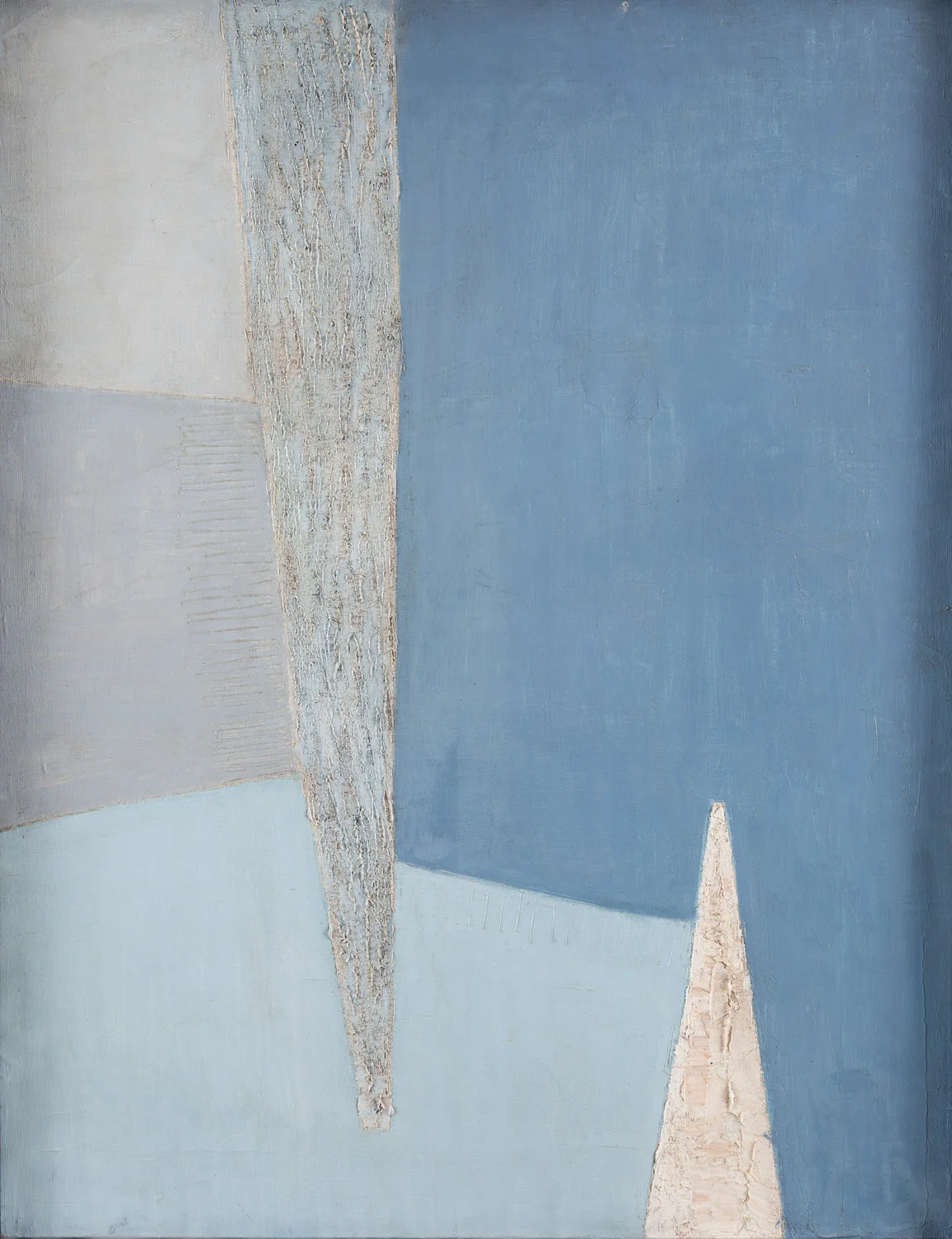
The artist's position quickly became a reason to adopt a kind of rebellious attitude, which can be found in her works from the 1960s. It was then that Hanna Krzetuska-Geppert distanced herself from painting in the tradition of colorism, and thus moved away creatively from her husband's activities, who remained faithful to this tradition. As an independent artist, she began to build her compositions from large geometric color planes, using bold color combinations and surprising solutions in terms of texture. In the presented offer, we find two works by Krzetuska-Geppert, which testify to the journey the artist took from coloristic painting to abstract painting.