
Small graphics overshadowed by big politics
At the beginning of the 1920s, Polish bookplates were created in Moscow under special circumstances. Some of them can be auctioned at the "Polish school of exlirbis" auction.
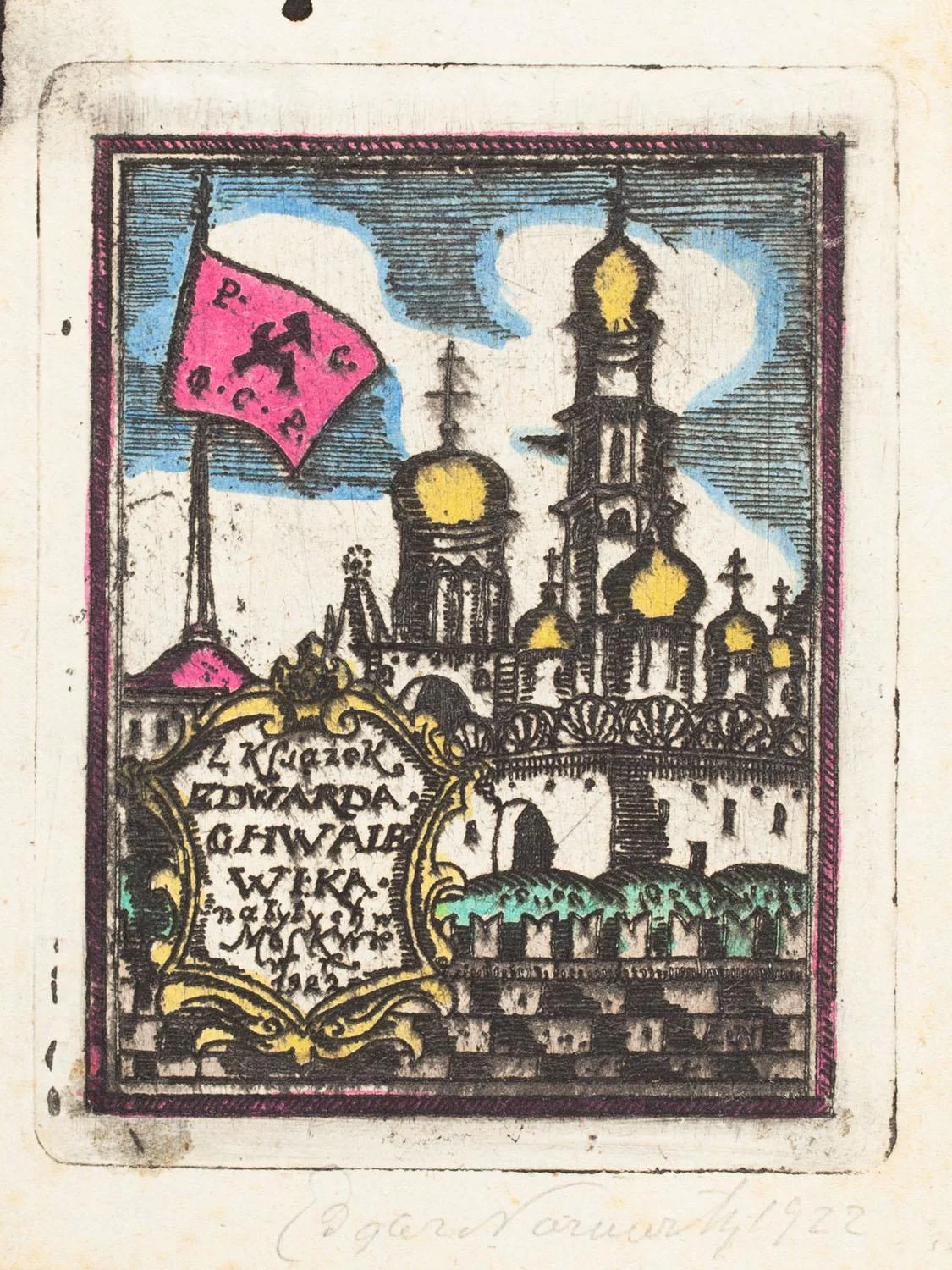
It is rare for such a non-material field of art as the exlibris to commemorate such a momentous moment in history. In August 1921, a group of representatives of the Polish intellectual elite traveled to Moscow. It consisted of scientists, writers, experts and collectors of art, and bibliophiles.
The aim was to talk about the recovery of Polish cultural goods under the provisions of the Treaty of Riga. It was the "big" politics that made this stay important. However, it also had a less formal side, and this is what the creation of Polish bookplates is connected with. The delegation included: Edward Chwalewik, Aleksander Czołowski, Kazimierz Piekarski, Stefan Rygiel, Witold Suchodolski, Feliks Kopera and Paweł Ettinger. They were people interested in visual arts, literature and books, and their specific intersection point, which is the exlibris. For the members of the commission, the visit to Moscow was an opportunity to learn about what was happening in the Russian culture of that time.
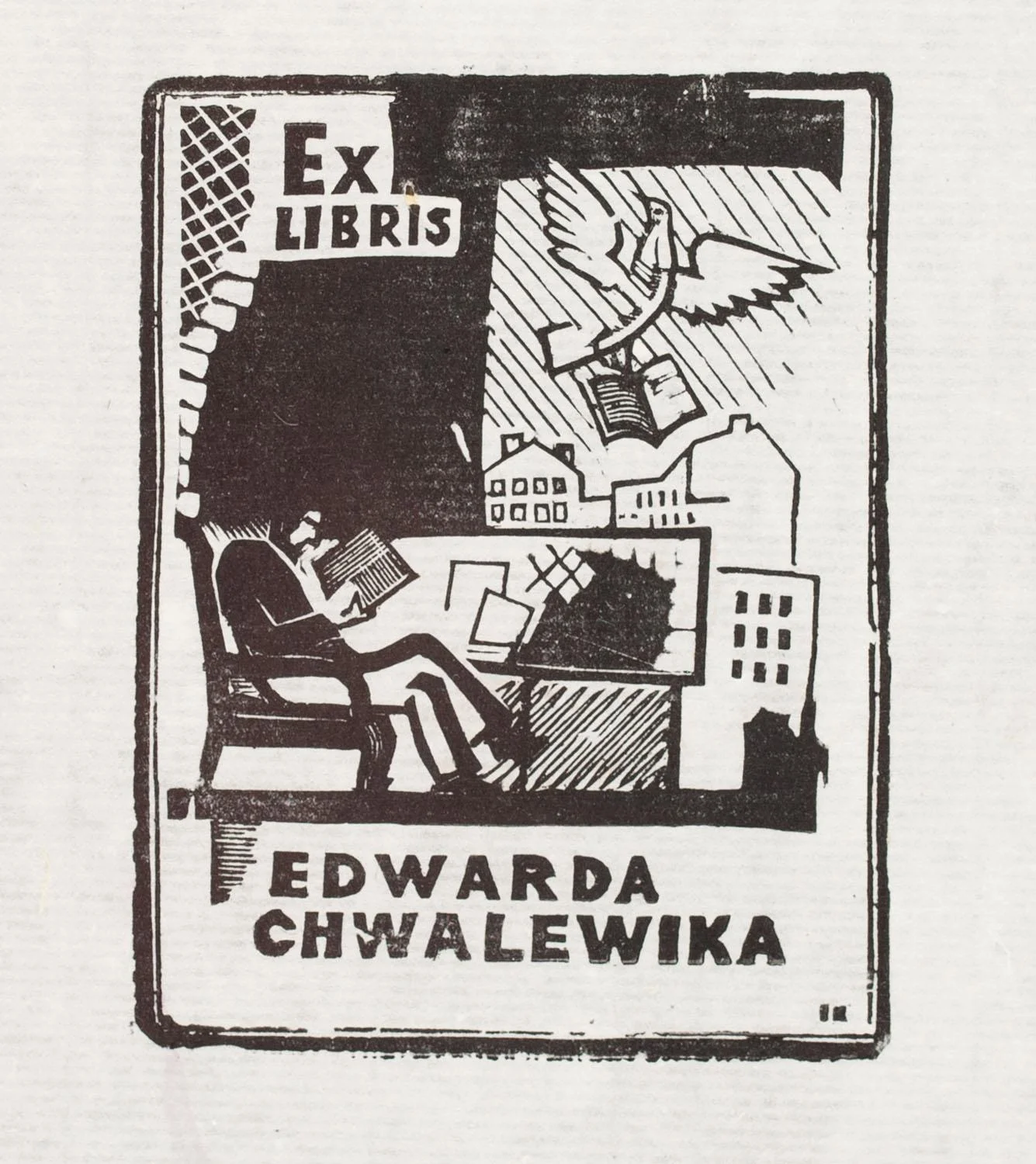
In their free time, they were supposed to walk around the city, visit museums and rummage in second-hand bookstores. Such a resilient and intelligent (so to speak of a group of people) delegation felt the need to commemorate their visit to the city on the Moskva River. Russian artists more than once created bookplates for Poles because of their participation in the cultural life of the empire. This order, however, had no precedent. It was placed in 1922 with local artists and with a Pole who was then active in Moscow (Edgar Norwerth). Ultimately, the whole was to take the form of a bibliophile publication with prints. The engravings were to be made in noble techniques - in woodcut, copperplate, etching or lithography. The performers were also free to choose the form, subject or inscriptions placed on the works. The history of publishing the intended book is long and complicated - it was only possible after World War II in a form other than originally intended.
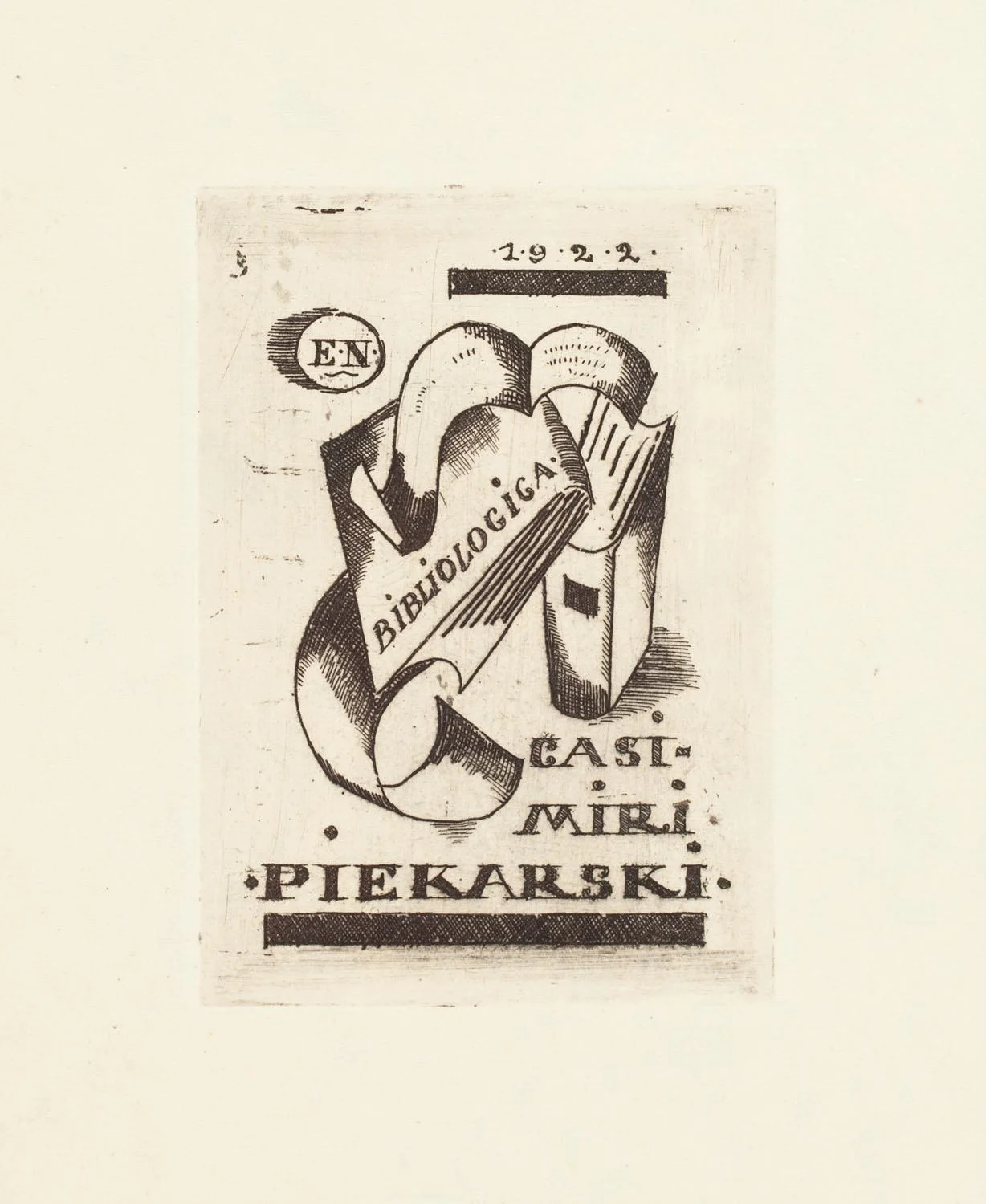
On the other hand, the very idea of commissioning bookplates is something unique and eloquent. The members of the delegation that fought for the looted works of Polish culture were apparently devoid of resentment towards their Russian colleagues. These small engravings are a moving testimony of human generosity, running across the misfortunes of history.