
Refined Elegance of Edwardian jewelry
Jewelry created in the Edwardian style emerged in the early 20th century, covering the period of the reign of English King Edward VII. It was the last jewelry period defined by a British monarch. Considering the elements of this style, the Edwardian era actually began in the late years of Queen Victoria's reign and ended a few years after King Edward's death with the outbreak of World War I. Edwardian aesthetics were a continuation of the Louis XVI style, promoted by the French court in the last quarter of the 19th century. This style became an inspiration for clients who desired aristocratic-looking jewels.
In the last decade of the 19th century, mass-produced jewelry, which had previously been seen as innovative, was rejected, leading to a shift in fashion and design. Jewelry at that time changed almost overnight from large and ostentatious to ethereal and delicate. Edwardian designs had their roots deeply embedded in 18th-century jewelry. Decorative motifs from earlier centuries were available in pattern books, and inspiration was also sought from 17th and 18th-century Parisian architecture.
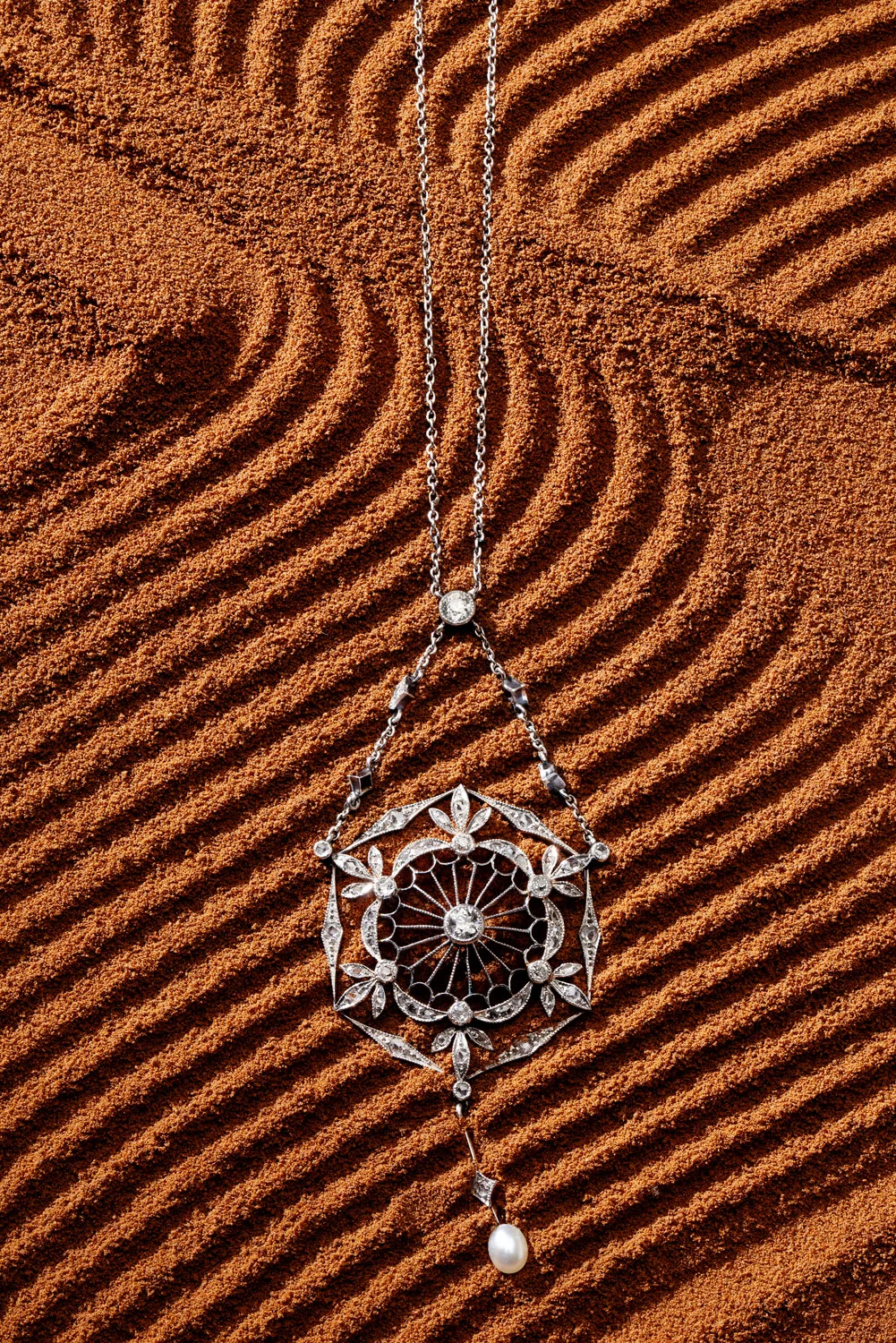
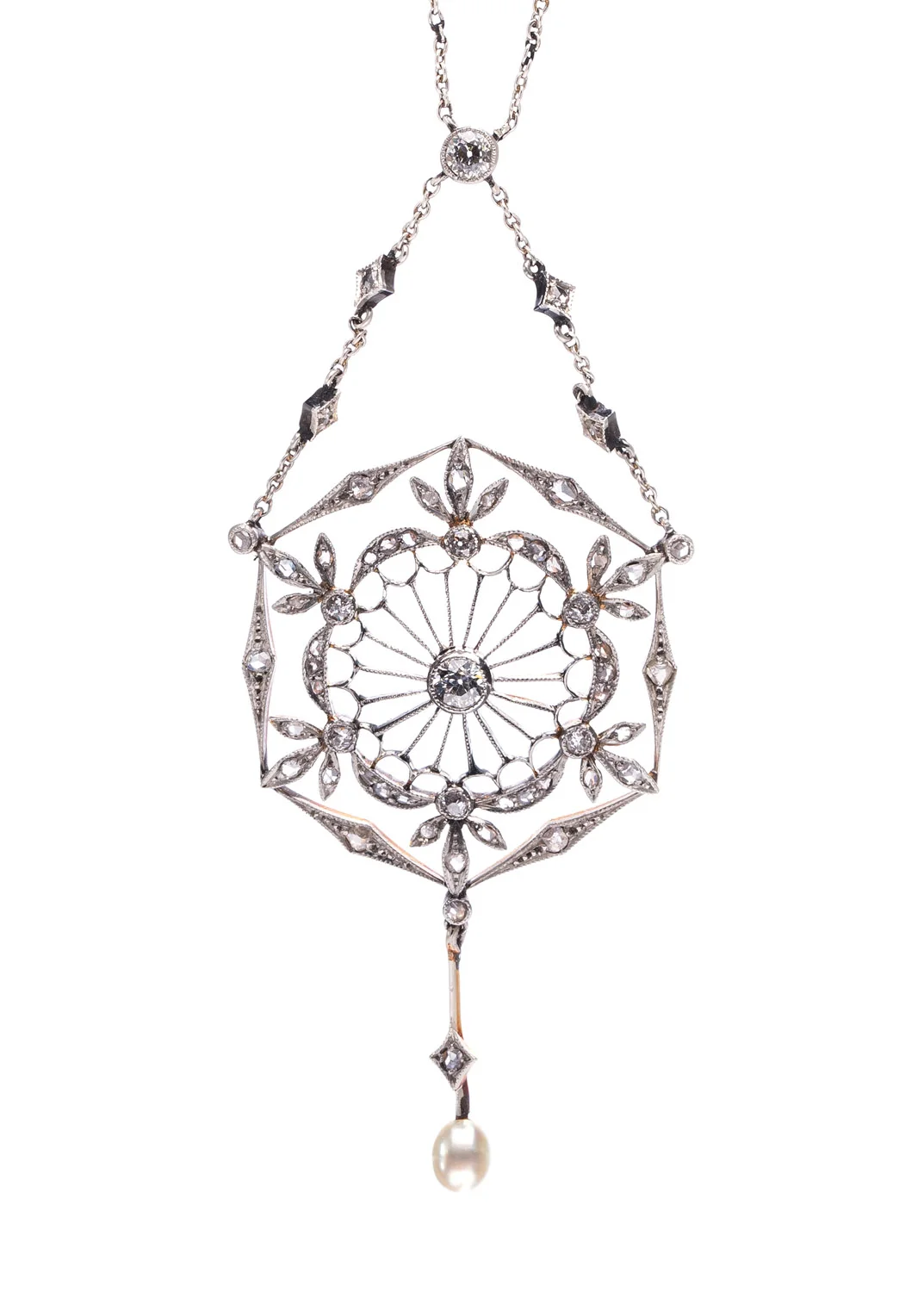
The jewelry created during this period was characterized by light, elegant, and refined forms, precision craftsmanship, and the use of precious materials, including diamonds, pearls, and platinum.
Typical decorative motifs of the time-garlands, ribbons, laurel wreaths, bows, fringes, and lace-acquired a delicate and airy quality thanks to the use of platinum. The invention of the acetylene-oxygen torch in 1903, which could reach temperatures necessary for working with platinum, allowed for the creation of jewelry made exclusively from this metal. This enabled the realization of jewelry designs resembling lace set with diamonds.
The use of diamonds, which were discovered in South Africa at the end of the 19th century, became typical of the Edwardian style. This made them more accessible and popular at that time.
At the beginning of the 20th century, delicate fabrics in pastel colors were extremely fashionable, and Edwardian jewelry matched them perfectly. Platinum and diamond brooches, which accentuated the neckline, were especially popular. Necklaces that closely adhered to the neck, made of diamonds, pearls, or black velvet ribbons with a decorative element in the center, were also worn with enthusiasm. Simple chains with delicate pendants, double asymmetrical négligée pendants, and larger necklaces adorned with garlands and geometric motifs were fashionable at that time. Earrings from the early 20th century took on delicate, filigree, elongated forms. Similarly, rings from that time were decorated with all the typical Edwardian decorative motifs.
Edwardian bracelets were made from delicate, tapering designs with repeating motifs, elongated forms, or links in a new, more refined style provided by platinum. Another popular bracelet style featured a front part with a beautiful, gem-set design, complemented by smooth links that flowed to the bottom of the wrist.
An Edwardian-style filigree necklace that will appear in the September jewelry auction could be a prized piece in any collection of subtle and refined early 20th-century jewelry.