
Rafał Malczewski
Weronika Daniluk
Painter, writer and talented mountaineer, from Zakopane, not by birth but by choice. Rafał Malczewski belongs to the group of artists most closely associated with Zakopane.
The crazy 1920's in Zakopane
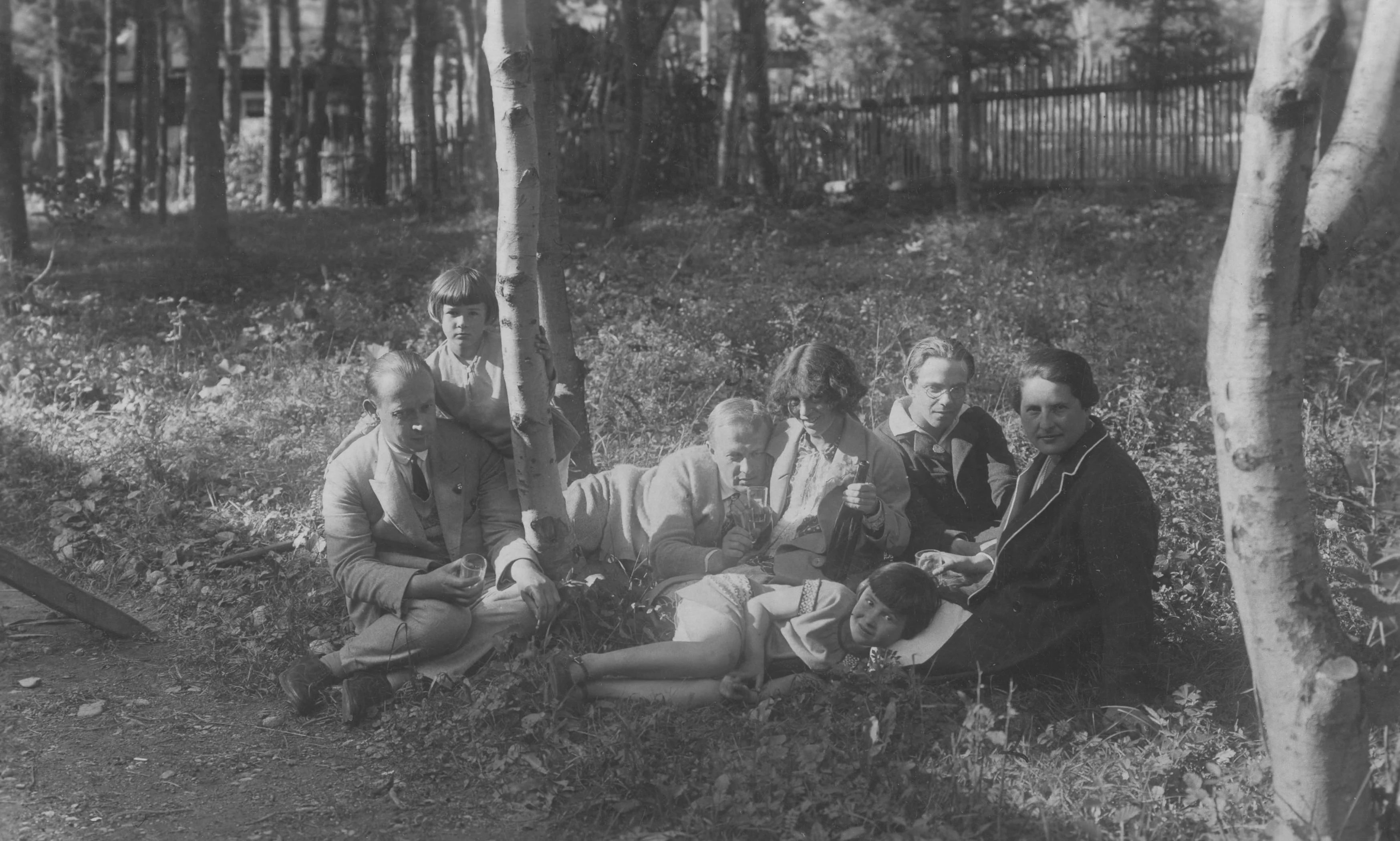
Together with a group of friends, including: Zofia and Karol Stryjeński, Karol Szymanowski, Kornel Makuszyński, and Leon Chwistek, in the 1920s and 1930s, he co-created the myth of Zakopane - a fashionable and modern city, and at the same time indigenously Polish, which was just seething from young talents. Social life flourished in this artistic melting pot. Concepts for art clashed, new styles matured, and at the same time friendships and relationships were formed. The interwar period in Zakopane is a real "crazy 20 years".
About how Jacek Malczewski spoiled children's painting decorations
"Often Juleczka and Rafcio painted something, some decorations for theatrical plays that they acted out.» Daddy «painted people, like actors, but children - decorations. I remember preparations for Faust. Małgorzata, Mefistofeles and Faust were already painted and cut out of cardboard, and there was a square in front of the church, but something with the perspective of the depth did not work and the street, which was supposed to disappear in the distance, was piled up like a wall. Then Mr. Malczewski came. And after seeing a mistake he took a brusz and painted stairs that lead to some building. Naturally, the child's picture turned into a work of art after a few touches of his brush. But Julcia and Rafek did not like it and began to cry, terribly desperate that "Daddy ruined everything" "
(M. Janoszanka, Wielki Tercjarz. My memory of Jacek Malczewski, S. Bross [ed.], Kultura Katolicka, Poznań [undated], pp. 34-35, after: D. Folga-Januszewska, Rafał Malczewski and the myth of Zakopane , vol. 1. Olszanica 2006, pp. 9-10.)
Like father Like Son
Rafał Malczewski was born in 1892 in Kraków as the second child of Jacek Malczewski and Maria née Gralewski. The children spent a lot of time with their grandparents and great-grandparents in Nowy Sącz. Jacek Malczewski, busy with his artistic work, was often absent from the lives of his children, although some portraits documenting their upbringing survived. He became more involved in their upbringing once they got older.
Rafał, although he did not associate his career with painting for a long time, began painting as a child. He never received any formal painting education. He studied philosophy at the University of Vienna, whose star was then Sigmund Freud. For a year he moved to the Hochschule fur Bodenkultur (College of Natural Resources and Applied Biological Sciences). He did not finish his studies in the end.
After his return, he moved permanently to Zakopane, where he immediately blended in with the local social environment. He traveled to the mountains with Stanisław Bronikowski, in Przanowski's cafe he met with Jan Pawlikowski and the Kaleciński brothers, and in Karpowicz's restaurant he played pool. He was friends with the greatest personality of his generation in Zakopane - Witkacy. The artists were united by the fact that they were both sons of recognized and respected artists who were also friends with each other. Both sons rebelled against the existing styles of their fathers, who, of course, left their mark on their art.
Maniery malarskie Malczewskich - ojca i syna - znacznie się od siebie różniły. Nic dziwnego, w końcu dzieliło ich prawie 40 lat. W późniejszych latach Jacek z Rafałem prowadzili ze sobą swoisty, malarski dialog. Twórczość Jacka Malczewskiego osadzona była w nurcie sztuki młodopolskiej, podczas gdy Rafał tworzył już pod wpływem zmian w sztuce XX wieku. Najwięksi wpływ wywarli na niego Ferdinand Hodler, Egon Schiele i Max Beckmann. Za obraz "Wiosna w górach" Rafał Malczewski otrzymał złoty medal na Międzynarodowej Wystawie Paryskiej Sztuki i Techniki w Paryżu 1937 rok. Tej samej, na której Picasso zaprezentował swoją Guernicę.
Military emigration
After the outbreak of World War II, Malczewski emigrated to Brazil. He eventually settles in Canada. He dies in Montreal on February 15, 1965. Until the end of his life, he showed a sentiment towards his lost paradise that was interwar Zakopane - the time of creative work and youth.
"WINTER"
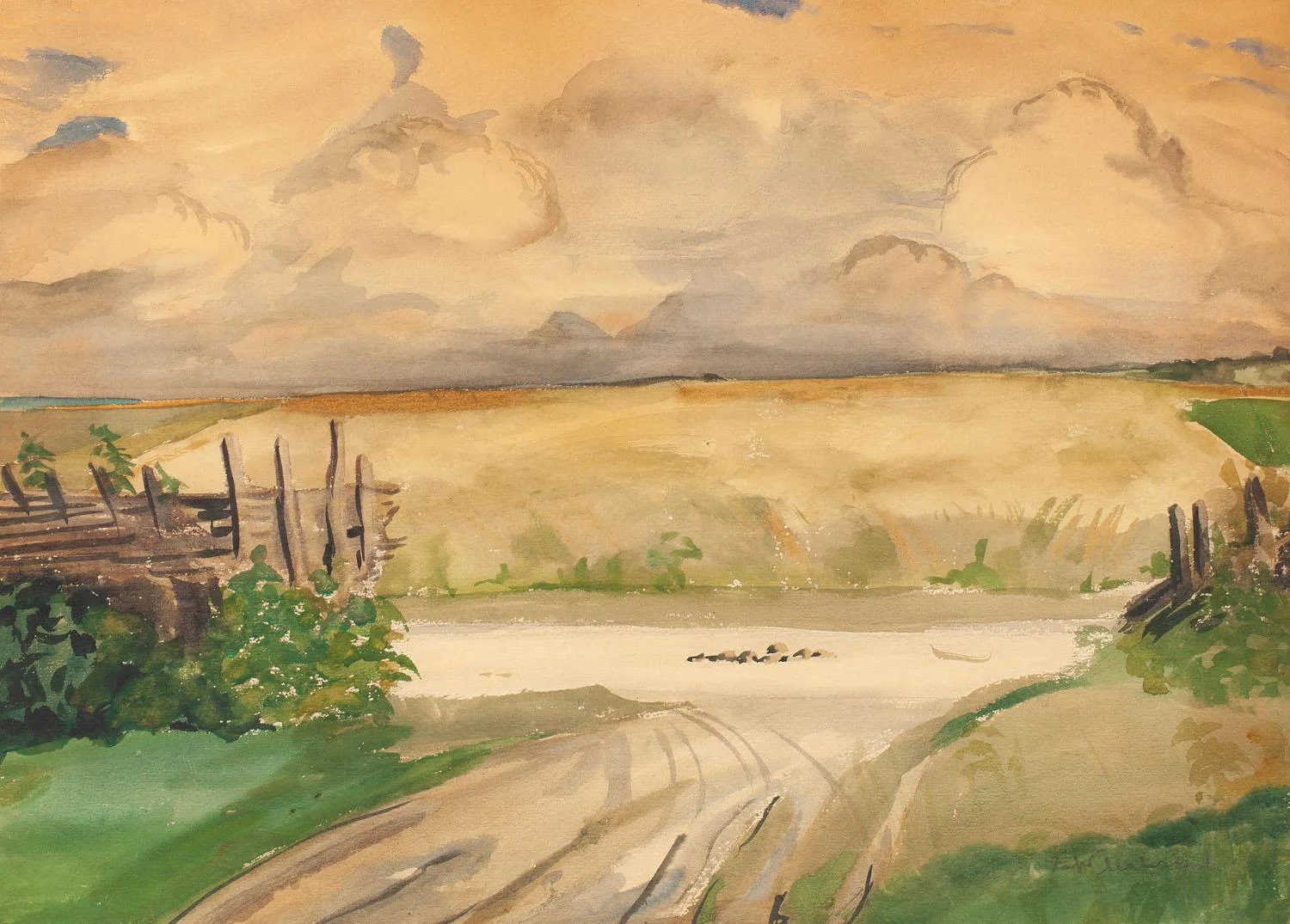
Apart from sketches in notebooks, Rafał created his works using two techniques - oil and watercolors. His watercolor paintings, usually in a smaller format, were of a quasi reportage nature (which was enforced by the technique itself). They were created a vista as a record of views, often mountains. Malczewski was especially good at presenting snow tracks. In his oil paintings, the artist indulged in bolder formal procedures - playing with perspective and colors.
The presented picture was probably painted at the turn of the 1920s and 1930s. The artist at that time, on the one hand, depicted Zakopane in a satirical and mocking way (Krupówki in Zakopane, Carousel in Zakopane), on the other hand, he began to turn towards the landscape, from which he gradually eliminated people.
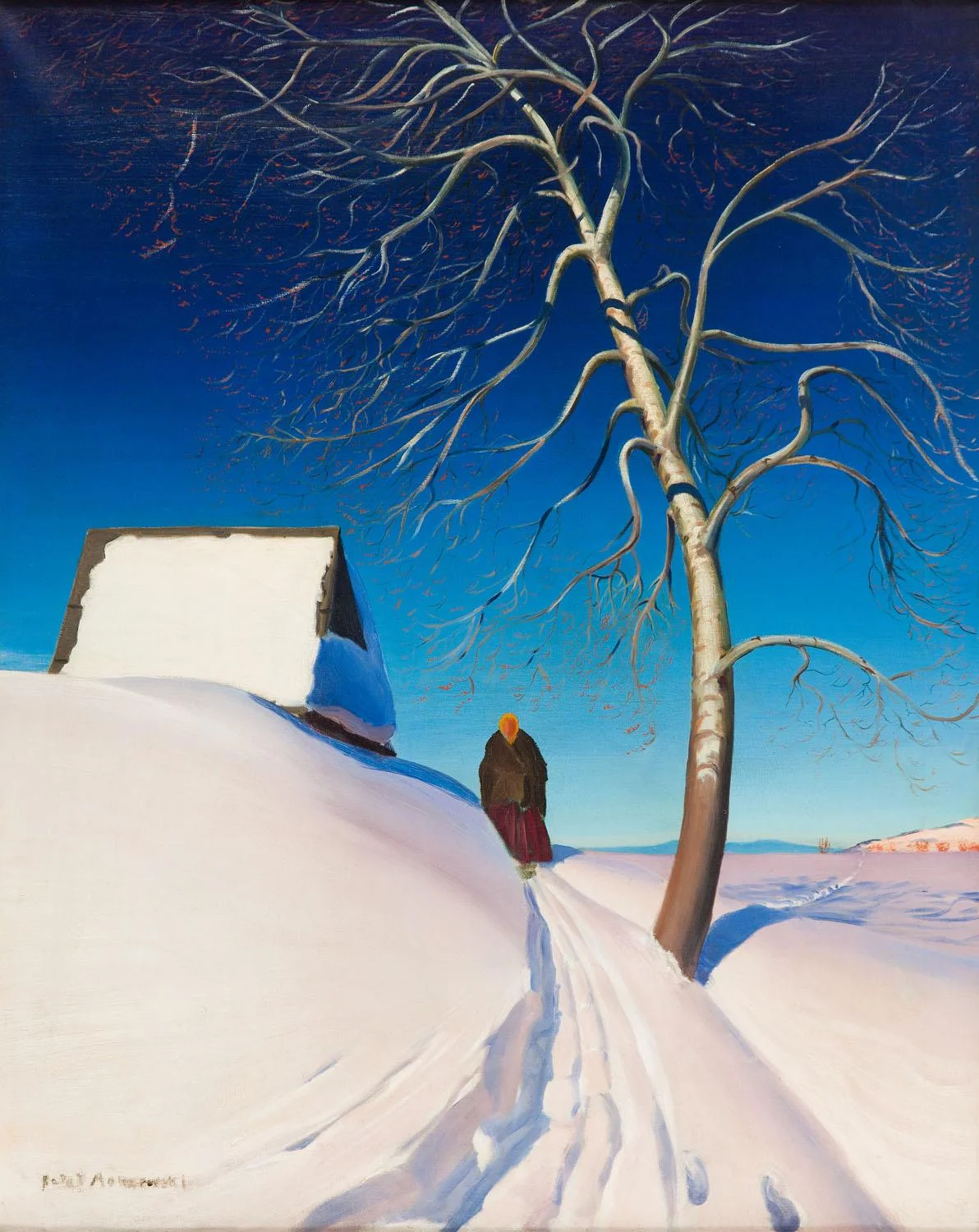
The image affects the viewer primarily with an unusual color palette, consisting of pure and saturated colors that reflect the impression of a frosty, but sunny, winter day. The two main color spots are blue that turns into navy blue in the upper left corner, and the whiteness of snow broken with pink tones. In the central point of the painting, the figure of a wrapped woman emerges from a bend in the road. The composition is framed as if the viewer is looking at the picture from below. It is based on Malczewski's arches (road bend, tree bend), which dynamize the image. Despite the passage of time, "Winter" remains a modern and universal work.