
Poster as an art - Miró, Picasso
This year, we commemorate the fortieth anniversary of the death of Joan Miró and the fiftieth anniversary of Pablo Picasso, who remained loyal friends throughout their lives. However, this is definitely not the only reason why it is worth bringing together the works of both Masters once again. The auction "Miró and Picasso in Catalonia. Posters" is a review of the graphic and poster works by both Artists, presented through the prism of their connections with Catalonia, as well as the changing communicative role they played.
Lithography and poster heading towards art
A poster "says" that there will be a concert somewhere or encourages you to buy something. It informs by capturing the gaze, and its most important feature is commonness. It is a powerful tool, one of the most important before the widespread use of the internet. Thanks to posters, knowledge reached many people. The natural environment for a poster is the city, and it is a typically urban "creature," with its history closely linked to the intensive development of large metropolises in the 19th century, mass industrial production, and also, since the mid-century, the development of printmaking technology. The improvement of the color lithography printing process and the ability to reproduce a larger number of copies were breakthroughs that opened the doors to the future for artists.
However, some time passed before artists began to take advantage of these possibilities. Important transformations in this field are primarily associated with Paris. Around 1870, lithography had a long enough history to be studied, and there were also collectors who wanted to collect prints made in this technique. Critics and art historians began to publish catalogues raisonnés of lithographs by artists such as Charlet, Raffet, or Géricault. The opening of Jules Chéret's lithographic printing house in Paris in 1866 coincided with these changes. He created an environment for the development of lithographic posters as a serious artistic occupation. When Chéret entered the scene of lithographic history, posters made in this technique were small, ordered by book sellers to announce the appearance of new titles. To open the doors for artists who could create posters considered works of art, a technological change was needed. Chéret, who gained years of experience as both a designer and a printer, introduced a steam-powered lithographic press (invented by someone else) in Paris. This allowed for the printing of larger posters (sheets up to 75 x 100 cm). Chéret employed talented artists who began to fill these larger paper surfaces. As an artist himself, he also created attention-grabbing compositions where the text harmoniously blended with the image..
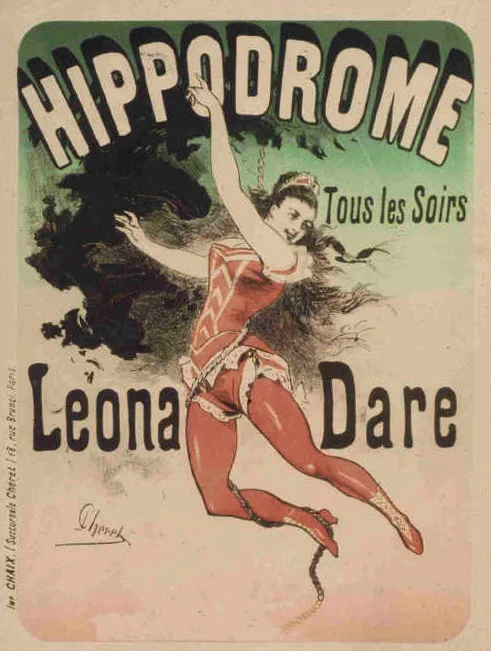
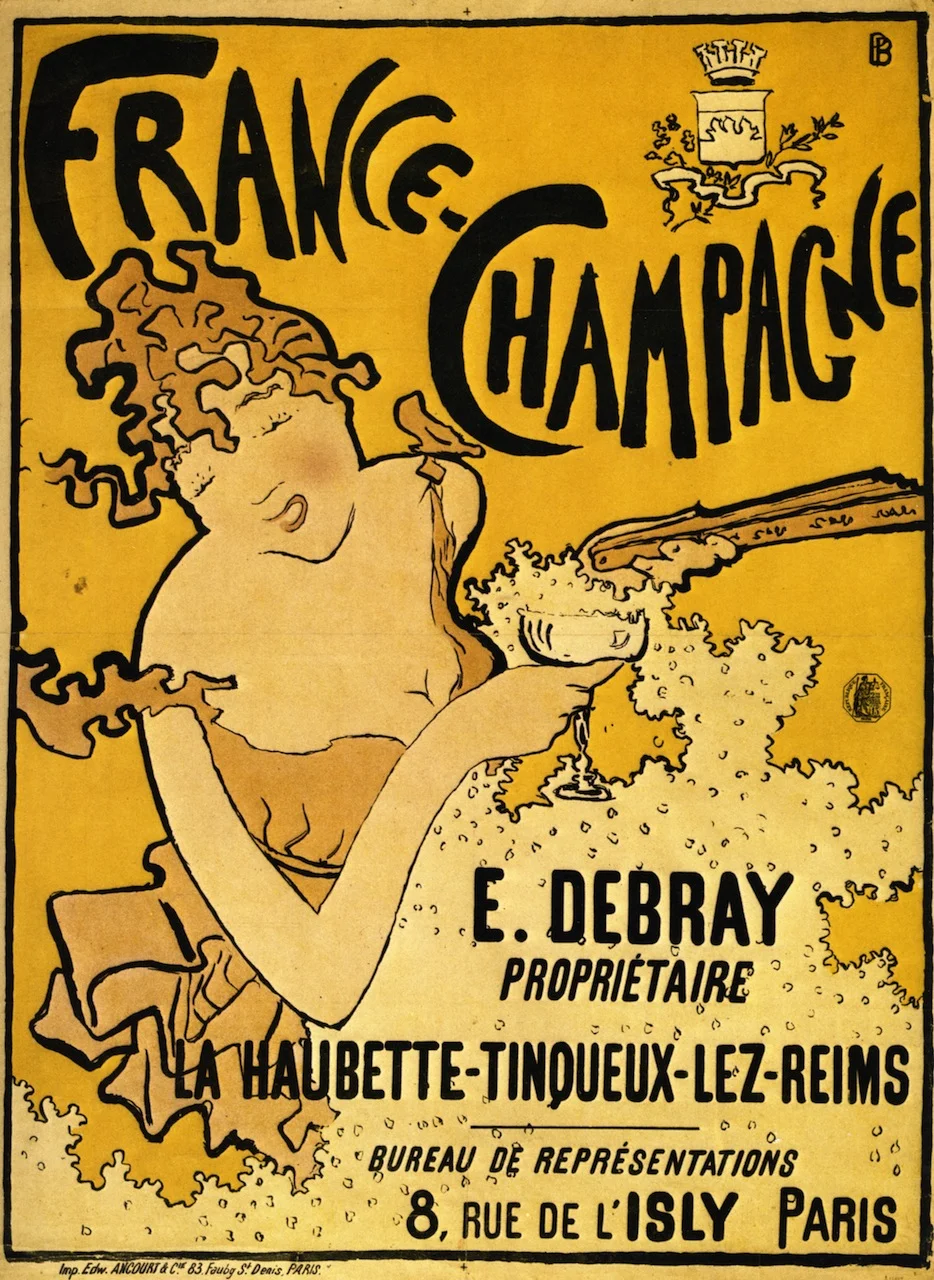
Apart from outstanding artists, publishers, and printers who worked to establish the status of the lithographic poster as a work of art, the activity of the Société des Peintres Lithographes, founded in 1892, was also important. In the previous year, 1891, a major exhibition of lithography as an artistic medium took place at the École des Beaux-Arts in Paris. Since then, both posters and prints produced in this technique have been unquestionably treated as art. After Chéret's works, two more artists made their mark in affirming color lithography in its artistic condition. Pierre Bonnard's posters, with the famous "France-Champagne" and its expressive values (more than strictly informational), and then came the decade-long poster art by Henri de Toulouse-Lautrec. It became a common practice for publishers of these posters, which were also (ordinary?) advertisements, to exclude a portion of the print run to offer them to collectors.
When it comes to Catalonia and Barcelona, the groundwork for the future of Miró and Picasso in their artistic and poster endeavors was laid in the last decade of the 19th century. Francesc Miquel i Badia, an important figure among Catalan critics, who published, among others, in the influential "Diario de Barcelona," wrote about the poster as an artistic object. In December 1896, an exhibition was held at Sala Parês, showcasing posters by the most outstanding artists working in this field: Jules Chéret, Eugène Grasset, Henri de Toulouse-Lautrec, Pierre Puvis de Chavannes, Dudley Hardy, and John Hassall. Alexandre de Riquer, an important figure and an artist paving the way for Miró, was associated primarily with posters. He drew inspiration from English printmaking art, the medieval world, and also Japanese color woodblock prints, which were popular in the European printmaking world at that time.
ART
Both artists were closely connected to Barcelona. It is the capital of Catalonia which is a common denominator for the "Miro and Picasso in Catalonia. Posters" auction. It is in the capital of Catalonia where Picasso began his serious adventure with art in 1895 when he entered the Academy of Fine Arts, and Miró was born here two years earlier. The Sala Gaspar Gallery, which had a tremendous influence on promoting avant-garde Catalan artists and where both artists had numerous exhibitions, was an important place for both of them.
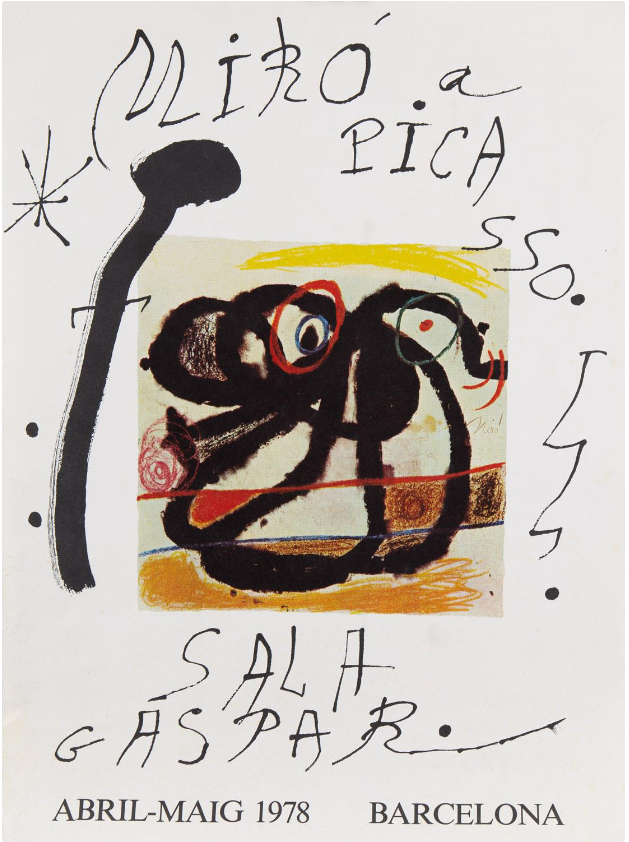
It is worth noting that both creators attached great importance to designing posters for their exhibitions. Almost all of Miró's exhibition posters were carefully prepared by the artist as original lithographic works in small editions, often in the form of "avant la lettre" pieces, that is, created before the addition of detailed information about the exhibition, often printed on higher-quality velin paper.
Similarly, Picasso had great respect for exhibition posters, through which he developed his interest in new printmaking techniques. The lithographic posters for two exhibitions of his drawings and gouaches at the Sala Gaspar Gallery in 1961, printed in only 500 copies, are the best example of this.
DICTATORSHIP
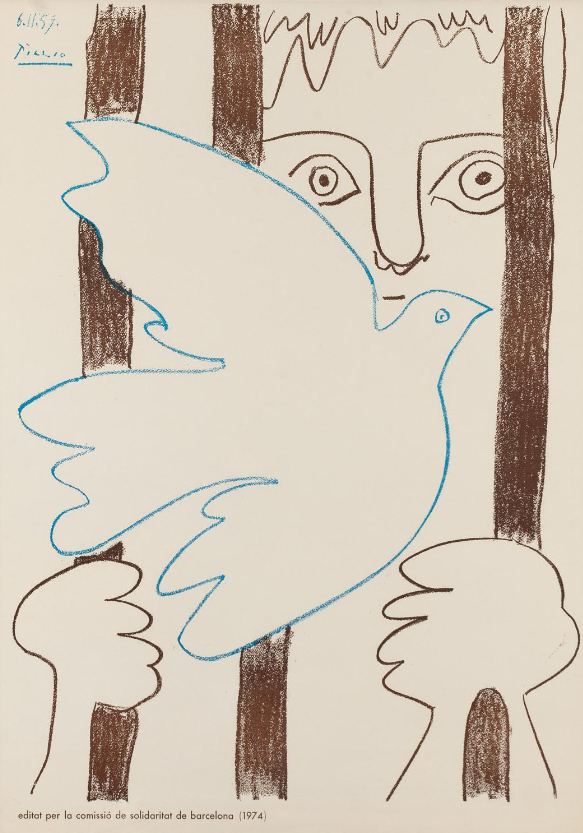
During the rule of Francisco Franco, Spain motivated both artists to engage in artistic rebellion and fight for their homeland. Posters played a significant role in this functional impact. For example, a lithographic poster for the Commission of Information and Solidarity with Spain featured Picasso's legendary work "Amnistía" from 1957.
Miró, as a staunch Catalan, created numerous posters for institutions and events related to Catalonia, its distinct culture, and language. Among them is an interesting lithographic poster printed on Guarro paper, supporting the activities of Catalan theaters, or an advertising poster for the largest newspaper published in Catalan, "Llegiu el Diari Avui."
It is worth noting that the local patriotism of both artists was also manifested through the commissioning of the printing and reproduction of posters and graphics to Catalan studios such as the legendary Barcelona-based Foto-Repro or La Polígrafa.
CITY
The importance of Barcelona for both creators and the impact the city left on them is evidenced by the fact that two outstanding museums dedicated to the works of Joan Miró and Pablo Picasso are located here: Fundació Joan Miró and Museum Picasso Barcelona.
Miró himself oversaw the establishment of the foundation, located on Montjuïc Hill, and designed two lithographic posters to inaugurate its opening in 1976.
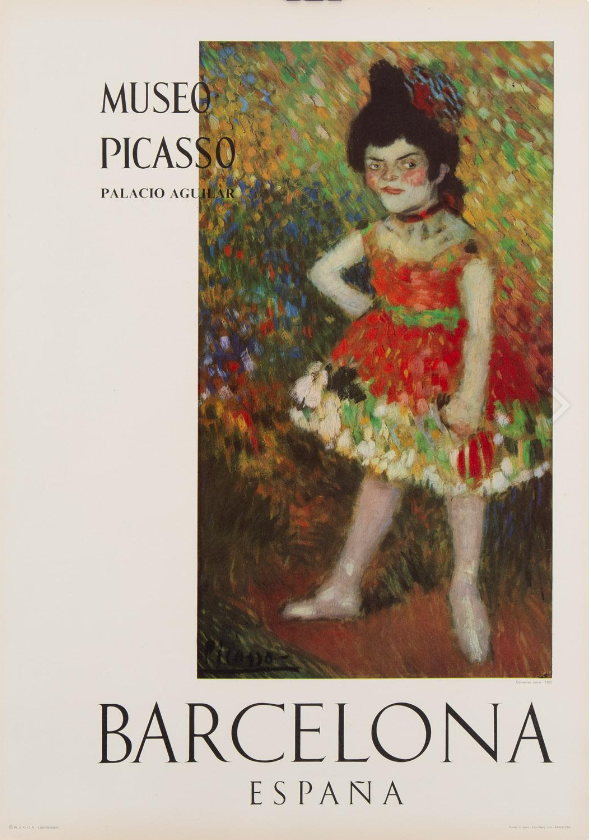
The Picasso Museum, on the other hand, gathers collections from the artist's earliest years of creative work and permanently associates him as a creator with the capital of Catalonia. The auction includes a set of five posters featuring reproductions of the most important works from the museum's collection, printed by Foto-Repro in 1966.
The auction "Miró and Picasso in Catalonia. Posters" brings together the achievements of two great friends fascinated by the avant-garde, the art of the old masters, as well as naive and primitive art. These artists were touched by the trauma of war and dictatorship, but forever bound by local patriotism and love for their homeland. This collection of posters is the legacy that both artists left to Barcelona.
We would like to thank Mr. Tytus Klepacz, an expert in the works of Joan Miró and Pablo Picasso, for his substantive contribution and collaboration in creating the text.