
Portrait photography by Miles Davis
Miles Davis went down in the history of world jazz music. The American trumpeter is also considered one of the most significant and creative musicians of the 20th century. His characteristic musical style is recognizable not only by jazz enthusiasts. Numerous photographers fancied having a portrait of the iconic jazzman in their portfolio. Eventually, some of the pictures became iconic themselves. This was the case with the two photographs by Anton Corbijn and William Coupon, presented at the auctions.
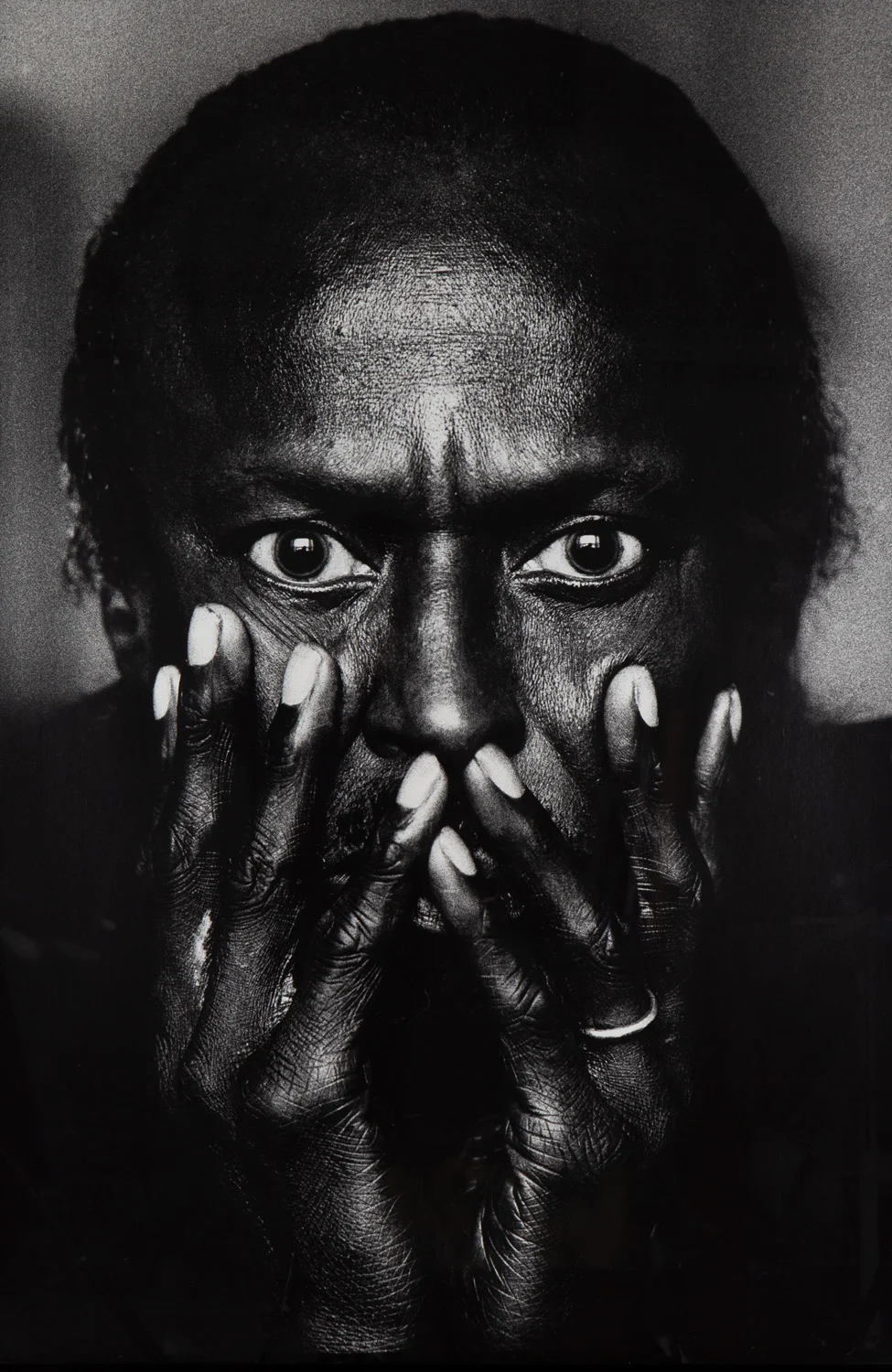
"I've always been quiet about a lot of things... about the people I've photographed, about the history behind the pictures... I want people to discover their meaning themselves, so I didn't tell all the stories behind the images. People want to know too much. The beauty of photography is that you, as a viewer, are able to interpret it as you want, create your own narrative, and you can't do that if you know the exact story."
said Anton Corbijn.
The second photograph of Miles Davis was taken by William Coupon. The artist himself admits that he has a fixation on faces. He became famous as one of the most prominent portraitists. Over the years, the artist photographed famous people from the world of culture, as well as politics. Among those portrayed by Coupon were, among others, US Presidents Jimmy Carter and Bill Clinton, Andy Warhol, Mick Jagger. His style is referred to as a combination of simplicity and minimalism. In his photos, the artist made use of fabric backgrounds, which gave his images a painterly character when exposed to appropriate lighting. His models usually don't have smiles on their faces.
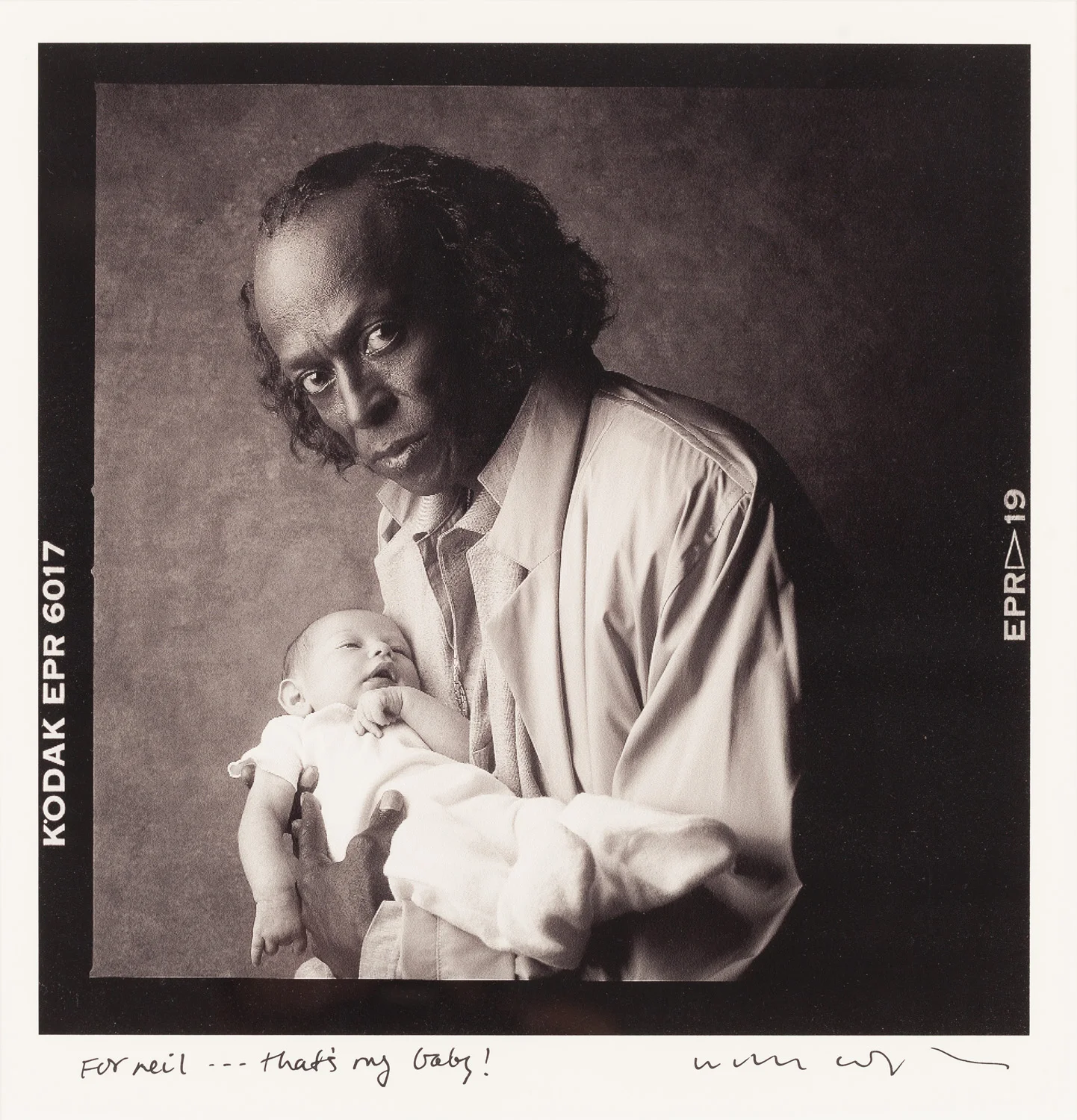
"Usually, no smile provides me with a greater range of emotions. Smiles are more facile. Many of the person's traits get lost in a smile. An ethereal look is more transcendent."
claims William Coupon.
The photograph by William Coupon depicting Miles Davis with a child in his hands is an unusual work. Coupon used the child to highlight the somewhat diabolical nature of the musician. The juxtaposition of these two characters is incredibly simple, yet expressive and eye-catching. The photograph has the author's handwritten dedication for the collector Neil Leifer.