
POLISH RIDER OF FREEDOM IN NEW YORK
Larry Rivers's graphic work "Jeździec polski" was created in 1982. It alludes to Rembrandt's famous painting of the same name from around 1655, which is in Frick's New York collection. The artwork presented at the auction is also an extension of Rivers' painting entitled "Rainbow Rembrandt I" from 1977, which is at the Hirshhorn Museum and Sculpture Garden in Washington. Rivers began creating works inspired by the works of Rembrandt after his visit to the countries of the Soviet Union in 1976, which was possible thanks to an invitation he received from the Union of Artists of the USSR. During his stay in Russia, he lectured on contemporary American art, and also confronted his idea of the Cold War relations between the USA and the USSR with the reality of everyday life in these two countries. Reflection on the conflict could have had a key impact on the way the Polish rider was presented as a kind of synonym for political freedom.
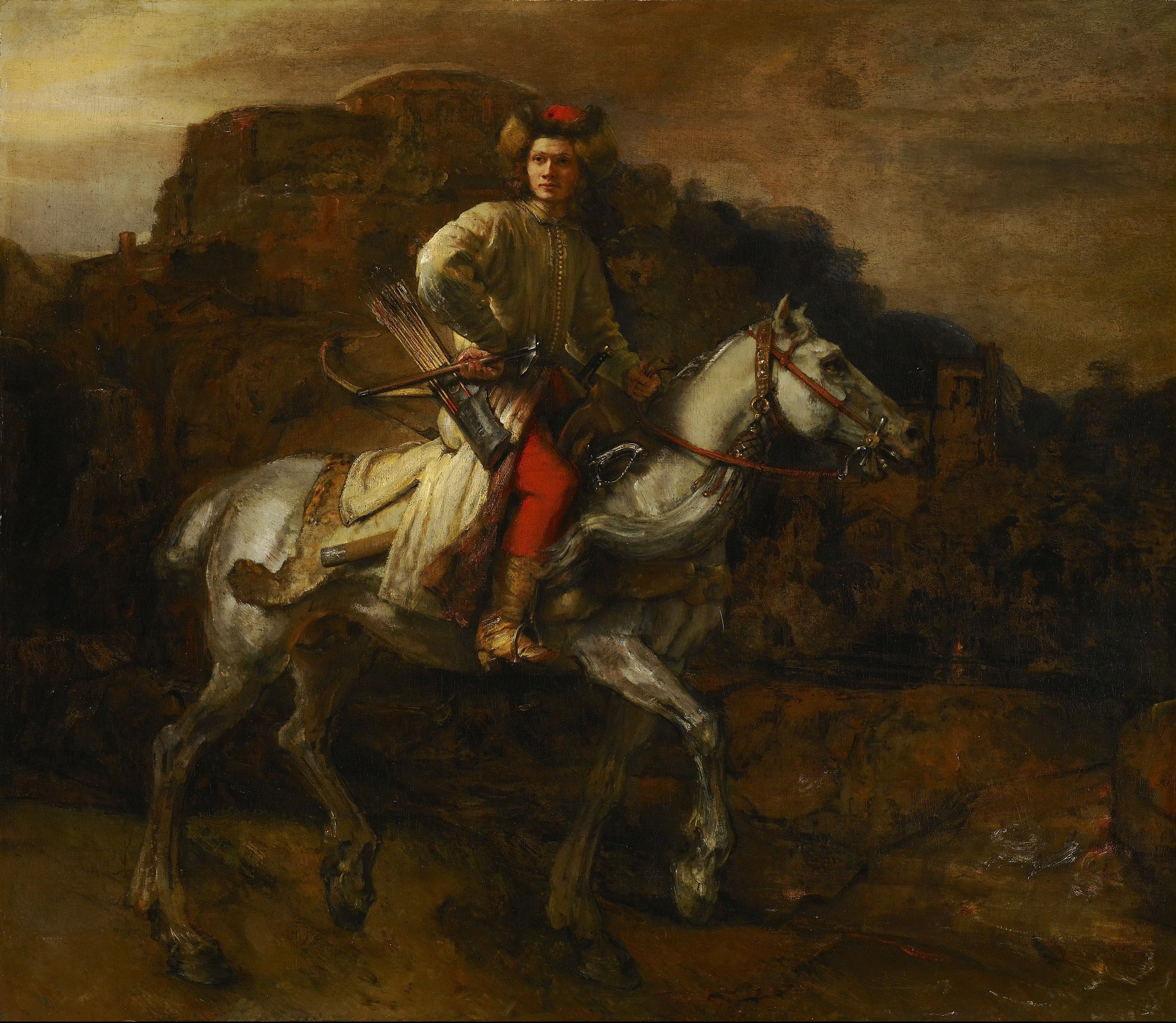
Rivers's Lisowczyk, just like Rembrandt's Rider, presents art historians with a lot of interpretation problems. The Lisowczyk's, accounting for almost two thousand light riders, was formed in 1607 by Aleksander Lisowski, who began to form the seeds of this unit during Lisowski's service with Dmitri II Samozwaniec in the years 1607-1611. Lisowczyk family served the Commonwealth, but did not receive any pay, living only on spoils. Fearless and ruthless to the enemy, they caused panic among the Swedes and Tatars, wreaking havoc in the enemy ranks from the Rhine to the areas by the White Sea. As a result of rapes and robberies, the Lisowczyk's weren't usually taken as prisoners. Their activity was condemned by the Seym of the Republic of Poland, which, starting in 1623, issued a number of laws banning combat formations from plundering activities. Lisowczyk's fought in the Netherlands during the Thirty Years' War, where they joined the imperial units, which aroused fear among Protestants. It was at this time that Rembrandt, born in 1606, was able to come into contact with them.
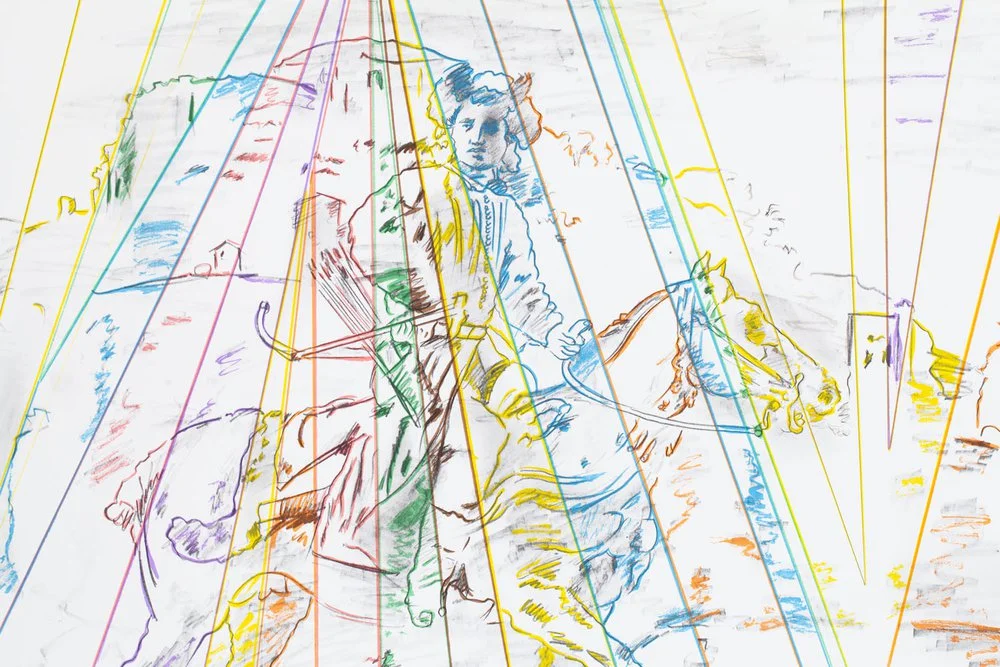
An interesting hypothesis in this respect was put forward by Jan Białostocki, who pointed out that the title "Polish Rider" is Latin for "Eques Polonus". Under this pseudonym in 1654 in Amsterdam he published a work entitled "Apologia" by Jonasz Szlichtyng, who was one of the leaders of the Polish brothers. This reformation religious movement became more and more hated in the Commonwealth, which led to the expulsion of Arians from the Commonwealth in 1658. In 1653, the Dutch States General forbade preaching the teachings of the Polish brothers. The treatise "Apology" published by Szlichtyng was a response to the growing persecution and concerned the issue of tolerance and the separation of churches and states. According to the hypothesis of prof. Białostocki, the rider from Rembrandt's painting would constitute an apotheosis of freedom, which in the context of Rivers's work can be read as a commentary on the events of the Cold War.