National Style
The Second Polish Republic was a place of rapid changes, both in the political and socio-cultural aspects, which includes gaining independence, the emancipation of women, technological progress, and new opportunities for spending free time.
Despite the enormous post-war devastation, the atmosphere of enthusiasm and creative optimism prevailed in Poland. It provided a basis for shaping Polish variation of art deco. Although the Second Polish Republic lasted only twenty years, it was full of remarkable creativity and mobilization in every artistic field. Polish nation, deprived of its state for over a hundred years, had to build it anew, meeting the standards set by other Western European countries. Developing appropriate symbolism and national style was supposed to be the foundation of Polish identity. Artists played a significant role in the reconstruction of the state, as domestic culture was expected to secure the nation's survival. The goal was to create a style that would be both Polish and modern.
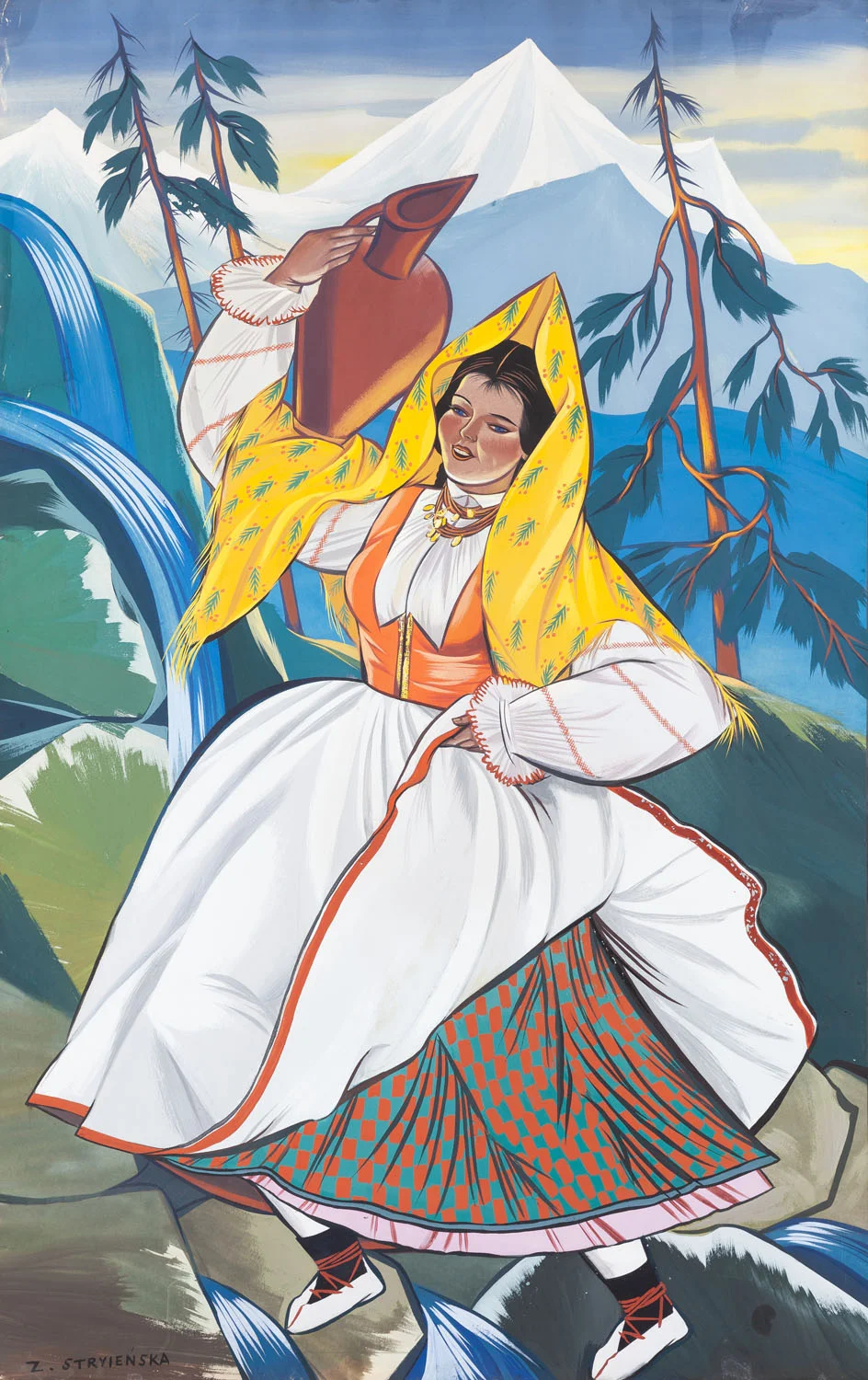
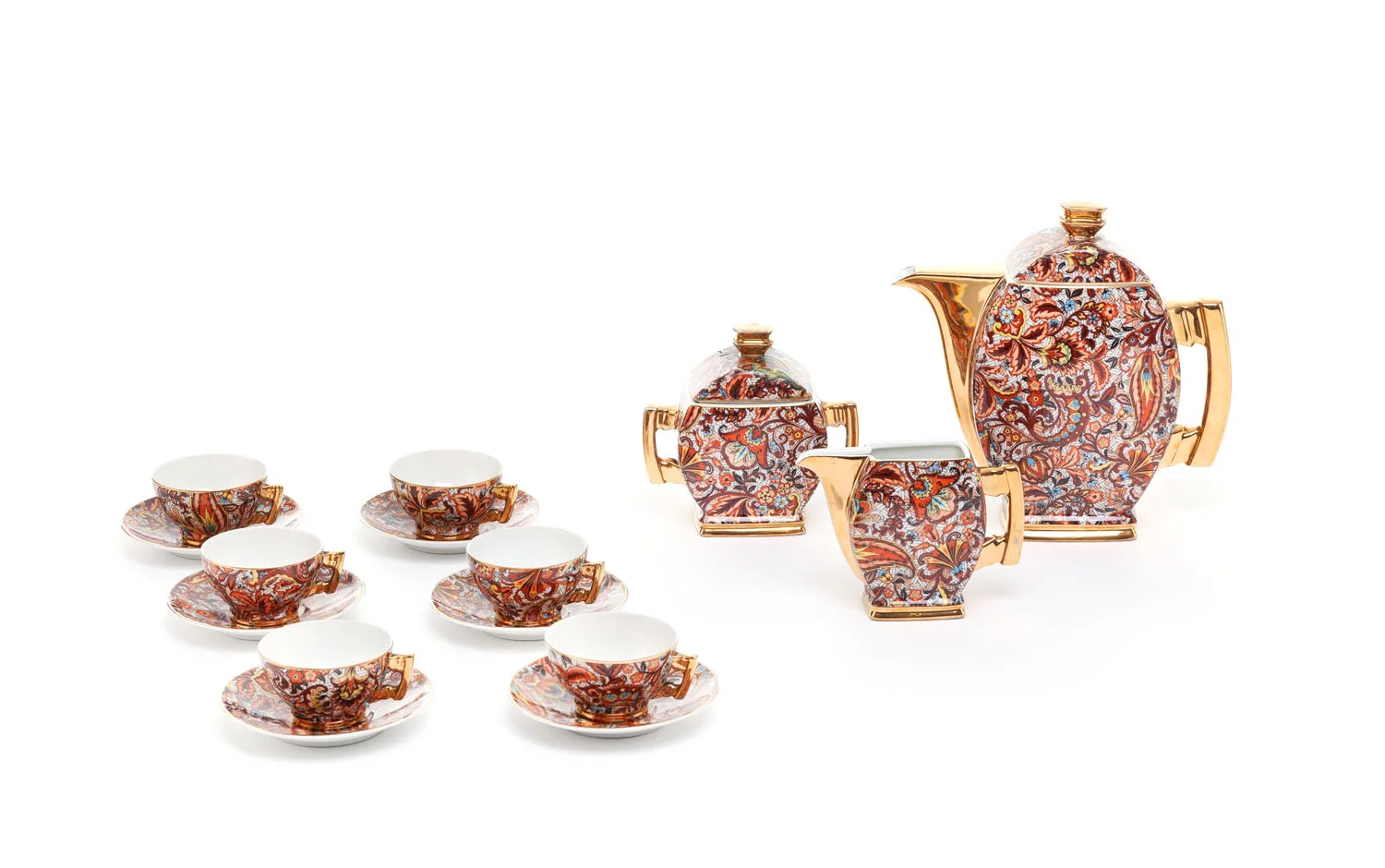
Poland's different historical and social background was a determining factor for its distinct form of art deco. European simple and purist forms were enhanced by elements of native folklore. Folk art played a huge role in this style, which was to become a symbol of Polish identity. Folk art was perceived as the source of Polish national symbols and was associated with unspoiled, intuitive forms and traditional workshop skills, which would be later employed by contemporary artists. Native art deco was thus shaped by combining pan-European, geometric forms with native motifs.
The theory of national style was shaped back in the 19th century, with the development of native art, perceived as a carrier of Poland's distinctiveness. Efforts to form Polish style were taken by, among others, Stanisław Witkiewicz, however, the highland Zakopane style introduced by the artist, inspired by Podhale and Hutsul art, did not catch on in other parts of the country. The Polish Applied Arts Society also attempted to establish characteristics of national style. Its members, including Stanisław Wyspiański, Jerzy Warchałowski, and Józef Czajkowski, may be referred to as the precursors of Polish art deco. The main source of inspiration for the Krakow Society was the British Arts & Crafts revival movement. Thanks to the efforts of the Polish Applied Arts Society, Polish art deco found its main sources of inspiration and the Society's activities were of key importance in the formation of the national style. Members of the Society placed particular emphasis on the development of artistic craftsmanship, which they considered one of the most significant elements in shaping aesthetics. The activities of the Society were continued by the Krakow Workshops established in 1913. Inspired by Josef Hoffman's Vienna Workshops (Wiener Werkstätte), the Krakow version of workshops created products which intended to be a Polish interpretation of current European trends in artistic craftsmanship.
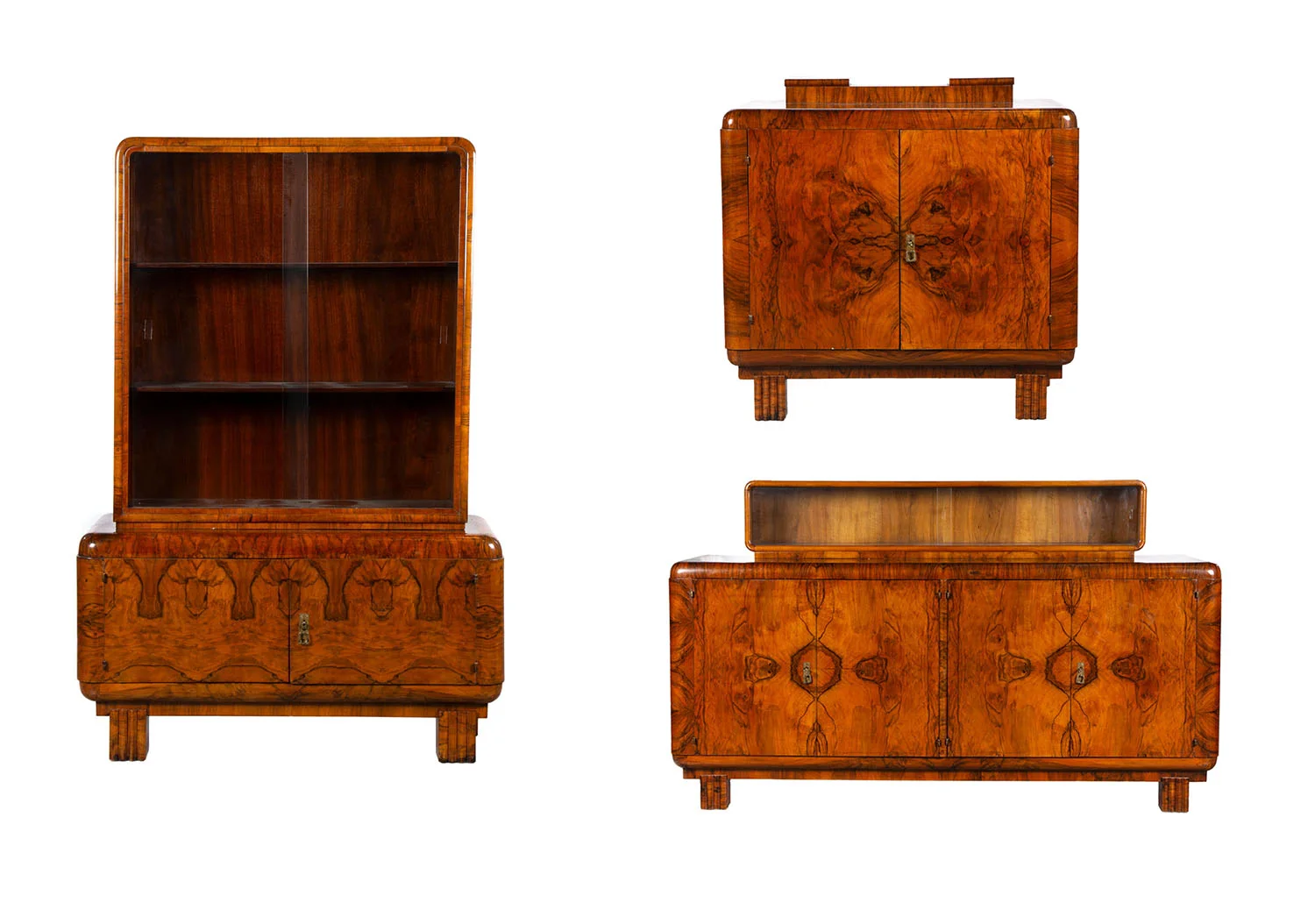
The artists associated with the Workshop developed a program of new decorative art, becoming one of the main creators of the Polish art deco style. This group included Karol and Zofia Stryjeńscy, Karol Maszkowski, Kazimierz Młodzianowski, Wojciech Jastrzębowski, Józef Czajkowski, and Antoni Buszek. Poland owes its success at the Paris World's Fair in 1925, among others, to the artists of the Krakow Workshops. Polish exposition, which was a synthesis of modernity and folk influences, constituted the group's crowning achievement. The Paris exhibition was a breakthrough in Polish art. For the first time, artists were able to represent their country on a big international forum. The sculpture "Rhythm" by Henryk Kuna stood in the center of the pavilion, which was designed by Józef Czajkowski, and the vestibule leading to the Hall of Honor with a glass dome was adorned with stained glass by Józef Mehoffer. The Hall of Honor was decorated with paintings by Zofia Stryjeńska, depicting, typical of the artist, stylized folk motifs. Other decorative elements of the interiors included, among others, wood furniture, referring to the highland art of Podhale, and the kilim designed by Stryjeńska. Polish artists received two hundred and five awards in Paris. Art of the newly emerged state, characterized by style clearly based on folk art but still fitting into the European context, was thus appreciated on the international scene.
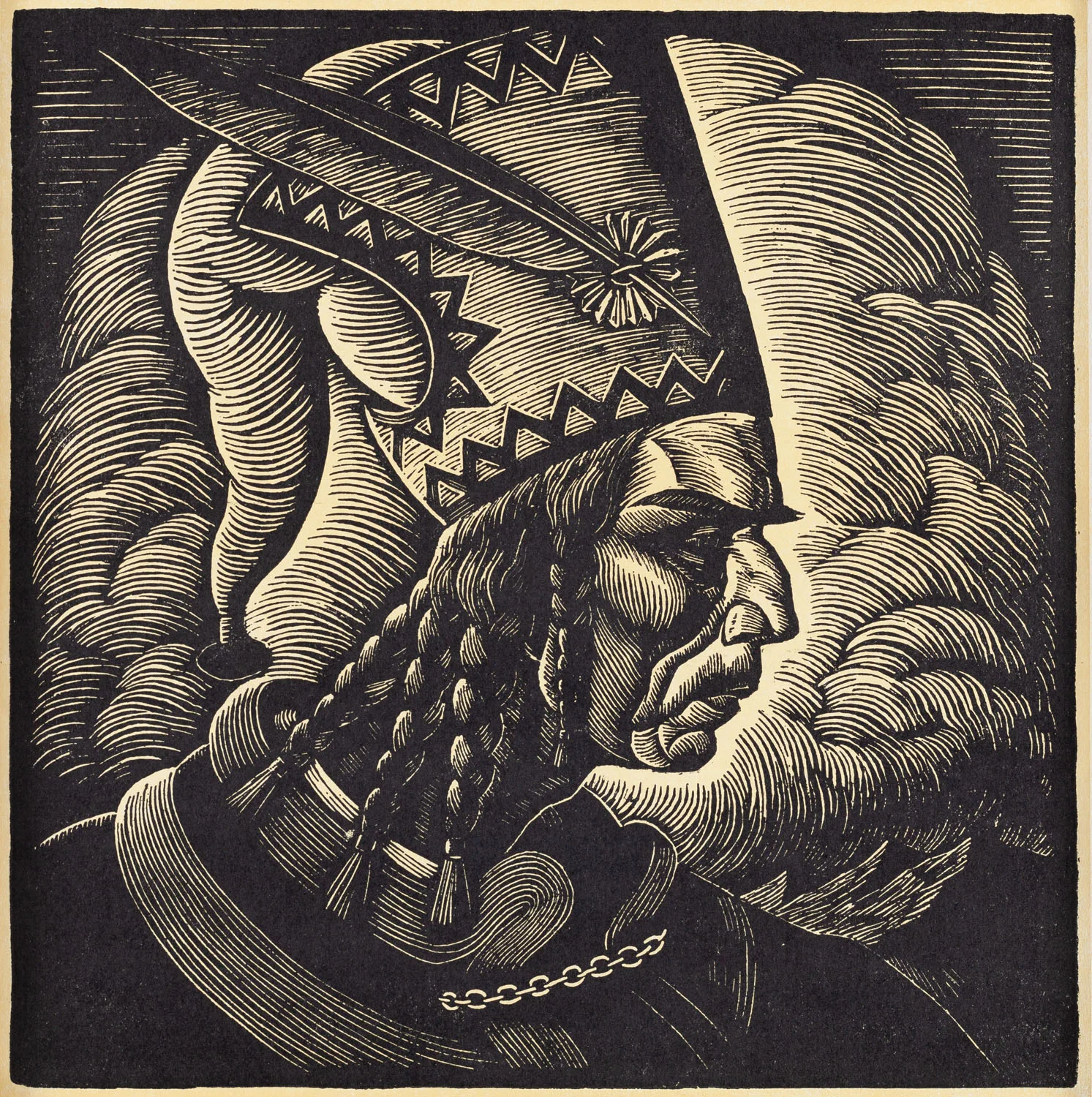
The search for national style is also associated with the activity of the Rytm group, whose members tried to combine tradition and modernity. One of the greatest enthusiasts of Polish national art was Władysław Skoczylas, whose woodcuts are perfect examples of his fascination with folk primitivism, being even more emphasized by the artist choosing this particular graphic technique. In his works, the artist referred mainly to the highland painting on glass, traditions of the Podhale region, and legends. Skoczylas' works, based on the juxtaposition of black and white, contrasted strongly with colorful works of the "princess of Polish art", Zofia Stryjeńska. A characteristic element of the artist's paintings is an unorthodox interpretation of folk tradition. Stryjeńska approached old Polish rituals, customs, and Slavic mythology in a casual way, her unlimited imagination allowed her to combine various motifs and play with folk patterns. Folklore inspirations also appear in the works of Wacław Wąsowicz, visible in the artist's decorative depictions, rhythmization of flat spots, and stative composition. Works by the artists of the Rytm group also referred to the tradition of classical French art, which did not evoke negative associations, as opposed to Austrian and German influences. France, perceived as the center of European culture, left a strong mark particularly on the works made by the founders of the Rytm group. France faced a similar issue as Poland, and also tried to face the dilemma of reconciling tradition with modernity. The harmony of compositions, cubist shapes, sublime beauty, and features representative of French art may be found in the works of Eugeniusz Zak, Wacław Borowski, Tymon Niesiołowski, and Henryk Kuna.
The most dynamically developing city of the Polish interwar period was, of course, Warsaw, the seat of state authorities, as well as the center of social and artistic life. Modern buildings began to spring up in the capital of the reborn state. Prudential, which was at that time the tallest building in Poland, became the symbol of innovation. It was designed in the art deco style and was 66 meters high upon its completion. It housed the headquarters of the English Prudential Insurance Company and exclusive apartments. The richest residents of the capital were keen on luxury, and rapidly developing Polish trade, kept pace with their needs. Wives of ambassadors, generals, and ministers, as well as stars of the Polish stage, wore clothes from the Fashion House of Bogusław Herse, the most exclusive department store in Poland, which advertised with the slogan: "Why is Warsaw called the Paris of the North? Because the women of Warsaw wear clothes from Bogusław Herse". Varsovians who wanted to be fashionable also were regulars at the Department Store of the Jabłkowski Brothers, where, while shopping, one could take the first glass elevator in Warsaw, have a coffee break in the cafe on the first floor, and, in the summer, rest and have a cocktail on a terrace. In the interwar period, Warsaw recorded an impressive number of cafes, which served as a meeting place for the upper crust of the contemporary intelligentsia. One of the most famous places was the Ziemiańska patisserie, visited on regular basis by artists like Tadeusz Boy-Żeleński, Jan Lechoń, Antoni Słonimski, Julian Tuwim, and Bolesław Wieniawa-Długoszowski.
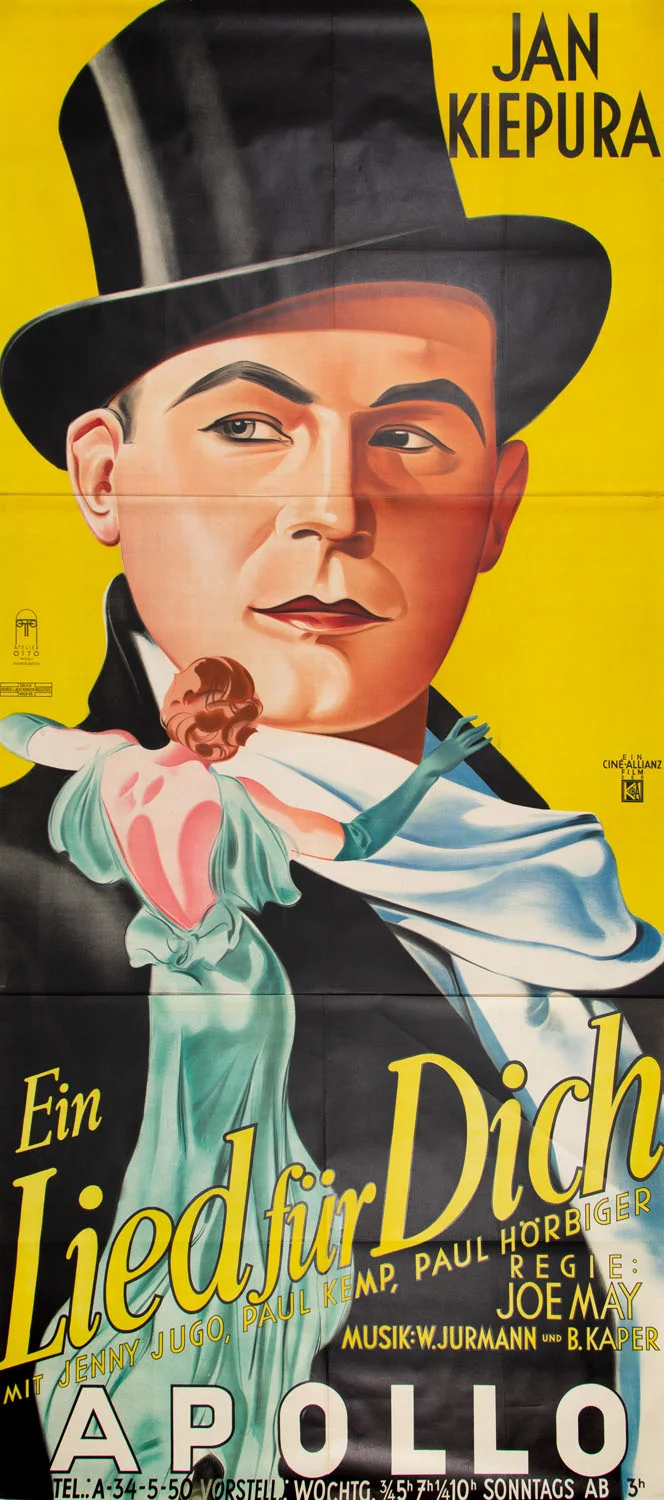
The interwar period also saw a dynamic development of Polish cinematography. The first film to be released in independent Poland was "Seasonal Love", a drama based on a novel by Gabriela Zapolska. Most recognizable works of that period also include comedies and their musical arrangement. Aleksander Żabczyński charmed the audience from the screen with the song"Not Loving on Such a Night is a Sin" featured in the film "Ada! It's not Right". The greatest stars of the interwar Polish cinema, Eugeniusz Bodo and Adolf Dymsza gave an unforgettable performance in the movie "Paweł and Gaweł", which featured for the first time the song "Oh Sleep Sweetheart", also well known today. In addition, the interwar period witnessed the birth of great Polish artists on the music scene. One of the most important Polish divas was Hanka Ordonówna, for whom composer Henryk Wars and poet Julian Tuwim wrote two of the artist's greatest hits: "Love Will Forgive You Everything" and "At the First Sign". Only Mieczysław Fogg, whose great songs such as "Tango Milonga", "The Last Sunday" and "Autumn Roses", popular until these days, could measure up to Ordonówna's fame. Moreover, tenor Jan Kiepura, who performed at the world's largest theaters and operas, could boast an international career.