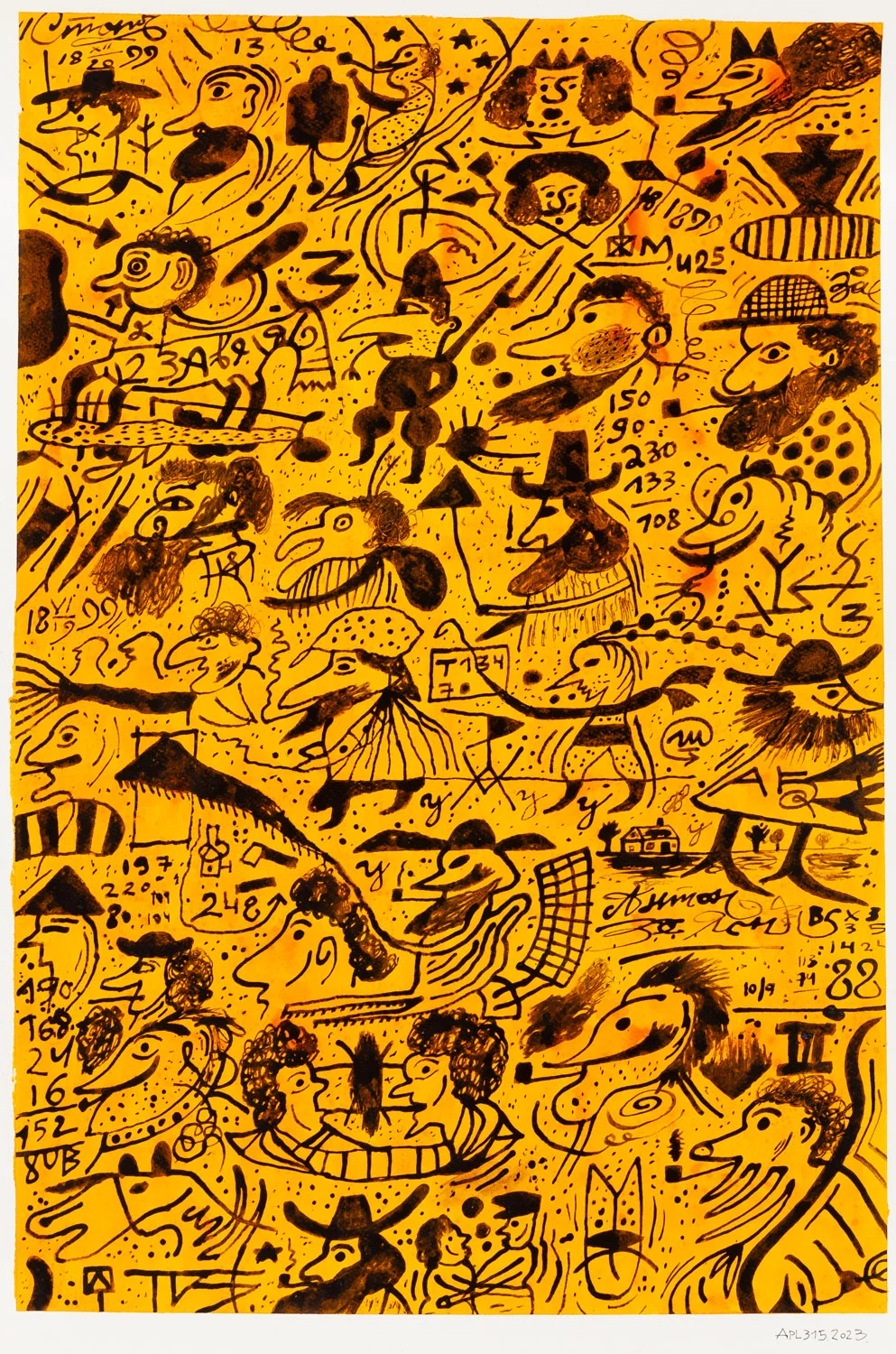
Mural about Odessa in Berlin
In the Urban Contemporary Art selection, there is a work with a very interesting history, especially regarding contemporary political issues. We're talking about a mural by the artist Apl315. It is located on a wall in Berlin, at the corner of Stargarder Straße and Schönhauser Allee. It's a sort of pictorial patchwork that combines sketches and notes from the artist's hometown – Odessa – with his temporary home, Berlin, on several levels.
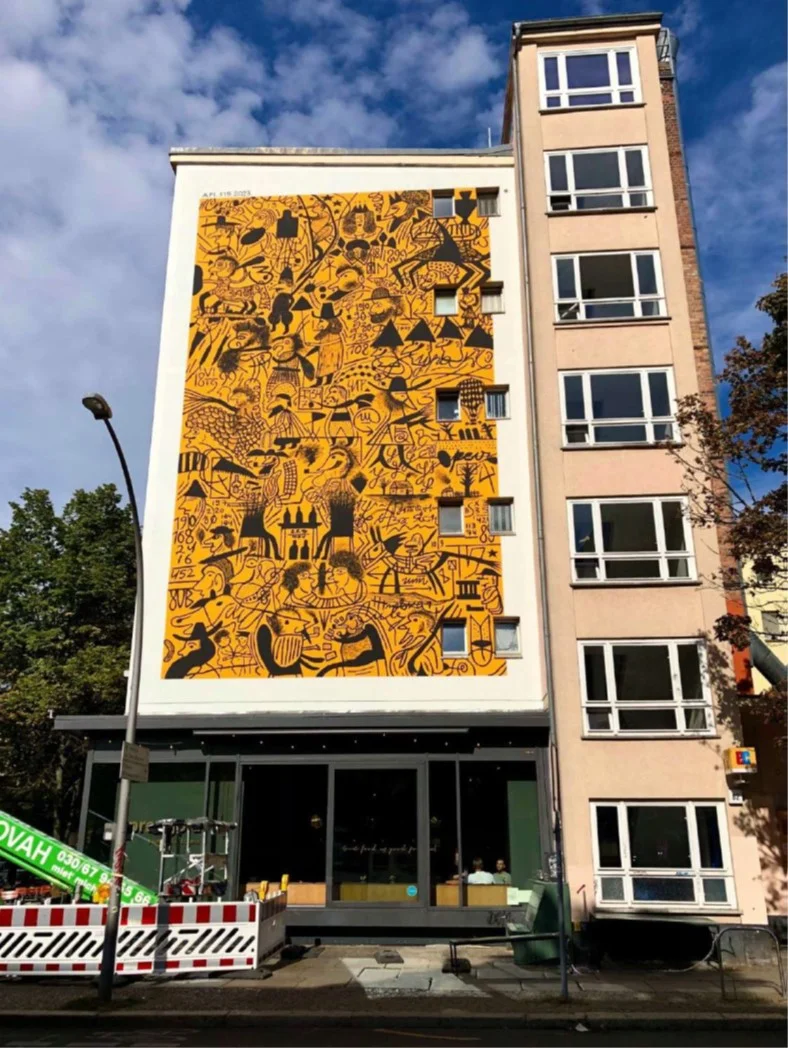
The mural pays tribute to the mysterious past of the so-called Odessa Catacombs, an approximately 2500-kilometer system of tunnels created in the 19th century, stretching beneath Odessa and far into the outskirts of the Ukrainian city on the Black Sea. The catacombs were formed as a result of the extraction of Pontic limestone, mainly used for construction, which began in the late 18th century and lasted until the mid-20th century. Drawings and inscriptions from the catacombs from the period between 1840 and 1917 were transferred by the artist onto the wall in Berlin in the form of a mural. Apl315 conducted extensive research in the Odessa catacombs even before the outbreak of the Russian war against Ukraine and meticulously photographed the images and inscriptions, most of which were made with charcoal. They are mainly the work of people working in sandstone quarries and mostly exhibit a naive style.
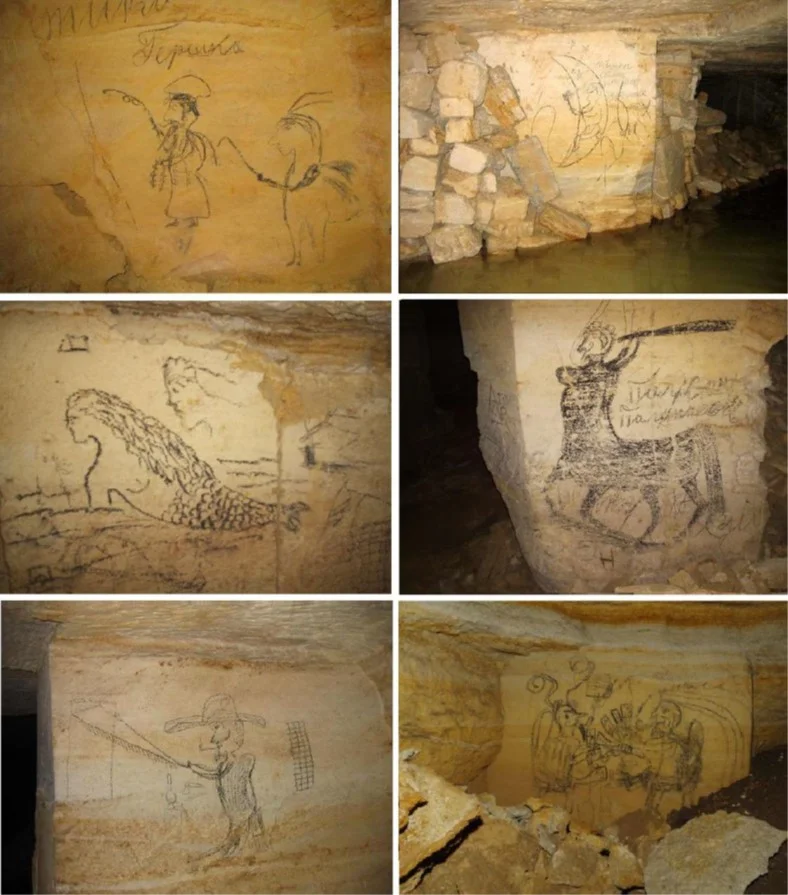
On the walls, workers and soldiers left work-related notes and mathematical equations alongside mythical creatures, handprints, daily figurative drawings from the world of work, as well as humorous illustrations that certainly contributed to entertainment during breaks. In the spirit of appropriation art (a trend involving borrowing motifs from existing works), Apl315 created a collage based on the visual-textual heritage. In this way, the artist not only encourages the discovery of this less accessible art but also refers to the history of Prenzlauer Berg as a former working-class district. He combines the soot-black color of charcoal drawings with a shade that, on the one hand, refers to breweries and industrial buildings in the district built of yellow bricks, and on the other hand, alludes to the color of older A3 metro trains, which can still be seen occasionally running along the viaduct of the U2 line along Schönhauser Allee.