
Mermaids - various perspectives
Mermaids are a captivating artistic motif, present in creative works since ancient times. The theme gained tremendous popularity in Homer's "Odyssey," where Ulysses resisted the songs of the sirens by instructing his crew to bind him and plug their ears, ensuring they wouldn't hear the enchanting melodies. Over the years, many painters have revisited this motif.
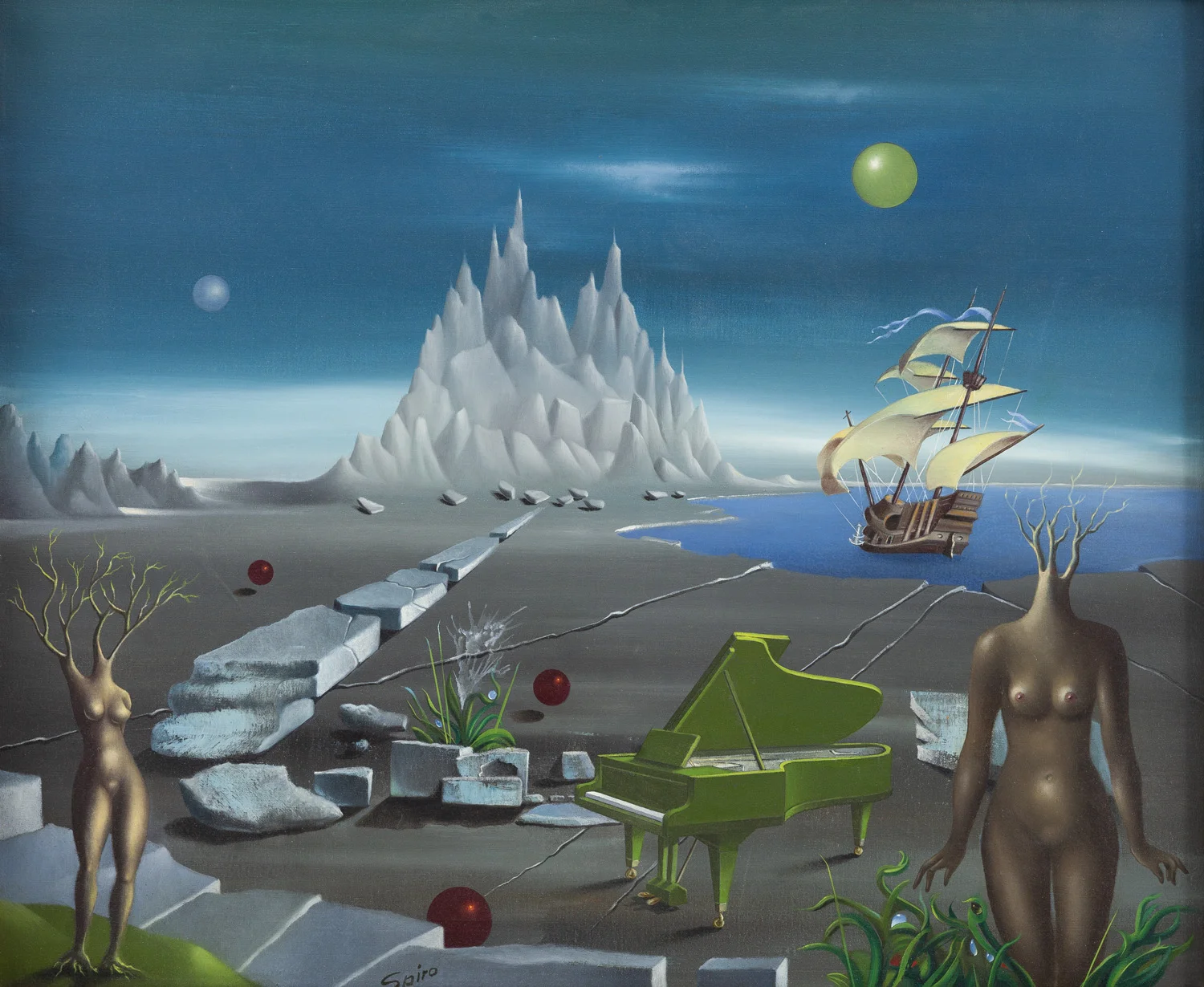
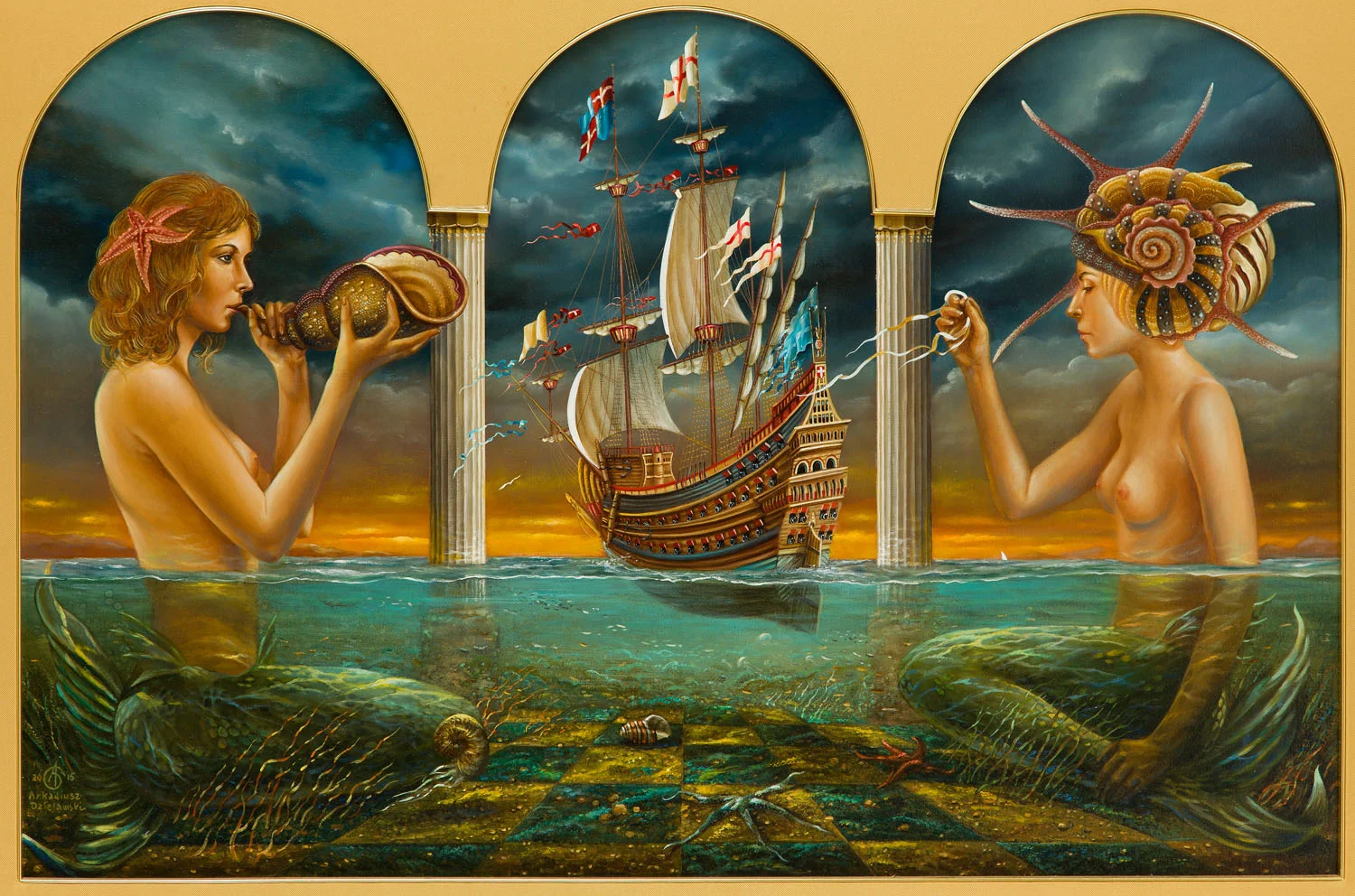
"The Sirens and Ulysse's" by English artist William Etty, first exhibited in 1837, depicts this very scene from Homer's "Odyssey." Traditionally depicted as human-animal chimeras, Etty portrayed them as naked young women on an island strewn with decaying bodies, a novel representation that some critics ridiculed for its lack of taste and unpleasantness. In our December auction, two paintings directly reference "The Sirens and Ulysses." The first, by the internationally renowned painter Georges Spiro, born in Warsaw, takes a novel approach. In Spiro's rendition, the mermaids have legs but lack heads (a departure from the usual singing sirens). Spiro's painting is an excellent example of how the contemporary image of mermaids evolves in various forms in popular culture. In the second painting from our December auction, Arkadiusz Dzielawski portrays these magical creatures in a more traditional manner. The painting features two mermaids with beautiful busts and fish tails, with a ship drifting between them, seemingly for their amusement. The expressive title, "Frolic Sirens," emphasizes that they are playing with the fate of the ship's crew.
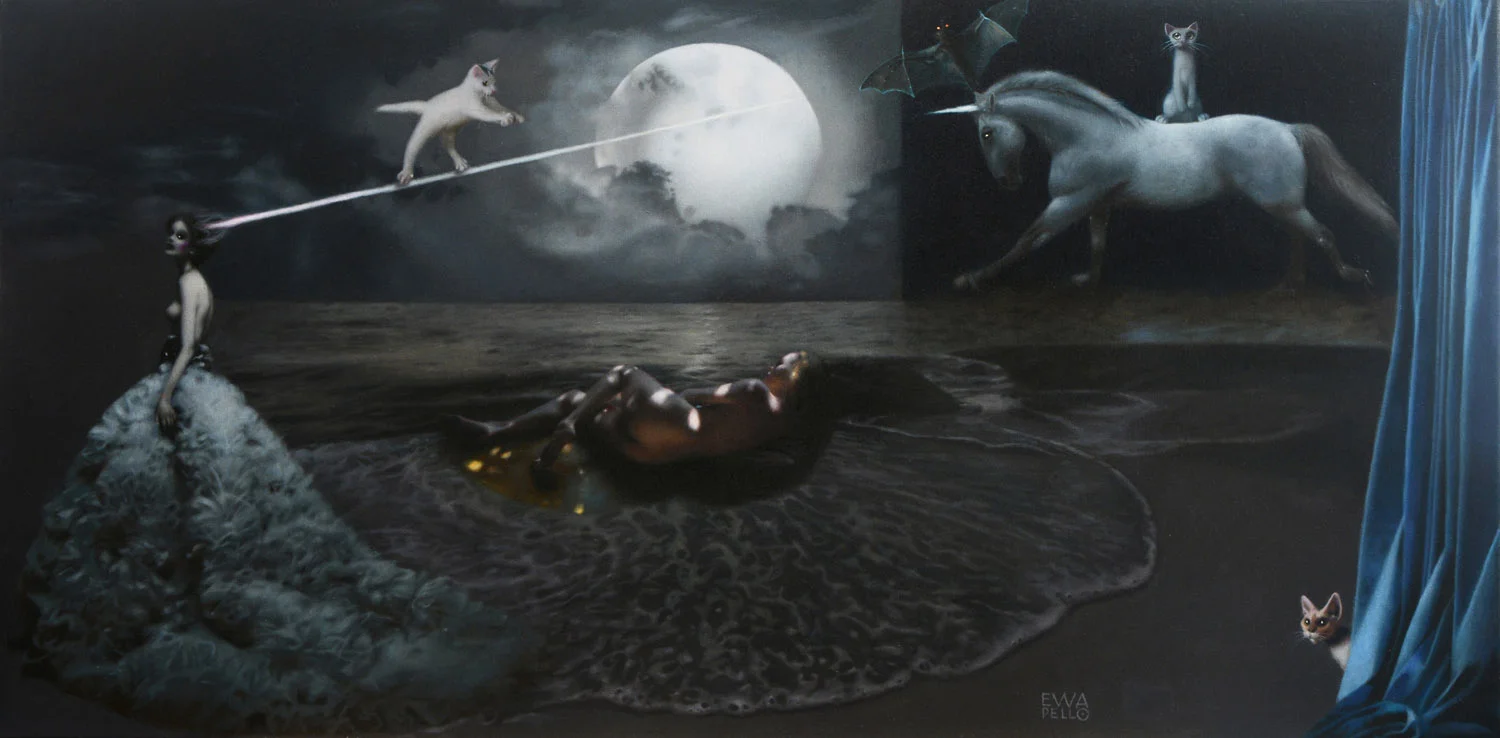
In addition to the story of Ulysses, most of us are familiar with Hans Christian Andersen's tale of "The Little Mermaid." This fictional character is so popular that a well-known statue of her stands in Copenhagen, symbolizing the city. "The Little Mermaid" is one of the most popular and beloved fairy tales, a beautiful story of love in literature. Andersen, who struggled with the realm of emotions in his own life, often presented love in his fairy tales as a tragic feeling. In "The Little Mermaid," the tragedy of love takes on a unique dimension. Not only does the feeling remain unrequited, but the mermaid never even confesses her love. The prince remains unaware that the mermaid loves him, never discovering that she saved his life and sacrificed much for him (she gave up her beautiful voice and became mute). Andersen's "The Little Mermaid" is less about love and more about what is most important in it: sacrifice and overcoming selfishness. The mermaid's feelings are so noble not because she is a goddess; she ceased to be one when she fell in love with a human. "The Little Mermaid" is considered a sad fairy tale, but modern adaptations in theater and film, including Disney's version, alter its ending, where the prince marries the mermaid. However, at a deeper level, the fairy tale has a very optimistic tone, conveying the idea that nothing is final, and there is always another level of self-realization. In this interpretation, the young mermaid changed her life (and appearance) for love. This optimistic tone influenced Zbigniew Seweryn's work in our auction, which radiates such optimism. On the other hand, in her excellent painting "Moonstrike (The Little Mermaid)," Ewa Pello focuses on the mystical process of the mermaid's transformation into a human. Accompanying creatures such as cats and a unicorn, the transformation occurs during a full moon. It is mystical and mysterious.
In summary, Andersen's fairy tale radically changed the preceding cultural image of the mermaid. The hybrid body and voice, which can drive people to madness, have fascinated since ancient times. The first stories were probably the work of sailors, but in ancient texts (significant due to Mediterranean culture), we should look for the archetype of the mermaid, a reference point for the literary consciousness of subsequent generations. In Homer's "Odyssey," the sirens are cunning, mature coquettes, while in Andersen's tale, the mermaid is full of altruistic love, still a teenager with a somewhat naive view of the world.
In addition, various versions overlay the original story and fairy tale. Especially during the Romantic era, authors were drawn to characters from legends. At that time, artists created many works about folk mermaids, water nymphs, and nymphs, perfect for depicting seductive love tinged with mystery, dread, and eroticism. An excellent example is Johann Wolfgang Goethe's ballad "The Fisherman" and Frederic Leighton's painting "The Fisherman and the Siren" from 1858, inspired by it.
The multitude of mermaids featured in the canvases of our December auction, along with their various depictions, clearly show that this theme has fascinated for centuries and continues to captivate to this day. Each of us can choose our favorite version of the mermaid: from the sensual coquette by Katarzyna Paleta and Arkadiusz Dzielawski, through the innocent creature by Zbigniew Seweryn, to intriguing, ambiguous beings like those depicted by Ewa Pello and Georges Spiro. The choice is ours...